Peter Singer — 作者 (34)
The Most Good You Can Do [图书] 豆瓣
From the ethicist the New Yorker calls “the most influential living philosopher,” a new way of thinking about living ethically
Peter Singer’s books and ideas have been disturbing our complacency ever since the appearance of Animal Liberation. Now he directs our attention to a new movement in which his own ideas have played a crucial role: effective altruism. Effective altruism is built upon the simple but profound idea that living a fully ethical life involves doing the "most good you can do." Such a life requires an unsentimental view of charitable giving: to be a worthy recipient of our support, an organization must be able to demonstrate that it will do more good with our money or our time than other options open to us. Singer introduces us to an array of remarkable people who are restructuring their lives in accordance with these ideas, and shows how living altruistically often leads to greater personal fulfillment than living for oneself.
The Most Good You Can Do develops the challenges Singer has made, in the New York Times and Washington Post, to those who donate to the arts, and to charities focused on helping our fellow citizens, rather than those for whom we can do the most good. Effective altruists are extending our knowledge of the possibilities of living less selfishly, and of allowing reason, rather than emotion, to determine how we live. The Most Good You Can Do offers new hope for our ability to tackle the world’s most pressing problems.
"Singer’s argument is powerful, provocative and, I think, basically right. The world would be a better place if we were as tough-minded in how we donate money as in how we make it."—Nicholas Kristof, New York Times
"In a world getting ever wealthier and more unequal, a book about effective altruism is overdue. What can you be doing— realistically, practically, today—to make the world a better place? No one has thought harder about this question than Peter Singer, and he answers it with his characteristic clarity and persuasiveness."—Elie Hassenfeld and Holden Kamofsky Co-Founders and Co-Executive Directors of the Open Philanthropy Project
"Peter Singer is one of the most important thinkers of our time, and this is his most important book. Through the stories of those in the nascent effective altruism movement, he provides clear guidance on what it means to live an ethical life in the face of the world’s many problems. From charity to career choice to consumerism, this book will revolutionize how you think about doing good."—Will MacAskill, author of Doing Good Better: Effective Altruism and How You Can Make a Difference
"Provocative and important. . . .The Most GoodYou Can Do is a delight to read—Singer is a deep thinker and a wonderfully clear writer, moving smoothly from careful philosophical analyses to vivid stories of extraordinary lives. And even if you are not persuaded that effective altruism is the way to become a better—and happier—person, you will find yourself deeply unsettled by Singer’s provocative claims about poverty, climate change, animals, art, rationality, and much else."—Paul Bloom, author of Just Babies
"From the time of his 1972 paper “Famine, Affluence, and Morality,” Peter Singer has argued that we should be giving more to alleviate global suffering than we usually do. In this new book, Singer introduces us to people who are giving much more and are having fun doing it, and shows us just how easy it is to make a positive difference in the world."—Lori Gruen, author of Ethics and Animals: An Introduction
"Singer's inspiring book challenges us all to take it up a notch in thinking about our giving. Reading this book can change your life; acting on this book can improve the lives of others."—Dean Karlan, author of More Than Good Intentions and President of Innovations for Poverty Action
"An outstanding resource for any donor looking to have an outsized impact on the world."—Cari Tuna, President, Good Ventures
"Peter Singer is the world’s most influential living philosopher, and this may be his most influential book—an inspiring and practical guide to living ethically in an age of unmatched opportunity. You cannot escape its pull." —Joshua Greene, author of Moral Tribes
"Peter Singer makes a compelling ethical argument for ‘effective altruism’ as a way of life. By giving of our time and resources in a thoughtful and significant way, each of us has the power to save lives and make the world a better place."—Lauren Bush Lauren, CEO and Founder of FEED
"Singer makes a strong case for a simple idea—that each of us has a tremendous opportunity to help others with our abilities, time and money. The Most Good You Can Do is an optimistic and compelling look at the positive impact that giving can have on the world."—Bill and Melinda Gates, co-chairs of the Bill and Melinda Gates Foundation
"We need thinkers such as Singer to test our intuitions. . . . The encouraging message is that we do have the resources to be better. . . . This requires foremost that we believe in the goodness of others. So reading these powerful new books on the existence of altruism could be the first step to making the world a nicer place."—Stephen Cave, Financial Times
"Read Peter Singer at your own peril. His arguments about animal welfare and vegetarianism have moved millions to change their lives. The Most GoodYou Can Do will challenge you to consider how your donations, career choices, and everyday life decisions can maximize good in the world."—Rob Reich, Stanford University
"Singer's book is bold, fresh, inspired, reasoned, optimistic. Read it and grow your brain."—Walter M. Bortz II, MD, Huffington Post Blog
"In The Most Good You Can Do, Singer lays out a rationale for effective altruism - and a provocative defense of a movement he hopes will spread . . . Singer opens up worthwhile conversations (and practical applications) related to ethical ideals."—Glenn C. Altschuler, Philadelphia Inquirer
“The thought that motivates effective altruists – that the needs of the worst-off people in the world overwhelm in importance the goods on which we who are well off spend most of our resources – is a very compelling one. It is easy to understand how it leads them to change their lives.”
Peter Singer’s books and ideas have been disturbing our complacency ever since the appearance of Animal Liberation. Now he directs our attention to a new movement in which his own ideas have played a crucial role: effective altruism. Effective altruism is built upon the simple but profound idea that living a fully ethical life involves doing the "most good you can do." Such a life requires an unsentimental view of charitable giving: to be a worthy recipient of our support, an organization must be able to demonstrate that it will do more good with our money or our time than other options open to us. Singer introduces us to an array of remarkable people who are restructuring their lives in accordance with these ideas, and shows how living altruistically often leads to greater personal fulfillment than living for oneself.
The Most Good You Can Do develops the challenges Singer has made, in the New York Times and Washington Post, to those who donate to the arts, and to charities focused on helping our fellow citizens, rather than those for whom we can do the most good. Effective altruists are extending our knowledge of the possibilities of living less selfishly, and of allowing reason, rather than emotion, to determine how we live. The Most Good You Can Do offers new hope for our ability to tackle the world’s most pressing problems.
"Singer’s argument is powerful, provocative and, I think, basically right. The world would be a better place if we were as tough-minded in how we donate money as in how we make it."—Nicholas Kristof, New York Times
"In a world getting ever wealthier and more unequal, a book about effective altruism is overdue. What can you be doing— realistically, practically, today—to make the world a better place? No one has thought harder about this question than Peter Singer, and he answers it with his characteristic clarity and persuasiveness."—Elie Hassenfeld and Holden Kamofsky Co-Founders and Co-Executive Directors of the Open Philanthropy Project
"Peter Singer is one of the most important thinkers of our time, and this is his most important book. Through the stories of those in the nascent effective altruism movement, he provides clear guidance on what it means to live an ethical life in the face of the world’s many problems. From charity to career choice to consumerism, this book will revolutionize how you think about doing good."—Will MacAskill, author of Doing Good Better: Effective Altruism and How You Can Make a Difference
"Provocative and important. . . .The Most GoodYou Can Do is a delight to read—Singer is a deep thinker and a wonderfully clear writer, moving smoothly from careful philosophical analyses to vivid stories of extraordinary lives. And even if you are not persuaded that effective altruism is the way to become a better—and happier—person, you will find yourself deeply unsettled by Singer’s provocative claims about poverty, climate change, animals, art, rationality, and much else."—Paul Bloom, author of Just Babies
"From the time of his 1972 paper “Famine, Affluence, and Morality,” Peter Singer has argued that we should be giving more to alleviate global suffering than we usually do. In this new book, Singer introduces us to people who are giving much more and are having fun doing it, and shows us just how easy it is to make a positive difference in the world."—Lori Gruen, author of Ethics and Animals: An Introduction
"Singer's inspiring book challenges us all to take it up a notch in thinking about our giving. Reading this book can change your life; acting on this book can improve the lives of others."—Dean Karlan, author of More Than Good Intentions and President of Innovations for Poverty Action
"An outstanding resource for any donor looking to have an outsized impact on the world."—Cari Tuna, President, Good Ventures
"Peter Singer is the world’s most influential living philosopher, and this may be his most influential book—an inspiring and practical guide to living ethically in an age of unmatched opportunity. You cannot escape its pull." —Joshua Greene, author of Moral Tribes
"Peter Singer makes a compelling ethical argument for ‘effective altruism’ as a way of life. By giving of our time and resources in a thoughtful and significant way, each of us has the power to save lives and make the world a better place."—Lauren Bush Lauren, CEO and Founder of FEED
"Singer makes a strong case for a simple idea—that each of us has a tremendous opportunity to help others with our abilities, time and money. The Most Good You Can Do is an optimistic and compelling look at the positive impact that giving can have on the world."—Bill and Melinda Gates, co-chairs of the Bill and Melinda Gates Foundation
"We need thinkers such as Singer to test our intuitions. . . . The encouraging message is that we do have the resources to be better. . . . This requires foremost that we believe in the goodness of others. So reading these powerful new books on the existence of altruism could be the first step to making the world a nicer place."—Stephen Cave, Financial Times
"Read Peter Singer at your own peril. His arguments about animal welfare and vegetarianism have moved millions to change their lives. The Most GoodYou Can Do will challenge you to consider how your donations, career choices, and everyday life decisions can maximize good in the world."—Rob Reich, Stanford University
"Singer's book is bold, fresh, inspired, reasoned, optimistic. Read it and grow your brain."—Walter M. Bortz II, MD, Huffington Post Blog
"In The Most Good You Can Do, Singer lays out a rationale for effective altruism - and a provocative defense of a movement he hopes will spread . . . Singer opens up worthwhile conversations (and practical applications) related to ethical ideals."—Glenn C. Altschuler, Philadelphia Inquirer
“The thought that motivates effective altruists – that the needs of the worst-off people in the world overwhelm in importance the goods on which we who are well off spend most of our resources – is a very compelling one. It is easy to understand how it leads them to change their lives.”
Animal Liberation [图书] 豆瓣 Goodreads
Animal Liberation
<center>The Book That Started A Revolution</center></p>
Since its original publication in 1975, this groundbreaking work has awakened millions of concerned men and women to the shocking abuse of animals everywhere -- inspiring a worldwide movement to eliminate much of the cruel and unnecessary laboratory animal experimentation of years past.
In this newly revised and expanded edition, author Peter Singer exposes the chilling realities of today's "factory forms" and product-testing procedures -- offering sound, humane solutions to what has become a profound environmental and social as well as moral issue. An important and persuasive appeal to conscience, fairness, decency and justice, Animal Liberation is essential reading for the supporter and the skeptic alike.</P>
Since its original publication in 1975, this groundbreaking work has awakened millions of concerned men and women to the shocking abuse of animals everywhere -- inspiring a worldwide movement to eliminate much of the cruel and unnecessary laboratory animal experimentation of years past.
In this newly revised and expanded edition, author Peter Singer exposes the chilling realities of today's "factory forms" and product-testing procedures -- offering sound, humane solutions to what has become a profound environmental and social as well as moral issue. An important and persuasive appeal to conscience, fairness, decency and justice, Animal Liberation is essential reading for the supporter and the skeptic alike.</P>
The Most Good You Can Do: How Effective Altruism Is Changing Ideas About Living Ethically [图书] Goodreads 豆瓣
From the ethicist the New Yorker calls “the most influential living philosopher,” a new way of thinking about living ethically
"Singer’s argument is powerful, provocative and, I think, basically right. The world would be a better place if we were as tough-minded in how we donate money as in how we make it."—Nicholas Kristof, New York Times
"Bold, fresh, inspired, reasoned, optimistic."—Walter M. Bortz II, MD, Huffington Post Blog
Peter Singer’s books and ideas have been disturbing our complacency ever since the appearance of Animal Liberation . Now he directs our attention to a new movement in which his own ideas have played a crucial effective altruism. Effective altruism is built upon the simple but profound idea that living a fully ethical life involves doing the "most good you can do." Such a life requires an unsentimental view of charitable to be a worthy recipient of our support, an organization must be able to demonstrate that it will do more good with our money or our time than other options open to us. Singer introduces us to an array of remarkable people who are restructuring their lives in accordance with these ideas, and shows how living altruistically often leads to greater personal fulfillment than living for oneself.
The Most Good You Can Do develops the challenges Singer has made, in the New York Times and Washington Post , to those who donate to the arts, and to charities focused on helping our fellow citizens, rather than those for whom we can do the most good. Effective altruists are extending our knowledge of the possibilities of living less selfishly, and of allowing reason, rather than emotion, to determine how we live. The Most Good You Can Do offers new hope for our ability to tackle the world’s most pressing problems.
"Singer’s argument is powerful, provocative and, I think, basically right. The world would be a better place if we were as tough-minded in how we donate money as in how we make it."—Nicholas Kristof, New York Times
"Bold, fresh, inspired, reasoned, optimistic."—Walter M. Bortz II, MD, Huffington Post Blog
Peter Singer’s books and ideas have been disturbing our complacency ever since the appearance of Animal Liberation . Now he directs our attention to a new movement in which his own ideas have played a crucial effective altruism. Effective altruism is built upon the simple but profound idea that living a fully ethical life involves doing the "most good you can do." Such a life requires an unsentimental view of charitable to be a worthy recipient of our support, an organization must be able to demonstrate that it will do more good with our money or our time than other options open to us. Singer introduces us to an array of remarkable people who are restructuring their lives in accordance with these ideas, and shows how living altruistically often leads to greater personal fulfillment than living for oneself.
The Most Good You Can Do develops the challenges Singer has made, in the New York Times and Washington Post , to those who donate to the arts, and to charities focused on helping our fellow citizens, rather than those for whom we can do the most good. Effective altruists are extending our knowledge of the possibilities of living less selfishly, and of allowing reason, rather than emotion, to determine how we live. The Most Good You Can Do offers new hope for our ability to tackle the world’s most pressing problems.
Hegel [图书] 豆瓣
Many people regard Hegel's work as obscure and extremely difficult, yet his importance and influence are universally acknowledged. Professor Singer eliminates any excuse for remaining ignorant of the outlines of Hegel's philosophy by providing a broad discussion of his ideas and an account of his major works.
Marx [图书] 豆瓣 谷歌图书
8.0 (7 个评分)
作者:
Peter Singer
出版社:
Oxford University Press, USA
2001
- 1
其它标题:
Marx: A Very Short Introduction
Peter Singer identifies the central vision that unifies Marx's thought, enabling us to grasp Marx's views as a whole. He sees him as a philosopher primarily concerned with human freedom, rather than as an economist or a social scientist. He explains alienation, historical materialism, the economic theory of Capital, and Marx's ideas of communism, in plain English, and concludes with an assessment of Marx's legacy.
Animal Liberation [图书] 豆瓣 谷歌图书
Since its original publication in 1975, this groundbreaking work has awakened millions of people to the existence of "speciesism"—our systematic disregard of nonhuman animals—inspiring a worldwide movement to transform our attitudes to animals and eliminate the cruelty we inflict on them. In Animal Liberation, author Peter Singer exposes the chilling realities of today's "factory farms" and product-testing procedures—destroying the spurious justifications behind them, and offering alternatives to what has become a profound environmental and social as well as moral issue. An important and persuasive appeal to conscience, fairness, decency, and justice, it is essential reading for the supporter and the skeptic alike.
Marx: A Very Short Introduction [图书] 豆瓣
Includes a new chapter showing how these theories can be applied to twenty first century politics and society, and considers whether they still hold true
Karl Marx is one of the most influential philosophers of all time, whose theories have shaped and directed political, economic, and social thought for 150 years. Considering Marx's life and impact, renowned philosopher Peter Singer identifies the central vision that unifies Marx's thought, enabling us to grasp Marx's views as a whole. Presenting Marx as a philosopher primarily concerned with human freedom, rather than as an economist or a social scientist, Singer explains Marx's key ideas on alienation, historical materialism, and the economic theory of Capital, in plain English.
In this new edition, Singer explores whether Marx remains relevant to the twenty-first century, and if so, how. Does the fact that eight billionaires now own as much as the bottom half of the world's population give support to Marxist thinking? Does the ease with which conservative politicians can win over working class voters by appealing to nationalism undermines Marx's view of class struggle and the inevitability of victory for the proletariat? Singer ponders key questions such as these, and also discusses the place of the internet as a "productive force" when analyzed in Marxist theory. He concludes with an assessment of Marx's legacy, asking if there is any realistic prospect of replacing capitalism with a better system of production and distribution in the twenty-first century.
Karl Marx is one of the most influential philosophers of all time, whose theories have shaped and directed political, economic, and social thought for 150 years. Considering Marx's life and impact, renowned philosopher Peter Singer identifies the central vision that unifies Marx's thought, enabling us to grasp Marx's views as a whole. Presenting Marx as a philosopher primarily concerned with human freedom, rather than as an economist or a social scientist, Singer explains Marx's key ideas on alienation, historical materialism, and the economic theory of Capital, in plain English.
In this new edition, Singer explores whether Marx remains relevant to the twenty-first century, and if so, how. Does the fact that eight billionaires now own as much as the bottom half of the world's population give support to Marxist thinking? Does the ease with which conservative politicians can win over working class voters by appealing to nationalism undermines Marx's view of class struggle and the inevitability of victory for the proletariat? Singer ponders key questions such as these, and also discusses the place of the internet as a "productive force" when analyzed in Marxist theory. He concludes with an assessment of Marx's legacy, asking if there is any realistic prospect of replacing capitalism with a better system of production and distribution in the twenty-first century.
One World Now [图书] 豆瓣
How Are We to Live? [图书] 豆瓣
"Is there still anything worth living for? Is anything worth pursuing, apart from money, love, and caring for one's own family?"
Internationally known social philosopher and ethicist Peter Singer has an answer to these and other questions in this compelling new volume. "If we can detach ourselves from our own immediate preoccupations and look at the world as a whole and our place in it, there is something absurd about the idea that people should have trouble finding something to live for."
Singer suggests that people who take an ethical approach to life often avoid the trap of meaninglessness, finding a deeper satisfaction in what they are doing than those people whose goals are narrower and more self-centered. He spells out what he means by an ethical approach to life, and shows that it can bring about significant and far-reaching changes to one's life.
Internationally known social philosopher and ethicist Peter Singer has an answer to these and other questions in this compelling new volume. "If we can detach ourselves from our own immediate preoccupations and look at the world as a whole and our place in it, there is something absurd about the idea that people should have trouble finding something to live for."
Singer suggests that people who take an ethical approach to life often avoid the trap of meaninglessness, finding a deeper satisfaction in what they are doing than those people whose goals are narrower and more self-centered. He spells out what he means by an ethical approach to life, and shows that it can bring about significant and far-reaching changes to one's life.
A Darwinian Left [图书] 豆瓣
In this ground-breaking book, a renowned bioethicist argues that the political left must radically revise its outdated view of human nature. He shows how the insights of modern evolutionary theory, particularly on the evolution of cooperation, can help the left attain its social and political goals.Singer explains why the left originally rejected Darwinian thought and why these reasons are no longer viable. He discusses how twentieth-century thinking has transformed our understanding of Darwinian evolution, showing that it is compatible with cooperation as well as competition, and that the left can draw on this modern understanding to foster cooperation for socially desirable ends. A Darwinian left, says Singer, would still be on the side of the weak, poor, and oppressed, but it would have a better understanding of what social and economic changes would really work to benefit them. It would also work toward a higher moral status for nonhuman animals and a less anthropocentric view of our dominance over nature.
The Lives of Animals [图书] 豆瓣
作者:
J. M. Coetzee
/
Marjorie Garber
…
出版社:
Princeton University Press
2001
- 7
The idea of human cruelty to animals so consumes novelist Elizabeth Costello in her later years that she can no longer look another person in the eye: humans, especially meat-eating ones, seem to her to be conspirators in a crime of stupefying magnitude taking place on farms and in slaughterhouses, factories, and laboratories across the world. Costello's son, a physics professor, admires her literary achievements, but dreads his mother's lecturing on animal rights at the college where he teaches. His colleagues resist her argument that human reason is overrated and that the inability to reason does not diminish the value of life; his wife denounces his mother's vegetarianism as a form of moral superiority. At the dinner that follows her first lecture, the guests confront Costello with a range of sympathetic and sceptical reactions to issues of animal rights, touching on broad philosophical, anthropological, and religious perspectives. Painfully for her son, Elizabeth Costello seems offensive and flaky, but - dare he admit it! - strangely on target. Here the internationally renowned writer J. M. Coetzee uses fiction to present a powerfully moving discussion of animal rights in all their complexity. He draws us into Elizabeth Costello's own sense of mortality, her compassion for animals, and her alienation from humans, even from her own family. In his fable, presented as a Tanner Lecture sponsored by the University Center for Human Values at Princeton University, Coetzee immerses us in a drama reflecting the real-life situation at hand: a writer delivering a lecture on an emotionally charged issue at a prestigious university. Literature, philosophy, performance, and deep human conviction - Coetzee brings all these elements into play. As in the story of Elizabeth Costello, the Tanner Lecture is followed by responses treating the reader to a variety of perspectives, delivered by leading thinkers in different fields. Coetzee's text is accompanied by an introduction by political philosopher Amy Gutmann and responsive essays by religion scholar Wendy Doniger, primatologist Barbara Smuts, literary theorist Marjorie Garber, and moral philosopher Peter Singer, author of Animal Liberation. Together the lecture-fable and the essays explore the palpable social consequences of uncompromising moral conflict and confrontation.
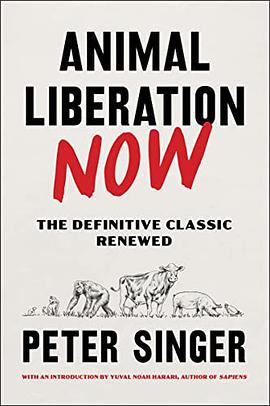
Animal Liberation [图书] 豆瓣
'An extraordinary book which has had extraordinary effects... Widely known as the bible of the animal liberation movement' Independent on Sunday
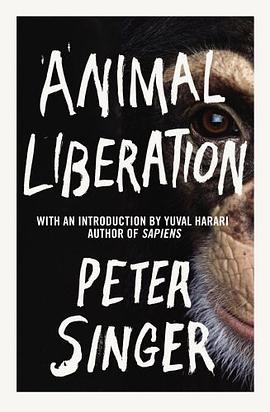
How should we treat non-human animals? In this immensely powerful and influential book (now with a new introduction by Sapiens author Yuval Noah Harari), the renowned moral philosopher Peter Singer addresses this simple question with trenchant, dispassionate reasoning. Accompanied by the disturbing evidence of factory farms and laboratories, his answers triggered the birth of the animal rights movement.
'An extraordinary book which has had extraordinary effects... Widely known as the bible of the animal liberation movement' Independent on Sunday
In the decades since this landmark classic first appeared, some public attitudes to animals may have changed but our continued abuse of animals in factory farms and as tools for research shows that the underlying ideas Singer exposes as ethically indefensible are still dominating the way we treat animals. As Yuval Harari’s brilliantly argued introduction makes clear, this book is as relevant now as the day it was written.
How should we treat non-human animals? In this immensely powerful and influential book (now with a new introduction by Sapiens author Yuval Noah Harari), the renowned moral philosopher Peter Singer addresses this simple question with trenchant, dispassionate reasoning. Accompanied by the disturbing evidence of factory farms and laboratories, his answers triggered the birth of the animal rights movement.
'An extraordinary book which has had extraordinary effects... Widely known as the bible of the animal liberation movement' Independent on Sunday
In the decades since this landmark classic first appeared, some public attitudes to animals may have changed but our continued abuse of animals in factory farms and as tools for research shows that the underlying ideas Singer exposes as ethically indefensible are still dominating the way we treat animals. As Yuval Harari’s brilliantly argued introduction makes clear, this book is as relevant now as the day it was written.
Ethics in the Real World [图书] 豆瓣 Goodreads
作者:
Peter Singer
出版社:
Text Publishing
2016
- 9
其它标题:
Ethics in the Real World: 86 Brief Essays on Things that Matter
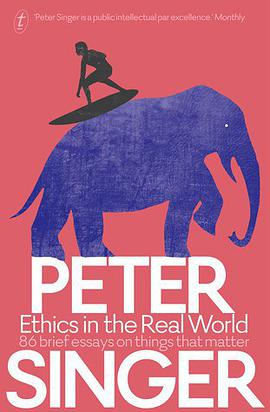
In this book of brief essays, Singer applies his controversial ways of thinking to issues like climate change, extreme poverty, animals, abortion, euthanasia, human genetic selection, sports doping, the sale of kidneys, the ethics of high-priced art, and ways of increasing happiness. Singer asks whether chimpanzees are people, smoking should be outlawed, or consensual sex between adult siblings should be decriminalised, and he reiterates his case against the idea that all human life is sacred, applying his arguments to some recent cases in the news. In addition, he explores, in an easily accessible form, some of the deepest philosophical questions, such as whether anything really matters and whether the pale blue dot that is our planet has any value. The collection also includes some more personal reflections, like Singer’s thoughts on one of his favourite activities, surfing, and an unusual suggestion for starting a family conversation over a holiday feast.
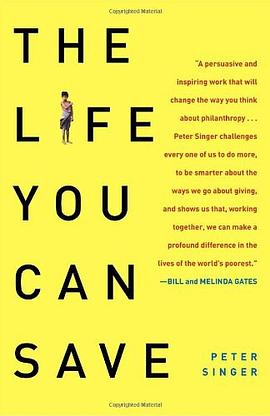
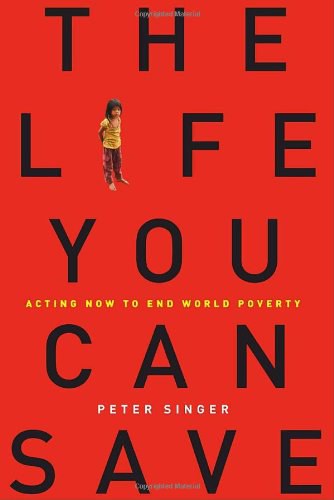
The Life You Can Save: Acting Now to End World Poverty [图书] Goodreads 豆瓣
It is 2021 and the world has experienced unimaginable suffering, death and despair. The pandemic has had a devastating effect on global extreme poverty and harrowing scenes from around the world continue to leave us shocked. As the pandemic rages on, it’s natural to ask: how can I help? Peter Singer – often considered to be the world’s most influential living philosopher– answers this question in The 10th Anniversary Edition of his seminal book, The Life You Can Save. This book will inspire and empower readers to ACT NOW and SAVE LIVES. Moreover, the ebook and the audiobook (narrated by mission–aligned celebrities including Stephen Fry, Kristen Bell, Paul Simon and Michael Schur!) is available to all readers for FREE on The Life You Can Save website.
In The Life You Can Save, Peter Singer compellingly lays out the case for why and how we can take action to provide immense benefit to others, at minimal cost to ourselves. Using ethical arguments, illuminating examples, and case studies of charitable giving, he shows that our current response to world poverty is not only insufficient but morally indefensible. And he provides practical recommendations of charities proven to dramatically improve, and even save, the lives of children, women and men living in extreme poverty. The Life You Can Save teaches us to be a part of the solution, helping others as we help ourselves.
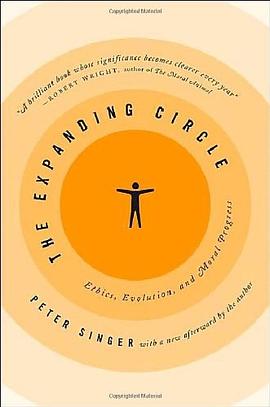
the expanding circle [图书] 豆瓣
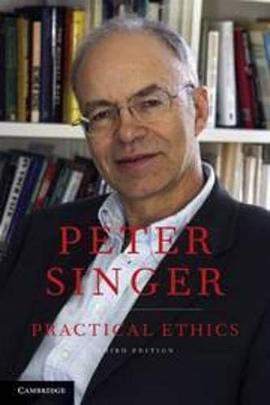
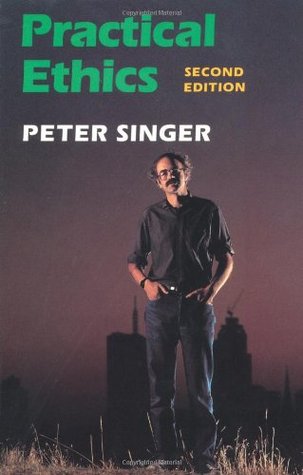
Practical Ethics [图书] Goodreads
Practical Ethics
Peter Singer's remarkably clear and comprehensive Practical Ethics has become a classic introduction to applied ethics since its publication in 1979 and has been translated into many languages. For this second edition the author has revised all the existing chapters, added two new ones, and updated the bibliography. He has also added an appendix describing some of the deep misunderstanding of and consequent violent reaction to the book in Germany, Austria, and Switzerland where the book has tested the limits of freedom of speech. The focus of the book is the application of ethics to difficult and controversial social questions.
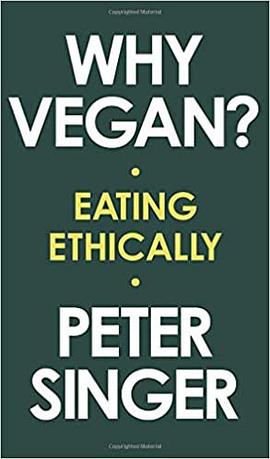
Why Vegan? [图书] 豆瓣
In a world reeling from a global pandemic, never has a treatise on veganism―from our foremost philosopher on animal rights―been more relevant or necessary.
“Peter Singer may be the most controversial philosopher alive; he is certainly among the most influential.” ―The New Yorker
Even before the publication of his seminal Animal Liberation in 1975, Peter Singer, one of the greatest moral philosophers of our time, unflinchingly challenged the ethics of eating animals. Now, in Why Vegan?, Singer brings together the most consequential essays of his career to make this devastating case against our failure to confront what we are doing to animals, to public health, and to our planet.
From his 1973 manifesto for Animal Liberation to his personal account of becoming a vegetarian in “The Oxford Vegetarians” and to investigating the impact of meat on global warming, Singer traces the historical arc of the animal rights, vegetarian, and vegan movements from their embryonic days to today, when climate change and global pandemics threaten the very existence of humans and animals alike. In his introduction and in “The Two Dark Sides of COVID-19,” cowritten with Paola Cavalieri, Singer excoriates the appalling health hazards of Chinese wet markets―where thousands of animals endure almost endless brutality and suffering―but also reminds westerners that they cannot blame China alone without also acknowledging the perils of our own factory farms, where unimaginably overcrowded sheds create the ideal environment for viruses to mutate and multiply.
Spanning more than five decades of writing on the systemic mistreatment of animals, Why Vegan? features a topical new introduction, along with nine other essays, including:
• “An Ethical Way of Treating Chickens?,” which opens our eyes to the lives of the birds who end up on so many plates―and to the lives of their parents;
• “If Fish Could Scream,” an essay exposing the utter indifference of commercial fishing practices to the experiences of the sentient beings they scoop from the oceans in such unimaginably vast numbers;
• “The Case for Going Vegan,” in which Singer assembles his most powerful case for boycotting the animal production industry;
• And most recently, in the introduction to this book and in “The Two Dark Sides of COVID-19,” Singer points to a new reason for avoiding meat: the role eating animals has played, and will play, in pandemics past, present, and future.
Written in Singer’s pellucid prose, Why Vegan? asserts that human tyranny over animals is a wrong comparable to racism and sexism. The book ultimately becomes an urgent call to reframe our lives in order to redeem ourselves and alter the calamitous trajectory of our imperiled planet.
“Peter Singer may be the most controversial philosopher alive; he is certainly among the most influential.” ―The New Yorker
Even before the publication of his seminal Animal Liberation in 1975, Peter Singer, one of the greatest moral philosophers of our time, unflinchingly challenged the ethics of eating animals. Now, in Why Vegan?, Singer brings together the most consequential essays of his career to make this devastating case against our failure to confront what we are doing to animals, to public health, and to our planet.
From his 1973 manifesto for Animal Liberation to his personal account of becoming a vegetarian in “The Oxford Vegetarians” and to investigating the impact of meat on global warming, Singer traces the historical arc of the animal rights, vegetarian, and vegan movements from their embryonic days to today, when climate change and global pandemics threaten the very existence of humans and animals alike. In his introduction and in “The Two Dark Sides of COVID-19,” cowritten with Paola Cavalieri, Singer excoriates the appalling health hazards of Chinese wet markets―where thousands of animals endure almost endless brutality and suffering―but also reminds westerners that they cannot blame China alone without also acknowledging the perils of our own factory farms, where unimaginably overcrowded sheds create the ideal environment for viruses to mutate and multiply.
Spanning more than five decades of writing on the systemic mistreatment of animals, Why Vegan? features a topical new introduction, along with nine other essays, including:
• “An Ethical Way of Treating Chickens?,” which opens our eyes to the lives of the birds who end up on so many plates―and to the lives of their parents;
• “If Fish Could Scream,” an essay exposing the utter indifference of commercial fishing practices to the experiences of the sentient beings they scoop from the oceans in such unimaginably vast numbers;
• “The Case for Going Vegan,” in which Singer assembles his most powerful case for boycotting the animal production industry;
• And most recently, in the introduction to this book and in “The Two Dark Sides of COVID-19,” Singer points to a new reason for avoiding meat: the role eating animals has played, and will play, in pandemics past, present, and future.
Written in Singer’s pellucid prose, Why Vegan? asserts that human tyranny over animals is a wrong comparable to racism and sexism. The book ultimately becomes an urgent call to reframe our lives in order to redeem ourselves and alter the calamitous trajectory of our imperiled planet.