W. Somerset Maugham — 作者 (64)
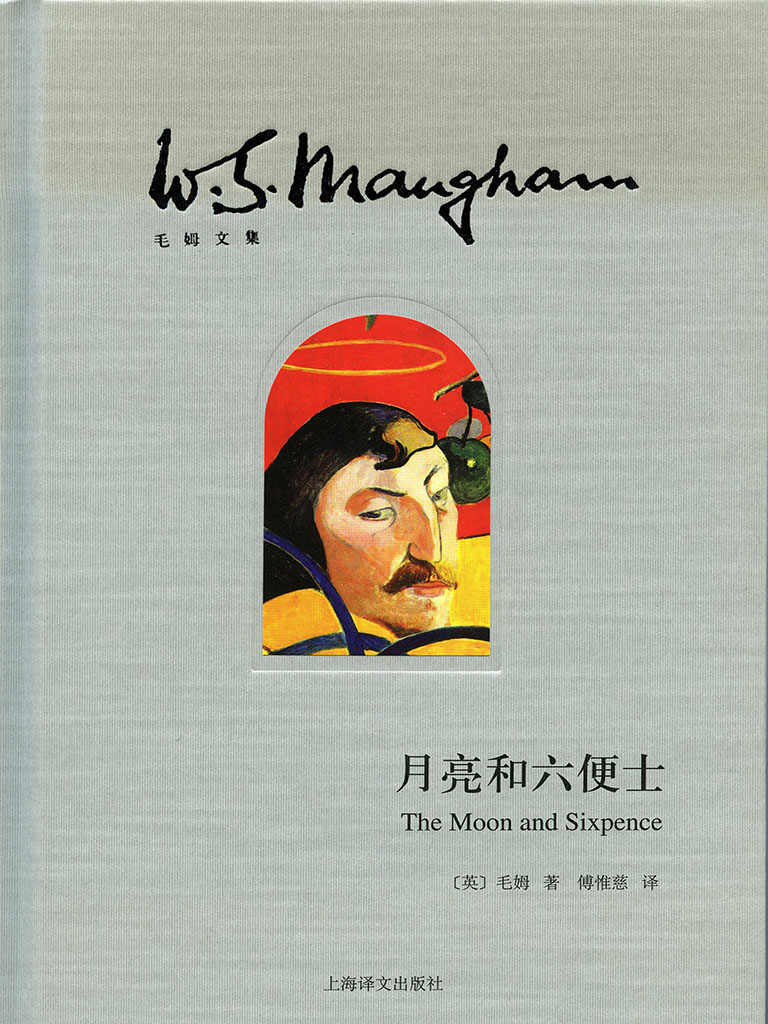
The Moon and Sixpence [图书] 豆瓣
8.2 (18 个评分) 作者: W. Somerset Maugham 出版社: Vintage Classics 2008 - 5
Charles Strickland, a conventional stockbroker, abandons his wife and children for Paris and Tahiti, to live his life as a painter. Whilst his betrayal of family, duty and honour gives him the freedom to achieve greatness, his decision leads to an obsession which carries severe implications. Inspired by the life of Paul Gauguin, The Moon and Sixpence is at once a satiric caricature of Edwardian conventions and a vivid portrayal of the mentality of a genius.
The Razor's Edge [图书] 豆瓣 Goodreads Goodreads
The Razor's Edge
8.9 (15 个评分) 作者: W. Somerset Maugham 出版社: Vintage Books USA 2003 - 9
Larry Darrell is a young American in search of the absolute. The progress of his spiritual odyssey involves him with some of Maugham's most brilliant characters - his fiancée Isabel whose choice between love and wealth have lifelong repercussions, and Elliott Templeton, her uncle, a classic expatriate American snob.Maugham himself wanders in and out of the story, to observe his characters struggling with their fates.
The Moon And Sixpence [图书] 豆瓣
9.4 (7 个评分) 作者: W. Somerset Maugham 出版社: Penguin Classics 2005
Book Description
It seems unthinkable that Charles Strickland, the dull, bourgeois city gent, would have the tortured soul of a genius. Yet Strickland is driven to abandon his home, wife, and children to devote himself slavishly to painting. In a tiny studio in Paris he fills canvas after canvas, refusing to sell or even exhibit his work. Beset by poverty, sickness, and his own intransigent nature, he drifts to Tahiti, where, even after being blinded by leprosy, he produces some of his most extraordinary works of art. First published in 1919 and inspired by the life of Paul Gauguin, The Moon and Sixpence is a study of a man possessed by the need to create - regardless of the cost to himself or others.
Book Dimension
length: (cm)19.7                 width:(cm)12.8
Then And Now [图书] 豆瓣
作者: W. Somerset Maugham 出版社: Vintage Books 2001 - 5
Maugham found a parallel to the turmoil of our own times in the duplicity, intrigue and sensuality of the Italian Renaissance. Then and Now enters the world of Machiavelli, and covers three important months in the career of that crafty politician, worldly seducer and high priest of schemers.
Theatre [图书] 豆瓣
作者: W. Somerset Maugham 出版社: Vintage 2001 - 3
In Theatre , W. Somerset Maugham–the author of the classic novels Of Human Bondage and Up at the Villa –introduces us to Julia Lambert, a woman of breathtaking poise and talent whose looks have stood by her forty-six years. She is one of the greatest actresses England–so good, in fact, that perhaps she never stops acting.
It seems that noting can ruffle her satin feathers, until a quiet stranger who challenges Julia's very sense of self. As a result, she will endure rejection for the first time, her capacity as a mother will be affronted, and her ability to put on whatever face she desired for her public will prove limited. In Theatre , Maugham subtly exposes the tensions and triumphs that occur when acting and reality blend together, and–for Julia–ultimately reverse.
Catalina [图书] 豆瓣
作者: W. Somerset Maugham 出版社: Vintage Classics 2001 - 6
His last novel. A romantic celebration of Spain and a delightfully mischievous satire on absolutism.
Summing Up (Maugham, W. Somerset, Works.) [图书] 豆瓣
作者: W. Somerset Maugham 出版社: Ayer Co Pub 1977 - 6
THE SUMMING UP represents Maugham's life and philosophy in his own words. It is autobiographical in nature, though most of the work is concerned with Maugham's unique and fascinating opinions on the theatre, writing, metaphysics and the interesting people he encountered in his long and successful career. His style is very conversational and you feel yourself settling into an intellectual odyssey led by a man who lived life to its fullest. Sixty years after THE SUMMING UP was published, Maugham's controversial insights and opinions continue to stimulate conversation and debate. This is one of the most entertaining, self-revealing pieces of all time.
On A Chinese Screen [图书] 豆瓣
作者: W. Somerset Maugham 出版社: Vintage Classics 2000 - 7
Maugham spent the winter months of 1919-20 travelling 1500 miles up the Yangtze River. Always more interested in people than places, he gave full rein to a sensitive and philosophical nature. On a Chinese Screen is the refined accumulation of the countless scraps of paper on which he had taken notes. Within the narrow confines of their colonial milieu, missionaries, consuls, army officers and company managers are all gently ridiculed as they persist obliviously with the life they know.
The Moon and Sixpence [图书] 豆瓣
作者: W. Somerset Maugham 出版社: Dover Publications 2006 - 1
The Moon and Sixpence<.I>, published in 1919, was one of the novels that galvanized W. Somerset Maugham's reputation as a literary master. It follows the life of one Charles Strickland, a bourgeois city gent whose dull exterior conceals the soul of a genius. Compulsive and impassioned, he abandons his home, wife, and children to devote himself slavishly to painting. In a tiny studio in Paris, he fills canvas after canvas, refusing to sell or even exhibit his work. Beset by poverty, sickness, and his own intransigent, unscrupulous nature, he drifts to Tahiti, where, even after being blinded by leprosy, he produces some of his most extraordinary works of art. Inspired by the life of Paul Gauguin, The Moon and Sixpence is an unforgettable study of a man possessed by the need to create&#151;regardless of the cost to himself and to others.
Liza of Lambeth [图书] 豆瓣
作者: W. Somerset Maugham 2010 - 5
Maugham's first published novel - a vividly realistic portrayal of slum life. Down among the drab slums of Lambeth, eighteen-year-old Liza is the darling of Vere Street. Vibrant and bewitching, she has found an adoring if conventional beau in Tom. When she meets Jim Blakeston, a married man new to the area, she is immediately magnetized by his attentions. But the streets are wise to their illicit, passionate affair and before long the secret is out.
The Painted Veil [图书] 豆瓣
作者: W. Somerset Maugham 出版社: Vintage 2009
Kitty Fane is the beautiful but shallow wife of Walter, a bacteriologist stationed in Hong Kong. Unsatisfied by her marriage, she starts an affair with charming, attractive and exciting Charles Townsend. But when Walter discovers her deception, he exacts a strange and terrible vengeance: Kitty must accompany him to his new posting in remote chinese mainland, where a cholera epidemic rages... First published to a storm of protest, The Painted Veil is a classic story of a woman's spiritual awakening.
Liza of Lambeth (Penguin Twentieth-Century Classics) [图书] 豆瓣
作者: W. Somerset Maugham 出版社: Penguin Classics 1992 - 9
LIZA OF LAMBETH is Maugham's first novel, and such is its power that it remains as vital today as when first written. Liza is a warm-hearted young girl, stifled by life in a London tenement.
Liza has been bred to it and externally can cope. But the heart is the problem: it craves love and affection.
"A fine book...shows all the promise of the author's later stories." (Editorial Reviews)
AH King and other stories [图书] 豆瓣
作者: W. Somerset Maugham 出版社: Oxford University Press 1986
This is Somerset Maugham's fifth mature short story collection and, as he states in the preface to The Collected Edition in 1936, the last one which contains stories popularly known as "exotic". Originally published in 1933 by Heinemann, "Ah King" is another achievement of Maugham in the genre of the short story that leaves me breathless while reading it. All six stories it contains are perfect examples of exquisite craftsmanship, at least four of them are true masterpieces (and the last two are quite close to perfection even if not as affecting as the other four). They all were published in magazines save "The Book-Bag"; "Footprints in the Jungle" as early as 1927 and all others in 1931, except "Neil Macadam" which appeared on the magazine pages in 1932. Interestingly, the last two stories had different names in magazine form, "The Temptation of Neil Macadam" and "The Right Thing is the Kind Thing" respectively. As almost all such changed titles, the ones that appear in the book are distinctly better.
The preface written for the inclusion of "Ah King" in The Collected Edition in 1936, just three years after its first edition, is worth noting. It is an excellent piece with a lot of meat in it. Maugham starts with giving a detailed account how he came to the title "Ah King". In case you are wondering what on earth that means, the explanation is that this is the name of the Chinese servant Maugham had during one of his travels through Borneo, Indo-China and Siam. He found him in the very last moment before starting and the boy turned out to be an excellent servant except that when Maugham was about to catch a train he was nowhere to be found. Finally he always strolled leisurely on the platform in the very last minute and said with his constant smile "I miss no train. Plenty time. Train always wait". But when the time came for them to separate, an extraordinary thing happened. I could not for the life of me describe it better than Maugham himself did and that is why I will allow myself to quote. It is rather poignant and it also shows that even so shrewd a judge of human nature like Maugham could sometimes be quite wrong. It is to his credit that he admits it with his usual frankness:
"''Good-bye, Ah King'' I said. ''I hope you'll find another job soon.''
Then I saw he was crying. I stared at him with amazement. An excellent servant, he had attended to all my wants for six months, but he had always seemed to me strangely detached; he had been as indifferent to my praise as he was unconcerned at my reproofs. It had never occurred to me for an instant that he looked upon me as anything but an odd, rather silly person who paid his wages and gave him board and lodging. That he had any feeling for me had never entered my head. I was embarrassed. I felt a little uncomfortable. I knew that I had often been impatient with him, tiresome and exacting. I had never thought of him as a human being. He wept because he was leaving me. It is for these tears that I now give his name to this collection of stories that I invented while he was travelling with me."
One could hardly help being sorry that Maugham never returned to writing exotic stories (except the rather lurid "Flotsam and Jetsam" written in 1940 and included in Maugham's last short story collection, "Creatures of Circumstance", seven years later). But the great author was adamant. In the same absorbing preface he says flatly that he had written all stories and devised all characters out of the tropics he could. He makes lots of very interesting points about choosing the locale of a story and developing its characters; he chose the tropics and the Englishmen who lived there simply because the incidents and characters that excited him could not happen in England although they might well happen in other parts of the colonies. And he chose Englishmen because, being English himself, he knows them better than any other people and perhaps this is what gives his stories their astonishing verisimilitude and makes them completely convincing. Some may find Maugham's claims about how different and impossible to know the other races are somewhat racist but I think that is a rather narrow point of view.
Incidentally, the two aforementioned stories that are not quite up to the perfection of the others are actually the only ones which do not deal, at least directly, with British planters, administrators, district officers, governors and other exalted duties in the vast British empire. But even if slightly less compelling, "The Vessel of Wrath" and "Neil Macadam" still make very enjoyable read. The former is the only amusing rather than dramatic story in the collection and it is actually one of Maugham's most famous ones, perhaps because it is something like a reversed version of his definitely most famous story, "Rain", but quite unlike its famous cousin it is extremely funny. As for "Neil Macadam", albeit lacking the dramatic strength of the others, it contains a perceptive description of fighting the temptation within you as well as terrific (and terrifying indeed!) character depiction of voluptuous and nymphomaniac woman.
But for Maugham at his very best you have to choose the other four stories here: "Footprints in the Jungle", "The Door of Opportunity", "The Book-Bag" and "The Back of Beyond". They all deal with Maugham's favourite theme in the tropics: the English gentlemen and ladies busy with building the British Empire and leading uncommonly dull lives. But Maugham never was in the least interested in dull characters or incidents. So together with the humdrum monotony of planters' lives you will find a lot nice and purely human qualities like conceit, complacency, cowardice, snobbishness and you will feel quite strongly the darkest side of human nature: adultery, murder, incest. It may not be a real picture of life, although nobody knows that for sure, but it certainly is an extremely compelling thing to read. Moreover, there is not a single character here that is one-sided or as simple as you might think at first glance. Maugham always gives the creatures of his fancy an astounding complexity and that, perhaps, is what makes them believable and convincing, even when their actions seem rather illogical and devoid of any common sense. A short quote from "The Book-Bag" may well serve as introduction to all these stories:
"But the human beings are incalculable and he is a fool who tells himself that he knows what a man is capable of."
"The Book-Bag" is the only story here that was never published in a magazine. Ray Long, a friend and an admirer of Maugham as well as editor of "Cosmopolitan", had to draw the line somewhere and refused to publish a short story concerned far too deeply with incest than it was acceptable at the time (which means not at all of course). Maugham never mentions the word in the whole story but he makes it quite clear what he means; he understood and did not blame Ray Long for his decision. By the way, an interesting detail is that "The Book-Bag" was first published in book form one year before "Ah King" by the very same Ray Long as a part of book with his favourite short stories that bore the subtitle "20 Best Short Stories in Ray Long's 20 Years as an Editor". He also had the audacity to choose "The Book-Bag" for title of this book. The story itself is one of Maugham's most powerful ones. Beside the incestuous affair, even more vivid against the tropical background, which ultimately leads to the tragedy, the story contains one of Maugham's most charming, and self-revealing, introductions about books and reading as well as some profound thoughts about love and affection, another theme he was always absorbed in:
[First lines.]
"Some people read for instruction, which is praiseworthy, and some for pleasure, which is innocent, but not a few read from habit, and I suppose that this is neither innocent nor praiseworthy. Of that lamentable company am I. Conversation after a time bores me, games tire me, and my own thoughts, which we are told are the unfailing resource of a sensible man, have a tendency to run dry. Then I fly to my book as the opium-smoker to his pipe. I would sooner read the catalogue of the Army and Navy stores or Bradshaw's Guide than nothing at all, and indeed I have spent many delightful hours over both these works."
"Though I said that affection was the greatest enemy of love, I would never deny that it's a very good substitute. I'm not sure that a marriage founded on it isn't the happiest."
"Footprints in the Jungle" is a rare exception in Maugham's oeuvre when he attempted a crime story. He always claimed he regretted that he did not have the talent to write this kind of stories. If you think of crime story only as one that should keep until the last page the information who did it, you cannot but agree with Maugham. He once mentioned that this story was given him complete and he just wrote it down without trying to write a who-did-it story. No, Maugham used the crime as he used everything else in his writing: as a mere skeleton on which to develop his views about the human nature. He did a brilliant job. I find "Footprints in the Jungle" not only one of his stories most thrilling to read but one of those who make me ask myself tons of serious questions as well. I wonder what is the relationship between the minds and the actions of the people around me. After all, am I concerned with the former or should I stick only to the latter? It is easy, and quite cynical according to a good many people, to devise motives behind any action of a person but is it worth while? Besides, one can never, absolutely never, be sure that the motives his fancy suggested have anything to do with reality. I am curious if we ourselves know all motives behind our own actions or there is something deeply buried in our brains that we can never perceive. Be that as it may, the final words of "Footprints in the Jungle" certainly are some of most haunting I have ever read:
"'I'll tell you what, there's one job I shouldn't like,' he said
'What is that?'
'God's, at the Judgment day,' said Gaze. 'No, sir'"
"The Door of Opportunity" is another story that shows Maugham's extraordinary ability for creating suspense and leading the plot until stunning climax. The story starts prosaically, in an almost banal way: Alban and Anne come back in London after three years in the tropics. Then you are given a hint that not everything in their relationship is quite all right but you learn exactly what is wrong in the very end of the story, after being brought back in the tropics where you gradually learn the whole background of the catastrophe. The end is not at all surprising and unexpected but it is written in so powerful and highly charged emotionally dialogue that always leaves me stunned. Indeed, the dialogue is brilliant throughout the whole story; what is more, Maugham rarely depicted characters and incidents with a psychological acumen so outstanding that not just makes you believe everything but it also makes you live the whole story. And ask yourself a great many questions about life, arts, virtues and some other not altogether unimportant things.
"The Back of Beyond" is another of the finest short stories Maugham ever wrote. It is superb in every aspect: plot and characters, dramatic intensity and thoughtful reflections, there is everything for everybody. Speaking of characters, George Moon certainly is quite a character and he is indispensable as the detached observer who gives the reader a great deal food for thought. He surely is one of the characters that Maugham must have based very firmly on himself and his own views of life. Monstrously cynical and cold and detached and insensitive as they may look to the majority, I don't think anybody with any common sense would refuse to consider them seriously.
"Is one's honour really concerned because one's wife hops into bed with another man?"
"Oh, my dear boy, one mustn't expect gratitude. It's a thing that no one has a right to. After all, you do good because it gives you pleasure. It's the purest form of happiness there is. To expect thanks for it is really asking too much. If you get it, well, it's like a bonus on shares on which you've already received a dividend; it's grand, but you mustn't look upon it as your due."
"You're behaving generously, old boy, and, you know, one needs a devil of a lot of tact to get people to forgive one one's generosity. Fortunately women are frivolous and they very quickly forget the benefits conferred upon them. Otherwise, of course, there'd be no living with them."
"I haven't deeply considered the matter [...] but if to look truth in the face and not resent it when it's unpalatable, and take human nature as you find it, smiling when it's absurd and grieved without exaggeration when it's pitiful, is to be cynical, then I suppose I'm a cynic. Mostly human nature is both absurd and pitiful, but if life has taught you tolerance you find in it more to smile at than to weep."
It may very well look unbelievable that such extremely profound and amazingly perceptive speculations about the human nature are part of a dramatic short story that is first and most of all a great pleasure to read, but it does happen to be true. George Moon certainly made a success of his life and that's the important thing for every one of us. But we must always keep in mind that this is something highly subjective and completely personal, so we must be tolerant if somebody else's idea of success in life is quite different than our own. I should like to finish here shamelessly quoting again, this time a part of conversation between George Moon and his ex-wife whom he was fool enough to divorce:
"'Have you been happy too?'
'I think I can say I've been a success.'
'Oh, well, that's probably all the happiness you were capable of.'"
Ten Novels And Their Authors [图书] 豆瓣 Goodreads
作者: W. Somerset Maugham 出版社: VINTAGE UK 2001 - 9
In this classic guide, Maugham introduces and discusses what he considers to be the ten greatest novels and their authors. Here are some of the formulae of greatness in the genre, as well as the flaws and heresies that enfeeble it. Maugham's choice list: Fielding's "Tom Jones"; Dickens's "David Copperfield"; Flaubert's "Madame Bovary"; Balzac's "Old Man Goriot"; "Wuthering Heights" by Emily Bronte, "The Brothers Karamazov" by Dostoevsky; "The Red and the Black" by Stendhal, "Pride and Prejudice" by Austen; Melville's "Moby Dick"; Tolstoy's "War and Peace".
毛姆对十大小说家的生平及其代表作的研究,可说是文学批评的典范之作。此处所涉及的,既有此类体裁之所以伟大的一些标准,亦有削弱其力量的瑕疵与异端。由一位小说巨匠所著的《巨匠与杰作》,实在是一部独一无二、不可估量的文学指南。
毛姆评十大名著小说。实际上评小说的文字不算多,毛老师的功夫花在了寻找作者八卦上了,穷、欠钱、花各样女人等。看这本书,会让自己狼狈平庸的生活显得不那么令自己不齿。十年前江苏人民出版社出过另一个叫保罗·约翰逊的英国人写的《知识分子》,写了马克思、卢梭、罗素这些大知识分子,也是类似的八卦写法,此书的出版当在《巨匠与杰作》出版半个世纪后。不过中文版删掉了马克思一章。看来不仅英国媒体有八卦的嗜好,英国文人也有好为此道的传统。
The Vagrant Mood [图书] 豆瓣
作者: W. Somerset Maugham 出版社: Vintage Classics 2001 - 7
The Vagrant Mood is a brilliantly varied and colourful collection of essays. From Kant to Raymond Chandler; from the legend of Zurbaran to the art of the detective story; from Burke to Augustus Hare, Maugham brings his inimitable mastery of the incisive character sketch to the genre of literary criticism.
Ashenden [图书] 豆瓣
作者: W. Somerset Maugham 出版社: Vintage 2009 - 6
A collection of stories rooted in Maugham's own experiences as an agent, reflecting the ruthlessness and brutality of espionage, its intrigue and treachery, as well as its absurdity.
spy