Ian Buruma — Author (25)
Theater of Cruelty [Book] Douban
The Churchill Complex [Book] Douban
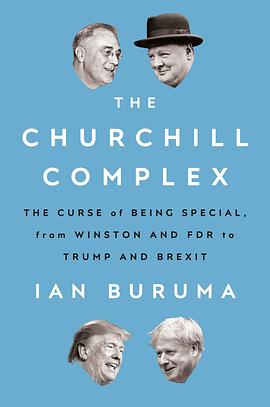
From one of its keenest observers, a brilliant, witty journey through the "special relationship" between England and America which has done so much to shape the world, from World War 2 to Brexit, through the lens of the fateful bonds between President and Prime Minister.
It's impossible to understand the last 75 years of American history, through to Trump and Brexit, without understanding the Anglo-American relationship, and specifically the bonds between presidents and prime ministers. FDR of course had Churchill; JFK famously had Macmillan, his consigliere during the Cuban Missile Crisis. Reagan found his ideological soul mate in Thatcher, and George W. Bush found his fellow believer, in religion and in war, in Tony Blair. And now, of course, it is impossible to understand the populist uprising in either country, from 2016 to the present, without reference to Trump and Boris Johnson, though ironically, they are also the key to understanding the special relationship's demise.
There are few things more certain in politics than that at some point, facing a threat to national security, a leader will evoke Winston Churchill to stand for brave leadership (and Neville Chamberlain to represent craven weakness). As Ian Buruma shows, in his dazzling short tour de force of storytelling and analysis, the mantle has in fact only grown more oppressive as nuanced historical understanding fades and is replaced by shallow myth. Absurd as it is to presume to say what Churchill would have thought about any current event, it's relatively certain he would have been horrified by the Iraq War and Brexit, to name two episodes dense with "Finest Hour" analogizing.
But The Churchill Complex is much more than a reflection on the weight of Churchill's legacy and its misuses. At its heart is a series of shrewd and absorbing character studies of the president-prime minster dyads, which in Ian Buruma's gifted hands serve as a master class in politics, diplomacy and abnormal psychology. It's never been a relationship of equals: from Churchill's desperate cajoling and conniving to keep FDR on side in the war on, British prime ministers have put much more stock in the relationship than their US counterparts did. For England, resigned to the loss of its once-great empire and the diminishment of its power, its close kinship to the world's greatest superpower would give it continued relevance, and serve as leverage to keep continental Europe in its place. As Buruma shows, this was almost always fool's gold. And now, even as the links between the Brexit vote and the 2016 US election are coming into sharper focus, the Anglo-American alliance has floundered on the rocks of the isolationism that is one of 2016's signal legacies. The Churchill Complex may not have a happy ending, but as with Ian Buruma's other works, piercing lucidity and elegant prose is its own form of lasting comfort.
It's impossible to understand the last 75 years of American history, through to Trump and Brexit, without understanding the Anglo-American relationship, and specifically the bonds between presidents and prime ministers. FDR of course had Churchill; JFK famously had Macmillan, his consigliere during the Cuban Missile Crisis. Reagan found his ideological soul mate in Thatcher, and George W. Bush found his fellow believer, in religion and in war, in Tony Blair. And now, of course, it is impossible to understand the populist uprising in either country, from 2016 to the present, without reference to Trump and Boris Johnson, though ironically, they are also the key to understanding the special relationship's demise.
There are few things more certain in politics than that at some point, facing a threat to national security, a leader will evoke Winston Churchill to stand for brave leadership (and Neville Chamberlain to represent craven weakness). As Ian Buruma shows, in his dazzling short tour de force of storytelling and analysis, the mantle has in fact only grown more oppressive as nuanced historical understanding fades and is replaced by shallow myth. Absurd as it is to presume to say what Churchill would have thought about any current event, it's relatively certain he would have been horrified by the Iraq War and Brexit, to name two episodes dense with "Finest Hour" analogizing.
But The Churchill Complex is much more than a reflection on the weight of Churchill's legacy and its misuses. At its heart is a series of shrewd and absorbing character studies of the president-prime minster dyads, which in Ian Buruma's gifted hands serve as a master class in politics, diplomacy and abnormal psychology. It's never been a relationship of equals: from Churchill's desperate cajoling and conniving to keep FDR on side in the war on, British prime ministers have put much more stock in the relationship than their US counterparts did. For England, resigned to the loss of its once-great empire and the diminishment of its power, its close kinship to the world's greatest superpower would give it continued relevance, and serve as leverage to keep continental Europe in its place. As Buruma shows, this was almost always fool's gold. And now, even as the links between the Brexit vote and the 2016 US election are coming into sharper focus, the Anglo-American alliance has floundered on the rocks of the isolationism that is one of 2016's signal legacies. The Churchill Complex may not have a happy ending, but as with Ian Buruma's other works, piercing lucidity and elegant prose is its own form of lasting comfort.
Occidentalism [Book] Goodreads Douban
author:
Ian Buruma
/
Avishai Margalit
publishing house:
Penguin Books
2005
- 3
other title:
Occidentalism: The West in the Eyes of Its Enemies
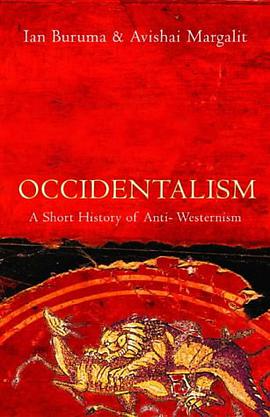
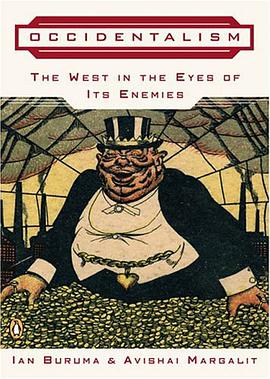
This "grandly illuminating study of two centuries of anti-Western ideas" ( Foreign Affairs ) traces the historical roots of a virulent set of stereotypes about Westerners and the West, a cluster of notions and prejudices that Ian Buruma and Avishai Margalit call Occidentalism. The path does not lead back to Islam but, in fact, back to the West itself. From nineteenth-century Germany and Russia to twentieth-century Japan, China, Southeast Asia, and the Middle East, Buruma and Margalit track the spread of these noxious ideas. Drawing on their formidable range and gift for synthesis to place modern terrorists in a long continuum of enemies of Western liberal society, Buruma and Margalit have written a book of extraordinary clarity and wide-ranging relevance.

A Tokyo Romance [Book] Douban Open Library
8.0 (5 ratings)
author:
Ian Buruma
publishing house:
Penguin Press
2018
- 3
other title:
A Tokyo romance
Includes bibliographical references and index.