
Kathryn Hunter — Actor (16)
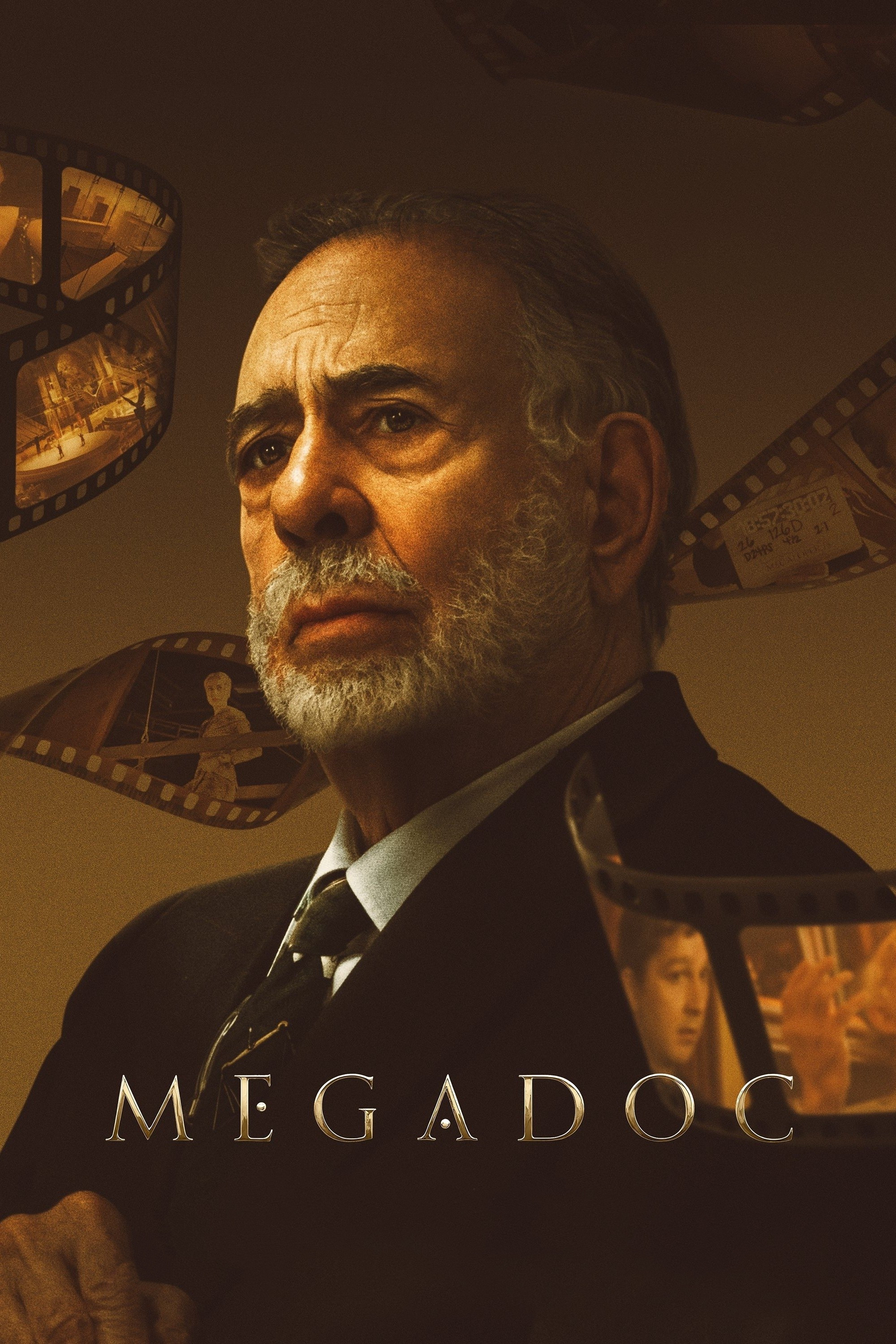

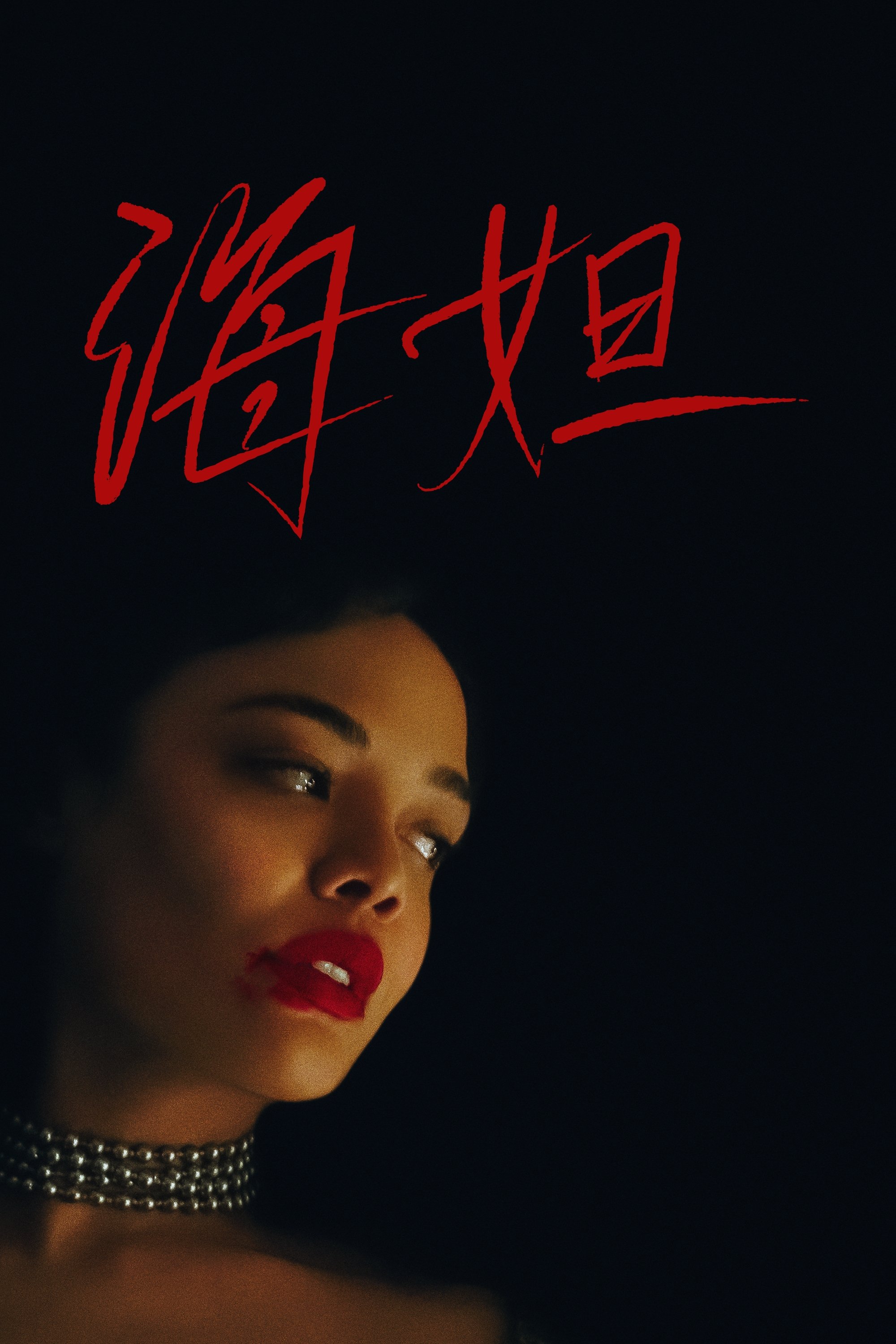
Hedda (2025) [Movie] TMDB IMDb WikiData Eggplant.place Douban Skybridge
Hedda
other title:
헤다
/
ヘッダ
…
Hedda Gabler finds herself torn between the lingering ache of a past love and the quiet suffocation of her present life. Over the course of one charged night, long-repressed desires and hidden tensions erupt—pulling her and everyone around her into a spiral of manipulation, passion, and betrayal.
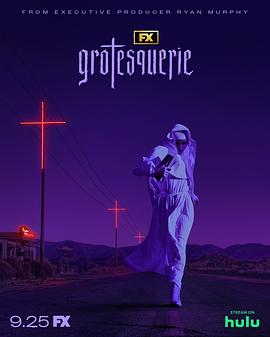
Grotesquerie (2024) [TV] Douban TMDB
Grotesquerie Season 1 part of TV Series: Grotesquerie
5.8 (6 ratings)
director:
瑞恩·墨菲
actor:
南希·纳什
/
米卡埃拉·戴蒙德
…
一个小社区正发生大量令人发指的罪行,路易斯侦探感觉这些行为仿佛都是某人或者某种存在在针对她。路易斯和女儿关系不好,更无法找卧病在床的丈夫求助,于是转向基督教报刊《基督卫报》的记者梅根修女求援。
梅根修女也有着糟糕的过去,曾见过人性至恶的一面。一方面她依旧坚信人性好的一面,另一方面又担心世界被邪恶污染。
随着调查推进,两人发现自己掉入了一张邪恶的大网,这里产生的问题远多于给出的答案。
梅根修女也有着糟糕的过去,曾见过人性至恶的一面。一方面她依旧坚信人性好的一面,另一方面又担心世界被邪恶污染。
随着调查推进,两人发现自己掉入了一张邪恶的大网,这里产生的问题远多于给出的答案。

The Front Room (2024) [Movie] Douban WikiData TMDB IMDb
The Front Room
director:
马克斯·艾格斯
/
Sam Eggers
actor:
安德鲁·伯纳普
/
布兰蒂·诺维德
…
other title:
前厅
/
더 프론트 룸
…
It tells the story of a young, newly pregnant couple who is forced to take in an ailing, estranged stepmother.
The Valley of Astonishment [Performance] Douban
The Valley of Astonishment
genre:
theater
playwright:
彼得·布鲁克
/
玛丽-海伦娜·伊斯坦尼
…
other title:
惊奇的山谷
director:
彼得·布鲁克
/
玛丽海伦娜·伊斯坦尼
…
actor:
Kathryn Hunter
/
Marcello Magni
/
Pitcho Womba Konga
第二届天津曹禺国际戏剧节暨第五届林兆华戏剧邀请展展演剧目
剧目简介
“当我们探索大脑的山峰和山谷,我们将抵达惊奇的山谷。”
想象一个世界,在这个世界中每个声音都有一个颜色,在这个世界中每个颜色都有一种味道,在这个世界中数字8是一个胖女士。这部惊人的新戏探索了那些用不同视角观察世界的真实的人的迷人经历。
《惊奇的山谷》是一次进入神秘的惊奇的人类大脑的万花筒般的旅程。它来自多年的神经学研究、真实的故事及法里德史诗般的神秘的诗《鸟的会议》。
导演简介
彼得·布鲁克(1925年—)是英国著名戏剧及电影导演,是上世纪五六十年代现代舞台剧的代表者,至今已创作超过70部作品。其力求创新和反传统的作风,对二十世纪的戏剧发展影响深远,被公认为是当今西方戏剧界最重要的导演之一。
他的戏剧理论著作《空的空间》是戏剧学院学生的必读书。他曾是英国皇家莎士比亚剧院的驻场导演,后赴法国巴黎创立国际戏剧研究中心进行戏剧实验。他的《摩诃婆罗多》以比《圣经》长9倍的印度史诗为蓝本,在露天剧场中演出9小时,创下历史之最。
剧院简介
巴黎北方剧院初建于1876年。1974年,彼得·布鲁克接手剧院成为其戏剧创作基地。其后,作为欧洲著名导演,他立足北方剧院,创作了很多经典、优秀的剧目。他说,一个古老的剧院是美丽的,但旧式的剧场空间限制了剧目的呈现。新剧场充满活力,但没有灵魂。如果我们恢复了影院完美的架构,它也将失去一些魅力,那也是一种缺憾。
剧目简介
“当我们探索大脑的山峰和山谷,我们将抵达惊奇的山谷。”
想象一个世界,在这个世界中每个声音都有一个颜色,在这个世界中每个颜色都有一种味道,在这个世界中数字8是一个胖女士。这部惊人的新戏探索了那些用不同视角观察世界的真实的人的迷人经历。
《惊奇的山谷》是一次进入神秘的惊奇的人类大脑的万花筒般的旅程。它来自多年的神经学研究、真实的故事及法里德史诗般的神秘的诗《鸟的会议》。
导演简介
彼得·布鲁克(1925年—)是英国著名戏剧及电影导演,是上世纪五六十年代现代舞台剧的代表者,至今已创作超过70部作品。其力求创新和反传统的作风,对二十世纪的戏剧发展影响深远,被公认为是当今西方戏剧界最重要的导演之一。
他的戏剧理论著作《空的空间》是戏剧学院学生的必读书。他曾是英国皇家莎士比亚剧院的驻场导演,后赴法国巴黎创立国际戏剧研究中心进行戏剧实验。他的《摩诃婆罗多》以比《圣经》长9倍的印度史诗为蓝本,在露天剧场中演出9小时,创下历史之最。
剧院简介
巴黎北方剧院初建于1876年。1974年,彼得·布鲁克接手剧院成为其戏剧创作基地。其后,作为欧洲著名导演,他立足北方剧院,创作了很多经典、优秀的剧目。他说,一个古老的剧院是美丽的,但旧式的剧场空间限制了剧目的呈现。新剧场充满活力,但没有灵魂。如果我们恢复了影院完美的架构,它也将失去一些魅力,那也是一种缺憾。
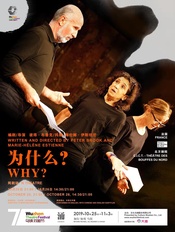
为什么? [Performance] Douban
Why?
genre:
theater
playwright:
彼得·布鲁克
/
玛丽·海伦娜·伊斯坦尼
2019年乌镇戏剧节剧目之一,时长约75分钟。
为什么是戏剧?它有什么用?是关于什么的?
我们将带着这些问题和许多其他问题一起踏上一段充满戏剧性和欢乐的旅程。我们会发现不仅我们,许多伟大的剧作家都受到了这些问题的启发。这就是“为什么”我们做《为什么?》。
“戏剧是一种非常危险的武器。”——这句话是在20世纪20年代由最有创意、最具创新精神的导演中的一位写下的。 他的名字叫梅耶荷德。他看到了整个俄罗斯30年代戏剧和艺术所经历的所有危险。他读到了我们所说的“不祥之兆”,但他没有停止,他直到最后一刻都希望革命能够胜利,并为此付出了他的生命。
海利·卡迈克尔、凯瑟琳·亨特 和马塞洛·马格尼这三位杰出的演员将为我们展现这个非常人性化、既有戏剧性的也有喜剧性的故事。
At the beginning of the 20th Century “why” and “how to do theatre“ became burning questions.
What was theatre about? How could it be more alive, more open to all? How could the actor be helped to be truer? What could be a new space? A new way of acting?
These questions and many others take us on an exploration joyful and dramatic. This is “why” we do Why?
“Theatre is a very dangerous weapon.” These words were written in the 1920s by one of the most creative, most innovative, directors the theatre has known. His name is Vsevolod Meyerhold. He saw all the menacing dangers that the theatre and art in general were going through in the 1930s in Russia. He read “the writing on the wall”, as we call it, but he did not stop. He hoped until the last minute that the Russian Revolution would win. Meyerhold paid for this with his life.
The three actors—Hayley Carmichael, Kathryn Hunter, and Marcello Magni—will unfold for us this very human story.
—Peter Brook and Marie-Hélène Estienne
为什么是戏剧?它有什么用?是关于什么的?
我们将带着这些问题和许多其他问题一起踏上一段充满戏剧性和欢乐的旅程。我们会发现不仅我们,许多伟大的剧作家都受到了这些问题的启发。这就是“为什么”我们做《为什么?》。
“戏剧是一种非常危险的武器。”——这句话是在20世纪20年代由最有创意、最具创新精神的导演中的一位写下的。 他的名字叫梅耶荷德。他看到了整个俄罗斯30年代戏剧和艺术所经历的所有危险。他读到了我们所说的“不祥之兆”,但他没有停止,他直到最后一刻都希望革命能够胜利,并为此付出了他的生命。
海利·卡迈克尔、凯瑟琳·亨特 和马塞洛·马格尼这三位杰出的演员将为我们展现这个非常人性化、既有戏剧性的也有喜剧性的故事。
At the beginning of the 20th Century “why” and “how to do theatre“ became burning questions.
What was theatre about? How could it be more alive, more open to all? How could the actor be helped to be truer? What could be a new space? A new way of acting?
These questions and many others take us on an exploration joyful and dramatic. This is “why” we do Why?
“Theatre is a very dangerous weapon.” These words were written in the 1920s by one of the most creative, most innovative, directors the theatre has known. His name is Vsevolod Meyerhold. He saw all the menacing dangers that the theatre and art in general were going through in the 1930s in Russia. He read “the writing on the wall”, as we call it, but he did not stop. He hoped until the last minute that the Russian Revolution would win. Meyerhold paid for this with his life.
The three actors—Hayley Carmichael, Kathryn Hunter, and Marcello Magni—will unfold for us this very human story.
—Peter Brook and Marie-Hélène Estienne
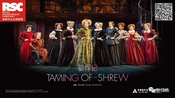
The Taming of the Shrew 2003年版 [Performance] Douban
part of Performance: The Taming of the Shrew
director:
Phyllida Lloyd
Prior to the first act, an induction frames the play as a "kind of history" played in front of a befuddled drunkard named Christopher Sly who is tricked into believing that he is a lord.
In the play performed for Sly, the "Shrew" is Katherina Minola, the eldest daughter of Baptista Minola, a lord in Padua. Katherina's temper is notorious and it is thought no man would ever wish to marry her. On the other hand, two men – Hortensio and Gremio – are eager to marry her younger sister Bianca. However, Baptista has sworn not to allow his younger daughter to marry before Katherina is wed, much to the despair of her suitors, who agree that they will work together to marry off Katherina so that they will be free to compete for Bianca.
The plot becomes more complex when Lucentio, who has recently come to Padua to attend university, sees Bianca and instantly falls in love with her. Lucentio overhears Baptista announce that he is on the lookout for tutors for his daughters, so he has his servant Tranio pretend to be him while he disguises himself as a Latin tutor named Cambio, so that he can woo Bianca behind Baptista's back.
In the meantime, Petruchio arrives in Padua, accompanied by his servant, Grumio. Petruchio tells his old friend Hortensio that he has set out to enjoy life after the death of his father and that his main goal is to wed. Hearing this, Hortensio seizes the opportunity to recruit Petruchio as a suitor for Katherina. He also has Petruchio present to Baptista a music tutor named Litio (Hortensio himself in disguise). Thus, Lucentio and Hortensio, pretending to be the teachers Cambio and Litio, attempt to woo Bianca unbeknownst to her father, and to one another.
Petruchio, to counter Katherina's shrewish nature, woos her with reverse psychology, pretending that every harsh thing she says or does is kind and gentle. Katherina allows herself to become engaged to Petruchio, and they are married in a farcical ceremony during which (amongst other things) he strikes the priest and drinks the communion wine, and then takes her home against her will. Once they are gone, Gremio and Tranio (disguised as Lucentio) formally bid for Bianca, with Tranio easily outbidding Gremio. However, in his zeal to win, he promises much more than the real Lucentio actually possesses, and Baptista determines that once Lucentio's father confirms the dowry, Bianca and Tranio can marry. Tranio thus decides that they will need someone to pretend to be Vincentio, Lucentio's father, at some point in the near future. Elsewhere, as part of their scheme, Tranio persuades Hortensio that Bianca is not worthy of his attentions, thus removing any problems he may cause.
Meanwhile, in Petruchio's house, he begins the "taming" of his new wife. She is refused food and clothing because nothing – according to Petruchio – is good enough for her; he claims perfectly cooked meat is overcooked, a beautiful dress doesn't fit right, and a stylish hat is not fashionable. He also sets about disagreeing with everything she says, and forcing her to agree with everything he says, no matter how absurd; on their way back to Padua to attend Bianca's wedding, she agrees with Petruchio that the sun is the moon, and proclaims that "if you please to call it a rush-candle,/Henceforth I vow it shall be so for me" (4.5.14–15). Along the way, they meet Vincentio who is also on his way to Padua, and Katherina agrees with Petruchio when he declares that Vincentio is a woman and then apologises to Vincentio when Petruchio tells her he is a man.
Meanwhile, back in Padua, Lucentio and Tranio convince a passing pedant to pretend to be Vincentio and confirm the dowry for Bianca. The man does so, and Baptista is happy for Bianca to wed Lucentio (actually Tranio in disguise). Bianca then secretly elopes with the real Lucentio. However, Vincentio arrives in Padua, and encounters the Pedant, who claims to be Lucentio's father. Tranio (still disguised as Lucentio) appears, and the Pedant acknowledges him to be his son Lucentio. There is much confusion about identities, and the real Vincentio is set to be arrested when the real Lucentio appears with his newly betrothed Bianca, and reveals all to a bewildered Baptista and Vincentio. Lucentio explains everything that has happened and all is forgiven by the two fathers.
Meanwhile, Hortensio has married a rich widow, and so in the final scene of the play there are three newly married couples at Baptista's banquet; Bianca and Lucentio, the widow and Hortensio, and Katherina and Petruchio. Because of the general opinion that Petruchio is married to a shrew, a quarrel breaks out about whose wife is the most obedient. Petruchio proposes a wager whereby each will send a servant to call for their wives, and whichever comes most obediently will have won the wager for her husband. Katherina is the only one of the three who comes, winning the wager for Petruchio. At the end of the play, after the other two wives have been hauled into the room by Katherina, she gives a speech on the subject of why wives should always obey their husbands and the play ends with Baptista, Hortensio and Lucentio marvelling at how successfully Petruchio has tamed the shrew.
In the play performed for Sly, the "Shrew" is Katherina Minola, the eldest daughter of Baptista Minola, a lord in Padua. Katherina's temper is notorious and it is thought no man would ever wish to marry her. On the other hand, two men – Hortensio and Gremio – are eager to marry her younger sister Bianca. However, Baptista has sworn not to allow his younger daughter to marry before Katherina is wed, much to the despair of her suitors, who agree that they will work together to marry off Katherina so that they will be free to compete for Bianca.
The plot becomes more complex when Lucentio, who has recently come to Padua to attend university, sees Bianca and instantly falls in love with her. Lucentio overhears Baptista announce that he is on the lookout for tutors for his daughters, so he has his servant Tranio pretend to be him while he disguises himself as a Latin tutor named Cambio, so that he can woo Bianca behind Baptista's back.
In the meantime, Petruchio arrives in Padua, accompanied by his servant, Grumio. Petruchio tells his old friend Hortensio that he has set out to enjoy life after the death of his father and that his main goal is to wed. Hearing this, Hortensio seizes the opportunity to recruit Petruchio as a suitor for Katherina. He also has Petruchio present to Baptista a music tutor named Litio (Hortensio himself in disguise). Thus, Lucentio and Hortensio, pretending to be the teachers Cambio and Litio, attempt to woo Bianca unbeknownst to her father, and to one another.
Petruchio, to counter Katherina's shrewish nature, woos her with reverse psychology, pretending that every harsh thing she says or does is kind and gentle. Katherina allows herself to become engaged to Petruchio, and they are married in a farcical ceremony during which (amongst other things) he strikes the priest and drinks the communion wine, and then takes her home against her will. Once they are gone, Gremio and Tranio (disguised as Lucentio) formally bid for Bianca, with Tranio easily outbidding Gremio. However, in his zeal to win, he promises much more than the real Lucentio actually possesses, and Baptista determines that once Lucentio's father confirms the dowry, Bianca and Tranio can marry. Tranio thus decides that they will need someone to pretend to be Vincentio, Lucentio's father, at some point in the near future. Elsewhere, as part of their scheme, Tranio persuades Hortensio that Bianca is not worthy of his attentions, thus removing any problems he may cause.
Meanwhile, in Petruchio's house, he begins the "taming" of his new wife. She is refused food and clothing because nothing – according to Petruchio – is good enough for her; he claims perfectly cooked meat is overcooked, a beautiful dress doesn't fit right, and a stylish hat is not fashionable. He also sets about disagreeing with everything she says, and forcing her to agree with everything he says, no matter how absurd; on their way back to Padua to attend Bianca's wedding, she agrees with Petruchio that the sun is the moon, and proclaims that "if you please to call it a rush-candle,/Henceforth I vow it shall be so for me" (4.5.14–15). Along the way, they meet Vincentio who is also on his way to Padua, and Katherina agrees with Petruchio when he declares that Vincentio is a woman and then apologises to Vincentio when Petruchio tells her he is a man.
Meanwhile, back in Padua, Lucentio and Tranio convince a passing pedant to pretend to be Vincentio and confirm the dowry for Bianca. The man does so, and Baptista is happy for Bianca to wed Lucentio (actually Tranio in disguise). Bianca then secretly elopes with the real Lucentio. However, Vincentio arrives in Padua, and encounters the Pedant, who claims to be Lucentio's father. Tranio (still disguised as Lucentio) appears, and the Pedant acknowledges him to be his son Lucentio. There is much confusion about identities, and the real Vincentio is set to be arrested when the real Lucentio appears with his newly betrothed Bianca, and reveals all to a bewildered Baptista and Vincentio. Lucentio explains everything that has happened and all is forgiven by the two fathers.
Meanwhile, Hortensio has married a rich widow, and so in the final scene of the play there are three newly married couples at Baptista's banquet; Bianca and Lucentio, the widow and Hortensio, and Katherina and Petruchio. Because of the general opinion that Petruchio is married to a shrew, a quarrel breaks out about whose wife is the most obedient. Petruchio proposes a wager whereby each will send a servant to call for their wives, and whichever comes most obediently will have won the wager for her husband. Katherina is the only one of the three who comes, winning the wager for Petruchio. At the end of the play, after the other two wives have been hauled into the room by Katherina, she gives a speech on the subject of why wives should always obey their husbands and the play ends with Baptista, Hortensio and Lucentio marvelling at how successfully Petruchio has tamed the shrew.

Drive Your Plow Over the Bones of the Dead [Performance] Douban
Drive Your Plow Over the Bones of the Dead
genre:
theater
playwright:
Olga Tokarczuk
other title:
糜骨之壤 / 犁过亡者的骨骸
theater:
Barbican Theatre
director:
Simon McBurney
actor:
Thomas Arnold
/
Johannes Flaschberger
/
Tamzin Griffin
/
Amanda Hadingue
/
Kathryn Hunter
…
World-renowned company Complicité return to our stage with a brand-new production based on Nobel prize-winning writer Olga Tokarczuk’s darkly comic novel, directed by Simon McBurney.
In the depths of winter in a small community on a remote Polish mountainside, men from the local hunting club are dying in mysterious circumstances and Janina – an eccentric older local woman, environmentalist and devoted astrologer – has her suspicions. She has been watching the animals with whom the community shares their isolated, rural home, and she believes they are acting strangely…
A thought-provoking, wry and otherworldly murder mystery, this is a tale about the cosmos, poetry, and the limitations and possibilities of activism.
Simon McBurney directs a new work for theatre based on Nobel Prize winning author Olga Tokarczuk’s acclaimed novel, which was shortlisted for the 2019 International Booker Prize.
In the depths of winter in a small community on a remote Polish mountainside, men from the local hunting club are dying in mysterious circumstances and Janina – an eccentric older local woman, environmentalist and devoted astrologer – has her suspicions. She has been watching the animals with whom the community shares their isolated, rural home, and she believes they are acting strangely…
A thought-provoking, wry and otherworldly murder mystery, this is a tale about the cosmos, poetry, and the limitations and possibilities of activism.
Simon McBurney directs a new work for theatre based on Nobel Prize winning author Olga Tokarczuk’s acclaimed novel, which was shortlisted for the 2019 International Booker Prize.
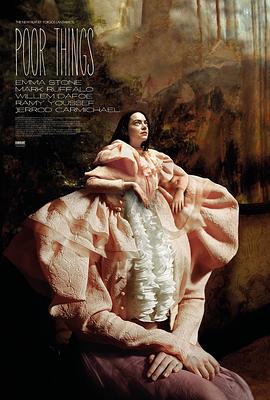
Poor Things (2023) [Movie] TMDB IMDb Douban Eggplant.place Skybridge WikiData
Poor Things
Star Wars: Andor (2022) [TV] Douban Eggplant.place Fantastika Skybridge TMDB
Andor Season 1 part of TV Series: Star Wars: Andor
In an era filled with danger, deception and intrigue, Cassian Andor will discover the difference he can make in the struggle against the tyrannical Galactic Empire. He embarks on a path that is destined to turn him into a rebel hero.

Megalopolis (2024) [Movie] Douban IMDb TMDB Skybridge WikiData
Megalopolis
other title:
메갈로폴리스
/
Megalópolis: Una fabula
…
Genius artist Cesar Catilina seeks to leap the City of New Rome into a utopian, idealistic future, while his opposition, Mayor Franklyn Cicero, remains committed to a regressive status quo, perpetuating greed, special interests, and partisan warfare. Torn between them is socialite Julia Cicero, the mayor’s daughter, whose love for Cesar has divided her loyalties, forcing her to discover what she truly believes humanity deserves.
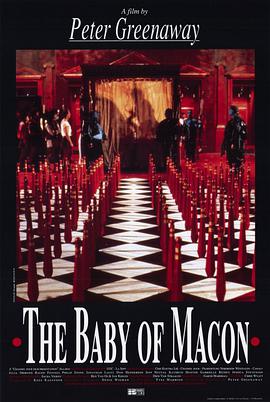

Flowers Season 1 (2016) [TV] Douban
Flowers Season 1 part of TV Series: Flowers
该剧描述一个功能失调的家庭如何确保自身的稳定。花儿一家人的性格全都古里古怪,导致他们难以团结一致。他们住在一间拥挤、肮脏、凌乱、破败、总是吱吱呀呀乱响的老房子里。毛瑞斯(Julian Barratt饰)是个儿童书作家,他的妻子狄波拉(Olivia Colman饰)是个 音乐教师。他们有一对双胞胎子女艾米(Sophia Di Martino饰)和唐纳德(Daniel Rigby饰),但他们爱上了同一个女孩阿比格(Georgina Campbell饰),天天争风吃醋。毛瑞斯的母亲海蒂(Leila Hoffman饰)也住在他们家中。狄波拉和毛瑞斯的婚姻很久以前就破裂了,但他们仍然没有离婚。毛瑞斯深受心魔和秘密折磨,狄波拉怀疑丈夫与给他的儿童书绘制插画的日本人瞬(Will Sharpe饰)在搅基。

Flowers Season 2 (2018) [TV] Douban
Flowers Season 2 part of TV Series: Flowers
古怪阴郁又催泪治愈的黑色喜剧,围绕着抑郁症和自杀话题,讲述一个功能失调的家庭和一个住家日本插画师的故事,自杀未遂不敢袒露抑郁痛苦的男主人,得不到丈夫关爱于是与建筑工调情的女主人,他们的龙凤胎儿女,沉浸在无用发明里的软蛋儿子和不敢出柜的古怪女儿,同时爱上了同一个女孩,还有一个不知来历的日本插画师男孩,似乎与男主人有着同性私情,每个人都有自己的秘密。男主角是来自《神奇动物管理员》的Julian Barratt,女主角是来自《小镇疑云》的Olivia Colman,并由日裔英国人Will Sharpe自编自导自演,他在片中扮演永远阳光的日本插画男孩,英剧的黑色幽默又掺杂着日剧的古怪治愈!