Vaclav Smil — 作者 (23)
Numbers Don't Lie: 71 Things You Need to Know About the World [图书] Goodreads
作者: Vaclav Smil publishing house: Viking 2020 - 10
Is flying dangerous? How much do the world's cows weigh? And what makes people happy?

From earth's nations and inhabitants, through the fuels and foods that energize them, to the transportation and inventions of our modern world - and how all of this affects the planet itself - in Numbers Don't Lie , Professor Vaclav Smil takes us on a fact-finding adventure, using surprising statistics and illuminating graphs to challenge lazy thinking.

Packed with 'well-I-never-knew-that' information and with fascinating and unusual examples throughout, we see how it is too soon to judge shale gas, that vaccination yields the best return on investment, and why electric cars aren't as great as we think (yet). There's a wonderful mix of science, history and wit, all in bite-sized chapters on a broad range of topics.

Should you trust unemployment figures? Is China's rise unstoppable? And what's worse for the environment: your car or mobile phone?

Unclouded by pessimism or optimism and unafraid of big questions, Smil explains why calls for the Anthropocene era may be premature but why the Paris Agreement does not go far enough. These issues are not straightforward and progress takes longer than you think, but with Smil as our authoritative and entertaining guide we get a healthy shot of realism.

Urgent and essential, Numbers Don't Lie is a powerful rallying cry for interrogating what you take to be true in these significant times. Smil is on a mission to make facts matter, because after all, numbers may not lie, but which truth do they convey?
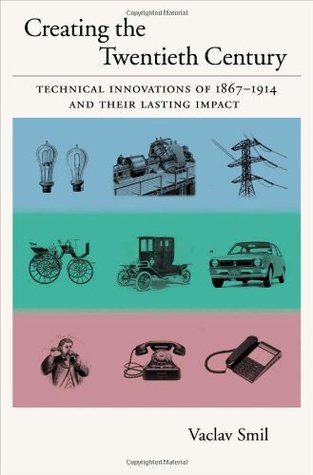
Creating the Twentieth Century: Technical Innovations of 1867-1914 and Their Lasting Impact [图书] Goodreads
作者: Vaclav Smil publishing house: Oxford University Press 2005 - 8
The period between 1867 and 1914 remains the greatest watershed in human history since the emergence of settled agricultural the time when an expansive civilization based on synergy of fuels, science, and technical innovation was born. At its beginnings in the 1870s were dynamite, the telephone, photographic film, and the first light bulbs. Its peak decade - the astonishing 1880s - brought electricity - generating plants, electric motors, steam turbines, the gramophone, cars, aluminum production, air-filled rubber tires, and prestressed concrete. And its post-1900 period saw the first airplanes, tractors, radio signals and plastics, neon lights and assembly line production. This book is a systematic interdisciplinary account of the history of this outpouring of European and American intellect and of its truly epochal consequences. It takes a close look at four fundamental classes of these epoch-making formation, diffusion, and standardization of electric
systems; invention and rapid adoption of internal combustion engines; the unprecedented pace of new chemical syntheses and material substitutions; and the birth of a new information age. These chapters are followed by an evaluation of the lasting impact these advances had on the 20th century, that is, the creation of high-energy societies engaged in mass production aimed at improving standards of living.
Grand Transitions [图书] 豆瓣
作者: Vaclav Smil publishing house: Oxford University Press 2021 - 3
What makes the modern world work? The answer to this deceptively simple question lies in four "grand transitions" of civilization--in populations, agriculture, energy, and economics--which have transformed the way we live.
Societies that have undergone all four transitions emerge into an era of radically different population dynamics, food surpluses (and waste), abundant energy use, and expanding economic opportunities. Simultaneously, in other parts of the world, hundreds of millions remain largely untouched by these developments.
Through erudite storytelling, Vaclav Smil investigates the fascinating and complex interactions of these transitions. He argues that the moral imperative to share modernity's benefits has become more acute with increasing economic inequality, but addressing this imbalance would make it exceedingly difficult to implement the changes necessary for the long-term preservation of the environment. Thus, managing the fifth transition--environmental changes from natural-resource depletion, biodiversity loss, and global warming--will determine the success or eventual failure of the grand transitions that have made the world we live in today.
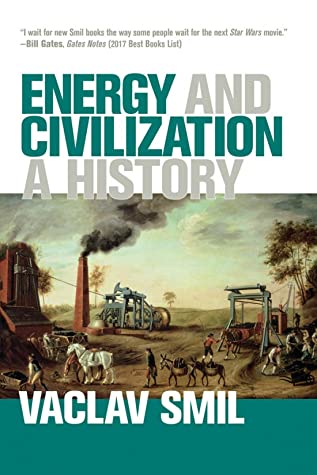
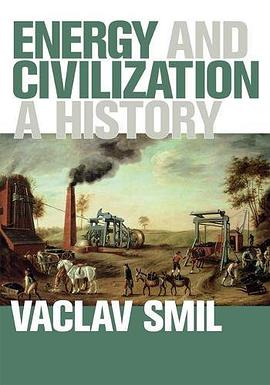
Energy and Civilization: A History [图书]
作者: Vaclav Smil publishing house: The MIT Press 2017 - 5
Energy is the only universal currency; it is necessary for getting anything done. The conversion of energy on Earth ranges from terra-forming forces of plate tectonics to cumulative erosive effects of raindrops. Life on Earth depends on the photosynthetic conversion of solar energy into plant biomass. Humans have come to rely on many more energy flows—ranging from fossil fuels to photovoltaic generation of electricity—for their civilized existence. In this monumental history, Vaclav Smil provides a comprehensive account of how energy has shaped society, from pre-agricultural foraging societies through today's fossil fuel–driven civilization.
Humans are the only species that can systematically harness energies outside their bodies, using the power of their intellect and an enormous variety of artifacts—from the simplest tools to internal combustion engines and nuclear reactors. The epochal transition to fossil fuels affected everything: agriculture, industry, transportation, weapons, communication, economics, urbanization, quality of life, politics, and the environment. Smil describes humanity's energy eras in panoramic and interdisciplinary fashion, offering readers a magisterial overview. This book is an extensively updated and expanded version of Smil's
(1994). Smil has incorporated an enormous amount of new material, reflecting the dramatic developments in energy studies over the last two decades and his own research over that time.
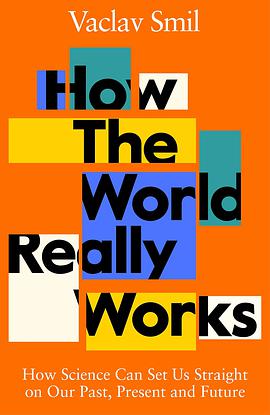
How the World Really Works [图书] 豆瓣
作者: Vaclav Smil publishing house: Viking 2021 - 10
We have never had so much information at our fingertips and yet most of us simply don't understand how our world really works. Professor Vaclav Smil is not a pessimist or an optimist, he is a scientist, and this book is a much-needed reality check on topics ranging from food production and nutrition, through energy and the environment, to globalization and the future. For example, the carbon footprint of meat is well known, but did you know that the equivalent of five tablespoons of diesel fuel goes into the production of each greenhouse-grown, medium-size, supermarket-bought tomato? The gap between belief and reality is vast.
Drawing on the latest science, tackling sources of misinformation head on and championing a rational, fact-based approach, in How the World Really Works Smil shows, for example, why the planet isn't 'suffocating' (even burning all the planet's fossil fuels would reduce oxygen levels by just 0.25 per cent) and that globalization isn't 'inevitable' and nor should it be (the stupidity of allowing 70 per cent of the world's rubber gloves to be made in just one factory became glaringly obvious in 2020).
Ultimately, Smil answers the most profound question of our age: are we irrevocably doomed or is a brighter utopia ahead? Compelling, data-rich and revisionist, this wonderfully broad, interdisciplinary masterpiece finds faults with both extremes. Looking at the world through this quantitative lens reveals hidden truths that change the way we see our past, present and uncertain future.
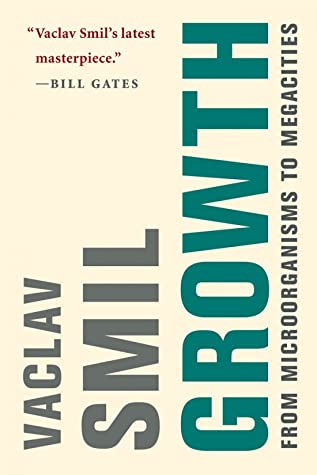
Growth: From Microorganisms to Megacities [图书] Goodreads
作者: Vaclav Smil publishing house: The MIT Press 2019 - 9
Growth has been both an unspoken and an explicit aim of our individual and collective striving. It governs the lives of microorganisms and galaxies; it shapes the capabilities of our extraordinarily large brains and the fortunes of our economies. Growth is manifested in annual increments of continental crust, a rising gross domestic product, a child's growth chart, the spread of cancerous cells. In this magisterial book, Vaclav Smil offers systematic investigation of growth in nature and society, from tiny organisms to the trajectories of empires and civilizations.
Smil takes readers from bacterial invasions through animal metabolisms to megacities and the global economy. He begins with organisms whose mature sizes range from microscopic to enormous, looking at disease-causing microbes, the cultivation of staple crops, and human growth from infancy to adulthood. He examines the growth of energy conversions and man-made objects that enable economic activities—developments that have been essential to civilization. Finally, he looks at growth in complex systems, beginning with the growth of human populations and proceeding to the growth of cities. He considers the challenges of tracing the growth of empires and civilizations, explaining that we can chart the growth of organisms across individual and evolutionary time, but that the progress of societies and economies, not so linear, encompasses both decline and renewal. The trajectory of modern civilization, driven by competing imperatives of material growth and biospheric limits, Smil tells us, remains uncertain.
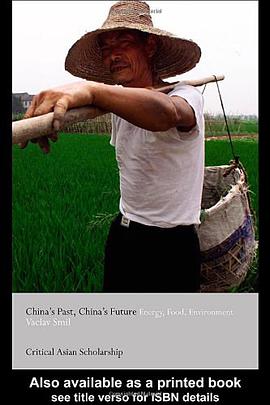
China's Past, China's Future [图书] 豆瓣
作者: Vaclav Smil publishing house: Routledge 2003
China has a population of 1.3 billion people which puts strain on her natural resources. This volume, by one of the leading scholars on the earth's biosphere, is the result of a lifetime of study, and provides the fullest account yet of the environmental challenges that China faces. The author examines China's energy resources, their uses, impacts and prospects, from the 1970s oil crisis to the present day, before analysing the key question of how China can best produce enough food to feed its enormous population.
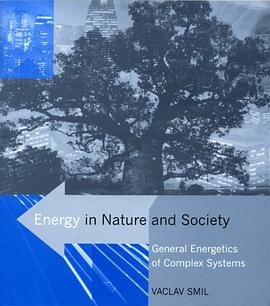
Energy in Nature and Society [图书] 豆瓣
作者: Vaclav Smil publishing house: The MIT Press 2008 - 1
Energy in Nature and Society is a systematic and exhaustive analysis of all the major energy sources, storages, flows, and conversions that have shaped the evolution of the biosphere and civilization. Vaclav Smil uses fundamental unifying metrics (most notably for power density and energy intensity) to provide an integrated framework for analyzing all segments of energetics (the study of energy flows and their transformations). The book explores not only planetary energetics (such as solar radiation and geomorphic processes) and bioenergetics (photosynthesis, for example) but also human energetics (such as metabolism and thermoregulation), tracing them from hunter-gatherer and agricultural societies through modern-day industrial civilization. Included are chapters on heterotrophic conversions, traditional agriculture, preindustrial complexification, fossil fuels, fossil-fueled civilization, the energetics of food, and the implications of energetics for the environment. The book concludes with an examination of general patterns, trends, and socioeconomic considerations of energy use today, looking at correlations between energy and value, energy and the economy, energy and quality of life, and energy futures. Throughout the book, Smil chooses to emphasize the complexities and peculiarities of the real world, and the counterintuitive outcomes of many of its processes, over abstract models. Energy in Nature and Society provides a unique, comprehensive, single-volume analysis and reference source on all important energy matters, from natural to industrial energy flows, from fuels to food, from the Earth's formation to possible energy futures, and can serve as a text for courses in energy studies, global ecology, earth systems science, biology, and chemistry. Vaclav Smil is Distinguished Professor at the University of Manitoba and the author of many books, including Energy at the Crossroads (2003), The Earth's Biosphere: Evolution, Dynamics, and Change (2002), and Energies: An Illustrated Guide to the Biosphere and Civilization (1998), all of which are published by The MIT Press.
Energy [图书] 豆瓣 Goodreads
作者: Vaclav Smil publishing house: Oneworld Publications 2006 - 4 其它标题: Energy: A Beginner's Guide
As Einstein pointed out in his famous equation, E=MC2, all matter can be described as energy. It is everywhere; it is everything. In this engaging book, prolific author and academic Vaclav Smil provides an introduction to the far-reaching term and gives the reader a greater understanding of energy's place in both past and present society. Starting with an explanation of the concept, he goes on to cover such exciting topics as the inner workings of the human body, and the race for more efficient and environmentally friendly fuels. With global warming becoming a mainstream political issue, this guide will help shed light on the science behind it and efforts to prevent it, and how our seemingly insignificant daily decisions affect energy consumption. Whether you're after insight or dinner table conversation, "Energy: A Beginner's Guide" will amaze and inform, uncovering the science behind one of the most important concepts in our universe.
Energy and Civilization [图书] 豆瓣 Goodreads
作者: Vaclav Smil publishing house: The MIT Press 2017 - 5
A comprehensive account of how energy has shaped society throughout history, from pre-agricultural foraging societies through today's fossil fuel–driven civilization.
"I wait for new Smil books the way some people wait for the next 'Star Wars' movie. In his latest book, Energy and Civilization: A History, he goes deep and broad to explain how innovations in humans' ability to turn energy into heat, light, and motion have been a driving force behind our cultural and economic progress over the past 10,000 years.
―Bill Gates, Gates Notes, Best Books of the Year
Energy is the only universal currency; it is necessary for getting anything done. The conversion of energy on Earth ranges from terra-forming forces of plate tectonics to cumulative erosive effects of raindrops. Life on Earth depends on the photosynthetic conversion of solar energy into plant biomass. Humans have come to rely on many more energy flows―ranging from fossil fuels to photovoltaic generation of electricity―for their civilized existence. In this monumental history, Vaclav Smil provides a comprehensive account of how energy has shaped society, from pre-agricultural foraging societies through today's fossil fuel–driven civilization.
Humans are the only species that can systematically harness energies outside their bodies, using the power of their intellect and an enormous variety of artifacts―from the simplest tools to internal combustion engines and nuclear reactors. The epochal transition to fossil fuels affected everything: agriculture, industry, transportation, weapons, communication, economics, urbanization, quality of life, politics, and the environment. Smil describes humanity's energy eras in panoramic and interdisciplinary fashion, offering readers a magisterial overview. This book is an extensively updated and expanded version of Smil's Energy in World History (1994). Smil has incorporated an enormous amount of new material, reflecting the dramatic developments in energy studies over the last two decades and his own research over that time.
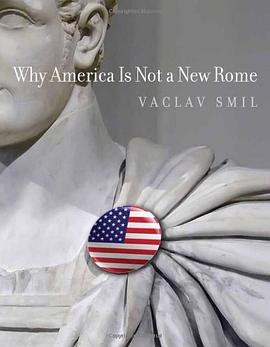
Why America Is Not a New Rome [图书] 豆瓣
作者: Vaclav Smil publishing house: The MIT Press 2010 - 1
America's post--Cold War strategic dominance and its pre-recession affluence inspired pundits to make celebratory comparisons to ancient Rome at its most powerful. Now, with America no longer perceived as invulnerable, engaged in protracted fighting in Iraq and Afghanistan, and suffering the worst economic downturn since the Great Depression, comparisons are to the bloated, decadent, ineffectual later Empire. In Why America Is Not a New Rome, Vaclav Smil looks at these comparisons in detail, going deeper than the facile analogy-making of talk shows and glossy magazine articles. He finds profound differences. On the surface, the vision of America as the new Rome has resonance. There are obvious, intriguing parallels and amusing--even disconcerting--similarities. The America-Rome analogy deserves a closer look, and this is what Smil, a scientist and a lifelong student of Roman history, offers. He does this by focusing on several fundamental concerns: the very meaning of empire; the actual extent and nature of Roman and American power; the role of knowledge and innovation in the two states and the importance of machines and energy sources; and demographic and economic basics--population dynamics, illness, death, wealth, and misery. America is not a latter-day Rome, Smil finds, and we need to understand this in order to look ahead without the burden of counterproductive analogies. Superficial similarities do not imply long-term political, demographic, or economic outcomes identical to Rome's.
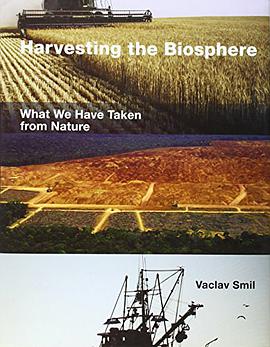
Harvesting the Biosphere [图书] 豆瓣
作者: Vaclav Smil publishing house: The MIT Press 2012
The biosphere -- the Earth's thin layer of life -- dates from nearly four billion years ago, when the first simple organisms appeared. Many species have exerted enormous influence on the biosphere's character and productivity, but none has transformed the Earth in so many ways and on such a scale as Homo sapiens. In Harvesting the Biosphere, Vaclav Smil offers an interdisciplinary and quantitative account of human claims on the biosphere's stores of living matter, from prehistory to the present day. Smil examines all harvests -- from prehistoric man's hunting of megafauna to modern crop production -- and all uses of harvested biomass, including energy, food, and raw materials. Without harvesting of the biomass, Smil points out, there would be no story of human evolution and advancing civilization; but at the same time, the increasing extent and intensity of present-day biomass harvests are changing the very foundations of civilization's well-being. In his detailed and comprehensive account, Smil presents the best possible quantifications of past and current global losses in order to assess the evolution and extent of biomass harvests. Drawing on the latest work in disciplines ranging from anthropology to environmental science, Smil offers a valuable long-term, planet-wide perspective on human-caused environmental change.
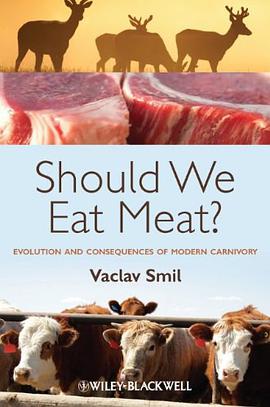
Should We Eat Meat [图书] 豆瓣
作者: Vaclav Smil publishing house: Wiley-Blackwell 2013 - 5
Meat eating is often a contentious subject, whether considering the technical, ethical, environmental, political, or health-related aspects of production and consumption. This book is a wide-ranging and interdisciplinary examination and critique of meat consumption by humans, throughout their evolution and around the world. Setting the scene with a chapter on meat's role in human evolution and its growing influence during the development of agricultural practices, the book goes on to examine modern production systems, their efficiencies, outputs, and impacts. The major global trends of meat consumption are described in order to find out what part its consumption plays in changing modern diets in countries around the world. The heart of the book addresses the consequences of the "massive carnivory" of western diets, looking at the inefficiencies of production and at the huge impacts on land, water, and the atmosphere. Health impacts are also covered, both positive and negative. In conclusion, the author looks forward at his vision of "rational meat eating", where environmental and health impacts are reduced, animals are treated more humanely, and alternative sources of protein make a higher contribution. Should We Eat Meat? is not an ideological tract for or against carnivorousness but rather a careful evaluation of meat's roles in human diets and the environmental and health consequences of its production and consumption. It will be of interest to a wide readership including professionals and academics in food and agricultural production, human health and nutrition, environmental science, and regulatory and policy making bodies around the world.
Energy Myths and Realities [图书] 豆瓣
作者: Vaclav Smil publishing house: AEI Press 2010 - 8
There are many misconceptions about the future of global energy often presented as fact by the media, politicians, business leaders, activists, and even scientists_wasting time and money and hampering the development of progressive energy policies. Energy Myths and Realities: Bringing Science to the Energy Policy Debate debunks the most common fallacies to make way for a constructive, scientific approach to the global energy challenge. When will the world run out of oil? Should nuclear energy be adopted on a larger scale? Are ethanol and wind power viable sources of energy for the future? Vaclav Smil advises the public to be wary of exaggerated claims and impossible promises. The global energy transition will be prolonged and expensive_and hinges on the development of an extensive new infrastructure. Established technologies and traditional energy sources are persistent and adaptable enough to see the world through that transition. Energy Myths and Realities brings a scientific perspective to an issue often dominated by groundless assertions, unfounded claims, and uncritical thinking. Before we can create sound energy policies for the future, we must renounce the popular myths that cloud our judgment and impede true progress.