Vaclav Smil — 作者 (23)
能量与文明 [图书] 豆瓣 Goodreads
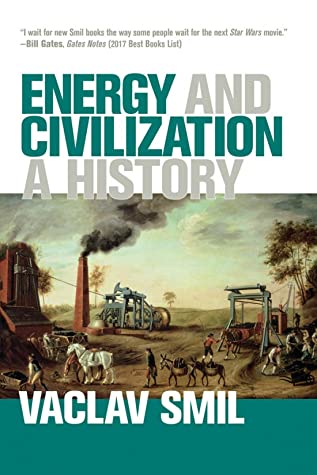
Energy and Civilization: A History
作者: [加] 瓦茨拉夫·斯米尔 / Vaclav Smil 译者: 吴玲玲 / 李竹 publishing house: 后浪丨九州出版社 2021 - 5
比尔•盖茨2017年度书单图书
高效利用能量是提升综合国力的引擎
华语世界首次引进,加拿大历史学家、科学家瓦茨拉夫•斯米尔能量研究重磅之作
从远古采集社会到化石能源时代,全景展现能量利用与文明进化互相交织的历史
以能量为标尺,对人类社会的进化进行的一次有文化的、精确的分析
“能量是唯一的通用货币”,开篇语振聋发聩,奠定了本书讨论的基调
◎ 编辑推荐
这是一本“无所不包”的大书,既大气磅礴,宏观地回溯了采集社会到油气时代,人类从在恶劣的自然环境下搜寻食物,到创造出足以更改地球面貌的毁灭性武器的壮阔历程,又细致入微,从都江堰的具体建设与规划思路到阿兹特克浮园的天才设计,从冬宫广场上美丽的亚历山大石柱的竖立过程到爱迪生与特斯拉的电流之争。……有趣的小故事,缀满了这部注定不易阅读的著作。不论是想要从能量的角度一窥人类文明史,还是希望看到一本另类的“百科全书”,抑或因对人类的化石能源使用现状感到忧虑而希望找到出路,你都能从本书中得到一些答案。
◎ 内容简介
能量是唯一的通用货币。要想达成任何目标,能量都必不可少。大到改变板块构造的力量,小到微小雨滴的累积侵蚀,能量无处不在。通过将太阳辐射的能量转换为植物质的光合作用,生命得以形成。人类文明的存续更是依赖于各种能量——从化石燃料的采掘到光能发电。本书作者瓦茨拉夫•斯米尔对人类社会的发展与能量的利用之间关系的重要历史作了全面解读,范围上至远古采集社会,近至当今的以化石能源为基础的工业文明。
作为唯一能够系统地利用体外能量的物种,人类利用能量来开发智力、制作种类丰富的器具——从最简单的工具,到现代最先进的内燃机和核反应堆。对化石燃料的利用开启了一个新纪元,对人类的农业、工业、交通运输、战争与武器、信息与通讯、经济、政治、城市化、生活质量和环境等方方面面产生了深远影响。斯米尔的研究是跨学科的,给读者提供了一个权威的、全景式的视角。本书基于斯米尔1994年的《世界历史中的能量》,并作了大量增补和修订。在本书中,斯米尔组织了大量的新材料,这在很大程度上反映了过去二十年中人们在能量研究方面取得的新成果。
◎ 专业推荐
《能量与文明》一书的作者从人类发展进程对能量的依赖谈起,诠释了能量利用对人类文明的作用,提出了一方面需要提高能量的利用效率、合理地利用能量,另一方面是要改善能量的来源,从两个方面推动人类文明的进步。尤其是作者对能量与文明的相互关系做了严谨的思考,期望能量更多用于推动文明的进步,而不是相反。总之,《能量与文明》一书值得能源工作者阅读和回味。
——李俊峰,国家应对气候变化战略研究和国际合作中心原主任、扎耶德未来能源奖终身成就奖得主
这本书回答了一个非常重要的问题——如何客观地衡量一个地区、一个时代的文明水平。全书通过俯视人类的文明史,给出了一个令人信服的答案,那就是使用能量这个标尺。《能量与文明》一书能够让我理解文明如何发展至今,又将向何处去。
——吴军,计算机科学家
这是一本基于扎实研究的心血之作。只知道什么时代的人用什么方式取得能量是远远不够的,高级知识都在细节之中:这种方式和那种方式相比,消耗多少、取得多少、浪费多少,由此产生的社会组织方式的差异是什么?当时的人被能量限制而未必能意识到能量这条线索,我们却可以掌握这个思考维度。
——万维钢,科学作家、得到APP《精英日课》专栏作者
有些读者试图从思想和主义的角度理解文明,但实际上,那些都是被修饰过无数次的说辞。想要拨开各种迷雾,就要从资源、武器、人口上入手。而这三要素都是由能量转换效率、获取能量的成本决定的。这本书,扎实就扎实在这里。
——卓克,科普作者
能量是贯穿宇宙运行、文明演进、社会建构、产业创新的通行货币。这本《能量与文明》揭示的这个道理,令我震撼。全书糅合了历史学家、科学家、工程师、经济学家、社会学家的综合功力,帮助读者在一个全新侧面,重新了解我们所生活的世界及与之互动的社会。
——王文,中国人民大学重阳金融研究院执行院长、国务院参事室金融研究中心研究员
人类社会数千年,如何生产与使用能量始终是最大的主题。在这本书里,作者将人类社会运用能量的轨迹清晰地描述了出来,堪称智者的深邃思考。喜欢思考底层逻辑的你不应该错过。
——仇子龙,中国科学院脑科学与智能技术卓越创新中心高级研究员、神经科学国家重点实验室副主任
《能量与文明》追溯了人类的故事,以及能量是如何被人类发现、生产、使用、食用以及浪费的。能量在很多方面统治着我们人类社会。这是一本细节丰富的书,所以有些人可能会觉得似乎有些出于意料。在书的最后部分,作者总结了能量对文明所有主要领域的影响。这是一本让人类思考自身命运与未来的好书。
——李大光,中国科学院大学教授
作者瓦茨拉夫•斯米尔教授通过一个有趣的角度给我们展示了,人类文明的发展史就是人类控制能量的演化历史。通过详细分析不同历史时期人类能够利用的能源形式,让我们能够更深入地理解能量是如何改变人类文明的发展并且驱动其进步的,很是值得一读。
——苟利军,中国科学院国家天文台研究员、中国科学院大学天文学教授、《中国国家天文》杂志执行总编
在《能量与文明》中,斯米尔深入而广泛地解释了人类将能量转化为热、光和运动的能力方面的创新,是如何在过去一万年中推动我们的文化和经济进步的。——比尔•盖茨
一部充满智慧、饱含怜悯的重要著作。
——《外交》(Foreign Affairs)
他(斯米尔)悄悄塑造了整个世界对能量的看法。
——《科学》(Science)
斯米尔是一个不允许真相被政治遮蔽的作家。
——《纽约书评》(New York Review of Books)
人类所完成的一切都取决于我们获取能量的能力。有关能量如何影响人类文明,瓦茨拉夫•斯米尔是全世界顶尖的研究者。毫无疑问,《能量与文明》将是21世纪有关这一课题的最重要的指南。
——伊恩•莫里斯,历史学家、斯坦福大学古典学教授,《西方将主宰多久》作者
斯米尔的非凡见解为我们阐释了能量在创造文明、维持文明的延续中的核心地位。本书立足于科学,对文明之间的差异保持敏感,内容翔实,是关于这一主题的权威性著作。
——大卫•E. 奈,历史学家,《百年流水线》《电气美国》作者
Enriching the Earth [图书] 豆瓣
作者: Vaclav Smil publishing house: MIT Press 2001 - 2
The industrial synthesis of ammonia from nitrogen and hydrogen has been of greater fundamental importance to the modern world than the invention of the airplane, nuclear energy, space flight, or television. The expansion of the world's population from 1.6 billion people in 1900 to today's six billion would not have been possible without the synthesis of ammonia.In Enriching the Earth, Vaclav Smil begins with a discussion of nitrogen's unique status in the biosphere, its role in crop production, and traditional means of supplying the nutrient. He then looks at various attempts to expand natural nitrogen flows through mineral and synthetic fertilizers. The core of the book is a detailed narrative of the discovery of ammonia synthesis by Fritz Haber -- a discovery scientists had sought for over one hundred years -- and its commercialization by Carl Bosch and the chemical company BASF. Smil also examines the emergence of the large-scale nitrogen fertilizer industry and analyzes the extent of global dependence on the Haber-Bosch process and its biospheric consequences. Finally, it looks at the role of nitrogen in civilization and, in a sad coda, describes the lives of Fritz Haber and Carl Bosch after the discovery of ammonia synthesis.
Japan's Dietary Transition and Its Impacts [图书] 豆瓣
作者: Vaclav Smil / Kazuhiko Kobayashi publishing house: The MIT Press 2012 - 8
In a little more than a century, the Japanese diet has undergone a dramatic transformation. In 1900, a plant-based, near-subsistence diet was prevalent, with virtually no consumption of animal protein. By the beginning of the twenty-first century, Japan's consumption of meat, fish, and dairy had increased markedly (although it remained below that of high-income Western countries). This dietary transition was a key aspect of the modernization that made Japan the world's second largest economic power by the end of the twentieth century, and it has helped Japan achieve an enviable demographic primacy, with the world's highest life expectancy and a population that is generally healthier (and thinner) than that of other modern affluent countries. In this book, Vaclav Smil and Kazuhiko Kobayashi examine Japan's gradual but profound dietary change and investigate its consequences for health, longevity, and the environment. Smil and Kobayashi point out that the gains in the quality of Japan's diet have exacted a price in terms of land use changes, water requirements, and marine resource depletion; and because Japan imports so much of its food, this price is paid globally as well as domestically. The book's systematic analysis of these diverse consequences offers the most detailed account of Japan's dietary transition available in English.
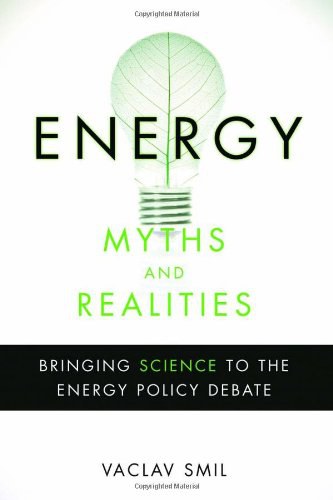
Energy Myths and Realities [图书] 豆瓣
作者: Vaclav Smil publishing house: AEI Press 2010 - 8
There are many misconceptions about the future of global energy often presented as fact by the media, politicians, business leaders, activists, and even scientists_wasting time and money and hampering the development of progressive energy policies. Energy Myths and Realities: Bringing Science to the Energy Policy Debate debunks the most common fallacies to make way for a constructive, scientific approach to the global energy challenge. When will the world run out of oil? Should nuclear energy be adopted on a larger scale? Are ethanol and wind power viable sources of energy for the future? Vaclav Smil advises the public to be wary of exaggerated claims and impossible promises. The global energy transition will be prolonged and expensive_and hinges on the development of an extensive new infrastructure. Established technologies and traditional energy sources are persistent and adaptable enough to see the world through that transition. Energy Myths and Realities brings a scientific perspective to an issue often dominated by groundless assertions, unfounded claims, and uncritical thinking. Before we can create sound energy policies for the future, we must renounce the popular myths that cloud our judgment and impede true progress.
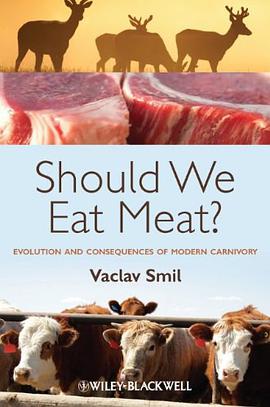
Should We Eat Meat [图书] 豆瓣
作者: Vaclav Smil publishing house: Wiley-Blackwell 2013 - 5
Meat eating is often a contentious subject, whether considering the technical, ethical, environmental, political, or health-related aspects of production and consumption. This book is a wide-ranging and interdisciplinary examination and critique of meat consumption by humans, throughout their evolution and around the world. Setting the scene with a chapter on meat's role in human evolution and its growing influence during the development of agricultural practices, the book goes on to examine modern production systems, their efficiencies, outputs, and impacts. The major global trends of meat consumption are described in order to find out what part its consumption plays in changing modern diets in countries around the world. The heart of the book addresses the consequences of the "massive carnivory" of western diets, looking at the inefficiencies of production and at the huge impacts on land, water, and the atmosphere. Health impacts are also covered, both positive and negative. In conclusion, the author looks forward at his vision of "rational meat eating", where environmental and health impacts are reduced, animals are treated more humanely, and alternative sources of protein make a higher contribution. Should We Eat Meat? is not an ideological tract for or against carnivorousness but rather a careful evaluation of meat's roles in human diets and the environmental and health consequences of its production and consumption. It will be of interest to a wide readership including professionals and academics in food and agricultural production, human health and nutrition, environmental science, and regulatory and policy making bodies around the world.
Harvesting the Biosphere [图书] 豆瓣
作者: Vaclav Smil publishing house: The MIT Press 2012
The biosphere -- the Earth's thin layer of life -- dates from nearly four billion years ago, when the first simple organisms appeared. Many species have exerted enormous influence on the biosphere's character and productivity, but none has transformed the Earth in so many ways and on such a scale as Homo sapiens. In Harvesting the Biosphere, Vaclav Smil offers an interdisciplinary and quantitative account of human claims on the biosphere's stores of living matter, from prehistory to the present day. Smil examines all harvests -- from prehistoric man's hunting of megafauna to modern crop production -- and all uses of harvested biomass, including energy, food, and raw materials. Without harvesting of the biomass, Smil points out, there would be no story of human evolution and advancing civilization; but at the same time, the increasing extent and intensity of present-day biomass harvests are changing the very foundations of civilization's well-being. In his detailed and comprehensive account, Smil presents the best possible quantifications of past and current global losses in order to assess the evolution and extent of biomass harvests. Drawing on the latest work in disciplines ranging from anthropology to environmental science, Smil offers a valuable long-term, planet-wide perspective on human-caused environmental change.
Why America Is Not a New Rome [图书] 豆瓣
作者: Vaclav Smil publishing house: The MIT Press 2010 - 1
America's post--Cold War strategic dominance and its pre-recession affluence inspired pundits to make celebratory comparisons to ancient Rome at its most powerful. Now, with America no longer perceived as invulnerable, engaged in protracted fighting in Iraq and Afghanistan, and suffering the worst economic downturn since the Great Depression, comparisons are to the bloated, decadent, ineffectual later Empire. In Why America Is Not a New Rome, Vaclav Smil looks at these comparisons in detail, going deeper than the facile analogy-making of talk shows and glossy magazine articles. He finds profound differences. On the surface, the vision of America as the new Rome has resonance. There are obvious, intriguing parallels and amusing--even disconcerting--similarities. The America-Rome analogy deserves a closer look, and this is what Smil, a scientist and a lifelong student of Roman history, offers. He does this by focusing on several fundamental concerns: the very meaning of empire; the actual extent and nature of Roman and American power; the role of knowledge and innovation in the two states and the importance of machines and energy sources; and demographic and economic basics--population dynamics, illness, death, wealth, and misery. America is not a latter-day Rome, Smil finds, and we need to understand this in order to look ahead without the burden of counterproductive analogies. Superficial similarities do not imply long-term political, demographic, or economic outcomes identical to Rome's.
Energy and Civilization [图书] 豆瓣 Goodreads
作者: Vaclav Smil publishing house: The MIT Press 2017 - 5
A comprehensive account of how energy has shaped society throughout history, from pre-agricultural foraging societies through today's fossil fuel–driven civilization.
"I wait for new Smil books the way some people wait for the next 'Star Wars' movie. In his latest book, Energy and Civilization: A History, he goes deep and broad to explain how innovations in humans' ability to turn energy into heat, light, and motion have been a driving force behind our cultural and economic progress over the past 10,000 years.
―Bill Gates, Gates Notes, Best Books of the Year
Energy is the only universal currency; it is necessary for getting anything done. The conversion of energy on Earth ranges from terra-forming forces of plate tectonics to cumulative erosive effects of raindrops. Life on Earth depends on the photosynthetic conversion of solar energy into plant biomass. Humans have come to rely on many more energy flows―ranging from fossil fuels to photovoltaic generation of electricity―for their civilized existence. In this monumental history, Vaclav Smil provides a comprehensive account of how energy has shaped society, from pre-agricultural foraging societies through today's fossil fuel–driven civilization.
Humans are the only species that can systematically harness energies outside their bodies, using the power of their intellect and an enormous variety of artifacts―from the simplest tools to internal combustion engines and nuclear reactors. The epochal transition to fossil fuels affected everything: agriculture, industry, transportation, weapons, communication, economics, urbanization, quality of life, politics, and the environment. Smil describes humanity's energy eras in panoramic and interdisciplinary fashion, offering readers a magisterial overview. This book is an extensively updated and expanded version of Smil's Energy in World History (1994). Smil has incorporated an enormous amount of new material, reflecting the dramatic developments in energy studies over the last two decades and his own research over that time.
Energy [图书] 豆瓣 Goodreads
作者: Vaclav Smil publishing house: Oneworld Publications 2006 - 4 其它标题: Energy: A Beginner's Guide
As Einstein pointed out in his famous equation, E=MC2, all matter can be described as energy. It is everywhere; it is everything. In this engaging book, prolific author and academic Vaclav Smil provides an introduction to the far-reaching term and gives the reader a greater understanding of energy's place in both past and present society. Starting with an explanation of the concept, he goes on to cover such exciting topics as the inner workings of the human body, and the race for more efficient and environmentally friendly fuels. With global warming becoming a mainstream political issue, this guide will help shed light on the science behind it and efforts to prevent it, and how our seemingly insignificant daily decisions affect energy consumption. Whether you're after insight or dinner table conversation, "Energy: A Beginner's Guide" will amaze and inform, uncovering the science behind one of the most important concepts in our universe.
Energy in Nature and Society [图书] 豆瓣
作者: Vaclav Smil publishing house: The MIT Press 2008 - 1
Energy in Nature and Society is a systematic and exhaustive analysis of all the major energy sources, storages, flows, and conversions that have shaped the evolution of the biosphere and civilization. Vaclav Smil uses fundamental unifying metrics (most notably for power density and energy intensity) to provide an integrated framework for analyzing all segments of energetics (the study of energy flows and their transformations). The book explores not only planetary energetics (such as solar radiation and geomorphic processes) and bioenergetics (photosynthesis, for example) but also human energetics (such as metabolism and thermoregulation), tracing them from hunter-gatherer and agricultural societies through modern-day industrial civilization. Included are chapters on heterotrophic conversions, traditional agriculture, preindustrial complexification, fossil fuels, fossil-fueled civilization, the energetics of food, and the implications of energetics for the environment. The book concludes with an examination of general patterns, trends, and socioeconomic considerations of energy use today, looking at correlations between energy and value, energy and the economy, energy and quality of life, and energy futures. Throughout the book, Smil chooses to emphasize the complexities and peculiarities of the real world, and the counterintuitive outcomes of many of its processes, over abstract models. Energy in Nature and Society provides a unique, comprehensive, single-volume analysis and reference source on all important energy matters, from natural to industrial energy flows, from fuels to food, from the Earth's formation to possible energy futures, and can serve as a text for courses in energy studies, global ecology, earth systems science, biology, and chemistry. Vaclav Smil is Distinguished Professor at the University of Manitoba and the author of many books, including Energy at the Crossroads (2003), The Earth's Biosphere: Evolution, Dynamics, and Change (2002), and Energies: An Illustrated Guide to the Biosphere and Civilization (1998), all of which are published by The MIT Press.
China's Past, China's Future [图书] 豆瓣
作者: Vaclav Smil publishing house: Routledge 2003
China has a population of 1.3 billion people which puts strain on her natural resources. This volume, by one of the leading scholars on the earth's biosphere, is the result of a lifetime of study, and provides the fullest account yet of the environmental challenges that China faces. The author examines China's energy resources, their uses, impacts and prospects, from the 1970s oil crisis to the present day, before analysing the key question of how China can best produce enough food to feed its enormous population.
Growth: From Microorganisms to Megacities [图书] Goodreads
作者: Vaclav Smil publishing house: The MIT Press 2019 - 9
Growth has been both an unspoken and an explicit aim of our individual and collective striving. It governs the lives of microorganisms and galaxies; it shapes the capabilities of our extraordinarily large brains and the fortunes of our economies. Growth is manifested in annual increments of continental crust, a rising gross domestic product, a child's growth chart, the spread of cancerous cells. In this magisterial book, Vaclav Smil offers systematic investigation of growth in nature and society, from tiny organisms to the trajectories of empires and civilizations.
Smil takes readers from bacterial invasions through animal metabolisms to megacities and the global economy. He begins with organisms whose mature sizes range from microscopic to enormous, looking at disease-causing microbes, the cultivation of staple crops, and human growth from infancy to adulthood. He examines the growth of energy conversions and man-made objects that enable economic activities—developments that have been essential to civilization. Finally, he looks at growth in complex systems, beginning with the growth of human populations and proceeding to the growth of cities. He considers the challenges of tracing the growth of empires and civilizations, explaining that we can chart the growth of organisms across individual and evolutionary time, but that the progress of societies and economies, not so linear, encompasses both decline and renewal. The trajectory of modern civilization, driven by competing imperatives of material growth and biospheric limits, Smil tells us, remains uncertain.
How the World Really Works [图书] 豆瓣
作者: Vaclav Smil publishing house: Viking 2021 - 10
We have never had so much information at our fingertips and yet most of us simply don't understand how our world really works. Professor Vaclav Smil is not a pessimist or an optimist, he is a scientist, and this book is a much-needed reality check on topics ranging from food production and nutrition, through energy and the environment, to globalization and the future. For example, the carbon footprint of meat is well known, but did you know that the equivalent of five tablespoons of diesel fuel goes into the production of each greenhouse-grown, medium-size, supermarket-bought tomato? The gap between belief and reality is vast.
Drawing on the latest science, tackling sources of misinformation head on and championing a rational, fact-based approach, in How the World Really Works Smil shows, for example, why the planet isn't 'suffocating' (even burning all the planet's fossil fuels would reduce oxygen levels by just 0.25 per cent) and that globalization isn't 'inevitable' and nor should it be (the stupidity of allowing 70 per cent of the world's rubber gloves to be made in just one factory became glaringly obvious in 2020).
Ultimately, Smil answers the most profound question of our age: are we irrevocably doomed or is a brighter utopia ahead? Compelling, data-rich and revisionist, this wonderfully broad, interdisciplinary masterpiece finds faults with both extremes. Looking at the world through this quantitative lens reveals hidden truths that change the way we see our past, present and uncertain future.
Energy and Civilization: A History [图书]
作者: Vaclav Smil publishing house: The MIT Press 2017 - 5
Energy is the only universal currency; it is necessary for getting anything done. The conversion of energy on Earth ranges from terra-forming forces of plate tectonics to cumulative erosive effects of raindrops. Life on Earth depends on the photosynthetic conversion of solar energy into plant biomass. Humans have come to rely on many more energy flows—ranging from fossil fuels to photovoltaic generation of electricity—for their civilized existence. In this monumental history, Vaclav Smil provides a comprehensive account of how energy has shaped society, from pre-agricultural foraging societies through today's fossil fuel–driven civilization.
Humans are the only species that can systematically harness energies outside their bodies, using the power of their intellect and an enormous variety of artifacts—from the simplest tools to internal combustion engines and nuclear reactors. The epochal transition to fossil fuels affected everything: agriculture, industry, transportation, weapons, communication, economics, urbanization, quality of life, politics, and the environment. Smil describes humanity's energy eras in panoramic and interdisciplinary fashion, offering readers a magisterial overview. This book is an extensively updated and expanded version of Smil's
(1994). Smil has incorporated an enormous amount of new material, reflecting the dramatic developments in energy studies over the last two decades and his own research over that time.
Grand Transitions [图书] 豆瓣
作者: Vaclav Smil publishing house: Oxford University Press 2021 - 3
What makes the modern world work? The answer to this deceptively simple question lies in four "grand transitions" of civilization--in populations, agriculture, energy, and economics--which have transformed the way we live.
Societies that have undergone all four transitions emerge into an era of radically different population dynamics, food surpluses (and waste), abundant energy use, and expanding economic opportunities. Simultaneously, in other parts of the world, hundreds of millions remain largely untouched by these developments.
Through erudite storytelling, Vaclav Smil investigates the fascinating and complex interactions of these transitions. He argues that the moral imperative to share modernity's benefits has become more acute with increasing economic inequality, but addressing this imbalance would make it exceedingly difficult to implement the changes necessary for the long-term preservation of the environment. Thus, managing the fifth transition--environmental changes from natural-resource depletion, biodiversity loss, and global warming--will determine the success or eventual failure of the grand transitions that have made the world we live in today.