Robert Harper — 作者 (4)
Practical Foundations for Programming Languages [图书] 豆瓣
作者: Robert Harper 出版社: Cambridge University Press 2016 - 4
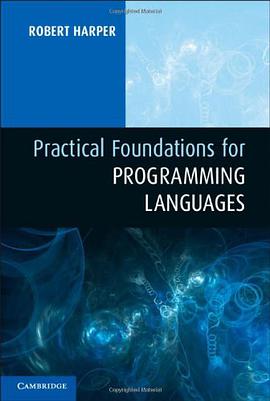
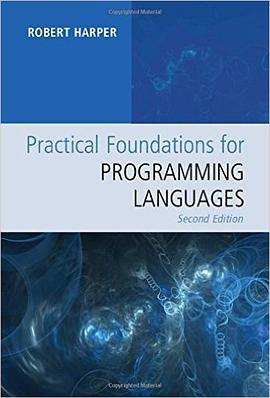
This text develops a comprehensive theory of programming languages based on type systems and structural operational semantics. Language concepts are precisely defined by their static and dynamic semantics, presenting the essential tools both intuitively and rigorously while relying on only elementary mathematics. These tools are used to analyze and prove properties of languages and provide the framework for combining and comparing language features. The broad range of concepts includes fundamental data types such as sums and products, polymorphic and abstract types, dynamic typing, dynamic dispatch, subtyping and refinement types, symbols and dynamic classification, parallelism and cost semantics, and concurrency and distribution. The methods are directly applicable to language implementation, to the development of logics for reasoning about programs, and to the formal verification language properties such as type safety. This thoroughly revised second edition includes exercises at the end of nearly every chapter and a new chapter on type refinements.
Practical Foundations for Programming Languages [图书] 豆瓣
作者: Robert Harper 出版社: Cambridge University Press 2012 - 11
In this innovative book, Professor Robert Harper offers a fresh perspective on the fundamentals of programming languages through the use of type theory. Whereas most textbooks on this subject emphasize taxonomy, Harper instead emphasizes genetics, examining the building blocks from which all programming languages are constructed. The result is an introduction to programming theory that is both accessible and practical.
The Little Typer [图书] Goodreads 豆瓣
作者: Daniel P. Friedman / David Thrane Christiansen 出版社: MIT Press 2018 - 10
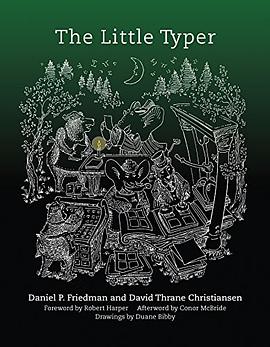
An introduction to dependent types, demonstrating the most beautiful aspects, one step at a time. A program's type describes its behavior. Dependent types are a first-class part of a language, and are much more powerful than other kinds of types; using just one language for types and programs allows program descriptions to be as powerful as the programs they describe. The Little Typer explains dependent types, beginning with a very small language that looks very much like Scheme and extending it to cover both programming with dependent types and using dependent types for mathematical reasoning. Readers should be familiar with the basics of a Lisp-like programming language, as presented in the first four chapters of The Little Schemer. The first five chapters of The Little Typer provide the needed tools to understand dependent types; the remaining chapters use these tools to build a bridge between mathematics and programming. Readers will learn that tools they know from programming-pairs, lists, functions, and recursions-can also capture patterns of reasoning. The Little Typer does not attempt to teach either practical programming skills or a fully rigorous approach to type. Instead, it demonstrates the most beautiful aspects as simply as possible, one step at a time.
Practical Foundations for Programming Languages [图书] 谷歌图书
作者: Robert Harper 出版社: Cambridge University Press 2016 - 4
This text develops a comprehensive theory of programming languages based on type systems and structural operational semantics. Language concepts are precisely defined by their static and dynamic semantics, presenting the essential tools both intuitively and rigorously while relying on only elementary mathematics. These tools are used to analyze and prove properties of languages and provide the framework for combining and comparing language features. The broad range of concepts includes fundamental data types such as sums and products, polymorphic and abstract types, dynamic typing, dynamic dispatch, subtyping and refinement types, symbols and dynamic classification, parallelism and cost semantics, and concurrency and distribution. The methods are directly applicable to language implementation, to the development of logics for reasoning about programs, and to the formal verification language properties such as type safety. This thoroughly revised second edition includes exercises at the end of nearly every chapter and a new chapter on type refinements.