Samuel Beckett — Author (77)
Cap au pire [Book] Douban
Mal vu mal dit [Book] Douban
* Écrit en français en 1980.
« Fasciné par le principe du philosophe irlandais Berkeley selon lequel « être c’est être perçu », Samuel Beckett l’applique ici, dans Mal vu mal dit, à l’acte d’écriture. Si le décor – un cabanon situé dans la caillasse d’une lande irlandaise – est relativement facile à planter car la nature, les couleurs, les objets, se laissent percevoir et décrire, comment peut-on percevoir les êtres ? Va-t-elle se laisser voir, se laisser dire, ou bien va-t-elle demeurer indicible, cette vieille femme vêtue tout de « noir immaculé », qui ne quitte sa masure et ne s’aventure à fouler l’herbe grise que pour aller visiter une tombe d’un « blanc hurlant » ? Avec quel regard parvenir à la saisir ? Un conflit s’instaure entre pensée et vision, entre ce que voit, ou croit voir l’œil ouvert, acharné, aux aguets, et ce que voit l’œil enfin fermé, paupières closes pour que puissent naître les « chimères » lorsque « l’œil couve sa pitance. Assoupi dans son noir à lui ». Tantôt la vieille femme est immobile, vue sous tel ou tel angle précis, comme soudain figée par l’objectif d’un photographe ; tantôt elle est parcourue d’un frémissement, ses lèvres se meuvent en un sourire infime, la voici alors douée du mouvement que seule lui confère la pensée de celui qui la crée. Ces deux regards possibles s’embrument parfois et se troublent comme se trouble aussi le rythme des mots lorsqu’ils cherchent à cerner ces insaisissables que sont le réel et son « contrepoison » : l’imaginaire ».
« Fasciné par le principe du philosophe irlandais Berkeley selon lequel « être c’est être perçu », Samuel Beckett l’applique ici, dans Mal vu mal dit, à l’acte d’écriture. Si le décor – un cabanon situé dans la caillasse d’une lande irlandaise – est relativement facile à planter car la nature, les couleurs, les objets, se laissent percevoir et décrire, comment peut-on percevoir les êtres ? Va-t-elle se laisser voir, se laisser dire, ou bien va-t-elle demeurer indicible, cette vieille femme vêtue tout de « noir immaculé », qui ne quitte sa masure et ne s’aventure à fouler l’herbe grise que pour aller visiter une tombe d’un « blanc hurlant » ? Avec quel regard parvenir à la saisir ? Un conflit s’instaure entre pensée et vision, entre ce que voit, ou croit voir l’œil ouvert, acharné, aux aguets, et ce que voit l’œil enfin fermé, paupières closes pour que puissent naître les « chimères » lorsque « l’œil couve sa pitance. Assoupi dans son noir à lui ». Tantôt la vieille femme est immobile, vue sous tel ou tel angle précis, comme soudain figée par l’objectif d’un photographe ; tantôt elle est parcourue d’un frémissement, ses lèvres se meuvent en un sourire infime, la voici alors douée du mouvement que seule lui confère la pensée de celui qui la crée. Ces deux regards possibles s’embrument parfois et se troublent comme se trouble aussi le rythme des mots lorsqu’ils cherchent à cerner ces insaisissables que sont le réel et son « contrepoison » : l’imaginaire ».
Le monde et le pantalon [Book] Douban
Le Dépeupleur [Book] Douban
* Texte en prose écrit en français, ébauché en 1966 et terminé en 1970.
Comme un thème que propose un compositeur, auquel les interprètes musiciens peuvent apporter toutes sortes de variations personnelles, c’est un thème que Samuel Beckett nous propose dans Le Dépeupleur. Il crée avec une rigueur mathématique et géométrique un microcosme totalement clos, un « cylindre surbaissé » qu’il peuple d’une foule d’êtres captifs. Il y fait régner des castes, des hiérarchies très précises, et des lois extrêmement rigoureuses. Pour autant, l’interprétation du thème reste ouverte et c’est même dans la multiplicité des lectures qu’il suscite que réside son infinie richesse.
Comme un thème que propose un compositeur, auquel les interprètes musiciens peuvent apporter toutes sortes de variations personnelles, c’est un thème que Samuel Beckett nous propose dans Le Dépeupleur. Il crée avec une rigueur mathématique et géométrique un microcosme totalement clos, un « cylindre surbaissé » qu’il peuple d’une foule d’êtres captifs. Il y fait régner des castes, des hiérarchies très précises, et des lois extrêmement rigoureuses. Pour autant, l’interprétation du thème reste ouverte et c’est même dans la multiplicité des lectures qu’il suscite que réside son infinie richesse.
Têtes-mortes [Book] Douban
« Le jardinier coupe les têtes mortes de son rosier s'il veut qu'il soit florissant. Les pétales recueillis continueront à offrir leur parfum. Ainsi de l'écrivain qui confie à la publication ce qui a fleuri sous sa plume, puis va poursuivant son œuvre. »
* D'un ouvrage abandonné. Fragment de prose écrit en anglais en 1956. Première publication : From an Abandoned Work, dans Trinity News, vol. 3, n°17, juin 1956 et (révisé) dans Evergreen Review, vol. 1, n°3, 1957. Traduction française par Ludovic et Agnès Janvier en collaboration avec l'auteur.
« Comme bien des protagonistes dans l'œuvre de Samuel Beckett, le personnage est ici en route non pas " pour quelque part, mais tout simplement en route ”. Il va donc, tombant parfois, se relevant, vieillissant, se détériorant, ne cessant d'évoquer le passé " Passé, passé, il y a une place dans mon cœur pour le passé. ” Mais il hait le mouvement, il ne s'arrête pour contempler les choses que si elles sont immobiles, fixes, enracinées. Il ne supporte pas le vol des oiseaux pas plus que jadis il n'avait supporté de voir sa mère gesticuler à la fenêtre. Peut-être l"a-t-il tuée comme il a tué son père, comme il voudrait sans doute se tuer pour que cesse " cette affreuse bougeotte que j’ai toujours eue ”. »
Edith Fournier
* Assez. Texte écrit en français en 1966. Pré-publication dans La Quinzaine littéraire, n°1, 1-15 avril 1966. Première publication aux Éditions de Minuit en 1966, sous forme d'une plaquette au tirage limité.
« Il erre aussi ce couple improbable tant est grande la différence de leurs âges. La femme nous raconte leurs étranges tribulations et leurs menus plaisirs. Ils sont bientôt tous deux si courbés, le tronc à l’horizontale, qu’ils ne voient plus que le tapis de fleurs sur les collines parcourues sans relâche, main dans la main. Ils sont disparates et pourtant identiques car tout ce qu’elle ressent émane toujours de lui, ses pensées, ses questions, ses désirs. D’aucuns verront là une relation de maître à esclave, quasi l’évocation d’un syndrome de Stockholm. Quoi qu’il en soit, se retrouvant maintenant seule après sa “ disgrâce supposée ” ou peut-être la mort de l’homme, et vieillissant à son tour, c’est un poignant hymne à l’amour que cette femme nous livre. “ Je ne sais plus le temps qu’il fait. Mais du temps de ma vie il était d’une douceur éternelle ”, dit-elle. De ce temps où, au repos, elle et lui étaient “ pliés en trois, emboîtés l’un dans l’autre. Deuxième équerre aux genoux. Moi à l’intérieur ” la sensation demeure : “ Je le sens la nuit contre moi. ” De ce seul temps où elle a vécu elle veut finalement effacer tous les détails et ne garder : “ Rien que nous deux nous traînant dans les fleurs. ” »
Edith Fournier
* Imagination morte imaginez. Texte écrit en français en 1965. Pré-publication dans Les Lettres Nouvelles, numéro d’octobre-novembre 1965. Première publication aux Éditions de Minuit en 1965, sous forme d’une plaquette au tirage limité.
* Bing. Texte écrit en français en 1966. Première publication aux Éditions de Minuit en 1966, sous forme d’une plaquette au tirage limité.
* Sans. Texte écrit en français en 1969. Pré-publication dans La Quinzaine littéraire, n°82, 1-15 novembre 1969. Première publication aux Éditions de Minuit en 1969, sous forme d’une plaquette au tirage limité.
« Il aura fallu que l’être s’égare par tant de faux chemins, qu’il se fourvoie sur tant de fausses routes, avant de parvenir enfin au vrai refuge calme et serein où règne l’absence de toutes choses. Là, maître de toute sa raison, l’être muet enfin sans souvenir demeure dans un monde sans temps, sans bruit et sans mouvement. Mais le “ vrai refuge ” s’effondre et voici que l’être est seul debout dans un monde de sable gris cendre, sans relief, sans issue et sans fin, où gisent alentour les ruines répandues du refuge aboli, oublié. Ici le dépouillement du langage s’allie à une structure d’une telle cohérence qu’elle se fait elle-même langage et se charge de sens. Au delà des mots, il y a le jeu de leur disposition et de leur répétition à l’intérieur des phrases ; au delà des phrases, le jeu de leur disposition et de leur répétition au cours du texte. Dans l’œuvre de Samuel Beckett apparaît souvent son goût pour les mathématiques, les nombres, l’élégance de leur langage et le jeu des combinaisons possibles qu’elles permettent. Ici le mathématicien s’est associé au poète. C’est la même mélopée que, dans une disposition différente, nous entendons, nous éprouvons, nous vivons une seconde fois. Mais c’est peut-être aussi une autre voix qui répète à sa manière la même litanie, le même poème. Le “ Petit corps soudé gris cendre cœur battant face aux lointains ” n’est peut-être pas le seul. Chacun seul “ debout ”, chacun ayant à l’avenir “ un pas un seul tout seul ” à faire, ce sont peut-être deux êtres qui, chacun dans ses ruines, chacun dans son refuge sans issue, tour à tour rêve en proie aux chimères et s’éveille enfin à “ l’air gris sans temps ”. »
Edith Fournier
* D'un ouvrage abandonné. Fragment de prose écrit en anglais en 1956. Première publication : From an Abandoned Work, dans Trinity News, vol. 3, n°17, juin 1956 et (révisé) dans Evergreen Review, vol. 1, n°3, 1957. Traduction française par Ludovic et Agnès Janvier en collaboration avec l'auteur.
« Comme bien des protagonistes dans l'œuvre de Samuel Beckett, le personnage est ici en route non pas " pour quelque part, mais tout simplement en route ”. Il va donc, tombant parfois, se relevant, vieillissant, se détériorant, ne cessant d'évoquer le passé " Passé, passé, il y a une place dans mon cœur pour le passé. ” Mais il hait le mouvement, il ne s'arrête pour contempler les choses que si elles sont immobiles, fixes, enracinées. Il ne supporte pas le vol des oiseaux pas plus que jadis il n'avait supporté de voir sa mère gesticuler à la fenêtre. Peut-être l"a-t-il tuée comme il a tué son père, comme il voudrait sans doute se tuer pour que cesse " cette affreuse bougeotte que j’ai toujours eue ”. »
Edith Fournier
* Assez. Texte écrit en français en 1966. Pré-publication dans La Quinzaine littéraire, n°1, 1-15 avril 1966. Première publication aux Éditions de Minuit en 1966, sous forme d'une plaquette au tirage limité.
« Il erre aussi ce couple improbable tant est grande la différence de leurs âges. La femme nous raconte leurs étranges tribulations et leurs menus plaisirs. Ils sont bientôt tous deux si courbés, le tronc à l’horizontale, qu’ils ne voient plus que le tapis de fleurs sur les collines parcourues sans relâche, main dans la main. Ils sont disparates et pourtant identiques car tout ce qu’elle ressent émane toujours de lui, ses pensées, ses questions, ses désirs. D’aucuns verront là une relation de maître à esclave, quasi l’évocation d’un syndrome de Stockholm. Quoi qu’il en soit, se retrouvant maintenant seule après sa “ disgrâce supposée ” ou peut-être la mort de l’homme, et vieillissant à son tour, c’est un poignant hymne à l’amour que cette femme nous livre. “ Je ne sais plus le temps qu’il fait. Mais du temps de ma vie il était d’une douceur éternelle ”, dit-elle. De ce temps où, au repos, elle et lui étaient “ pliés en trois, emboîtés l’un dans l’autre. Deuxième équerre aux genoux. Moi à l’intérieur ” la sensation demeure : “ Je le sens la nuit contre moi. ” De ce seul temps où elle a vécu elle veut finalement effacer tous les détails et ne garder : “ Rien que nous deux nous traînant dans les fleurs. ” »
Edith Fournier
* Imagination morte imaginez. Texte écrit en français en 1965. Pré-publication dans Les Lettres Nouvelles, numéro d’octobre-novembre 1965. Première publication aux Éditions de Minuit en 1965, sous forme d’une plaquette au tirage limité.
* Bing. Texte écrit en français en 1966. Première publication aux Éditions de Minuit en 1966, sous forme d’une plaquette au tirage limité.
* Sans. Texte écrit en français en 1969. Pré-publication dans La Quinzaine littéraire, n°82, 1-15 novembre 1969. Première publication aux Éditions de Minuit en 1969, sous forme d’une plaquette au tirage limité.
« Il aura fallu que l’être s’égare par tant de faux chemins, qu’il se fourvoie sur tant de fausses routes, avant de parvenir enfin au vrai refuge calme et serein où règne l’absence de toutes choses. Là, maître de toute sa raison, l’être muet enfin sans souvenir demeure dans un monde sans temps, sans bruit et sans mouvement. Mais le “ vrai refuge ” s’effondre et voici que l’être est seul debout dans un monde de sable gris cendre, sans relief, sans issue et sans fin, où gisent alentour les ruines répandues du refuge aboli, oublié. Ici le dépouillement du langage s’allie à une structure d’une telle cohérence qu’elle se fait elle-même langage et se charge de sens. Au delà des mots, il y a le jeu de leur disposition et de leur répétition à l’intérieur des phrases ; au delà des phrases, le jeu de leur disposition et de leur répétition au cours du texte. Dans l’œuvre de Samuel Beckett apparaît souvent son goût pour les mathématiques, les nombres, l’élégance de leur langage et le jeu des combinaisons possibles qu’elles permettent. Ici le mathématicien s’est associé au poète. C’est la même mélopée que, dans une disposition différente, nous entendons, nous éprouvons, nous vivons une seconde fois. Mais c’est peut-être aussi une autre voix qui répète à sa manière la même litanie, le même poème. Le “ Petit corps soudé gris cendre cœur battant face aux lointains ” n’est peut-être pas le seul. Chacun seul “ debout ”, chacun ayant à l’avenir “ un pas un seul tout seul ” à faire, ce sont peut-être deux êtres qui, chacun dans ses ruines, chacun dans son refuge sans issue, tour à tour rêve en proie aux chimères et s’éveille enfin à “ l’air gris sans temps ”. »
Edith Fournier
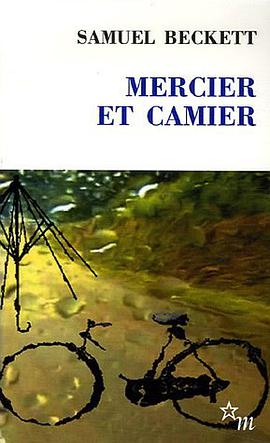
Mercier et Camier [Book] Douban
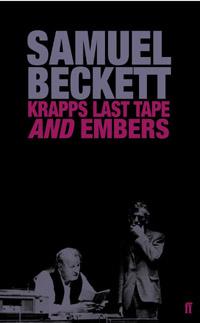
Krapp's Last Tape / Embers [Book] Douban
Krapp's Last Tape was first performed by Patrick Magee at the Royal Court Theatre in October 1958, and has since been played by a host of distinguished actors including Albert Finney and Max Wall.
Embers was specially written for radio and first performed in 1959.
Embers was specially written for radio and first performed in 1959.
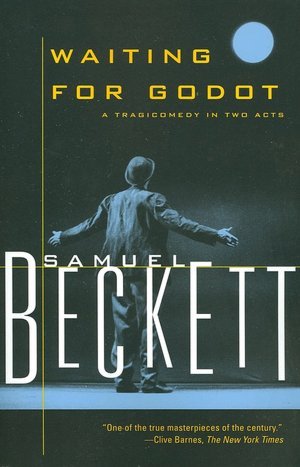
Waiting for Godot [Book] Skybridge Goodreads
En attendant Godot
author:
Samuel Beckett
The story revolves around two seemingly homeless men simply waiting for someone—or something—named Godot. Vladimir and Estragon wait near a tree, inhabiting a drama spun of their own consciousness. The result is a comical wordplay of poetry, dreamscapes, and nonsense, which has been interpreted as mankind’s inexhaustible search for meaning. Beckett’s language pioneered an expressionistic minimalism that captured the existential post-World War II Europe. His play remains one of the most magical and beautiful allegories of our time.
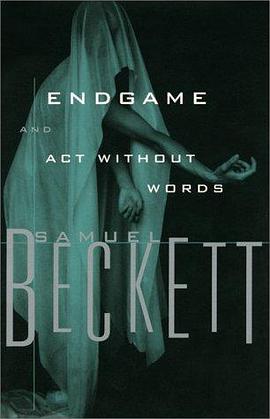
Endgame and Act Without Words [Book] Douban Goodreads
author:
Samuel Beckett
publishing house:
Grove Press
1970
- 7
other title:
Endgame & Act Without Words
Samuel Beckett was awarded the Nobel Prize for Literature n 1969; his literary output of plays, novels, stories and poetry has earned him an uncontested place as one of the greatest writers of our time. "Endgame, " originally written in French and translated into English by Beckett himself, is considered by many critics to be his greatest single work. A pinnacle of Beckett's characteristic raw minimalism, it is a pure and devastating distillation of the human essence in the face of approaching death.
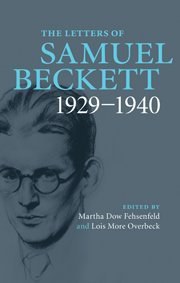
The Letters of Samuel Beckett [Book] Douban
The letters written by Samuel Beckett between 1929 and 1940 provide a vivid and personal view of Western Europe in the 1930s, and mark the gradual emergence of Beckett's unique voice and sensibility. The Cambridge University Press edition of The Letters of Samuel Beckett offers for the first time a comprehensive range of letters of one of the greatest literary figures of the twentieth century. Selected for their bearing on his work from over 15,000 extant letters, the letters published in this four-volume edition encompass sixty years of Beckett's writing life (1929-1989), and include letters to friends, painters and musicians, as well as to students, publishers, translators, and colleagues in the world of literature and theater. For anyone interested in twentieth-century literature and theater this edition is essential reading, offering not only a record of Beckett's achievements but a powerful literary experience in itself.
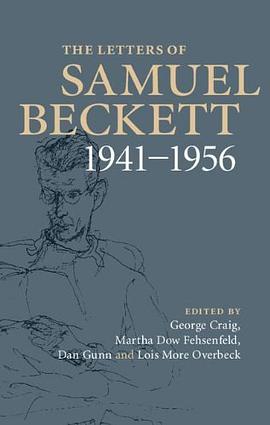
The Letters of Samuel Beckett [Book] Douban
This second volume of The Letters of Samuel Beckett opens with the War years, when it was often impossible or too dangerous to correspond. The surge of letters beginning in 1945, and their variety, are matched by the outpouring and the range of Beckett's published work. Primarily written in French and later translated by the author, the work includes stories, a series of novels (Molloy, Malone Dies, and The Unnamable), essays and plays - most notably Waiting for Godot. The letters chronicle a passionately committed but little known writer evolving into a figure of international reputation, and his response to such fame. The volume provides detailed introductions which discuss Beckett's situation during the War and his crucial move into the French language, as well as translations of the letters, explanatory notes, year-by-year chronologies, profiles of correspondents and other contextual information.
Premier amour [Book] Douban
* Nouvelle écrite en français (datée « 1945 »).
Waiting for Godot [Book] Douban
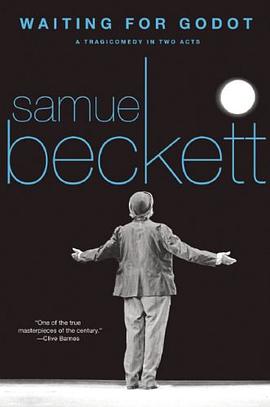
From an inauspicious beginning at the tiny Left Bank Theatre de Babylone in 1953, followed by bewilderment among American and British audiences, Waiting for Godot has become of the most important and enigmatic plays of the past fifty years and a cornerstone of twentieth-century drama. As Clive Barnes wrote, “Time catches up with genius … Waiting for Godot is one of the masterpieces of the century.”
The story revolves around two seemingly homeless men waiting for someone—or something—named Godot. Vladimir and Estragon wait near a tree, inhabiting a drama spun of their own consciousness. The result is a comical wordplay of poetry, dreamscapes, and nonsense, which has been interpreted as mankind’s inexhaustible search for meaning. Beckett’s language pioneered an expressionistic minimalism that captured the existential post-World War II Europe. His play remains one of the most magical and beautiful allegories of our time.
The story revolves around two seemingly homeless men waiting for someone—or something—named Godot. Vladimir and Estragon wait near a tree, inhabiting a drama spun of their own consciousness. The result is a comical wordplay of poetry, dreamscapes, and nonsense, which has been interpreted as mankind’s inexhaustible search for meaning. Beckett’s language pioneered an expressionistic minimalism that captured the existential post-World War II Europe. His play remains one of the most magical and beautiful allegories of our time.
Company [Book] Douban
author:
Samuel Beckett
1980
Nine Plays of the Modern Theater [Book] Douban
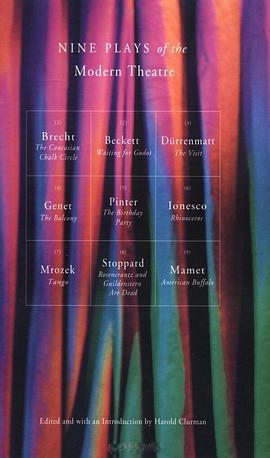
This comprehensive volume contains nine of the most important, most indispensable plays of the modern theater. What Harold Clurman has done in this seminal collection is to create for us a portrait of the progress and turmoil of the twentieth century.
Proust [Book] Douban
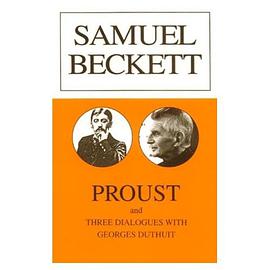
Samuel Beckett's celebrated early study of Marcel proust, whose theories of time were to play a large part in his own work, was written in 1931. It is a brilliant work of critical insight that also tells us much about its author's own thinking and preoccupations. In its own right it is a masterpiece of literary and philosophical creative writing. This edition was published in 1999 - ten years after the writer's death. The volume also contains the equally celebrated dialogues with the art critic Georges Duthuit - written to record their different points of view after the discussions took place. Beckett always let Duthuit win, but his very unusual and often opposite point of view on the nature and purpose of art is all the more forceful and memorable on that account.
Samuel Beckett's celebrated study of Marcel Proust, whose theories of time were to play a large part in his own work, was written in 1931, a brilliant work of critical insight that also tells us much about its author's own thinking and preoccupations. In its own right it is a masterpiece of literary and philosophical creative writing. This new edition is published ten years after the writer's death.
The Volume also contains the equally celebrated dialogues with the art critic Georges Duthuit, written to record their different points of view after the discussions took place. Beckett always lets Duthuit win, but his very unusual and often opposite point of view on the nature and purpose of art is all the more forceful and memorable on that account.
Samuel Beckett's celebrated study of Marcel Proust, whose theories of time were to play a large part in his own work, was written in 1931, a brilliant work of critical insight that also tells us much about its author's own thinking and preoccupations. In its own right it is a masterpiece of literary and philosophical creative writing. This new edition is published ten years after the writer's death.
The Volume also contains the equally celebrated dialogues with the art critic Georges Duthuit, written to record their different points of view after the discussions took place. Beckett always lets Duthuit win, but his very unusual and often opposite point of view on the nature and purpose of art is all the more forceful and memorable on that account.