
Craig Wright — Author (7)
The Pavilion [Book] Douban
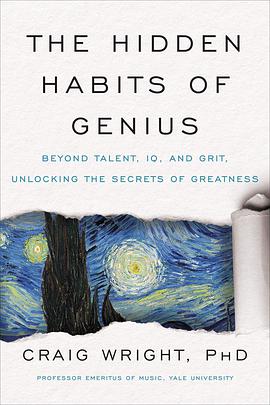
The Hidden Habits of Genius [Book] Douban
“An unusually engaging book on the forces that fuel originality across fields.” --Adam Grant
Looking at the 14 key traits of genius, from curiosity to creative maladjustment to obsession, Professor Craig Wright, creator of Yale University's popular “Genius Course,” explores what we can learn from brilliant minds that have changed the world.
Einstein. Beethoven. Picasso. Jobs. The word genius evokes these iconic figures, whose cultural contributions have irreversibly shaped society.
Yet Beethoven could not multiply. Picasso couldn’t pass a 4th grade math test. And Jobs left high school with a 2.65 GPA. What does this say about our metrics for measuring success and achievement today? Why do we teach children to behave and play by the rules, when the transformative geniuses of Western culture have done just the opposite? And what is genius, really?
Professor Craig Wright, creator of Yale University’s popular “Genius Course,” has devoted more than two decades to exploring these questions and probing the nature of this term, which is deeply embedded in our culture. In The Hidden Habits of Genius, he reveals what we can learn from the lives of those we have dubbed “geniuses,” past and present.
Examining the lives of transformative individuals ranging from Charles Darwin and Marie Curie to Leonardo Da Vinci and Andy Warhol to Toni Morrison and Elon Musk, Wright identifies more than a dozen drivers of genius—characteristics and patterns of behavior common to great minds throughout history. He argues that genius is about more than intellect and work ethic—it is far more complex—and that the famed “eureka” moment is a Hollywood fiction. Brilliant insights that change the world are never sudden, but rather, they are the result of unique modes of thinking and lengthy gestation. Most importantly, the habits of mind that produce great thinking and discovery can be actively learned and cultivated, and Wright shows us how.
This book won't make you a genius. But embracing the hidden habits of these transformative individuals will make you more strategic, creative, and successful, and, ultimately, happier.
Looking at the 14 key traits of genius, from curiosity to creative maladjustment to obsession, Professor Craig Wright, creator of Yale University's popular “Genius Course,” explores what we can learn from brilliant minds that have changed the world.
Einstein. Beethoven. Picasso. Jobs. The word genius evokes these iconic figures, whose cultural contributions have irreversibly shaped society.
Yet Beethoven could not multiply. Picasso couldn’t pass a 4th grade math test. And Jobs left high school with a 2.65 GPA. What does this say about our metrics for measuring success and achievement today? Why do we teach children to behave and play by the rules, when the transformative geniuses of Western culture have done just the opposite? And what is genius, really?
Professor Craig Wright, creator of Yale University’s popular “Genius Course,” has devoted more than two decades to exploring these questions and probing the nature of this term, which is deeply embedded in our culture. In The Hidden Habits of Genius, he reveals what we can learn from the lives of those we have dubbed “geniuses,” past and present.
Examining the lives of transformative individuals ranging from Charles Darwin and Marie Curie to Leonardo Da Vinci and Andy Warhol to Toni Morrison and Elon Musk, Wright identifies more than a dozen drivers of genius—characteristics and patterns of behavior common to great minds throughout history. He argues that genius is about more than intellect and work ethic—it is far more complex—and that the famed “eureka” moment is a Hollywood fiction. Brilliant insights that change the world are never sudden, but rather, they are the result of unique modes of thinking and lengthy gestation. Most importantly, the habits of mind that produce great thinking and discovery can be actively learned and cultivated, and Wright shows us how.
This book won't make you a genius. But embracing the hidden habits of these transformative individuals will make you more strategic, creative, and successful, and, ultimately, happier.
Listening to Music [Book] Douban
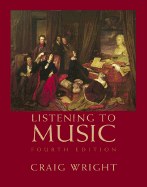
LISTENING TO MUSIC covers all the major topics of a typical music appreciation course, but adds two important pedagogical advantages: one, a CD in each student copy of the text contains all of the music discussed in Chapters 1-3, which covers the elements (or "fundamentals") of music, and two, listening exercises in the text. Chronologically ordered, this text covers traditional Western music from medieval to modern. Concluding chapters discuss popular and world music. Musical examples from each historical period are discussed within their social context.This book is available packaged with a 2 or 6-CD Set. See Companion Products for details.
Listening to Music [Book] Douban
6-CD Set for Wright's Listening to Music, 5th and Listening to Western Music [Book] Douban
More than any other music appreciation text, LISTENING TO MUSIC, 5th Edition, helps students to develop and refine their listening skills. Wright covers traditional Western music from medieval to modern and integrates non-Western music throughout the text where appropriate, drawing comparisons between Western and non-Western musical cultures. Concluding chapters discuss popular music and its impact on musical globalization. Musical examples from each historical period are discussed within their social context, giving students a broad sense not only of the construction of a piece, but also of its historical and cultural meaning. This chronological text offers instructors and students particular help in developing listening skills in three ways: First, a free "Introduction to Listening" CD comes packaged with each student copy of the text. This CD plays all of the music discussed in the music fundamentals chapters in Part I of the text, providing numerous demonstrations and quizzes, as well as an audio guide called "Instruments of the Orchestra." Second, Wright's text is the only one to provide Listening Exercises built into the book; a total of 47 Exercises delve deeply into the core repertory. Third, computer-enhanced Active Listening Guides and listening quizzes for all of the music in the text are available at no extra cost from the Thomson Schirmer website to further challenge and test your students.
Get the whole lessons on http://oyc.yale.edu/music/listening-to-music/.
Get the whole lessons on http://oyc.yale.edu/music/listening-to-music/.
Listening to Music [Book] Douban
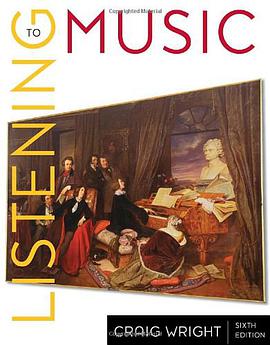
The only music appreciation text on the market to include listening exercises throughout the book, LISTENING TO MUSIC, Sixth Edition, masterfully develops and refines your listening skills. Acclaimed for unparalleled clarity and accuracy, using Wright will help you study efficiently, do well on your tests and quizzes, and learn to enjoy many kinds of music. Wright covers traditional Western music from medieval to modern as well as popular music and its impact on musical globalization, and music from the Far East, the Near East and Africa, the Caribbean, and Latin America, drawing comparisons between Western and non-Western musical cultures. Learning to listen critically is at the heart of a music appreciation course, and Wright gives you the tools to develop and sharpen your listening skills in three important ways: First, Listening to Music is the only text to include detailed Listening Exercises throughout the book. These exercises, which ask questions just like the ones your instructor is likely to ask in quizzes, will help you focus on important musical elements and episodes and do well in the course. Second, a free "Introduction to Listening" CD is packaged with each copy of the text. This CD plays all of the music discussed in the music fundamentals chapters in Part I of the text to help you get a good start in the first few weeks of class. Third, interactive Active Listening Guides and listening quizzes, with streaming music for most of the selections in the text, are available on the Schirmer Cengage Learning website and multimedia eBook.
点击链接进入中文版:
听音乐音乐欣赏教程(附光盘1张)
点击链接进入中文版:
听音乐音乐欣赏教程(附光盘1张)