Steven Levitsky — 作者 (9)
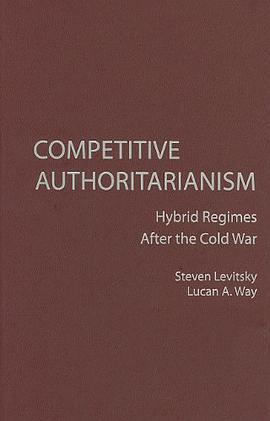
Competitive Authoritarianism [图书] 豆瓣
作者: Steven Levitsky / Lucan A. Way 出版社: Cambridge University Press 2010 - 8
Based on a detailed study of 35 cases in Africa, Asia, Latin America, and post-communist Eurasia, this book explores the fate of competitive authoritarian regimes between 1990 and 2008. It finds that where social, economic, and technocratic ties to the West were extensive, as in Eastern Europe and the Americas, the external cost of abuse led incumbents to cede power rather than crack down, which led to democratization. Where ties to the West were limited, external democratizing pressure was weaker and countries rarely democratized. In these cases, regime outcomes hinged on the character of state and ruling party organizations. Where incumbents possessed developed and cohesive coercive party structures, they could thwart opposition challenges, and competitive authoritarian regimes survived; where incumbents lacked such organizational tools, regimes were unstable but rarely democratized.
How Democracies Die [图书] 豆瓣 Goodreads
作者: Steven Levitsky / Daniel Ziblatt 出版社: Crown 2018 - 1
Donald Trump’s presidency has raised a question that many of us never thought we’d be asking: Is our democracy in danger? Harvard professors Steven Levitsky and Daniel Ziblatt have spent more than twenty years studying the breakdown of democracies in Europe and Latin America, and they believe the answer is yes. Democracy no longer ends with a bang—in a revolution or military coup—but with a whimper: the slow, steady weakening of critical institutions, such as the judiciary and the press, and the gradual erosion of long-standing political norms. The good news is that there are several exit ramps on the road to authoritarianism. The bad news is that, by electing Trump, we have already passed the first one.
Drawing on decades of research and a wide range of historical and global examples, from 1930s Europe to contemporary Hungary, Turkey, and Venezuela, to the American South during Jim Crow, Levitsky and Ziblatt show how democracies die—and how ours can be saved.
Competitive Authoritarianism [图书] 豆瓣
作者: Steven Levitsky / Lucan Way 出版社: Cambridge University Press 2010
Review
"This landmark contribution to the comparative study of political regimes will be widely read and cited. In an epic act of theoretical synthesis, Levitsky and Way weave careful empirical research on three-dozen countries across five world regions into a convincing account of patterns of regime change. In distinguishing democratic transitions from a range of authoritarian outcomes, they reach nuanced conclusions about the relative explanatory influence of international factors (linkage and leverage) and domestic power politics (rulers versus oppositions). Above all, they help us understand how autocrats learn to live with elections. Strongly recommended."
- Michael Bratton, University Distinguished Professor of Political Science and African Studies, Michigan State University
"This is a brilliant and truly pathbreaking book that should be closely studied by any serious student of democracy or comparative politics. Its precise conceptualization, striking theory, rigorous comparative methodology, and breathtaking range of case study evidence distinguish it as the most important study of political regimes and regime transitions in a generation."
- Larry Diamond, Stanford University
"Competitive Authoritarianism establishes Steven Levitsky and Lucan Way as the Juan Linz and Alfred Stepan of their generation. In the tradition of Linz and Stepan, Levitsky and Way offer an abundance of theoretical and conceptual innovation as well as a trove of empirical material drawn from broad swaths of the globe. The book is as elegantly written as it is theoretically creative. It is written by and for professional social scientists; yet undergraduates and the attentive public will be able to digest the book's central argument and findings with ease. This is what social science should look like."
- M. Steven Fish, University of California, Berkeley
"This is the most anticipated book in comparative politics in more than a decade. Written in a single authorial voice, Levitsky and Way's arguments about the distinct trajectories of competitive authoritarian regimes are theoretically grounded, conceptually nuanced, geographically wide ranging, and empirically well supported. I expect this book to have a major impact on the field for many years to come."
- Marc Morjé Howard, Georgetown University
"Levitsky and Way's book makes two major contributions to research on political regime change. First, by developing the notion of competitive authoritarianism, it engages in a sustained effort to provide a clear and theoretically fertile conception of a particular subset of political regimes belonging to the vague class of 'hybrid' regimes. Second, it offers the as yet most sophisticated and subtle effort to interweave domestic and international explanations of political regime change with provocative implications for run-of-the-mill theories, whether based on economic development, inequality, or institutions."
- Herbert Kitschelt, Duke University
"Regimes that blend meaningful elections and illicit incumbent advantage are not merely resting points on the road to democracy; Levitsky and Way guide us along the multiple paths these regimes can take and provide powerful reasoning to explain why nations follow these distinct paths. This deeply insightful analysis of an important subset of post-Cold War regimes is conceptually innovative and precise, empirically ambitious, and theoretical agile, moving fluidly between international and domestic causes of regime dynamics. Read it to understand the dynamics of contemporary hybrid regimes; then read it again to appreciate its many lessons for our general understanding of regime change."
- David Waldner, University of Virginia
Product Description
Competitive authoritarian regimes - in which autocrats submit to meaningful multiparty elections but engage in serious democratic abuse - proliferated in the post-Cold War era. Based on a detailed study of 35 cases in Africa, Asia, Latin America, and post-communist Eurasia, this book explores the fate of competitive authoritarian regimes between 1990 and 2008. It finds that where social, economic, and technocratic ties to the West were extensive, as in Eastern Europe and the Americas, the external cost of abuse led incumbents to cede power rather than crack down, which led to democratization. Where ties to the West were limited, external democratizing pressure was weaker and countries rarely democratized. In these cases, regime outcomes hinged on the character of state and ruling party organizations. Where incumbents possessed developed and cohesive coercive party structures, they could thwart opposition challenges, and competitive authoritarian regimes survived; where incumbents lacked such organizational tools, regimes were unstable but rarely democratized.
How Democracies Die [图书] 豆瓣
作者: Steven Levitsky / Daniel Ziblatt 出版社: Viking 2018 - 1
NEW YORK TIMES BESTSELLER • “Comprehensive, enlightening, and terrifyingly timely.”—The New York Times Book Review (Editors' Choice)
WINNER OF THE GOLDSMITH BOOK PRIZE • SHORTLISTED FOR THE LIONEL GELBER PRIZE • NAMED ONE OF THE BEST BOOKS OF THE YEAR BY The Washington Post • Time • Foreign Affairs • WBUR • Paste
Donald Trump’s presidency has raised a question that many of us never thought we’d be asking: Is our democracy in danger? Harvard professors Steven Levitsky and Daniel Ziblatt have spent more than twenty years studying the breakdown of democracies in Europe and Latin America, and they believe the answer is yes. Democracy no longer ends with a bang—in a revolution or military coup—but with a whimper: the slow, steady weakening of critical institutions, such as the judiciary and the press, and the gradual erosion of long-standing political norms. The good news is that there are several exit ramps on the road to authoritarianism. The bad news is that, by electing Trump, we have already passed the first one.
Drawing on decades of research and a wide range of historical and global examples, from 1930s Europe to contemporary Hungary, Turkey, and Venezuela, to the American South during Jim Crow, Levitsky and Ziblatt show how democracies die—and how ours can be saved.
Praise for How Democracies Die
“What we desperately need is a sober, dispassionate look at the current state of affairs. Steven Levitsky and Daniel Ziblatt, two of the most respected scholars in the field of democracy studies, offer just that.”—The Washington Post
“Where Levitsky and Ziblatt make their mark is in weaving together political science and historical analysis of both domestic and international democratic crises; in doing so, they expand the conversation beyond Trump and before him, to other countries and to the deep structure of American democracy and politics.”—Ezra Klein, Vox
“If you only read one book for the rest of the year, read How Democracies Die. . . .This is not a book for just Democrats or Republicans. It is a book for all Americans. It is nonpartisan. It is fact based. It is deeply rooted in history. . . . The best commentary on our politics, no contest.”—Michael Morrell, former Acting Director of the Central Intelligence Agency (via Twitter)
“A smart and deeply informed book about the ways in which democracy is being undermined in dozens of countries around the world, and in ways that are perfectly legal.”—Fareed Zakaria, CNN
Revolution and Dictatorship [图书] Goodreads
作者: Steven Levitsky / Lucan Way 出版社: Princeton University Press 2022 - 9
Revolution and Dictatorship explores why dictatorships born of social revolution—such as those in China, Cuba, Iran, the Soviet Union, and Vietnam—are extraordinarily durable, even in the face of economic crisis, large-scale policy failure, mass discontent, and intense external pressure. Few other modern autocracies have survived in the face of such extreme challenges. Drawing on comparative historical analysis, Steven Levitsky and Lucan Way argue that radical efforts to transform the social and geopolitical order trigger intense counterrevolutionary conflict, which initially threatens regime survival, but ultimately fosters the unity and state-building that supports authoritarianism.

Although most revolutionary governments begin weak, they challenge powerful domestic and foreign actors, often bringing about civil or external wars. These counterrevolutionary wars pose a threat that can destroy new regimes, as in the cases of Afghanistan and Cambodia. Among regimes that survive, however, prolonged conflicts give rise to a cohesive ruling elite and a powerful and loyal coercive apparatus. This leads to the downfall of rival organizations and alternative centers of power, such as armies, churches, monarchies, and landowners, and helps to inoculate revolutionary regimes against elite defection, military coups, and mass protest—three principal sources of authoritarian breakdown.

Looking at a range of revolutionary and nonrevolutionary regimes from across the globe, Revolution and Dictatorship shows why governments that emerge from violent conflict endure.
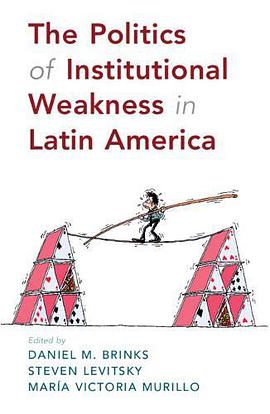
The Politics of Institutional Weakness in Latin America [图书] 豆瓣
作者: Daniel M. Brinks / Steven Levitsky 出版社: Cambridge University Press 2020 - 6
Analysts and policymakers often decry the failure of institutions to accomplish their stated purpose. Bringing together leading scholars of Latin American politics, this volume helps us understand why. The volume offers a conceptual and theoretical framework for studying weak institutions. It introduces different dimensions of institutional weakness and explores the origins and consequences of that weakness. Drawing on recent research on constitutional and electoral reform, executive–legislative relations, property rights, environmental and labor regulation, indigenous rights, squatters and street vendors, and anti-domestic violence laws in Latin America, the volume's chapters show us that politicians often design institutions that they cannot or do not want to enforce or comply with. Challenging existing theories of institutional design, the volume helps us understand the logic that drives the creation of weak institutions, as well as the conditions under which they may be transformed into institutions that matter.
Transforming Labor-Based Parties in Latin America [图书] 豆瓣
作者: Steven Levitsky 出版社: Cambridge University Press 2003 - 4
Why did some Latin American labor-based parties adapt successfully to the contemporary challenges of neoliberalism and working class decline while others did not? Drawing on a detailed study of the Argentine Peronism, as well as a broader comparative analysis, this book develops an organizational approach to party change. Levitsky's study breaks new ground in its focus on informal and weakly institutionalized party structures. It argues that loosely structured party organizations, such as those found in many populist labor-based parties, are often better equipped to adapt to rapid environmental change than are more bureaucratic labor-based parties. The argument is illustrated in the case of Peronism, a mass labor-based party with a highly fluid internal structure. The book shows how this weakly routinized structure allowed party reformers to undertake a set of far-reached coalitional and programmatic changes that enabled Peronism to survive, and even thrive, in the neoliberal era.
How Democracies Die: What History Reveals About Our Future [图书]
How Democracies Die: What History Reveals About Our Future
作者: Steven Levitsky / Daniel Ziblatt 出版社: Crown Publishing Group (NY) 2018 - 1
Donald Trump's presidency has raised a question that many of us never thought we'd be asking: Is our democracy in danger? Harvard professors Steven Levitsky and Daniel Ziblatt have spent more than twenty years studying the breakdown of democracies in Europe and Latin America, and they believe the answer is yes. Democracy no longer ends with a bang--in a revolution or military coup--but with a whimper: the slow, steady weakening of critical institutions, such as the judiciary and the press, and the gradual erosion of long-standing political norms. The good news is that there are several exit ramps on the road to authoritarianism. The bad news is that, by electing Trump, we have already passed the first one.
Drawing on decades of research and a wide range of historical and global examples, from 1930s Europe to contemporary Hungary, Turkey, and Venezuela, to the American South during Jim Crow, Levitsky and Ziblatt show how democracies die--and how ours can be saved.
Tyranny of the Minority: Why American Democracy Reached the Breaking Point [图书] Goodreads
作者: Steven Levitsky / Daniel Ziblatt 出版社: Crown 2023 - 9
A call to reform our antiquated political institutions before it’s too late—from the New York Times bestselling authors of How Democracies Die

America is undergoing a massive experiment: It is moving, in fits and starts, toward a multiracial democracy, something few societies have ever done. But the prospect of change has sparked an authoritarian backlash that threatens the very foundations of our political system. Why is this happening here, and not in other diversifying nations? And what can we do to save our democracy?

With the clarity and brilliance that made their first book, How Democracies Die, a global bestseller, Harvard professors Steven Levitsky and Daniel Ziblatt offer a coherent framework for understanding these volatile times. They draw on a wealth of examples—from 1930s France to present-day Thailand—to explain why and how political parties turn against democracy: When political leaders realize they can no longer win at the ballot box, they begin to attack the system from within, condoning violent extremists and using the law as a weapon. Unfortunately, our Constitution makes us uniquely vulnerable. It is a pernicious enabler of minority rule, allowing partisan minorities to consistently thwart and even rule over popular majorities. Most modern democracies—from Germany and Sweden to Argentina and New Zealand—have eliminated outdated institutions like elite upper chambers, indirect elections, and lifetime tenure for judges. The United States lags dangerously behind.

In this revelatory book, Levitsky and Ziblatt issue an urgent call to perfect our national experiment. It’s a daunting task, but we have remade our country before—most notably, after the Civil War and during the Progressive Era. And now we are at a crossroads: America will either become a multiracial democracy or it will cease to be a democracy at all.