Mei Fong — 作者 (6)
One Child [图书] 豆瓣
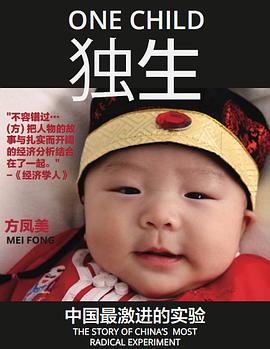
One Child
7.1 (7 个评分) 作者: Mei Fong 译者: 麦子 2015
http://www.meifong.org/wp-content/uploads/2016/11/%E7%8B%AC%E7%94%9F-simplified-2016-1123-compressed.pdf
One Child [图书] 豆瓣
7.6 (16 个评分) 作者: Mei Fong 出版社: Oneworld Publications 2016 - 1
For over three decades, China exercised unprecedented control over the reproductive habits of its billion citizens. Now, with its economy faltering just as it seemed poised to become the largest in the world, the Chinese government has brought an end to its one-child policy. It may once have seemed a shortcut to riches, but it has had a profound effect on society in modern China.
Combining personal portraits of families affected by the policy with a nuanced account of China’s descent towards economic and societal turmoil, Pulitzer Prize-winning journalist Mei Fong reveals the true cost of this most controversial of policies. Drawing on eight years spent documenting its repercussions, she reveals a dystopian legacy of second children refused documentation by the state, only children supporting their parents and grandparents, and villages filled with ineligible bachelors. An exceptional piece of on-the-ground journalism, One Child humanizes the policy that defined China and warns that the ill-effects of its legacy will be felt across the globe.
One Child: The Story of China's Most Radical Experiment. [图书] Goodreads
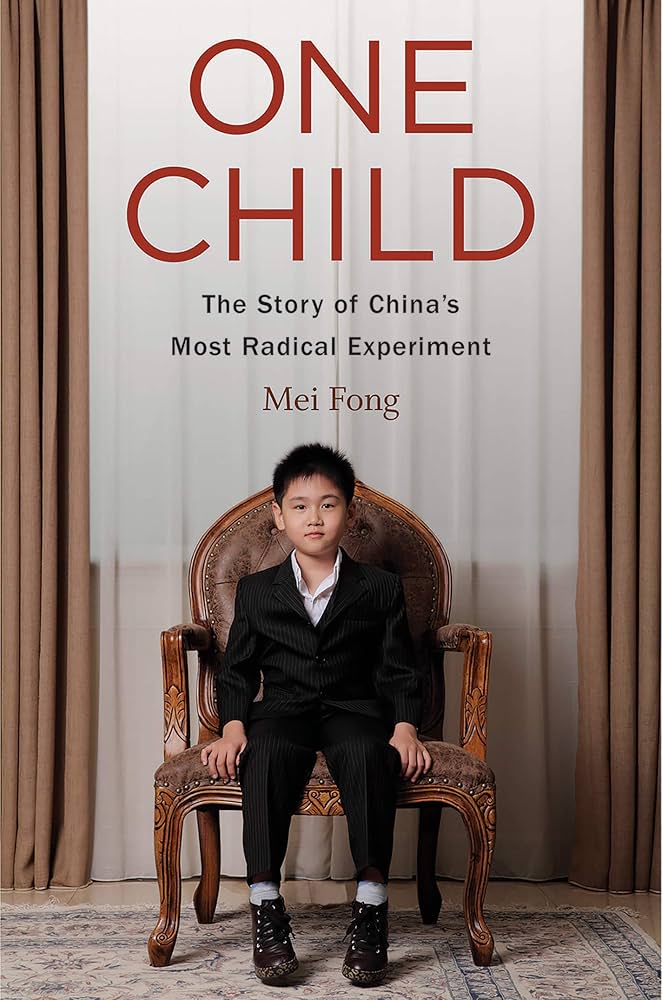
One Child: The Story of China's Most Radical Experiment
作者: Mei Fong 出版社: Mei Fong 2016 - 11
When Communist Party leaders adopted the one-child policy in 1980, they hoped curbing birth-rates would help lift China's poorest and increase the country's global stature. But at what cost? Now, as China closes the book on the policy after more than three decades, it faces a population grown too old and too male, with a vastly diminished supply of young workers. This is the special Chinese-language edition created for readers likely most impacted by the policy.
Mei Fong has spent years documenting the policy's repercussions on every sector of Chinese society. In
, she explores its true human impact, traveling across China to meet the people who live with its consequences. Their stories reveal a dystopian reality: unauthorized second children ignored by the state, only-children supporting aging parents and grandparents on their own, villages teeming with ineligible bachelors, and an ungoverned adoption market stretching across the globe. Fong tackles questions that have major implications for China's future: whether its "Little Emperor" cohort will make for an entitled or risk-averse generation; how China will manage to support itself when one in every four people is over sixty-five years old; and above all, how much the one-child policy may end up hindering China's growth.
Weaving in Fong's reflections on striving to become a mother herself,
offers a nuanced and candid report from the extremes of family planning.
One Child [图书] 谷歌图书
作者: Mei Fong 出版社: Houghton Mifflin Harcourt 2015 - 11
A Pulitzer Prize-winning journalist offers an intimate investigation of China’s one-child policy and its consequences for families and the nation at large.For over three decades, China exercised unprecedented control over the reproductive habits of its billion citizens. Now, with its economy faltering just as it seemed poised to become the largest in the world, the Chinese government has brought an end to its one-child policy. It may once have seemed a shortcut to riches, but it has had a profound effect on society in modern China.

Combining personal portraits of families affected by the policy with a nuanced account of China’s descent towards economic and societal turmoil, Mei Fong reveals the true cost of this controversial policy. Drawing on eight years of research, Fong reveals a dystopian legacy of second children refused documentation by the state; only children supporting their parents and grandparents; and villages filled with ineligible bachelors.  A “vivid and thoroughly researched” piece of on-the-ground journalism, One Child humanizes the policy that defined China and warns that the ill-effects of its legacy will be felt across the globe (The Guardian, UK).