http://www.cambridge.org/cn/academic/subjects/archaeology/archaeology-asia-sub-saharan-africa-and-pacific/ancient-china-and-its-eurasian-neighbors-artefacts-and-cross-cultural-interactions-3000-700-bce?format=HB#vjJit9fv0Spej6Vl.97
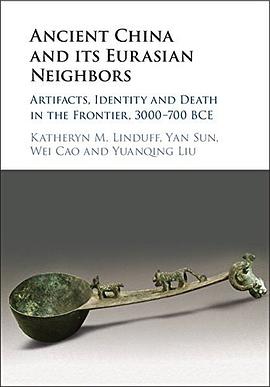
This volume examines the role of objects in the region north of early dynastic state centers, at the intersection of Ancient China and Eurasia, a large area that stretches from Xinjiang to the China Sea, from c.3000 BCE to the mid-eighth century BCE. This area was a frontier, an ambiguous space that lay at the margins of direct political control by the metropolitan states, where local and colonial ideas and practices were reconstructed transculturally. These identities were often merged and displayed in material culture. Types of objects, styles, and iconography were often hybrids or new to the region, as were the tomb assemblages in which they were deposited and found. Patrons commissioned objects that marked a symbolic vision of place and person and that could mobilize support, legitimize rule, and bind people together. Through close examination of key artifacts, this book untangles the considerable changes in political structure and cultural makeup of ancient Chinese states and their northern neighbors.
In this book, Inner Asia is studied for its own sake, not as an adjunct of China, challenging the China-centered view of ancient Inner Asia
Allows a view of material culture in action - objects, whoever designed them, were chosen for a purpose which gives a fresh view to the study of objects and their agency, especially in mortuary settings
Uses a new way of describing human groupings, such as technoiscapes, regionscapes, lineagescapes, and individualscapes, which insists on a re-evaluation of archaeological cultures as a defining category of human grouping