王惠 — 作者 (5)
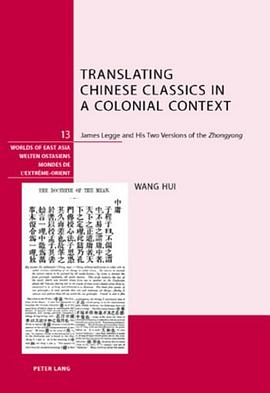
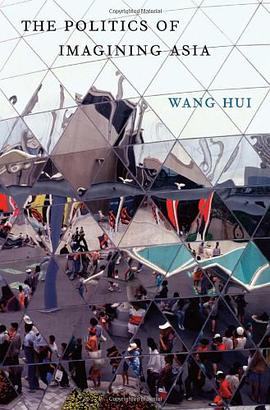
The Politics of Imagining Asia [图书] 豆瓣
In this bold, provocative collection, Wang Hui confronts some of the major issues concerning modern China and the status quo of contemporary Chinese thought. The book's overarching theme is the possibility of an alternative modernity that does not rely on imported conceptions of Chinese history and its legacy. Wang Hui argues that current models, based largely on Western notions of empire and the nation-state, fail to account for the richness and diversity of pre-modern Chinese historical practice. At the same time, he refrains from offering an exclusively Chinese perspective and placing China in an intellectual ghetto. Navigating terrain on regional language and politics, he draws on China's unique past to expose the inadequacies of European-born standards for assessing modern China's evolution. He takes issue particularly with the way in which nation-state logic has dominated politically charged concerns like Chinese language standardization and "The Tibetan Question." His stance is critical--and often controversial--but he locates hope in the kinds of complex, multifaceted arrangements that defined China and much of Asia for centuries. The Politics of Imagining Asia challenges us not only to re-examine our theories of "Asia" but to reconsider what "Europe" means as well. As Theodore Huters writes in his introduction, "Wang Hui's concerns extend beyond China and Asia to an ambition to rethink world history as a whole."
China's New Order [图书] 豆瓣
As the world is drawn together with increasing force, our long-standing isolation from--and baffling ignorance of--China is ever more perilous. This book offers a powerful analysis of China and the transformations it has undertaken since 1989.
Wang Hui is unique in China's intellectual world for his ability to synthesize an insider's knowledge of economics, politics, civilization, and Western critical theory. A participant in the Tiananmen Square movement, he is also the editor of the most important intellectual journal in contemporary China. He has a grasp and vision that go beyond contemporary debates to allow him to connect the events of 1989 with a long view of Chinese history. Wang Hui argues that the features of contemporary China are elements of the new global order as a whole in which considerations of economic growth and development have trumped every other concern, particularly those of democracy and social justice. At its heart this book represents an impassioned plea for economic and social justice and an indictment of the corruption caused by the explosion of "market extremism."
As Wang Hui observes, terms like "free" and "unregulated" are largely ideological constructs masking the intervention of highly manipulative, coercive governmental actions on behalf of economic policies that favor a particular scheme of capitalist acquisition--something that must be distinguished from truly free markets. He sees new openings toward social, political, and economic democracy in China as the only agencies by which the unstable conditions thus engendered can be remedied.
Wang Hui is unique in China's intellectual world for his ability to synthesize an insider's knowledge of economics, politics, civilization, and Western critical theory. A participant in the Tiananmen Square movement, he is also the editor of the most important intellectual journal in contemporary China. He has a grasp and vision that go beyond contemporary debates to allow him to connect the events of 1989 with a long view of Chinese history. Wang Hui argues that the features of contemporary China are elements of the new global order as a whole in which considerations of economic growth and development have trumped every other concern, particularly those of democracy and social justice. At its heart this book represents an impassioned plea for economic and social justice and an indictment of the corruption caused by the explosion of "market extremism."
As Wang Hui observes, terms like "free" and "unregulated" are largely ideological constructs masking the intervention of highly manipulative, coercive governmental actions on behalf of economic policies that favor a particular scheme of capitalist acquisition--something that must be distinguished from truly free markets. He sees new openings toward social, political, and economic democracy in China as the only agencies by which the unstable conditions thus engendered can be remedied.
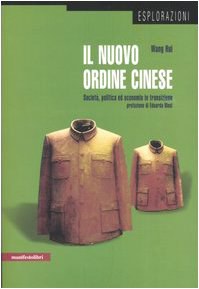
Il nuovo ordine cinese [图书] 豆瓣
Un'indagine dall'interno della transizione che si è aperta in Cina dopo il 1989: il conflitto tra l'apertura neoliberista al mercato globale e le istanze del movimento democratico nelle analisi di uno dei più significativi intellettuali cinesi contemporanei. Il volume di Wang Hui ricostruisce le trasformazioni che hanno mutato radicalmente, nell'ultimo quindicennio, l'economia, la società e la politica cinese: traccia un quadro delle riforme economiche dell'epoca postmaoista, mettendo in risalto come esse abbiano determinato ineguaglianze sociali, polarizzazione di classe e corruzione politica.
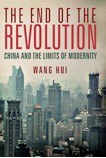
The End of the Revolution [图书] 豆瓣
Challenging both the bureaucratic one-party regime and the Western neoliberal paradigm, China's leading critic shatters the myth of progress and reflects upon the inheritance of a revolutionary past. In this original and wide-ranging study, Wang Hui examines the roots of China's social and political problems, and traces the reforms and struggles that have led to the current state of mass depoliticization. Arguing that China's revolutionary history and its current liberalization are part of the same discourse of modernity, Wang Hui calls for alternatives to both its capitalist trajectory and its authoritarian past. From the May Fourth Movement to Tiananmen Square, The End of the Revolution offers a broad discussion of Chinese intellectual history and society, in the hope of forging a new path for China's future.