寺山修司 — 导演 (33)
百年孤独 (1981) [电影] 豆瓣 TMDB
百年の孤独
导演: 寺山修司 演员: 天井栈敷
其它标题: 百年の孤独 / Tenjo Sajiki: 100 Years Of Solitude
This sumptuous-yet-austere liberal re-working of Cien años de soledad by Gabriel García Márquez, arranged on a five-part stage surrounded by the audience, was historically the latest production of Tenjo Sajiki. It is also something of a theater prequel to Terayama's last film, Farewell to the Ark.
毛皮瑪莉 (1983) [电影] 豆瓣 TMDB
毛皮瑪莉
8.8 (6 个评分) 导演: 寺山修司 演员: 天井桟敷
其它标题: 天井桟敷・寺山修司・毛皮之玛丽 / Tenjo Sajiki: La Marie-vison
This is a Shuji Terayama memorial performance of his play La Marie-vison (Mink Marie) by the Tenjo Sajiki theater troupe, featuring Akihiro Miwa in the title role.
Marie is a transvestite who lives in a hen house. He tells his story to a butterfly.
性、爱、欲 (1979) [电影] TMDB IMDb 豆瓣 维基数据
Collections privées
其它标题: Collections privées / Private Collections
Three stories. A solitary sailor falls from his boat and washes ashore on a tropical island. While seeking rescue, he's found by a nearly naked woman who is playful and compliant. He decides to erase his signs of distress and remain on the island. What awaits? In the second, an adolescent searches for the words of a nursery rime he remembers bits of. His journey takes him into dreams, sexual awakening, and Oedipal fantasy. Third, a man of wealth in late-nineteenth century Paris hires a prostitute for the night. She's also cabaret performer and takes him to her room. He fears he's about to be robbed.
青森县的驼背男 (1983) [电影] 豆瓣
青森県のせむし男
导演: 寺山修司 / 天井栈敷实验剧团 演员: 天井栈敷实验剧团
其它标题: 青森県のせむし男 / 天井桟敷・寺山修司・青森县的驼背男
This poor, deformed boy was a hungry thief, made the sex-xlave of a haughty dominatrix Matsu, herself a former servant who had been raped by the master's son. Now old and rich, she seeks a replacement for her abandoned (and assumed dead) hunchback infant son. While denying incest, she humiliates and rapes him, getting extra pleasure by painfuly manipulating his hump. This "tomb of flesh" was the visible answer to the pregnant girl's prater to mark her hated, unborn child.
The virginal Minstreal is also in love with the hunchback. He tells her "I'll always be a stranger, existing only for others. Always feared, a mere object of interest, until finaly, I'll be a laughingstock... I'm like the one who's 'it' in hide-and-seek. I chase them and they run away laughing. He remembers childhood dreams of incestuous or forbidden lust. Since the town's birth records were mysteriously stolen the truth of the susbected incest in unknowable. However, rumors persist that the baby, like the defomed and abandoned Oedipus, was saved by the servant ordered to desert him. These and other rumors are whispered by a chorus of ancient hags and crippled, male masseurs.
The hunchback is depicted as the ultimate outcast: born of rape, abandoned, deprived of his inheritance, despited, sexualy desired, and abused, and finaly murdered. Two women, one his grotesque, sexualy depraved mother (described as "an aging bride"), the other a virginal, young minstrel wearing a middy blouse (described as "a girl student"), fight viciously over his body and his memory.
The play also works as an extended metaphor or allegory for Japan's relationship with the West, especialy America. Like the poor servant raped by her rich master, and also like her deformed, despited child, modern Japan was an innocent youth which desired and feared the powerful, rich West. Hating yet desiring the rapist, Japan became a grotesque parody of the West, learning the worst lessons of sadistic imperialism, militarism and colonialism. The atomic holocaust - a final gift of contamination from the idolized/demonized rapist - created another deformed baby, a living tomb of memories, a tomb of twisted flesh. The abandoned, hunchbacked child re-emerged as the global outcast, the atomic-contamined pariah, the child of rape and incest, filled with self loathing, lacking identity, simultaneously loving and hating the parent-rapist.
奴婢训 (1978) [电影] 豆瓣
导演: 寺山修司 演员: 天井桟敷实验剧团 (Tenjo Sajiki experimental theater)
其它标题: Nuhikun (日文)
it was interesting to see the acrobatic Japanese actors of the Tenjosajiki company in Shuji Terayama’s Directions to servants. The title and some of the text were taken from Swift’s satire, but the main inspiration seemed to come from Genet’s Les bonnes. Multiplying the maids into a large cast of servants, male and female, who take it in turns to imitate the master, Tereyama has physicalized and partly mechanized the action. Domination is imposed partly through machines—we see a man submitting to an imperious voice on a tape recorder, lowering his trousers and climbing inside a sadistic machine that beats his bare buttocks.
The ingenuity, the sadism and the offbeat humour are all characteristic of the production. The main cruelty to the audience was in the over-amplification of J.A. Seazer’s music. I sat with my hands over my ears for a lot of the time. The visual assault was almost equally strong, and some of the theatrical imagery was quite unlike anything that had been seen in this country. In one meticulously choreographed sequence the servant playing at being master throws a bone to a succession of servants who play at being dogs. In another, a servant trying to steal food from a cupboard is terrified to find that it is like a puzzle: each panel conceals a face that sings at him accusingly, and he can silence it only by sliding a panel that reveals another singing face.
番茄酱皇帝 (1971) [电影] 维基数据 IMDb 豆瓣 TMDB
トマトケチャップ皇帝
7.9 (8 个评分) 导演: Shūji Terayama 演员: Goro Abashiri / Tarô Apollo
其它标题: トマトケチャップ皇帝 / Emperor Tomato Ketchup
在纯真的番茄皇帝的国度中,性爱无罪,造反有理!一次无政府主义而有狂暴的影像之旅,60年代青年运动的影响显而易见,同时寺山所有作品中的叛逆精神都可以在其中找到源头。
身毒丸 (1978) [电影] TMDB
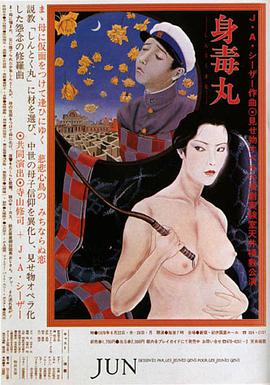
身毒丸
导演: 寺山修司 演员: 新高恵子 / Yoko Ran
身毒丸少年丧母,他终日沉浸在怀念母亲的悲痛之中。父亲为了家庭,从妓院买回来妓女抚子担任孩子们的继母,抚子带着领养的孩子千代一起进入了这个家庭。抚子努力维系这个家,然身毒丸过于执迷过去,对这个继母始终心怀敌意,母子之间的隔阂 逐渐加深。最终,忍无可忍的抚子通过诅咒弄瞎了身毒丸的双眼,而逃出家门的身毒丸为了报复继母,杀害了无血缘关系的弟弟千代。父亲因无法承受巨大的打击而去世。家破人亡后,身毒丸悔不当初,最终与继母冰释前嫌,以恋人的身份生活下去。