Bo Wang — 导演 (11)

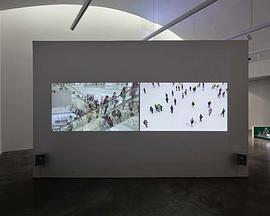
The Revolution Will Not Be Air-conditioned (2022) [电影] 豆瓣
导演:
王博
Taking this phenomenon as its point of departure, the work traces the architectural evolution of these retail complexes. Drawing from a range of historical references—including the Crystal Palace, built for the 1851 Great Exhibition in London; 19th-century terrarium prototypes used in the British Empire’s botanical trade; and 20th-century corporate salesforce training videos—the work reflects on how the mall as a spatial form evolved from its colonial root of conquest, to a machine of consumerism and social control. Yet, The Revolution Will Not Be Air-Conditioned also pays close attention to how the intended outcomes of spatial design can be subverted, turning such insulated and sanitized spaces into a ground for political action and dissent.” (Bo Wang)
Sound Mixing: Julian Schulze
Music:
In Isolation
Over the Black
Chunk's Travel Diary
Artist: Fionnlagh, Album: What Came Before, Label: Ambientologist Records
This work was commissioned by Junni Chen, for the exhibition Lustrous Like Plastic, Hessel Museum of Art, CCS Bard College, NY.
Sound Mixing: Julian Schulze
Music:
In Isolation
Over the Black
Chunk's Travel Diary
Artist: Fionnlagh, Album: What Came Before, Label: Ambientologist Records
This work was commissioned by Junni Chen, for the exhibition Lustrous Like Plastic, Hessel Museum of Art, CCS Bard College, NY.
九龍東往事 (2023) [电影] 豆瓣 TMDB IMDb
An Asian Ghost Story
其它标题:
An Asian Ghost Story
/
아시안 고스트 스토리
…
This film is about haunting memories of Asia's late 20th-century modernization. The story departs from a 1965 United States embargo on the hair trade, known as the "Communist Hair Ban". Yet, in every wig resides a ghost from the imperial past.
Wigs were vital for the rise of the Asian economy in the post-war era. In the heyday of the 1960s, it was the number four export in Hong Kong's export-orientated industrialization. Between Mao's China - the largest source of hair supplies, and the insatiable Western market, Hong Kong functioned as the gateway. In 1965, U.S. Treasury Department imposed an embargo on "Asiatic hair", to cut off foreign currency to Communist China in the hair trade. The highly racialized category of "Asiatic hair" was later revised as "communist hair", to enable the wig industry to develop in U.S. allies including mainly South Korea and Japan, which led to a significant reconfiguration of light industry in East Asia. Departing from the moment of the communist hair ban, through stories of movement, diaspora and migration, this project examines the role of Hong Kong as a transient space that mediates and sanitizes the connection between different worlds, and the relationship between U.S. Imperialism and East Asia order in the Cold War era.
Produced by: Ruoyao Jane Yao
Director of Photography: Yavuz Selim Isler
Cameraman (Hong Kong): Fai Wan
Sound Recording: Franco van der Linde
Casting Director: Sai-wang Lau
Makeup: Ika Kartika
Color Grading: Bob Lemm
Voice-over:
Jia Zhao, Hamza Junaid, Tommy Tse
Cast:
Zoenie Liwen Deng, Ruoyao Jane Yao, Zoe Tang, Michael de Ross, Sidney Vereycken, Sai-wang Lau, Jo-Lene Ong
Produced by:
Geodesic Studio, Vines Films
Thanks to
WAAG Society, Amsterdam
16mm Film Transfer and Scanning
Andec Filmtechnik, Berlin
Wigs were vital for the rise of the Asian economy in the post-war era. In the heyday of the 1960s, it was the number four export in Hong Kong's export-orientated industrialization. Between Mao's China - the largest source of hair supplies, and the insatiable Western market, Hong Kong functioned as the gateway. In 1965, U.S. Treasury Department imposed an embargo on "Asiatic hair", to cut off foreign currency to Communist China in the hair trade. The highly racialized category of "Asiatic hair" was later revised as "communist hair", to enable the wig industry to develop in U.S. allies including mainly South Korea and Japan, which led to a significant reconfiguration of light industry in East Asia. Departing from the moment of the communist hair ban, through stories of movement, diaspora and migration, this project examines the role of Hong Kong as a transient space that mediates and sanitizes the connection between different worlds, and the relationship between U.S. Imperialism and East Asia order in the Cold War era.
Produced by: Ruoyao Jane Yao
Director of Photography: Yavuz Selim Isler
Cameraman (Hong Kong): Fai Wan
Sound Recording: Franco van der Linde
Casting Director: Sai-wang Lau
Makeup: Ika Kartika
Color Grading: Bob Lemm
Voice-over:
Jia Zhao, Hamza Junaid, Tommy Tse
Cast:
Zoenie Liwen Deng, Ruoyao Jane Yao, Zoe Tang, Michael de Ross, Sidney Vereycken, Sai-wang Lau, Jo-Lene Ong
Produced by:
Geodesic Studio, Vines Films
Thanks to
WAAG Society, Amsterdam
16mm Film Transfer and Scanning
Andec Filmtechnik, Berlin

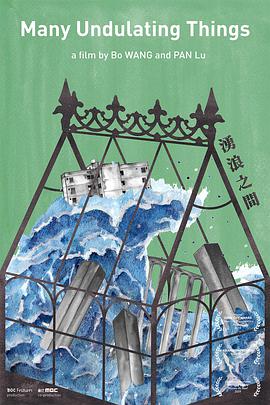
涌浪之间 (2019) [电影] 豆瓣 IMDb TMDB
湧浪之間
其它标题:
湧浪之间
/
湧浪之間
…
The film begins and ends in a shopping centre in Hong Kong. We carefully observe the smooth movement of the escalators, the constant flow of people that never stops, the musical fountain that presides over the centre of the internal courtyard, as if this gigantic complex could concentrate the circulation of the entire city, or even, the entire country. From there, it will be more a tale about concrete, enormous port warehouses, glazed galleries built for the 2010 universal exhibition, overpopulated tower blocks, the fragments of still recent colonialism...