Dirk Bogarde — Actor (50)

1977年的法斯宾德 (1977) [Movie] Douban TMDB IMDb
Rainer Werner Fassbinder, 1977
director:
Florian Hopf
/
Maximiliane Mainka
actor:
赖纳·维尔纳·法斯宾德
/
德克·博加德
…
other title:
Rainer Werner Fassbinder, 1977
Der Dokumentarfilm besteht hauptsächlich aus Interviews, die Florian Hopf 1977 mit Rainer Werner Fassbinder gedreht hat. Die Vertrautheit, die sich zwischen Hopf und Fassbinder über viele Jahre hin entwickelt hatte, ist in den mit großer Offenheit geführten Interviews spürbar.

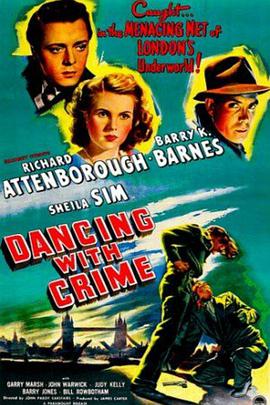
Sir John Mills' Moving Memories (2000) [Movie] Douban
Sir John Mills' life told through his own colour home movies!
'Moving Memories' is a unique opportunity to experience the life of a film legend through his own 16mm home movies. Sir John started shooting in 1948 before home movie making became widely accessable. He shot on the then groundbreaking colour reversal film which means that many of his colour clips are behind the scenes on movies released in black and white, such as 'Ice Cold in Alex' and 'Dunkirk'. The cast list for these never before seen home movies is extraordinary. Sir John recorded personal moments with unforgettable stars.
Moving Memories features interviews with Sir John , Hayley, Juliet, Jonathan Mills, & Lord Attenborough. It features classic movie clips, plus never before seen personal home movie footage, and amazing behind the scenes shots. A truly unique film (60 minutes).
Following the discovery of 12000 feet of personal 16mm home movies in Sir John Mills' attic, Marcus Dillistone directed and edited 'Moving Memories', a 60 minute film which tells the extraordinary life and career of Sir John Mills, uniquely told through Sir John's own behind-the-scenes footage!
The 'cast' of these unique home movies reads like a cinema who's who: Rex Harrison, David Niven, Stewart Grainger, Jean Simmons , Dickie Attenborough, Dirk Bogarde, Ernest Borgnine and Angela Lansbury... to name but a few!
'Moving Memories' is a unique opportunity to experience the life of a film legend through his own 16mm home movies. Sir John started shooting in 1948 before home movie making became widely accessable. He shot on the then groundbreaking colour reversal film which means that many of his colour clips are behind the scenes on movies released in black and white, such as 'Ice Cold in Alex' and 'Dunkirk'. The cast list for these never before seen home movies is extraordinary. Sir John recorded personal moments with unforgettable stars.
Moving Memories features interviews with Sir John , Hayley, Juliet, Jonathan Mills, & Lord Attenborough. It features classic movie clips, plus never before seen personal home movie footage, and amazing behind the scenes shots. A truly unique film (60 minutes).
Following the discovery of 12000 feet of personal 16mm home movies in Sir John Mills' attic, Marcus Dillistone directed and edited 'Moving Memories', a 60 minute film which tells the extraordinary life and career of Sir John Mills, uniquely told through Sir John's own behind-the-scenes footage!
The 'cast' of these unique home movies reads like a cinema who's who: Rex Harrison, David Niven, Stewart Grainger, Jean Simmons , Dickie Attenborough, Dirk Bogarde, Ernest Borgnine and Angela Lansbury... to name but a few!
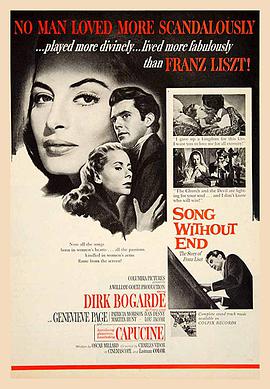
Song Without End (1960) [Movie] Douban
Song Without End
other title:
一曲相思未了情
/
无尽之歌
In a confused welter of artistic licence, this is the classical music biopic which makes 'Song to Remember'look like a masterpiece. Bogarde succeeds in diminishing the reputation of the musical colossus who spanned European music for most of the 19th Century. The absurdities of the plot, the sequoia-like quality of the acting and the prevalence of historical,musical and linguistic anachronisms combine to elevate this offering to the status of an A1 turkey.How a pianist of the stature of Bolet came to be mixed up in this fiasco can only be guessed at. The characterisation of Liszt fails to convey even a minute impression of his magnetic personality and the overwhelming effect that he had on not only his audiences, but also his pianistic rivals.Clara Schumann herself said that 'we toil over that which Liszt reads at sight!' Whilst the emphasis seems to focus on his romantic prowess,rather than his status as the greatest pianist of the century or,arguably, of all time, one feels,nevertheless, that this was an opportunity lost.
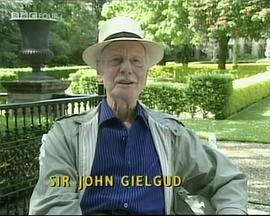
六十年代的英伦电影 (1993) [TV] Douban
Hollywood U.K.
actor:
Michael Caine
/
Lindsay Anderson
…
In this series, first shown between 5th September to 10th October 1993, director Richard Lester (A Hard Day's Night, The Three Musketeers) surveys a remarkable decade in British filmmaking through archive clips and interviews with directors and stars.

The Private Dirk Bogarde: Part One (2001) [Movie] Douban TMDB
The Private Dirk Bogarde
director:
Adam Low
actor:
Dirk Bogarde
other title:
The Private Dirk Bogarde
The first part of a televisual life of the film actor who died in 1999, drawing on new video footage from the archive of Bogarde's long-term partner and manager Anthony Forwood.
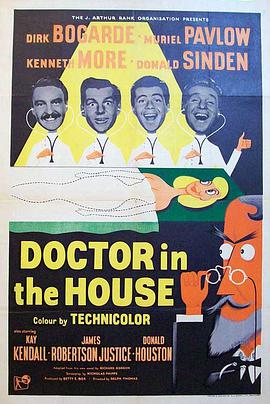
Doctor in the House (1954) [Movie] Douban
Doctor in the House
director:
拉尔夫·托马斯
actor:
德克·博加德
/
穆瑞尔·帕弗洛
…
other title:
房里的医生
/
Toubib or not toubib
Follow the antics of four of the funniest roommates who ever tried to get through English medical school. One's a womanizer, one's a rugby star, one's determined to flunk, and one just happens to be a good influence on the other three in this British production.
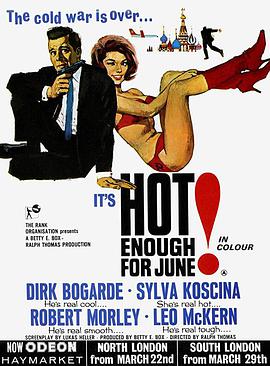
Hot Enough for June (1964) [Movie] Douban
Hot Enough for June
director:
拉尔夫·托马斯
actor:
德克·博加德
/
西娃·科丝西娜
…
other title:
捷京谍影
/
007艳传
…
Unemployed Czech-speaking writer Nicholas Whistler thinks he's got a job visiting Prague for a bit of industrial espionage. In fact he is now in the employ of British Intelligence. His pretty chauffeuse on arrival behind the Iron Curtain, Comrade Simonova, is herself a Czech agent. Just as well she's immediately attracted to 007's unwitting replacement.
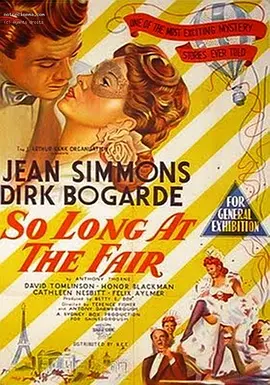
So Long at the Fair (1950) [Movie] Douban IMDb WikiData TMDB
So Long at the Fair
other title:
逆旅惊魂
/
Paris um Mitternacht
…
In 1889, young Englishwoman Vicky Barton (Jean Simmons) and her brother Johnny (David Tomlinson) arrive in Paris to see the Exposition Universelle. This is Vicky's first time in Paris, and after checking into a hotel, she drags her tired brother to dinner and the famous Moulin Rouge. She finally retires for the night, while Johnny has a late-night drink. When English painter George Hathaway (Dirk Bogarde) drops off his girlfriend, Rhoda O'Donovan (Honor Blackman), and her mother (Betty Warren) at the hotel, he asks Johnny for change for a 100 franc note to pay a carriage driver; Johnny loans him 50 francs and gives him his name and room number.
The next morning, Vicky finds a blank wall where Johnny's room used to be. When she questions hotel owner and manager Madame Hervé (Cathleen Nesbitt), the latter claims she arrived alone. The room number now adorns the common bathroom. Madame Hervé's brother Narcisse (Marcel Pontin) and the day porter (Eugene Deckers) back up her story.
Frantic, Vicky goes to see the British consul (Felix Aylmer), followed secretly by Narcisse. She has no proof of her brother's existence, so the consul can only suggest she find a witness, Nina (Zena Marshall), the hotel maid who attended her. Nina had informed her that she was going up in a balloon with her boyfriend at the Exposition that day, so the consul takes her there. Tragically, she is too late. Before she can talk to Nina, the balloon ascends, bursts into flames, and plummets to the ground, killing the two passengers.
Vicky tries the French police commissaire (Austin Trevor). He questions Madame Hervé and her brother, but can find nothing amiss in their story. Since her room has been reserved for only two nights, Vicky has to leave the hotel. Madame Hervé offers her a ticket home to England, which she is forced to accept, as she has little money left. However, unbeknownst to either party, Rhoda O'Donovan has been asked by George Hathaway to deliver a letter containing his loan repayment to Johnny. Not finding his room, Rhoda slips the envelope under Vicky's door, where she finds it.
Vicky goes to see George. When he confirms having met her brother, she bursts into tears. He offers his assistance. George notices there are six balconies, but only five rooms on the floor, and finds the missing hotel room, the entrance having been covered over to be part of the wall.
Under questioning by the police, Madame Hervé reveals where Johnny has been taken. It turns out that he became sick with the Black Plague during the night. The news would have been disastrous for the Exposition, so he was secretly taken away to a hospital. George brings along Doctor Hart (André Morell), who tells Vicky her brother has a chance of living.
The next morning, Vicky finds a blank wall where Johnny's room used to be. When she questions hotel owner and manager Madame Hervé (Cathleen Nesbitt), the latter claims she arrived alone. The room number now adorns the common bathroom. Madame Hervé's brother Narcisse (Marcel Pontin) and the day porter (Eugene Deckers) back up her story.
Frantic, Vicky goes to see the British consul (Felix Aylmer), followed secretly by Narcisse. She has no proof of her brother's existence, so the consul can only suggest she find a witness, Nina (Zena Marshall), the hotel maid who attended her. Nina had informed her that she was going up in a balloon with her boyfriend at the Exposition that day, so the consul takes her there. Tragically, she is too late. Before she can talk to Nina, the balloon ascends, bursts into flames, and plummets to the ground, killing the two passengers.
Vicky tries the French police commissaire (Austin Trevor). He questions Madame Hervé and her brother, but can find nothing amiss in their story. Since her room has been reserved for only two nights, Vicky has to leave the hotel. Madame Hervé offers her a ticket home to England, which she is forced to accept, as she has little money left. However, unbeknownst to either party, Rhoda O'Donovan has been asked by George Hathaway to deliver a letter containing his loan repayment to Johnny. Not finding his room, Rhoda slips the envelope under Vicky's door, where she finds it.
Vicky goes to see George. When he confirms having met her brother, she bursts into tears. He offers his assistance. George notices there are six balconies, but only five rooms on the floor, and finds the missing hotel room, the entrance having been covered over to be part of the wall.
Under questioning by the police, Madame Hervé reveals where Johnny has been taken. It turns out that he became sick with the Black Plague during the night. The news would have been disastrous for the Exposition, so he was secretly taken away to a hospital. George brings along Doctor Hart (André Morell), who tells Vicky her brother has a chance of living.
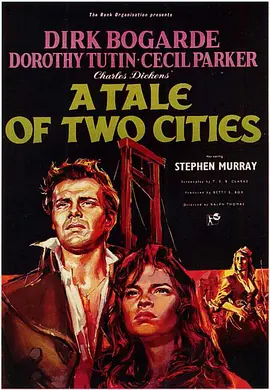
A Tale of Two Cities (1958) [Movie] Douban TMDB WikiData IMDb
A Tale of Two Cities
director:
拉尔夫·托马斯
actor:
德克·博加德
/
多洛特·图丁
…
other title:
双城记
/
두 도시 이야기
…
Set against the conditions leading up to the French Revolution and the Reign of Terror, French doctor Alexandre Manette serves an 18-year imprisonment in the Bastille in Paris, followed by his release to live in London with the daughter he has never met.
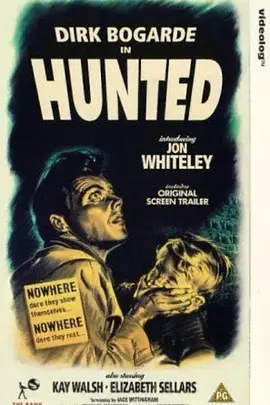

Modesty Blaise (1966) [Movie] Douban IMDb TMDB WikiData
Modesty Blaise
director:
约瑟夫·罗西
actor:
莫尼卡·维蒂
/
特伦斯·斯坦普
…
other title:
女谍玉娇龙
/
女金刚智破钻石案
…
Modesty Blaise, a secret agent whose hair color, hair style, and mod clothing change at a snap of her fingers is being used by the British government as a decoy in an effort to thwart a diamond heist. She is being set up by the feds but is wise to the plot and calls in sidekick Willie Garvin and a few other friends to outsmart them. Meanwhile, at his island hideaway, Gabriel, the diamond thief has his own plans for Blaise and Garvin.
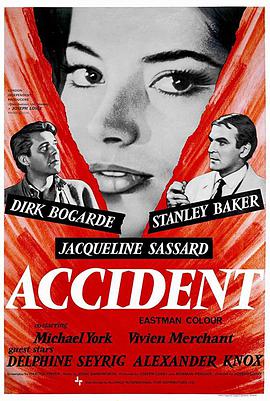
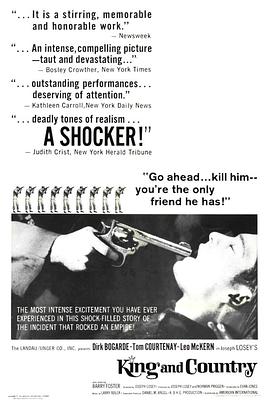
King and Country (1964) [Movie] Douban
King and Country
other title:
国王与国家
/
吾土吾王
…
The last time Britain was a major force in world cinema was in the 1960s; a documentary of a few years back on the subject was entitled 'Hollywood UK'. This was the era of the Kitchen Sink, social realism, angry young men; above all, the theatrical. And yet, ironically, the best British films of the decade were made by two Americans, Richard Lester and Joseph Losey, who largely stayed clear of the period's more typical subject matter, which, like all attempts at greater realism, now seems curiously archaic.
'King and Country', though, seems to be the Losey film that tries to belong to its era. Like 'Look Back in Anger' and 'A Taste of Honey', it is based on a play, and often seems cumbersomely theatrical. Like 'Loneliness of the long distance runner', its hero is an exploited, reluctantly transgressive working class lad played by Tom Courtenay. Like (the admittedly brilliant) 'Charge of the Light Brigade', it is a horrified, near-farcical (though humourless) look at the horrors of war, most particularly its gaping class injustices.
Private Hamp is a young volunteer soldier at Pachendaele, having served three years at the front, who is court-martialled for desertion. Increasingly terrorised by the inhuman pointlessness of trench warfare, the speedy, grisly, violent deaths of his comrades and the medieval, rat-infested conditions of his trench, he claims to have emerged dazed from one gruesome attack and decided to walk home, to England. He is defended by the archetypal British officer, Captain Hargreaves, who professes disdain for the man's cowardice, but must do his duty. He attempts to spin a defence on the grounds of madness, but the upper-crust officers have heard it all before.
This is a very nice, duly horrifying, liberal-handwringing, middle-class play. It panders to all the cliches of the Great War - the disgraceful working-class massacre, while the officers sup whiskey (Haig!) - figured in some charmingly obvious symbolism: Hargreaves throwing a dying cigarette in the mud; Hamp hysterically playing blind man's buff.
The sets are picturesquely grim, medieval, a modern inferno, as these men lie trapped in a never-ending, subterranean labyrinth, lit by hellish fires, with rats for company and the constant sound of shells and gunfire reminding them of the outside world.
The play, in a very middle-class way, is not really about the working class at all - Hamp is more of a symbol, an essence, lying in the dark, desolately playing his harmonica, a note of humanity in a score of inhumanity. He doesn't develop as a character. The play is really about Hargreaves, his realisation of the shabby inadequacy of notions like duty. He develops. This realisation sends him to drink (tastier than dying!). Like his prole subordinates, he falls in the mud, just as Hamp is said to have done; he even says to his superior 'We are all murderers'.
This is all very effective, if not much of a development of RC Sherriff's creaky 'Journey's End', filmed by James Whale in 1930. Its earnestness and verbosity may seem a little stilted in the age of 'Paths of Glory' and 'Dr. Strangelove'; we may feel that 'Blackadder goes forth' is a truer representation of the Great War. But what I have described is not the film Losey has made. He is too sophisticated and canny an intellectual for that.
The film opens with a lingering pan over one of those monumental War memorials you see all over Britain (and presumably Europe), as if to say Losey is going to question the received ideas of this statue, the human cost. But what he's really questioning is this play, and its woeful inadequacy to represent the manifold complexities of the War.
This is Brechtian filmmaking at its most subtle. We are constantly made aware of the artifice of the film, the theatrical - the stilted dialogue is spoken with deliberate stiffness; theatrical rituals are emphasised (the initial interrogation; the court scene, where actors literally tread the boards, enunciating the predictable speeches; the mirror-play put on by the hysterical soldiers and the rats; the religious ceremony; the horrible farce of the execution). Proscenium arches are made prominent, audiences observe events.
This is a play that would seek to contain, humanise, explain the Great War. This is a hopeless task, as Losey's provisional apparatus explains, 'real' photographs of harrowing detritus fading from the screen as if even these are not enough to convey the War, never mind a well-made, bourgeois play. Losey's vision may be apocalyptic - it questions the possibility of representation at all - the various tags of poetry quoted make no impact on hard men men who rattled them off when young; the Shakespearean duality of 'noble' drama commented on by 'low' comedy, effects no transcendence, no greater insight.
Losey's camerawork and composition repeatedly breaks our involvement with the drama, any wish we might have for manly sentimentality; in one remarkable scene an officer takes an Aubrey Beardsley book from the cameraman! This idea of the theatrical evidently mirrors the rigid class 'roles' played by the main characters (Hamp's father and grandfather were cobblers too; presumably Hargreaves' were always Sandhurst cadets). Losey also takes a sideswipe at the kitchen sink project, by using its tools - history has borne him out.
'King and Country', though, seems to be the Losey film that tries to belong to its era. Like 'Look Back in Anger' and 'A Taste of Honey', it is based on a play, and often seems cumbersomely theatrical. Like 'Loneliness of the long distance runner', its hero is an exploited, reluctantly transgressive working class lad played by Tom Courtenay. Like (the admittedly brilliant) 'Charge of the Light Brigade', it is a horrified, near-farcical (though humourless) look at the horrors of war, most particularly its gaping class injustices.
Private Hamp is a young volunteer soldier at Pachendaele, having served three years at the front, who is court-martialled for desertion. Increasingly terrorised by the inhuman pointlessness of trench warfare, the speedy, grisly, violent deaths of his comrades and the medieval, rat-infested conditions of his trench, he claims to have emerged dazed from one gruesome attack and decided to walk home, to England. He is defended by the archetypal British officer, Captain Hargreaves, who professes disdain for the man's cowardice, but must do his duty. He attempts to spin a defence on the grounds of madness, but the upper-crust officers have heard it all before.
This is a very nice, duly horrifying, liberal-handwringing, middle-class play. It panders to all the cliches of the Great War - the disgraceful working-class massacre, while the officers sup whiskey (Haig!) - figured in some charmingly obvious symbolism: Hargreaves throwing a dying cigarette in the mud; Hamp hysterically playing blind man's buff.
The sets are picturesquely grim, medieval, a modern inferno, as these men lie trapped in a never-ending, subterranean labyrinth, lit by hellish fires, with rats for company and the constant sound of shells and gunfire reminding them of the outside world.
The play, in a very middle-class way, is not really about the working class at all - Hamp is more of a symbol, an essence, lying in the dark, desolately playing his harmonica, a note of humanity in a score of inhumanity. He doesn't develop as a character. The play is really about Hargreaves, his realisation of the shabby inadequacy of notions like duty. He develops. This realisation sends him to drink (tastier than dying!). Like his prole subordinates, he falls in the mud, just as Hamp is said to have done; he even says to his superior 'We are all murderers'.
This is all very effective, if not much of a development of RC Sherriff's creaky 'Journey's End', filmed by James Whale in 1930. Its earnestness and verbosity may seem a little stilted in the age of 'Paths of Glory' and 'Dr. Strangelove'; we may feel that 'Blackadder goes forth' is a truer representation of the Great War. But what I have described is not the film Losey has made. He is too sophisticated and canny an intellectual for that.
The film opens with a lingering pan over one of those monumental War memorials you see all over Britain (and presumably Europe), as if to say Losey is going to question the received ideas of this statue, the human cost. But what he's really questioning is this play, and its woeful inadequacy to represent the manifold complexities of the War.
This is Brechtian filmmaking at its most subtle. We are constantly made aware of the artifice of the film, the theatrical - the stilted dialogue is spoken with deliberate stiffness; theatrical rituals are emphasised (the initial interrogation; the court scene, where actors literally tread the boards, enunciating the predictable speeches; the mirror-play put on by the hysterical soldiers and the rats; the religious ceremony; the horrible farce of the execution). Proscenium arches are made prominent, audiences observe events.
This is a play that would seek to contain, humanise, explain the Great War. This is a hopeless task, as Losey's provisional apparatus explains, 'real' photographs of harrowing detritus fading from the screen as if even these are not enough to convey the War, never mind a well-made, bourgeois play. Losey's vision may be apocalyptic - it questions the possibility of representation at all - the various tags of poetry quoted make no impact on hard men men who rattled them off when young; the Shakespearean duality of 'noble' drama commented on by 'low' comedy, effects no transcendence, no greater insight.
Losey's camerawork and composition repeatedly breaks our involvement with the drama, any wish we might have for manly sentimentality; in one remarkable scene an officer takes an Aubrey Beardsley book from the cameraman! This idea of the theatrical evidently mirrors the rigid class 'roles' played by the main characters (Hamp's father and grandfather were cobblers too; presumably Hargreaves' were always Sandhurst cadets). Losey also takes a sideswipe at the kitchen sink project, by using its tools - history has borne him out.
德克·博加德:我自己 (1992) [Movie] Douban
Dirk Bogarde: By Myself
director:
Paul Joyce
actor:
德克·博加德
other title:
Dirk Bogarde: By Myself
"A must-see for Dirk Bogarde fans, and highly recommended to anyone who wants to hear an intelligent actor speak at length. This two-part British TV documentary by Paul Joyce features a fascinating discussion by Bogarde about his craft, with particularly interesting bits about Visconti’s blocking of his mise-en-scene to music by Mahler in Death in Venice; how Fassbinder allegedly destroyed Despair in the cutting room; the controversial early handling of a gay theme in Victim; experiences with Judy Garland and Joseph Losey; the Hollywood blacklist; and work with Bertrand Tavernier on Daddy Nostalgia, Bogarde’s farewell film."
(from
)
(from
)
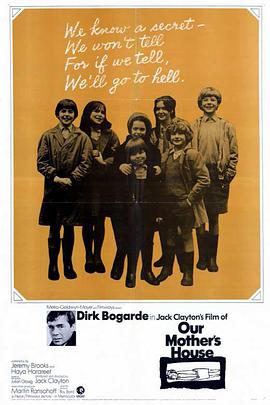
Our Mother's House (1967) [Movie] Douban WikiData IMDb TMDB
Our Mother's House
director:
杰克·克莱顿
actor:
Dirk Bogarde
other title:
我们妈妈的房子
/
苦海七雏
…
When their deeply religious mother dies, the seven Hook children bury her in the garden and continue life as normal. Then their absent father , Charlie, reappears...
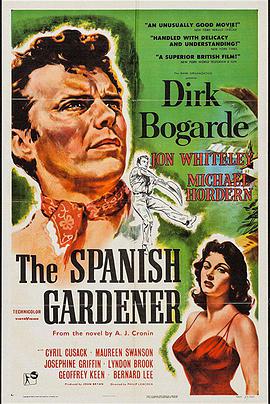
The Spanish Gardener (1957) [Movie] TMDB IMDb WikiData Douban
The Spanish Gardener
director:
Philip Leacock
actor:
德克·博加德
/
Jon Whiteley
other title:
西班牙园丁
/
Der spanische Gärtner
…
Harrington Brande, a British diplomat who recently broke up with his wife, is stationed in a small coastal town in Spain with his son, Nicholas. Harrington is unreasonably possessive of Nicholas and becomes jealous when he begins to form a close friendship with Jose, their gentle gardener.
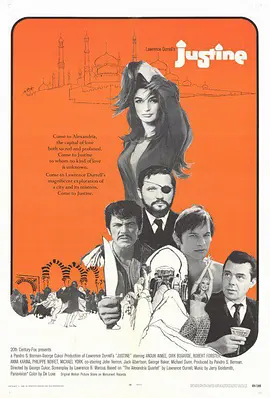
Justine (1969) [Movie] Douban
Justine
other title:
贾斯廷
/
乱世奇花数落红(港)
…
In Alexandria, in 1938, Darley, a young British schoolmaster and poet, makes friends through Pursewarden, the British consular officer, with Justine, the beautiful and mysterious wife of a Coptic banker. He observes the affairs of her heart and incidentally discovers that she is involved in a plot against the British, meant to arm the Jewish underground in Palestine. The plot finally fails, Justine is sent to jail and Darley decides to return to England.
- Written by Guy Bellinger (From IMDb)
- Written by Guy Bellinger (From IMDb)