John Cage — 艺术家 (54)
4'33'' [音乐] 豆瓣
John Cage 类型: 世界音乐
发布日期 2011年1月7日 出版发行: Cramps Records
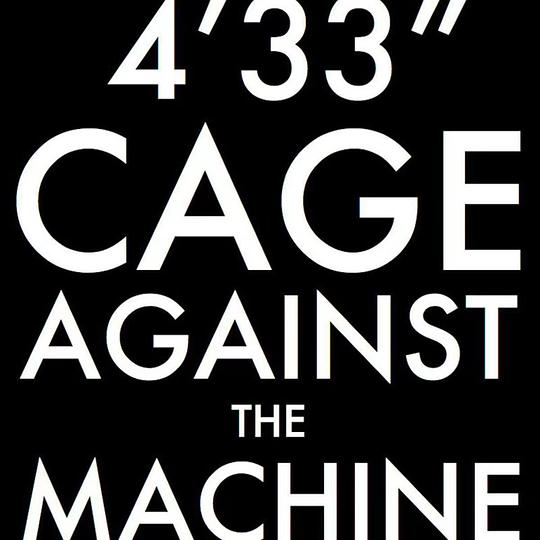
《4分33秒》(英语:4′33″、Four minutes, thirty-three seconds、Four thirty-three)是由美国先锋派作曲家约翰·凯奇创作的曲子,任何乐器或乐器组合皆可演奏。此曲最特别之处为演奏者从头至尾都不需要演奏出一个音。
《4分 33秒》是美国先锋派作曲家约翰·凯奇最著名的音乐作品之一。任何乐器或乐器组合皆可演奏《4分33秒》,但比较常见的版本是以钢琴演奏。可是,根据《4分33秒》的乐谱显示,演奏者从头至尾都不需要奏出一个音。一般来说,钢琴演奏者在乐章之间会做出开合琴盖、擦汗等动作,而在演奏这首乐曲期间听众听见的各种声响都可被认为是音乐的组成部分。因此,《4分33秒》具有机遇音乐的特征。而因为这部作品在演奏时演奏者不会演奏出一个音,所以常被称为“四分半钟的寂静”。另外,因为此曲的演奏会被环境与观众行为影响,所以每次演奏期间发出的声音都会不同。此曲子分为三个乐章,其中第一乐章长度为30秒;第二乐章长度为2分23秒;第三乐章长度为1分40秒。
《4分33秒》的首次公演是由大卫·都铎于1952年8月29日在伍德斯托克进行。
New Electronic Music From Leaders Of The Avant-Garde [音乐] 豆瓣
John Cage / Milton Babbitt 类型: 电子
发布日期 2002年8月7日 出版发行: Sony International
Originally released on LP in 1967.
Recording: July 14, 1967 Columbia 30th Street Studio, NYC (Track 1)
Unknown / Master Purchase (Track2-5)
16-page booklet includes liner notes in Japanese
John Cage Meets Sun Ra [音乐] 豆瓣
8.0 (5 个评分) John Cage / Sun Ra 类型: 爵士
发布日期 1987年1月1日 出版发行: Meltdown Records
John Cage: excerpts from Empty Words (part IV) (1974-75), read as interludes
Sun Ra improvising on the Yamaha DX7 synthesizer. Empty Words IV performed by John Cage, voice.
Recorded live in concert: June 8, 1986 at Coney Island, N.Y.
LP released in 1987
The New Albion Discography has some more background information on this recording
These are unedited segments of the historic concert that was part of the "Sideshows by the Seashore" held on June 8, 1986 in Coney Island, NY. Improvisations and songs by Sun Ra and Cage's indeterminate performance vocals based on strict composition methods are contrasted and find a common meeting ground as, toward the end of the session, they play together. Fascinating and in genuine communal spirit.
Cage Performs Cage: Empty Words with Music for Piano; One 7 [音乐] 豆瓣
John Cage / Yvar Mikhashoff
发布日期 2009年2月24日 出版发行: Mode
Mode celebrates its 200th release with a special installment in its John Cage Edition - works performed by John Cage himself, released for the first time.
These recordings were made in Buffalo, New York in April 1991. Cage and Mode Records were in Buffalo to work on the premiere of his Europera 5, which he wrote for Yvar Mikhashoff, a longtime collaborator and specialist in New Music.
Cage and Mikhashoff had performed this special duet of Empty Words simultaneous with Music for Piano in concert several times, and decided to make this recording, without an audience, especially for Mode.
The single sounds of Music for Piano, many of them quiet, make for a beautiful counterpoint with the mysterious and somewhat lonesome voice of the elderly Cage.
As part of the events surrounding Europera 5, Cage gave a performance of the solo piece One7, recorded in a live performance here.
Like most of the other Number Pieces, One7 is written in what Cage called time brackets - flexible measures whose start times and end times are specified. In this work, the performer has more freedom in that Cage gives no specific content for these time brackets, but rather a series of 10 numbers from 1 to 12 (1 and 10 do not appear) which represent sounds that performer chooses himself.
Liner notes by Rob Haskins.
Ryoanji [音乐] 豆瓣
发布日期 1996年1月1日 出版发行: hat ART CD 6183
In 1983 started a composition in progress called Ryoanji, named after the rock garden in Kyoto, Japan. This garden is a collection of 15 rocks, placed in a landscape of raked, white sand. In the summer of 1983 Cage started a series of drawings entitled Where R=Ryoanji, using 15 different stones and drawing around these. Around that time the oboist James Ostryniec asked Cage to write a piece for him, which resulted in the first part of Ryoanji. Between 1983 and 1985 Cage added 4 more parts for voice, flute, double bass and trombone. In July 1992 Cage made sketches (during an interview with Joan Retallack and Michael Bach, described in Musicage - Cage muses on Words, Art, Music. ), together with Michael Bach, for a cello part he never completed.
The solos (in any combination or as solos) are always accompanied by a percussion part or a similar 20 member orchestral part.
Every solo is a series of 8 songs (9 in the voice version). A song is created on 2 pages, each of which contains 2 rectangular systems. In every rectangle Cage traced parts of the perimeters of the given stones. These curves should be played as glissandi, within the given pitch ranges. In some places, contours overlap, thus being impossible to play for a soloist. In these cases, tape recordings are used to allow the soloist to play duets or trios.
The percussion part is a single complex of 2 unspecified sounds, played in unison, wood and metal (not metal and metal). The metres for these materials are twelve, thirteen, fourteen or fifteen.
The twenty musicians of the orchestra each independently choose a single sound, which they use for the entire performance. They should play in "Korean unison", their attacks being close, but not exactly together. These parts are a series of quarter notes (like in the percussion part) with notations (different for each instrument) to play slightly before, slightly after or more or less on the beat.
The soloists represent the stones of the garden, the accompaniment the raked sand.
Cage: Indeterminacy [音乐] 豆瓣
John Cage / David Tudor
发布日期 1992年11月10日 出版发行: Smithsonian Folkways
The idea behind Indeterminacy was, like many Cagean ideas, essentially simple and audaciously original. Cage read 90 stories, his speed determined by the story's length. In another room, beyond earshot of Cage, David Tudor, pianist and veteran Cage collaborator, performed miscellaneous selections from Cage's Concert for Piano and Orchestra and played pre-recorded tape from Cage's Fontana Mix. The resulting collaboration is an astounding piece of "music," and a fine introduction to the innovations of John Cage. "A wonderfully curious way to hear stories." - Stereophile
The 25-Year Retrospective Concert of the Music of John Cage [音乐] 豆瓣
发布日期 1995年1月17日 出版发行: Wergo
On May 15, 1958 - a few months before Cage's memorable appearance in Darmstadt - some friends organized a concert for the then 45 year old composer in New York's Town Hall. The friends were Jasper Johns, Robert Rauschenberg, and Emile de Antonio.
The pieces performed were written over a period of 25 years - between 1934 and 1958. Presented together, they reflect not only Cage's search for new compositional processes and means of expression, they also already contain the seed for all the technical procedures and the ideological basis of his later compositions: the interest in Eastern philosophies, the involvement with "silence", and the introduction of chance as a compositional procedure.
WERGO has now obtained the original recordings from producer George Avakian and has released them on three CDs, following the original sequence of the pieces. The 96-page booklet includes all texts (extensive notes by John Cage and George Avakian) and facsimiles of music scores that appeared in the original record booklet, and, in addition, rare historic photographs.
Four of the nine works documented in the album were first performances: "Six Short Inventions for Seven Instruments", "She is Asleep" (the first complete performance), "Music for Carillon", and "Concerto for Piano and Orchestra", in which Merce Cunningham took the part of the conductor - the "living clock" - and David Tudor that of the pianist.
Artists
Anahid Ajemian, Maro Ajemian, Douglas Allan, Joan Brockway, Melvyn Broiles, Earle Brown, Philip Brown, Don Butterfield, John Cage, Xenia Cage, Arline Carmen, Isadore Cohen, Michael Colgrass, Merce Cunningham, Doris Dennison, Burton Fisch, William Gromko, Margaret Jansen, Albert Kaufman, Andrew Lolya, Allan Martin, Paul Price, Frank Rehak, Marvin Rosenberg, Sy Schwartzberg, Warren Smith, Jesse Taiko, David Tudor
OHM: The Early Gurus of Electronic Music [音乐] 豆瓣
Brian Eno / Maryanne Amacher
发布日期 2000年4月25日 出版发行: Ellipsis Arts
OHM+ : the early gurus of electronic music

Special Edition 3CD + DVD

Leaps in technology: oscillators, generators, vacuum tubes, amplifiers, transistors, magnetic tape, integrated circuits, and the microchip— inspired new instruments: the telharmonium, theremin, ondes martenot, electronic sackbut, clavivox, electronium, moog synthesizer, and computers— and artists everywhere hungry for new modes of expression.

This collection is a humble but bold attempt to give form to the wonderful, multi-directional, inevitable birth of electronic music.

"Many of the ideas in this collection have now been so completely assimilated into popular listening that it may sometimes be hard to remember how surprising it all was on first outing. Some of it still sounds pretty exotic. These CDs are important as part of the story of how we got to where we are now–the cultural conversation so far–and as a still fruitful repertoire of future possibilities." —from the Foreword by Brian Eno

Three CDs—42 original music tracks from 1948–1980 112 Page Book—extensive artist interviews, commentaries, and archival photographs Special Edition DVD—over two hours of rare performances, interviews, animations, and experimental video.
Sonatas And Interludes Vol. 1 [音乐] 豆瓣
Yuji Takahashi / John Cage 类型: 古典
发布日期 1997年1月1日 出版发行: Fylkingen Records
Recorded July 26 and 27, 1965 at the Italian Institute in Stockholm, Sweden.
Digipak packaging.
Originally released 1966 as "Sonatas And Interludes Vol. 1" and "Sonatas And Interludes Vol. 2"