佛朗哥·泽菲雷里 — 导演 (53)
唐 • 卡洛斯 [演出] 豆瓣
Don Carlos
类型: Opera 编剧: Joseph Méry / Camille du Locle
其它标题: Don Carlos / Don Carlo 导演: 未知 / Franco Zeffirelli 演员: Jean Morère / Louis-Henri Obin / Jean-Baptiste Faure / Joseph David / Armand Castelmary
[This synopsis is based on the original five-act version composed for Paris and completed in 1866. Important changes for subsequent versions are noted in indented brackets. First lines of arias, etc., are given in French and Italian.]
Act 1
[This act was omitted in the 1883 revision]
A prelude and chorus of woodcutters and their wives is heard. They complain of their hard life, made worse by war with Spain. Elisabeth, daughter of the King of France, arrives with her attendants. She reassures the people that her impending marriage to Don Carlos, Infante and son of Philip II, King of Spain, will bring the war to an end, and departs.
[This was cut before the Paris première and replaced by a short scene in which Elisabeth crosses the stage and hands out money to the woodcutters; she exits without singing.]
Carlos, coming out from hiding, has seen Elisabeth and fallen in love with her (Aria: "Je l'ai vue" / "Io la vidi"). When she reappears, he initially pretends to be a member of the Count of Lerma's delegation. She asks him about Don Carlos, whom she has not yet met. Before long, Carlos reveals his true identity and his feelings, which she reciprocates (Duet: "De quels transports poignants et doux" / "Di quale amor, di quanto ardor"). A cannon-shot signifies that peace has been declared between Spain and France. Thibault appears and gives Elisabeth the surprising news that her hand is to be claimed not by Carlos but by his father, Philip. When Lerma and his followers confirm this, Elisabeth is devastated but feels bound to accept, in order to consolidate the peace. She departs for Spain, leaving Carlos equally devastated.
Act 2
[This is Act 1 in the 1883 revision]
Scene 1: The monastery of Saint-Just (San Jerónimo de Yuste) in Spain
The scene takes place soon after King Philip II and Elisabeth have married. Monks pray before the tomb of the former Emperor Charles V ("Carlo Quinto"). The monks' leader proclaims that the Emperor was proud but has been humbled though error.
Don Carlos enters, anguished that the woman he loves is now his stepmother.
[In the 1883 revision, he sings a revised version of the aria "Je l'ai vue" / "Io la vidi", which was salvaged from the omitted first act but with some different music and different text to reflect his current situation. In the four-act version he already knows that he cannot marry Elisabeth. In the original, when singing the aria, he was still expecting to marry her.]
When Carlos pauses in his lament, the leader of the monks proclaims that the turbulence of the world persists even in sacred places; we cannot rest except in Heaven. The sound of his voice frightens Carlos, who thinks it sounds like that of the Emperor Charles V. Carlos further notices that the monk physically resembles the Emperor, and recalls hearing rumors that the Emperor's ghost haunts the monastery.
Carlos' dear friend Rodrigue, Marquis of Posa, who has just arrived from the oppressed land of Flanders, enters. The two greet each other joyfully (Aria: "J'étais en Flandres").
Posa asks for the Infante's aid on behalf of the suffering people there. Carlos reveals that he loves his stepmother. Posa is first shocked, but then sympathetic. He encourages Carlos to leave Spain and go to Flanders, and to forget his pain by focusing on political activity there. The two men swear eternal friendship (Duet: "Dieu, tu semas dans nos âmes" / "Dio, che nell'alma infondere").
King Philip and his new wife, with their attendants, enter also to do homage at Charles V's tomb, while Don Carlos laments his lost love.
Scene 2: A garden near Saint-Just
Princess Eboli sings the Veil Song ("Au palais des fées" / "Nel giardin del bello") about a Moorish King trying to seduce an alluring veiled beauty, who turns out to be his own neglected wife. Elisabeth enters. Posa gives her a letter from France, which covers a secret note from Don Carlos. At his urging (Aria: "L'Infant Carlos, notre espérance" / "Carlo ch'è sol il nostro amore"), Elisabeth agrees to see the Infante alone. Unaware of this relationship, Eboli infers that she, Eboli, is the one Don Carlos loves.
When they are alone, Don Carlos tells Elisabeth that he is miserable, and asks her to request the King to send him to Flanders. She promptly agrees, provoking Carlos to renew his declarations of love, which she piously rejects. Don Carlos exits in a frenzy, shouting that he must be under a curse. The King enters and becomes angry because the Queen is alone and unattended. His suspicions are insulting to her. He orders the lady-in-waiting who was meant to be attending her, the Countess of Aremberg, to return to France, prompting Elizabeth to sing a sorrowful farewell-aria. (Aria: "Oh ma chère compagne" / "Non pianger, mia compagna").
The King now approaches Posa, with whose character and activism he is impressed, and offers to reward him for his loyalty and service. Posa begs the King to stop oppressing the people of Flanders. The King calls Posa's idealism unrealistic and warns that the Grand Inquisitor is watching him. The King confides in Posa, telling him that he fears that Carlos is having an affair with Elisabeth. Posa replies that Carlos is innocent, and offers to watch Elisabeth and to be responsible for her good behavior. The King gratefully accepts this offer, and again warns Posa to beware of the Grand Inquisitor.
[This dialogue was revised three times by Verdi]
Act 3
[This is Act 2 in the 1883 revision]
Scene 1: Evening in the Queen's garden in Madrid
Elisabeth is tired, and wishes to concentrate on the following day's coronation of the King. To avoid the divertissement planned for the evening, she exchanges masks with Eboli, assuming that thereby her absence will not be noticed, and leaves.
[This scene was omitted from the 1883 revision]
[In the première, the ballet (choreographed by Lucien Petipa and entitled "La Pérégrina") took place at this point]
At midnight, Don Carlos enters, clutching a note suggesting a tryst in the gardens. Although he thinks this is from Elisabeth, it is really from Eboli. Eboli, who still thinks Don Carlos loves her, enters. Don Carlos mistakes her for Elisabeth in the dark, and passionately declares his love. When he sees Eboli's face, he realizes his error and recoils from her. Eboli guesses his secret - that he was expecting the Queen, whom he loves. She threatens to tell the King that Elisabeth and Carlos are lovers. Carlos, terrified, begs for mercy. Posa enters, and warns her not to cross him; he is the King's confidant. Eboli replies by hinting darkly that she is a formidable and dangerous foe, with power which Posa does not yet know about. (Her power is that she is having an affair with the King, but she does not reveal this yet.) Posa draws his dagger, intending to stab her to death, but reconsiders, spares her, and declares his trust in the Lord. Eboli exits in a vengeful rage. Posa advises Carlos to entrust to him any sensitive, potentially incriminating political documents that he may have and, when Carlos agrees, they reaffirm their friendship.
Scene 2: In front of the Cathedral of Valladolid
Preparations are being made for an "Auto-da-fé", the public parade and burning of condemned heretics. While the people celebrate, monks drag the condemned to the woodpile. A royal procession follows, and the King addresses the populace, promising to protect them with fire and sword. Don Carlos enters with six Flemish envoys, who plead with the King for their country's freedom. Although the people and the court are sympathetic, the King, supported by the monks, orders his guards to arrest the envoys. Carlos demands that the King grant him authority to govern Flanders; the King scornfully refuses. Enraged, Carlos draws his sword against the King. The King calls for help but the guards will not attack Don Carlos. Posa steps in and takes the sword from Carlos. Relieved and grateful, the King raises Posa to the rank of Duke. The guards arrest Carlos, the monks fire the woodpile, and as the flames start to rise, a heavenly voice can be heard promising heavenly peace to the condemned souls.
Act 4
[This is Act 3 in the 1883 revision]
Scene 1: Dawn in King Philip's study in Madrid
Alone and suffering from insomnia, the King, in a reverie, laments that Elisabeth has never loved him, that his position means that he has to be eternally vigilant and that he will only sleep properly when he is in his tomb in the Escorial (Aria: "Elle ne m'aime pas" / "Ella giammai m'amò"). The blind, ninety-year-old Grand Inquisitor is announced and shuffles into the King's apartment. When the King asks if the Church will object to him putting his own son to death, the Inquisitor replies that the King will be in good company: God sacrificed His own son. In return for his support, the Inquisitor demands that the King have Posa killed. The King refuses at first to kill his friend, whom he admires and likes. However, the Grand Inquisitor reminds the King that the Inquisition can take down any king; he has created and destroyed other rulers before. Frightened and overwhelmed, the King begs the Grand Inquisitor to forget about the past discussion. The latter replies "Peut-être" / "Forse!" – perhaps! – and leaves. The King bitterly muses on his helplessness to oppose the Church.
Elisabeth enters, alarmed at the apparent theft of her jewel casket. However, the King produces it and points to the portrait of Don Carlos which it contains, accusing her of adultery. She protests her innocence but, when the King threatens her, she faints. In response to his calls for help, into the chamber come Eboli and Posa. Their laments of suspicion cause the King to realize that he has been wrong to suspect his wife ("Maudit soit le soupçon infâme" / "Ah, sii maledetto, sospetto fatale"). Aside, Posa resolves to save Carlos, though it may mean his own death. Eboli feels remorse for betraying Elisabeth; the latter, recovering, expresses her despair.
[This quartet was revised by Verdi in 1883]
Elisabeth and Eboli are left together.
[Duet: "J'ai tout compris", was cut before the première]
Eboli confesses that it was she who told the King that Elisabeth and Carlos were having an affair, for revenge against Carlos for having rejected her. She also confesses that she herself has had an affair with the King. Elisabeth orders her to go into exile, or enter a convent. After Elisabeth exits, Eboli, left alone, curses her own beauty and pride, and resolves to make amends by trying to save Carlos from the Inquisition (Aria: "O don fatal" / "O don fatale").
Scene 2: A prison
Don Carlos has been imprisoned. Posa arrives and tells Carlos that he (Posa) has saved Carlos from being executed, by allowing himself (Posa) to be incriminated by the politically sensitive documents which he had obtained from Carlos earlier (Aria, part 1: "C'est mon jour suprême" / "Per me giunto è il dì supremo"). A shadowy figure appears--one of the Grand Inquisitor's assassins--and shoots Posa in the chest. As he dies, Posa tells Carlos that Elisabeth will meet him at Saint-Just the following day. He adds that he is content to die if his friend can save Flanders and rule over a happier Spain (Aria, part 2: "Ah, je meurs, l'âme joyeuse" / "Io morrò, ma lieto in core"). At that moment, the King enters, offering his son freedom, as Posa had arranged. Carlos repulses him for having murdered Posa. The King sees that Posa is dead and cries out in sorrow.
[Duet: Carlos and the King- "Qui me rendra ce mort ?" /"Chi rende a me quest'uom" It was cut before the première and, following it, Verdi authorized its optional removal. The music was later re-used by Verdi for the Lacrimosa of his Messa da Requiem of 1874.]
Bells ring as Elisabeth and Eboli enter. The crowd pushes its way into the prison and threatens the King, demanding the release of Carlos. In the confusion, Eboli escapes with Carlos. The people are brave enough at first in the presence of the King, but they are terrified by the arrival of the Grand Inquisitor, and instantly obey his angry command to quiet down and pay homage to the King.
[After the première, some productions ended this act with the death of Posa. However, in 1883 Verdi provided a much shortened version of the insurrection, as he felt that otherwise it would not be clear how Eboli had fulfilled her promise to rescue Carlos.]
Act 5
[This is Act 4 in the 1883 revision]
The moonlit monastery of Yuste
Elisabeth kneels before the tomb of Charles V. She is committed to help Don Carlos on his way to fulfill his destiny in Flanders, but she herself longs only for death (Aria: "Toi qui sus le néant" / "Tu che le vanità"). Carlos appears and tells her that he has overcome his desire for her; he now loves her honorably, as a son loves his mother. They say a final farewell, promising to meet again in Heaven (Duet: "Au revoir dans un monde où la vie est meilleure" / "Ma lassù ci vedremo in un mondo migliore").
[This duet was twice revised by Verdi]
The King and the Grand Inquisitor enter. The King infers that Carlos and Elisabeth have been lovers and demands that they both be immediately killed in a double sacrifice. The Inquisitor confirms that the Inquisition will do its duty. A short summary trial follows, confirming Carlos's putative culpability.
[The trial was omitted in 1883 and does not occur on any recording]
Carlos, calling on God for protection, draws his sword to defend himself against the guards. He is fighting well in spite of being outnumbered, when a mysterious figure (the leader of the monks from the earlier scene at the tomb, which is listed here as Act 2 Scene 1 but is usually the opening scene of the opera, since the first act is usually omitted--so the Monk appears only at the very beginning and the very end of most performances and recordings) suddenly emerges from the tomb of Charles V. He grabs Carlos by the shoulder, and loudly proclaims that the turbulence of the world persists even in the Church; we cannot rest except in Heaven. The King and the Inquisitor recognize the Monk's voice: he is the King's father, Charles V, who was believed dead. Everyone screams in shock and astonishment, while the Monk drags Carlos into the tomb and closes the entrance.
唐 • 卡洛斯 1992年斯卡拉剧院版 [演出] 豆瓣
所属 演出: 唐 • 卡洛斯
语言: italian 意大利语 剧团: Orchestra del Teatro alla Scala 斯卡拉剧院管弦乐团 ; Coro del Teatro alla Scala 斯卡拉剧院合唱团 剧院: Teatro alla Scala 斯卡拉剧院 导演: Franco Zeffirelli
其它标题: 1992年斯卡拉剧院版 编剧: Joseph Méry / Camille du Locle 作曲: Giuseppe Verdi 演员: Luciano Pavarotti / Samuel Ramey
[This synopsis is based on the original five-act version composed for Paris and completed in 1866. Important changes for subsequent versions are noted in indented brackets. First lines of arias, etc., are given in French and Italian.]
Act 1
[This act was omitted in the 1883 revision]
A prelude and chorus of woodcutters and their wives is heard. They complain of their hard life, made worse by war with Spain. Elisabeth, daughter of the King of France, arrives with her attendants. She reassures the people that her impending marriage to Don Carlos, Infante and son of Philip II, King of Spain, will bring the war to an end, and departs.
[This was cut before the Paris première and replaced by a short scene in which Elisabeth crosses the stage and hands out money to the woodcutters; she exits without singing.]
Carlos, coming out from hiding, has seen Elisabeth and fallen in love with her (Aria: "Je l'ai vue" / "Io la vidi"). When she reappears, he initially pretends to be a member of the Count of Lerma's delegation. She asks him about Don Carlos, whom she has not yet met. Before long, Carlos reveals his true identity and his feelings, which she reciprocates (Duet: "De quels transports poignants et doux" / "Di quale amor, di quanto ardor"). A cannon-shot signifies that peace has been declared between Spain and France. Thibault appears and gives Elisabeth the surprising news that her hand is to be claimed not by Carlos but by his father, Philip. When Lerma and his followers confirm this, Elisabeth is devastated but feels bound to accept, in order to consolidate the peace. She departs for Spain, leaving Carlos equally devastated.
Act 2
[This is Act 1 in the 1883 revision]
Scene 1: The monastery of Saint-Just (San Jerónimo de Yuste) in Spain
The scene takes place soon after King Philip II and Elisabeth have married. Monks pray before the tomb of the former Emperor Charles V ("Carlo Quinto"). The monks' leader proclaims that the Emperor was proud but has been humbled though error.
Don Carlos enters, anguished that the woman he loves is now his stepmother.
[In the 1883 revision, he sings a revised version of the aria "Je l'ai vue" / "Io la vidi", which was salvaged from the omitted first act but with some different music and different text to reflect his current situation. In the four-act version he already knows that he cannot marry Elisabeth. In the original, when singing the aria, he was still expecting to marry her.]
When Carlos pauses in his lament, the leader of the monks proclaims that the turbulence of the world persists even in sacred places; we cannot rest except in Heaven. The sound of his voice frightens Carlos, who thinks it sounds like that of the Emperor Charles V. Carlos further notices that the monk physically resembles the Emperor, and recalls hearing rumors that the Emperor's ghost haunts the monastery.
Carlos' dear friend Rodrigue, Marquis of Posa, who has just arrived from the oppressed land of Flanders, enters. The two greet each other joyfully (Aria: "J'étais en Flandres").
Posa asks for the Infante's aid on behalf of the suffering people there. Carlos reveals that he loves his stepmother. Posa is first shocked, but then sympathetic. He encourages Carlos to leave Spain and go to Flanders, and to forget his pain by focusing on political activity there. The two men swear eternal friendship (Duet: "Dieu, tu semas dans nos âmes" / "Dio, che nell'alma infondere").
King Philip and his new wife, with their attendants, enter also to do homage at Charles V's tomb, while Don Carlos laments his lost love.
Scene 2: A garden near Saint-Just
Princess Eboli sings the Veil Song ("Au palais des fées" / "Nel giardin del bello") about a Moorish King trying to seduce an alluring veiled beauty, who turns out to be his own neglected wife. Elisabeth enters. Posa gives her a letter from France, which covers a secret note from Don Carlos. At his urging (Aria: "L'Infant Carlos, notre espérance" / "Carlo ch'è sol il nostro amore"), Elisabeth agrees to see the Infante alone. Unaware of this relationship, Eboli infers that she, Eboli, is the one Don Carlos loves.
When they are alone, Don Carlos tells Elisabeth that he is miserable, and asks her to request the King to send him to Flanders. She promptly agrees, provoking Carlos to renew his declarations of love, which she piously rejects. Don Carlos exits in a frenzy, shouting that he must be under a curse. The King enters and becomes angry because the Queen is alone and unattended. His suspicions are insulting to her. He orders the lady-in-waiting who was meant to be attending her, the Countess of Aremberg, to return to France, prompting Elizabeth to sing a sorrowful farewell-aria. (Aria: "Oh ma chère compagne" / "Non pianger, mia compagna").
The King now approaches Posa, with whose character and activism he is impressed, and offers to reward him for his loyalty and service. Posa begs the King to stop oppressing the people of Flanders. The King calls Posa's idealism unrealistic and warns that the Grand Inquisitor is watching him. The King confides in Posa, telling him that he fears that Carlos is having an affair with Elisabeth. Posa replies that Carlos is innocent, and offers to watch Elisabeth and to be responsible for her good behavior. The King gratefully accepts this offer, and again warns Posa to beware of the Grand Inquisitor.
[This dialogue was revised three times by Verdi]
Act 3
[This is Act 2 in the 1883 revision]
Scene 1: Evening in the Queen's garden in Madrid
Elisabeth is tired, and wishes to concentrate on the following day's coronation of the King. To avoid the divertissement planned for the evening, she exchanges masks with Eboli, assuming that thereby her absence will not be noticed, and leaves.
[This scene was omitted from the 1883 revision]
[In the première, the ballet (choreographed by Lucien Petipa and entitled "La Pérégrina") took place at this point]
At midnight, Don Carlos enters, clutching a note suggesting a tryst in the gardens. Although he thinks this is from Elisabeth, it is really from Eboli. Eboli, who still thinks Don Carlos loves her, enters. Don Carlos mistakes her for Elisabeth in the dark, and passionately declares his love. When he sees Eboli's face, he realizes his error and recoils from her. Eboli guesses his secret - that he was expecting the Queen, whom he loves. She threatens to tell the King that Elisabeth and Carlos are lovers. Carlos, terrified, begs for mercy. Posa enters, and warns her not to cross him; he is the King's confidant. Eboli replies by hinting darkly that she is a formidable and dangerous foe, with power which Posa does not yet know about. (Her power is that she is having an affair with the King, but she does not reveal this yet.) Posa draws his dagger, intending to stab her to death, but reconsiders, spares her, and declares his trust in the Lord. Eboli exits in a vengeful rage. Posa advises Carlos to entrust to him any sensitive, potentially incriminating political documents that he may have and, when Carlos agrees, they reaffirm their friendship.
Scene 2: In front of the Cathedral of Valladolid
Preparations are being made for an "Auto-da-fé", the public parade and burning of condemned heretics. While the people celebrate, monks drag the condemned to the woodpile. A royal procession follows, and the King addresses the populace, promising to protect them with fire and sword. Don Carlos enters with six Flemish envoys, who plead with the King for their country's freedom. Although the people and the court are sympathetic, the King, supported by the monks, orders his guards to arrest the envoys. Carlos demands that the King grant him authority to govern Flanders; the King scornfully refuses. Enraged, Carlos draws his sword against the King. The King calls for help but the guards will not attack Don Carlos. Posa steps in and takes the sword from Carlos. Relieved and grateful, the King raises Posa to the rank of Duke. The guards arrest Carlos, the monks fire the woodpile, and as the flames start to rise, a heavenly voice can be heard promising heavenly peace to the condemned souls.
Act 4
[This is Act 3 in the 1883 revision]
Scene 1: Dawn in King Philip's study in Madrid
Alone and suffering from insomnia, the King, in a reverie, laments that Elisabeth has never loved him, that his position means that he has to be eternally vigilant and that he will only sleep properly when he is in his tomb in the Escorial (Aria: "Elle ne m'aime pas" / "Ella giammai m'amò"). The blind, ninety-year-old Grand Inquisitor is announced and shuffles into the King's apartment. When the King asks if the Church will object to him putting his own son to death, the Inquisitor replies that the King will be in good company: God sacrificed His own son. In return for his support, the Inquisitor demands that the King have Posa killed. The King refuses at first to kill his friend, whom he admires and likes. However, the Grand Inquisitor reminds the King that the Inquisition can take down any king; he has created and destroyed other rulers before. Frightened and overwhelmed, the King begs the Grand Inquisitor to forget about the past discussion. The latter replies "Peut-être" / "Forse!" – perhaps! – and leaves. The King bitterly muses on his helplessness to oppose the Church.
Elisabeth enters, alarmed at the apparent theft of her jewel casket. However, the King produces it and points to the portrait of Don Carlos which it contains, accusing her of adultery. She protests her innocence but, when the King threatens her, she faints. In response to his calls for help, into the chamber come Eboli and Posa. Their laments of suspicion cause the King to realize that he has been wrong to suspect his wife ("Maudit soit le soupçon infâme" / "Ah, sii maledetto, sospetto fatale"). Aside, Posa resolves to save Carlos, though it may mean his own death. Eboli feels remorse for betraying Elisabeth; the latter, recovering, expresses her despair.
[This quartet was revised by Verdi in 1883]
Elisabeth and Eboli are left together.
[Duet: "J'ai tout compris", was cut before the première]
Eboli confesses that it was she who told the King that Elisabeth and Carlos were having an affair, for revenge against Carlos for having rejected her. She also confesses that she herself has had an affair with the King. Elisabeth orders her to go into exile, or enter a convent. After Elisabeth exits, Eboli, left alone, curses her own beauty and pride, and resolves to make amends by trying to save Carlos from the Inquisition (Aria: "O don fatal" / "O don fatale").
Scene 2: A prison
Don Carlos has been imprisoned. Posa arrives and tells Carlos that he (Posa) has saved Carlos from being executed, by allowing himself (Posa) to be incriminated by the politically sensitive documents which he had obtained from Carlos earlier (Aria, part 1: "C'est mon jour suprême" / "Per me giunto è il dì supremo"). A shadowy figure appears--one of the Grand Inquisitor's assassins--and shoots Posa in the chest. As he dies, Posa tells Carlos that Elisabeth will meet him at Saint-Just the following day. He adds that he is content to die if his friend can save Flanders and rule over a happier Spain (Aria, part 2: "Ah, je meurs, l'âme joyeuse" / "Io morrò, ma lieto in core"). At that moment, the King enters, offering his son freedom, as Posa had arranged. Carlos repulses him for having murdered Posa. The King sees that Posa is dead and cries out in sorrow.
[Duet: Carlos and the King- "Qui me rendra ce mort ?" /"Chi rende a me quest'uom" It was cut before the première and, following it, Verdi authorized its optional removal. The music was later re-used by Verdi for the Lacrimosa of his Messa da Requiem of 1874.]
Bells ring as Elisabeth and Eboli enter. The crowd pushes its way into the prison and threatens the King, demanding the release of Carlos. In the confusion, Eboli escapes with Carlos. The people are brave enough at first in the presence of the King, but they are terrified by the arrival of the Grand Inquisitor, and instantly obey his angry command to quiet down and pay homage to the King.
[After the première, some productions ended this act with the death of Posa. However, in 1883 Verdi provided a much shortened version of the insurrection, as he felt that otherwise it would not be clear how Eboli had fulfilled her promise to rescue Carlos.]
Act 5
[This is Act 4 in the 1883 revision]
The moonlit monastery of Yuste
Elisabeth kneels before the tomb of Charles V. She is committed to help Don Carlos on his way to fulfill his destiny in Flanders, but she herself longs only for death (Aria: "Toi qui sus le néant" / "Tu che le vanità"). Carlos appears and tells her that he has overcome his desire for her; he now loves her honorably, as a son loves his mother. They say a final farewell, promising to meet again in Heaven (Duet: "Au revoir dans un monde où la vie est meilleure" / "Ma lassù ci vedremo in un mondo migliore").
[This duet was twice revised by Verdi]
The King and the Grand Inquisitor enter. The King infers that Carlos and Elisabeth have been lovers and demands that they both be immediately killed in a double sacrifice. The Inquisitor confirms that the Inquisition will do its duty. A short summary trial follows, confirming Carlos's putative culpability.
[The trial was omitted in 1883 and does not occur on any recording]
Carlos, calling on God for protection, draws his sword to defend himself against the guards. He is fighting well in spite of being outnumbered, when a mysterious figure (the leader of the monks from the earlier scene at the tomb, which is listed here as Act 2 Scene 1 but is usually the opening scene of the opera, since the first act is usually omitted--so the Monk appears only at the very beginning and the very end of most performances and recordings) suddenly emerges from the tomb of Charles V. He grabs Carlos by the shoulder, and loudly proclaims that the turbulence of the world persists even in the Church; we cannot rest except in Heaven. The King and the Inquisitor recognize the Monk's voice: he is the King's father, Charles V, who was believed dead. Everyone screams in shock and astonishment, while the Monk drags Carlos into the tomb and closes the entrance.
乡村骑士 [演出] 豆瓣
Cavalleria rusticana
类型: Opera 编剧: Giovanni Targioni-Tozzetti / Guido Menasci
其它标题: Cavalleria rusticana 导演: 未知 / Franco Zeffirelli 演员: Roberto Stagno / Gemma Bellincioni / Gaudenzio Salassa / Annetta Gulì / Federica Casali
Place: A 19th-century Sicilian village
Time: Easter morning
Before the action takes place, the young villager Turiddu had returned from military service to find that his fiancée Lola had married the carter Alfio while Turiddu was away. In revenge, Turiddu had seduced Santuzza, a young woman in the village. As the opera begins, Lola, overcome by her jealousy of Santuzza, has begun an adulterous affair with Turiddu.
The main square of the village
Offstage, Turiddu is heard singing a siciliana, "O Lola c'hai di latti la cammisa" ("O Lola! like the snow, pure in thy whiteness!"). To one side is the church; to the other is Lucia's wine shop and the house where she lives with her son, Turiddu. The villagers move about the square, singing of the beautiful spring day, "Gli aranci olezzano sui verdi margini" ("The air is sweet with orange blossoms") and a hymn to the Blessed Virgin Mary. Some villagers enter the church, and others wander off still singing.
Santuzza, having slept with Turiddu and suspecting that he has betrayed her for Lola, is distraught and approaches Lucia as she comes out of her house. Santuzza asks for Turiddu, but Lucia replies that he has gone to another town to fetch some wine. Santuzza tells her that he was seen during the night in the village. Lucia asks her inside to talk, but just at that moment Alfio arrives on his wagon, accompanied by the villagers. He praises the joys of a teamster's life and the beauty of Lola his bride. Alfio asks Lucia for some of her fine old wine. She tells him it has run out and Turiddu has gone away to buy more. Alfio replies that he had seen Turiddu early that morning near his cottage. Lucia starts to express surprise, but Santuzza stops her.
Alfio leaves. The choir inside the church is heard singing the Regina Coeli. Outside, the villagers sing an Easter Hymn, "Inneggiamo, il Signor non è morto" ("We rejoice that our Saviour is living!") joined by Santuzza. The villagers enter the church, while Santuzza and Lucia remain outside. Lucia asks Santuzza why she signalled her to remain silent when Alfio said that he had seen Turiddu that morning. Santuzza exclaims, "Voi lo sapete" ("You well know") and tells Lucia the story of her seduction by Turiddu and his affair with Lola. Lucia pities Santuzza, who feels dishonored, having been seduced by Turiddu only to be abandoned by him for his old flame, Lola. Santuzza feels she cannot enter the church, but begs Lucia to go inside herself and pray for Santuzza who stays behind to try to plead with Turiddu to leave Lola and return to her.
Turiddu arrives. Santuzza upbraids him for pretending to have gone away, when he was actually seeing Lola. Lola enters the square singing. She mocks Santuzza and goes inside the church. Turiddu turns to follow Lola, but Santuzza begs him to stay. Turiddu pushes her away. She clings to him. He loosens her hands, throws her to the ground, and enters the church. Alfio arrives looking for Lola. Santuzza tells him that his wife has betrayed him with Turiddu. Alfio swears to take vendetta (revenge) which causes Santuzza to repent for having disclosed the affair and begs Alfio to stop to no avail.
The square is empty as the orchestra plays the famous Intermezzo.
The villagers come out of the church. Turiddu is in high spirits because he is with Lola and Santuzza appears to have gone. He invites his friends to his mother’s wine shop where he sings a drinking song, "Viva, il vino spumeggiante" ("Hail to the bubbling wine!"). Alfio joins them. Turiddu offers him wine, but he refuses it. All understand that trouble is in the air. The women leave, taking Lola with them. In a brief exchange of words, Alfio challenges Turiddu to a duel. Following Sicilian custom, the two men embrace, and Turiddu, in a token of acceptance, bites Alfio’s ear, drawing blood which signifies a fight to the death. Alfio leaves and Turiddu calls Lucia back. He tells her that he is going outside to get some air and asks that she be a kindly mother to Santuzza if he should not return: "Un bacio, mamma! Un altro bacio!—Addio!" ("One kiss, mother! One more kiss! – Farewell!").
Turiddu rushes out. Lucia, weeping, wanders aimlessly around outside her house. Santuzza approaches and throws her arms around her. The villagers start to crowd around. Voices are heard in the distance and a woman cries, "They have murdered Turiddu!" Santuzza faints and Lucia collapses in the arms of the women villagers.
乡村骑士 1978年大都会歌剧团版 [演出] 豆瓣
所属 演出: 乡村骑士
语言: italian 意大利语 剧团: Metropolitan Opera Orchestra 大都会歌剧团管弦乐团 ; Metropolitan Opera Chorus 大都会歌剧团合唱团 剧院: Metropolitan Opera House 大都会歌剧院 导演: Franco Zeffirelli / Fabrizio Melano
其它标题: 1978年大都会歌剧团版 编剧: Giovanni Targioni-Tozzetti / Guido Menasci 作曲: Pietro Mascagni 演员: Plácido Domingo / Tatiana Troyanos
Place: A 19th-century Sicilian village
Time: Easter morning
Before the action takes place, the young villager Turiddu had returned from military service to find that his fiancée Lola had married the carter Alfio while Turiddu was away. In revenge, Turiddu had seduced Santuzza, a young woman in the village. As the opera begins, Lola, overcome by her jealousy of Santuzza, has begun an adulterous affair with Turiddu.
The main square of the village
Offstage, Turiddu is heard singing a siciliana, "O Lola c'hai di latti la cammisa" ("O Lola! like the snow, pure in thy whiteness!"). To one side is the church; to the other is Lucia's wine shop and the house where she lives with her son, Turiddu. The villagers move about the square, singing of the beautiful spring day, "Gli aranci olezzano sui verdi margini" ("The air is sweet with orange blossoms") and a hymn to the Blessed Virgin Mary. Some villagers enter the church, and others wander off still singing.
Santuzza, having slept with Turiddu and suspecting that he has betrayed her for Lola, is distraught and approaches Lucia as she comes out of her house. Santuzza asks for Turiddu, but Lucia replies that he has gone to another town to fetch some wine. Santuzza tells her that he was seen during the night in the village. Lucia asks her inside to talk, but just at that moment Alfio arrives on his wagon, accompanied by the villagers. He praises the joys of a teamster's life and the beauty of Lola his bride. Alfio asks Lucia for some of her fine old wine. She tells him it has run out and Turiddu has gone away to buy more. Alfio replies that he had seen Turiddu early that morning near his cottage. Lucia starts to express surprise, but Santuzza stops her.
Alfio leaves. The choir inside the church is heard singing the Regina Coeli. Outside, the villagers sing an Easter Hymn, "Inneggiamo, il Signor non è morto" ("We rejoice that our Saviour is living!") joined by Santuzza. The villagers enter the church, while Santuzza and Lucia remain outside. Lucia asks Santuzza why she signalled her to remain silent when Alfio said that he had seen Turiddu that morning. Santuzza exclaims, "Voi lo sapete" ("You well know") and tells Lucia the story of her seduction by Turiddu and his affair with Lola. Lucia pities Santuzza, who feels dishonored, having been seduced by Turiddu only to be abandoned by him for his old flame, Lola. Santuzza feels she cannot enter the church, but begs Lucia to go inside herself and pray for Santuzza who stays behind to try to plead with Turiddu to leave Lola and return to her.
Turiddu arrives. Santuzza upbraids him for pretending to have gone away, when he was actually seeing Lola. Lola enters the square singing. She mocks Santuzza and goes inside the church. Turiddu turns to follow Lola, but Santuzza begs him to stay. Turiddu pushes her away. She clings to him. He loosens her hands, throws her to the ground, and enters the church. Alfio arrives looking for Lola. Santuzza tells him that his wife has betrayed him with Turiddu. Alfio swears to take vendetta (revenge) which causes Santuzza to repent for having disclosed the affair and begs Alfio to stop to no avail.
The square is empty as the orchestra plays the famous Intermezzo.
The villagers come out of the church. Turiddu is in high spirits because he is with Lola and Santuzza appears to have gone. He invites his friends to his mother’s wine shop where he sings a drinking song, "Viva, il vino spumeggiante" ("Hail to the bubbling wine!"). Alfio joins them. Turiddu offers him wine, but he refuses it. All understand that trouble is in the air. The women leave, taking Lola with them. In a brief exchange of words, Alfio challenges Turiddu to a duel. Following Sicilian custom, the two men embrace, and Turiddu, in a token of acceptance, bites Alfio’s ear, drawing blood which signifies a fight to the death. Alfio leaves and Turiddu calls Lucia back. He tells her that he is going outside to get some air and asks that she be a kindly mother to Santuzza if he should not return: "Un bacio, mamma! Un altro bacio!—Addio!" ("One kiss, mother! One more kiss! – Farewell!").
Turiddu rushes out. Lucia, weeping, wanders aimlessly around outside her house. Santuzza approaches and throws her arms around her. The villagers start to crowd around. Voices are heard in the distance and a woman cries, "They have murdered Turiddu!" Santuzza faints and Lucia collapses in the arms of the women villagers.
乡村骑士 1982年电影版 [演出] 豆瓣
所属 演出: 乡村骑士
语言: italian 意大利语 剧团: Orchestra del Teatro alla Scala 斯卡拉剧院管弦乐团 ; Coro del Teatro alla Scala 斯卡拉剧院合唱团 导演: Franco Zeffirelli
其它标题: 1982年电影版 编剧: Giovanni Targioni-Tozzetti / Guido Menasci 作曲: Pietro Mascagni 演员: Plácido Domingo / Elena Obraztsova
Place: A 19th-century Sicilian village
Time: Easter morning
Before the action takes place, the young villager Turiddu had returned from military service to find that his fiancée Lola had married the carter Alfio while Turiddu was away. In revenge, Turiddu had seduced Santuzza, a young woman in the village. As the opera begins, Lola, overcome by her jealousy of Santuzza, has begun an adulterous affair with Turiddu.
The main square of the village
Offstage, Turiddu is heard singing a siciliana, "O Lola c'hai di latti la cammisa" ("O Lola! like the snow, pure in thy whiteness!"). To one side is the church; to the other is Lucia's wine shop and the house where she lives with her son, Turiddu. The villagers move about the square, singing of the beautiful spring day, "Gli aranci olezzano sui verdi margini" ("The air is sweet with orange blossoms") and a hymn to the Blessed Virgin Mary. Some villagers enter the church, and others wander off still singing.
Santuzza, having slept with Turiddu and suspecting that he has betrayed her for Lola, is distraught and approaches Lucia as she comes out of her house. Santuzza asks for Turiddu, but Lucia replies that he has gone to another town to fetch some wine. Santuzza tells her that he was seen during the night in the village. Lucia asks her inside to talk, but just at that moment Alfio arrives on his wagon, accompanied by the villagers. He praises the joys of a teamster's life and the beauty of Lola his bride. Alfio asks Lucia for some of her fine old wine. She tells him it has run out and Turiddu has gone away to buy more. Alfio replies that he had seen Turiddu early that morning near his cottage. Lucia starts to express surprise, but Santuzza stops her.
Alfio leaves. The choir inside the church is heard singing the Regina Coeli. Outside, the villagers sing an Easter Hymn, "Inneggiamo, il Signor non è morto" ("We rejoice that our Saviour is living!") joined by Santuzza. The villagers enter the church, while Santuzza and Lucia remain outside. Lucia asks Santuzza why she signalled her to remain silent when Alfio said that he had seen Turiddu that morning. Santuzza exclaims, "Voi lo sapete" ("You well know") and tells Lucia the story of her seduction by Turiddu and his affair with Lola. Lucia pities Santuzza, who feels dishonored, having been seduced by Turiddu only to be abandoned by him for his old flame, Lola. Santuzza feels she cannot enter the church, but begs Lucia to go inside herself and pray for Santuzza who stays behind to try to plead with Turiddu to leave Lola and return to her.
Turiddu arrives. Santuzza upbraids him for pretending to have gone away, when he was actually seeing Lola. Lola enters the square singing. She mocks Santuzza and goes inside the church. Turiddu turns to follow Lola, but Santuzza begs him to stay. Turiddu pushes her away. She clings to him. He loosens her hands, throws her to the ground, and enters the church. Alfio arrives looking for Lola. Santuzza tells him that his wife has betrayed him with Turiddu. Alfio swears to take vendetta (revenge) which causes Santuzza to repent for having disclosed the affair and begs Alfio to stop to no avail.
The square is empty as the orchestra plays the famous Intermezzo.
The villagers come out of the church. Turiddu is in high spirits because he is with Lola and Santuzza appears to have gone. He invites his friends to his mother’s wine shop where he sings a drinking song, "Viva, il vino spumeggiante" ("Hail to the bubbling wine!"). Alfio joins them. Turiddu offers him wine, but he refuses it. All understand that trouble is in the air. The women leave, taking Lola with them. In a brief exchange of words, Alfio challenges Turiddu to a duel. Following Sicilian custom, the two men embrace, and Turiddu, in a token of acceptance, bites Alfio’s ear, drawing blood which signifies a fight to the death. Alfio leaves and Turiddu calls Lucia back. He tells her that he is going outside to get some air and asks that she be a kindly mother to Santuzza if he should not return: "Un bacio, mamma! Un altro bacio!—Addio!" ("One kiss, mother! One more kiss! – Farewell!").
Turiddu rushes out. Lucia, weeping, wanders aimlessly around outside her house. Santuzza approaches and throws her arms around her. The villagers start to crowd around. Voices are heard in the distance and a woman cries, "They have murdered Turiddu!" Santuzza faints and Lucia collapses in the arms of the women villagers.
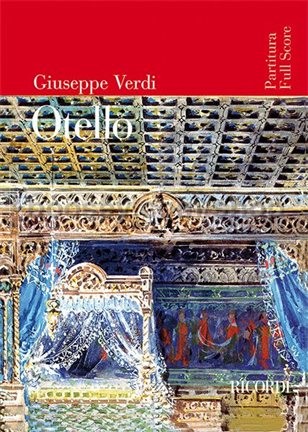
奥赛罗 1978年大都会歌剧团版 [演出] 豆瓣
所属 演出: 奥赛罗
语言: italian 意大利语 剧团: Metropolitan Opera Orchestra 大都会歌剧团管弦乐团 ; Metropolitan Opera Chorus 大都会歌剧团合唱团 剧院: Metropolitan Opera House 大都会歌剧院 导演: Franco Zeffirelli / Fabrizio Melano
其它标题: 1978年大都会歌剧团版 编剧: Arrigo Boito 作曲: Giuseppe Verdi 演员: Jon Vickers / Renata Scotto
Time: The late 16th century
Place: A coastal city on the island of Cyprus
Act 1
A town in Cyprus, outside the castle. An inn with a pergola, in the background the quayside and sea. It is evening. Lightning, thunder, gale force winds.
On a stormy evening, the people of Cyprus anxiously await the arrival of the new governor, Otello, from a naval battle with the Turks (Chorus, Montano, Cassio, Iago, Roderigo: Una vela! / "A sail!"). For a moment it seems as if Otello's ship will founder, to the delight of Otello's treacherous ensign, Iago, but Otello arrives safely and announces that the Turkish fleet has been destroyed, and the Cypriots cheer (Otello, chorus: Esultate! L'orgoglio musulmano sepolto è in mar / "Rejoice! The Muslim’s pride is buried in the sea").
Iago offers to help the young Venetian gentleman Roderigo in his seduction of Otello's wife, Desdemona – Iago envies Otello his success and longs to destroy the Moor (Iago, Roderigo: Roderigo, ebben che pensi? / "Well, Roderigo, what are you thinking?"). Among his grievances, Iago is outraged that Otello has appointed Cassio to be the captain of the navy, a position that Iago hoped to have. The people of Cyprus celebrate the safe return of Otello and his men by lighting a bonfire and drinking (Chorus: Fuoco di gioia!/ "Fire of joy").
Iago proposes a toast to Otello and his wife, while Cassio praises Desdemona (Iago, Cassio, Chorus, Roderigo: Roderigo, beviam! / "Roderigo, let's drink!"). Iago offers Cassio more wine, but Cassio says he has had enough. Iago pressures him and offers a toast to Otello and Desdemona. Cassio gives in. Iago sings a drinking song and continues to pour Cassio wine (Iago, Cassio, Roderigo, chorus: Inaffia l'ugola! / "Wet your throat").
Montano enters and calls for Cassio to begin his watch; he is surprised to find Cassio drunk and barely able to stand upright. Iago lies to Montano, telling him that this is how Cassio spends every evening. Roderigo laughs at Cassio's drunkenness and Cassio attacks him. Montano tells Cassio to calm down, but Cassio draws his sword and threatens to crack open Montano's head. (Montano, Cassio, Iago, Roderigo, chorus: Capitano, v'attende la fazione ai baluardi / "Captain, the guard awaits you on the ramparts".) Cassio and Montano begin to duel, and Iago sends Roderigo to call the alarm. Montano is wounded and the fight is stopped only by the appearance of Otello.
Otello orders Montano and Cassio to lower their swords. He then asks "honest Iago" to explain how the duel began, but Iago says he doesn't know. Otello then turns to Cassio, who is embarrassed and cannot excuse his actions. When Otello discovers that Montano is wounded, he becomes enraged. Desdemona enters, and, upon seeing that his bride's rest has been disturbed, Otello declares that Cassio is no longer Captain. (Otello, Iago, Cassio, Montano: Abbasso le spade / "Down with your swords".) He tells Iago to patrol the town to restore quiet, calls for help for Montano and orders everyone to return to their houses.
The Cypriots leave Otello alone with Desdemona. Together Otello and Desdemona recall why they fell in love. Otello, in an ecstasy of joy, invites death, fearing that he will never know such happiness again. Desdemona prays that their love will remain unchanged. They kiss, overcome with love for each other. (Otello, Desdemona: Già nella notte densa s'estingue ogni clamor /"Now in the dark night all noise is silenced".)
Act 2
A hall on the ground floor of the castle, divided by a glass partition from the garden at the back, with a balcony.
Iago suggests to Cassio that he should ask Desdemona to talk to Otello about his demotion; Desdemona can influence her husband to reinstate him (Iago, Cassio: Non ti crucciar / "Do not fret"). Desdemona and Emilia can be seen walking the garden. Cassio approaches Desdemona. Watching from the room, Iago voices his nihilistic beliefs and hatred of humankind (Credo in un Dio crudel / "I believe in a cruel God").
Otello enters the room; Iago, pretending not to notice him, says that he is deeply troubled. Cassio sees Otello from afar and goes discreetly away. Otello asks what's wrong, but Iago gives only vague answers. Finally, he hints that Cassio and Desdemona are having an affair. Otello begins to get suspicious, but declares that he needs proof before believing that Desdemona has been unfaithful. (Iago, Otello: Ciò m'accora... Che parli? / "That worries me..." "What did you say?") Iago warns Otello against jealousy, but also advises him to be vigilant.
A crowd of children, sailors, and Cypriots sing to Desdemona, praising her beauty and purity (Chorus, Iago, children, Desdemona, Otello: Dove guardi splendono raggi / "Wherever you look, brightness shines..."). They present her with gifts and wish her happiness before leaving.
Desdemona carries Cassio's request for reinstatement to Otello. Otello sourly tells her to ask him another time; as she persists, he grows impatient and says he has a headache. Desdemona offers to wrap his head in a handkerchief Otello once gave her, linen embroidered with strawberries. Otello throws it to the ground and says he doesn't need it (Desdemona, Otello: D'un uom che geme sotto il tuo disdegno la preghiera ti porto / "I bring a petition from one who suffers under your displeasure"). Emilia picks up the handkerchief. Desdemona asks for Otello's forgiveness. Aside, Iago demands that Emilia give him the handkerchief. When she refuses, Iago forcibly takes it from her.
Otello dismisses the others, and declares that he now believes that Desdemona may be deceiving him (Otello: Ora e per sempre addio sante memorie / "Now and forever farewell, holy memories"). Iago returns, and the jealous Otello demands proof of Desdemona's infidelity. Iago says that once, when he and Cassio were sleeping in the same room, he heard Cassio talking to Desdemona in a dream. In the dream, says Iago, Cassio told Desdemona that they must be careful to conceal their love. (Iago: Era la notte, Cassio dormia / "It was night, Cassio was sleeping".) Iago says that dreams don't prove anything, but remarks that he saw Cassio carrying Desdemona's strawberry-embroidered handkerchief just the day before. Otello swears vengeance on Desdemona and Cassio, and Iago joins him in his vow (Otello, Iago: Sì, pel ciel marmoreo giuro / "Yes, by the marble heavens I swear").
Act 3
The great hall of the castle. To the right, a large colonnade leading to a smaller hall, in the back of which is a balcony. Othello and Iago talking in the hall as a herald enters.
A herald brings news of the approach of ambassadors from Venice. Iago explains to Otello that he will lure Cassio here and talk with him while Otello watches, hidden. He leaves to go get Cassio. (Iago: Qui trarrò Cassio / "Here I will bring Cassio".)
Desdemona enters and reminds Otello of Cassio's request. Otello says that his headache has returned, and asks Desdemona to wrap her handkerchief around his head. When Desdemona produces a different handkerchief, Otello demands the one with strawberries. When she says she does not have it, Otello says that it was a talisman, and troubles will befall her if she loses it. Desdemona says that he is trying to ignore Cassio's plea, and as she asks him about Cassio, he demands the handkerchief ever more insistently. (Desdemona, Otello: Dio ti giocondi, o sposo / "God keep you merry, husband".) Desdemona protests that she is faithful; Otello sends her away (Desdemona, Otello: Esterrefatta fisso lo sguardo tuo tremendo / "Terrified, I face your dreadful look").
Otello laments his fate (Dio! mi potevi scagliar tutti i mali / "God, you could have thrown every evil at me" ). When Iago calls out "Cassio is here!" Otello hides as Iago and Cassio enter. Cassio says he had hoped to see Desdemona here, for he wanted to know whether she had been successful with Otello (Iago, Cassio, Otello: Vieni; l'aula è deserta / "Come, the hall is deserted"). Iago asks him to tell of his adventures with that woman. Cassio asks which woman, and, softly, so that Otello cannot hear, Iago says "Bianca" (the name of Cassio's actual lover). As Cassio laughs about his romantic adventures, Otello assumes he is speaking of Desdemona. In a conversation only partially heard, Cassio seems to be telling Iago that another woman, a secret admirer, left him a handkerchief as a token. At Iago's urging, Cassio produces it, whereupon Iago seizes it—for it is Desdemona's—and holds it out where he knows Otello can see it. He then returns it to Cassio and teases him, while in his hiding place Otello fumes (Iago, Cassio, Otello: Questa è una ragna dove il tuo cuor casca / "This is a spiderweb in which your heart is caught").
Bugles sound, announcing the arrival of the Venetian ambassador, Lodovico. Iago warns Cassio that he should leave unless he wants to see Otello. Cassio exits, and Otello asks Iago how he should kill his wife. Iago advises Otello to kill Desdemona by suffocating her in her bed, while he will take care of Cassio. Otello promotes Iago to Captain.
Lodovico, Desdemona, Emilia, Roderigo, and other dignitaries enter. When Lodovico notes Cassio's absence, Iago tells him that Cassio is out of favor. Desdemona interrupts, telling Lodovico that she hopes he will soon be restored. Otello calls her a demon and almost strikes her violently but is held back by Lodovico. Otello then calls for Cassio. (Lodovico, Otello, Desdemona, Emilia, Iago, chorus: Il Doge ed il Senato salutano l'eroe trionfatore / "The Doge and the Senate greet the triumphant hero".) Cassio enters and Otello reads (mixing in insults to Desdemona) a letter from the Doge, announcing that he (Otello) has been called back to Venice and Cassio is to succeed him as governor of Cyprus. Enraged, Otello throws Desdemona to the ground. (Otello, Roderigo, Iago, Cassio, Lodovico: Messeri! il Doge mi richiama a Venezia / "Gentlemen! The Doge recalls me to Venice".)
Desdemona, on the ground, laments (A terra! … sì … nel livido fango / "Fallen! yes, in the foul mud..."). The various characters express their feelings: Emilia and Lodovico express their sympathy for Desdemona, Cassio marvels at his sudden change of fortune, and Roderigo laments that Desdemona will soon depart. In separate asides, Iago urges Otello to take his revenge as soon as possible, while he will take care of Cassio. He advises Roderigo that the only way to prevent Desdemona from leaving is for Cassio, the new Duke, to die, and suggests that Roderigo murder Cassio that night. (Emilia, Cassio, Desdemona, Roderigo, Lodovico, Iago, Otello, chorus: Quell'innocente un fremito d'odio non ha nè un gesto / "That innocent one is without feeling or gesture of hatred"). In a fury, Otello orders everyone to leave. Desdemona goes to comfort him, but Lodovico pulls her away as Otello curses her. As the others leave, Otello raves about the handkerchief, then collapses. Iago presses Otello's forehead with his heel, then walks away. Outside the crowd of Cypriots calls out victory and glory for Otello. (Otello, Desdemona, Emilia, Cassio, Roderigo, Lodovico, Iago, chorus: Fuggite! / "Begone".)
Act 4
Desdemona's bedchamber. A bed, a prie-dieu, a table, a mirror, some chairs. A light burns in front of an image of the Madonna which hangs above the prie-dieu. To the right is a door. On the table a light. It is night.
Desdemona is preparing for bed with the assistance of Emilia. She asks Emilia to put out the bridal gown she used on her wedding day, and says that if she dies, she wants to be buried in it. Emilia tells her not to talk about such things. Desdemona recalls how her mother's servant Barbara was abandoned by her lover, and how she used to sing the Willow Song (Desdemona: Piangea cantando nell'erma landa / "Singing, she wept on the lonely hearth"). After Emilia leaves, Desdemona prays (Ave Maria) and then falls asleep.
Silently, Otello enters, with a sword. He kisses his wife three times; she awakens. Otello asks her if she has prayed tonight; she must die, and he does not wish to condemn her soul. She asks God for mercy, both for her and for Otello. Otello accuses her of sin, saying that he must kill her because she loves Cassio. Desdemona denies it and asks that he summon Cassio to testify to her innocence. Otello says that Cassio is already dead. Desdemona, horrified, pleads for mercy, but Otello tells her it's too late and strangles her (Otello, Desdemona: Diceste questa sera le vostre preci / "Have you said your prayers tonight?").
Emilia knocks at the door, (Emilia: Aprite! Aprite! / "Open up!") announcing that Cassio has killed Roderigo. Desdemona softly calls out that she has been unjustly accused, but refuses to blame Otello. She dies. Emilia calls Otello a murderer; he retorts that Iago gave him proof of Desdemona's infidelity. Otello begins to threaten Emilia, who calls for help. Iago, Cassio, and Lodovico enter. Emilia demands that Iago deny Otello's accusation; he refuses. Otello says that the handkerchief Desdemona gave to Cassio is proof enough. Emilia, horrified, explains that Iago stole the handkerchief from her—Cassio confirms that the handkerchief appeared mysteriously in his lodgings. Montano enters and says that Roderigo, with his dying breath, has revealed Iago's plot. Iago, brandishing his sword, runs away.
After he realizes what has happened, Otello grieves over Desdemona's death. Initially he draws his scimitar (Otello: Niun mi tema / "That none fear me") but then relinquishes it. He then stealthily draws a dagger from his robe (Otello: Ho un'arma ancor! / I still have another weapon!) and stabs himself. Others try to stop him, but it is too late. Before he dies, he drags himself next to his wife and kisses her (Otello: Un bacio...un bacio ancora...ah!...un altro bacio... / A kiss.. another kiss...ah...and yet another kiss). He lies dead next to Desdemona.
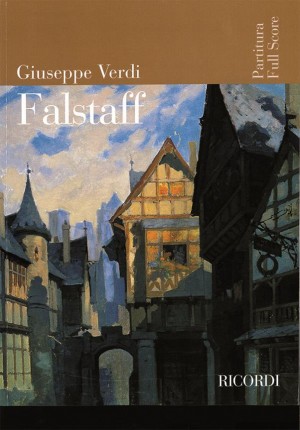
福斯塔夫 [演出] 豆瓣
Falstaff
类型: Opera 编剧: Arrigo Boito
其它标题: Falstaff / 法尔斯塔夫 / 法斯塔夫 导演: 未知 / Franco Zeffirelli 演员: Victor Maurel / Emma Zilli / Antonio Pini-Corsi / Edoardo Garbin / Adelina Stehle
Time: The reign of Henry IV, 1399 to 1413
Place: Windsor, England
Act 1
A room at the Garter Inn
Falstaff and his servants, Bardolfo and Pistola, are drinking at the inn. Dr Caius bursts in and accuses Falstaff of burgling his house and Bardolfo of picking his pocket. He is ejected. Falstaff hands a letter to each of his servants for delivery to Alice Ford and Meg Page, two wealthy married women. In these two identical letters, Falstaff professes his love for each of the women, although it is access to their husbands' money that he chiefly covets. Bardolfo and Pistola refuse, claiming that honour prevents them from obeying him. Falstaff dispatches his page, Robin, to deliver the letters. Falstaff delivers a tirade at his rebellious followers (L'onore! Ladri ... ! / "Honour! You rogues ... !") telling them that honour is a mere word and is of no practical value. He chases them out of his sight.
Ford's garden
Alice and Meg have received Falstaff's letters. They compare them, see that they are identical and, together with Mistress Quickly and Nannetta Ford, resolve to punish Falstaff. Meanwhile, Ford has been warned of the letters by Bardolfo and Pistola. All three are thirsty for revenge and are supported by Dr Caius and Fenton, a young gentleman. To Ford's disapproval, Fenton is in love with Nannetta. Finding a moment to be alone, the young lovers exchange banter. They are interrupted by the return of Alice, Meg and Mistress Quickly. The act ends with an ensemble in which the women and the men separately plan revenge on Falstaff.
Act 2
A room at the Garter Inn
Falstaff is alone at the inn. Bardolfo and Pistola, now in the pay of Ford, enter and pretend to beg for forgiveness for past transgressions. They announce to their master the arrival of Mistress Quickly, who delivers an invitation to go to Alice's house that afternoon between the hours of two and three. She also delivers an answer from Meg Page and assures Falstaff that neither is aware of the other's letter. Falstaff celebrates his potential success ("Va, vecchio John" / "Go, old Jack, go your own way"). Ford arrives, masquerading as "Signor Fontana", supposedly an admirer of Alice; he offers money to the fat knight to seduce her. Falstaff is puzzled at the request, and "Fontana" explains that if Alice succumbs to Falstaff, it will then be easier for Fontana to overcome her virtuous scruples. Falstaff agrees with pleasure and reveals that he already has a rendezvous arranged with Alice for two o'clock – the hour when Ford is always absent from home. Falstaff goes off to change into his best clothes; Ford is consumed with jealousy (È sogno o realtà? / "Is it a dream or reality?"). When Falstaff returns in his finery, they leave together with elaborate displays of mutual courtesy.
A room in Ford's house
The three women plot their strategy ("Gaie Comari di Windsor" / "Merry wives of Windsor, the time has come!"). They are in high spirits, but Alice notices that Nannetta is not. This is because Ford plans to marry her to Dr Caius, a man old enough to be her grandfather; the women reassure her that they will prevent it. Mistress Quickly announces Falstaff's arrival, and Mistress Ford has a large laundry basket and a screen placed in readiness. Falstaff's attempts to seduce Alice with tales of his past glory ("Quand'ero paggio del Duca di Norfolk" / "When I was page to the Duke of Norfolk I was slender") are cut short, as Mistress Quickly reports the impending arrival of Ford with a retinue of henchmen to catch his wife's lover. Falstaff hides first behind the screen, and then the women hide him in the laundry basket. In the meantime Fenton and Nannetta hide behind the screen. The men hear the sound of a kiss behind it. They assume it is Falstaff with Alice, but instead they find the young lovers. Ford orders Fenton to leave. Inside the hamper Falstaff is almost suffocating. While the men resume the search of the house Alice orders her servants to throw the laundry basket through the window into the River Thames, where Falstaff endures the jeers of the crowd.
Act 3
Before the inn
Falstaff glumly curses the sorry state of the world. Some mulled wine soon improves his mood. Mistress Quickly arrives and delivers another invitation to meet Alice. Falstaff at first wants nothing to do with it, but she persuades him. He is to meet Alice at midnight at Herne's Oak in Windsor Great Park dressed up as Herne the Hunter. He and Mistress Quickly go inside the inn. Ford has realised his error in suspecting his wife, and they and their allies have been watching secretly. They now concoct a plan for Falstaff's punishment: dressed as supernatural creatures, they will ambush and torment him at midnight. Ford privately proposes a separate plot to Caius: Nannetta will be disguised as Queen of the Fairies, Caius will wear a monk's costume, and Ford will join the two of them with a nuptial blessing. Mistress Quickly overhears and quietly vows to thwart Ford's scheme.
Herne's Oak in Windsor Park on a moonlit midnight
Fenton arrives at the oak tree and sings of his happiness ("Dal labbro il canto estasiato vola" / "From my lips, a song of ecstasy flies") ending with "Lips that are kissed lose none of their allure." Nannetta enters to finish the line with "Indeed, they renew it, like the moon." The women arrive and disguise Fenton as a monk, telling him that they have arranged to spoil Ford's and Caius's plans. Nannetta, as the Fairy Queen, instructs her helpers ("Sul fil d'un soffio etesio" / "On the breath of a fragrant breeze, fly, nimble spirits") before all the characters arrive on the scene. Falstaff's attempted love scene with Alice is interrupted by the announcement that witches are approaching, and the men, disguised as elves and fairies, soundly thrash Falstaff. At length he recognises Bardolfo in disguise. The joke is over, and Falstaff acknowledges that he has received his due. Ford announces that a wedding shall ensue. Caius and the Queen of the Fairies enter. A second couple, also in masquerade, ask Ford to deliver the same blessing for them as well. Ford conducts the double ceremony. Caius finds that instead of Nannetta, his bride is the disguised Bardolfo, and Ford has unwittingly blessed the marriage of Fenton and Nannetta. Ford accepts the fait accompli with good grace. Falstaff, pleased to find himself not the only dupe, proclaims in a fugue, which the entire company sings, that all the world is folly, and all are figures of fun (Tutto nel mondo è burla ... Tutti gabbati! / "Everything in the world is a jest ...").
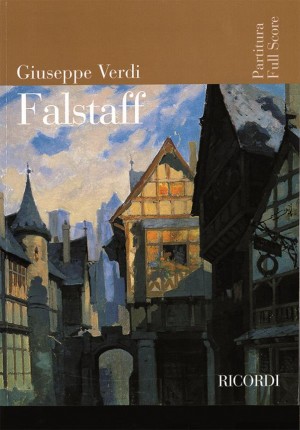
福斯塔夫 1992年大都会歌剧团版 [演出] 豆瓣
所属 演出: 福斯塔夫
语言: italian 意大利语 剧团: Metropolitan Opera Orchestra 大都会歌剧团管弦乐团 ; Metropolitan Opera Chorus 大都会歌剧团合唱团 ; Metropolitan Opera Ballet 大都会歌剧团芭蕾舞团 剧院: Metropolitan Opera House 大都会歌剧院 导演: Franco Zeffirelli / Paul Mills
其它标题: 1992年大都会歌剧团版 编剧: Arrigo Boito 作曲: Giuseppe Verdi 演员: Paul Plishka / Mirella Freni
Time: The reign of Henry IV, 1399 to 1413
Place: Windsor, England
Act 1
A room at the Garter Inn
Falstaff and his servants, Bardolfo and Pistola, are drinking at the inn. Dr Caius bursts in and accuses Falstaff of burgling his house and Bardolfo of picking his pocket. He is ejected. Falstaff hands a letter to each of his servants for delivery to Alice Ford and Meg Page, two wealthy married women. In these two identical letters, Falstaff professes his love for each of the women, although it is access to their husbands' money that he chiefly covets. Bardolfo and Pistola refuse, claiming that honour prevents them from obeying him. Falstaff dispatches his page, Robin, to deliver the letters. Falstaff delivers a tirade at his rebellious followers (L'onore! Ladri ... ! / "Honour! You rogues ... !") telling them that honour is a mere word and is of no practical value. He chases them out of his sight.
Ford's garden
Alice and Meg have received Falstaff's letters. They compare them, see that they are identical and, together with Mistress Quickly and Nannetta Ford, resolve to punish Falstaff. Meanwhile, Ford has been warned of the letters by Bardolfo and Pistola. All three are thirsty for revenge and are supported by Dr Caius and Fenton, a young gentleman. To Ford's disapproval, Fenton is in love with Nannetta. Finding a moment to be alone, the young lovers exchange banter. They are interrupted by the return of Alice, Meg and Mistress Quickly. The act ends with an ensemble in which the women and the men separately plan revenge on Falstaff.
Act 2
A room at the Garter Inn
Falstaff is alone at the inn. Bardolfo and Pistola, now in the pay of Ford, enter and pretend to beg for forgiveness for past transgressions. They announce to their master the arrival of Mistress Quickly, who delivers an invitation to go to Alice's house that afternoon between the hours of two and three. She also delivers an answer from Meg Page and assures Falstaff that neither is aware of the other's letter. Falstaff celebrates his potential success ("Va, vecchio John" / "Go, old Jack, go your own way"). Ford arrives, masquerading as "Signor Fontana", supposedly an admirer of Alice; he offers money to the fat knight to seduce her. Falstaff is puzzled at the request, and "Fontana" explains that if Alice succumbs to Falstaff, it will then be easier for Fontana to overcome her virtuous scruples. Falstaff agrees with pleasure and reveals that he already has a rendezvous arranged with Alice for two o'clock – the hour when Ford is always absent from home. Falstaff goes off to change into his best clothes; Ford is consumed with jealousy (È sogno o realtà? / "Is it a dream or reality?"). When Falstaff returns in his finery, they leave together with elaborate displays of mutual courtesy.
A room in Ford's house
The three women plot their strategy ("Gaie Comari di Windsor" / "Merry wives of Windsor, the time has come!"). They are in high spirits, but Alice notices that Nannetta is not. This is because Ford plans to marry her to Dr Caius, a man old enough to be her grandfather; the women reassure her that they will prevent it. Mistress Quickly announces Falstaff's arrival, and Mistress Ford has a large laundry basket and a screen placed in readiness. Falstaff's attempts to seduce Alice with tales of his past glory ("Quand'ero paggio del Duca di Norfolk" / "When I was page to the Duke of Norfolk I was slender") are cut short, as Mistress Quickly reports the impending arrival of Ford with a retinue of henchmen to catch his wife's lover. Falstaff hides first behind the screen, and then the women hide him in the laundry basket. In the meantime Fenton and Nannetta hide behind the screen. The men hear the sound of a kiss behind it. They assume it is Falstaff with Alice, but instead they find the young lovers. Ford orders Fenton to leave. Inside the hamper Falstaff is almost suffocating. While the men resume the search of the house Alice orders her servants to throw the laundry basket through the window into the River Thames, where Falstaff endures the jeers of the crowd.
Act 3
Before the inn
Falstaff glumly curses the sorry state of the world. Some mulled wine soon improves his mood. Mistress Quickly arrives and delivers another invitation to meet Alice. Falstaff at first wants nothing to do with it, but she persuades him. He is to meet Alice at midnight at Herne's Oak in Windsor Great Park dressed up as Herne the Hunter. He and Mistress Quickly go inside the inn. Ford has realised his error in suspecting his wife, and they and their allies have been watching secretly. They now concoct a plan for Falstaff's punishment: dressed as supernatural creatures, they will ambush and torment him at midnight. Ford privately proposes a separate plot to Caius: Nannetta will be disguised as Queen of the Fairies, Caius will wear a monk's costume, and Ford will join the two of them with a nuptial blessing. Mistress Quickly overhears and quietly vows to thwart Ford's scheme.
Herne's Oak in Windsor Park on a moonlit midnight
Fenton arrives at the oak tree and sings of his happiness ("Dal labbro il canto estasiato vola" / "From my lips, a song of ecstasy flies") ending with "Lips that are kissed lose none of their allure." Nannetta enters to finish the line with "Indeed, they renew it, like the moon." The women arrive and disguise Fenton as a monk, telling him that they have arranged to spoil Ford's and Caius's plans. Nannetta, as the Fairy Queen, instructs her helpers ("Sul fil d'un soffio etesio" / "On the breath of a fragrant breeze, fly, nimble spirits") before all the characters arrive on the scene. Falstaff's attempted love scene with Alice is interrupted by the announcement that witches are approaching, and the men, disguised as elves and fairies, soundly thrash Falstaff. At length he recognises Bardolfo in disguise. The joke is over, and Falstaff acknowledges that he has received his due. Ford announces that a wedding shall ensue. Caius and the Queen of the Fairies enter. A second couple, also in masquerade, ask Ford to deliver the same blessing for them as well. Ford conducts the double ceremony. Caius finds that instead of Nannetta, his bride is the disguised Bardolfo, and Ford has unwittingly blessed the marriage of Fenton and Nannetta. Ford accepts the fait accompli with good grace. Falstaff, pleased to find himself not the only dupe, proclaims in a fugue, which the entire company sings, that all the world is folly, and all are figures of fun (Tutto nel mondo è burla ... Tutti gabbati! / "Everything in the world is a jest ...").
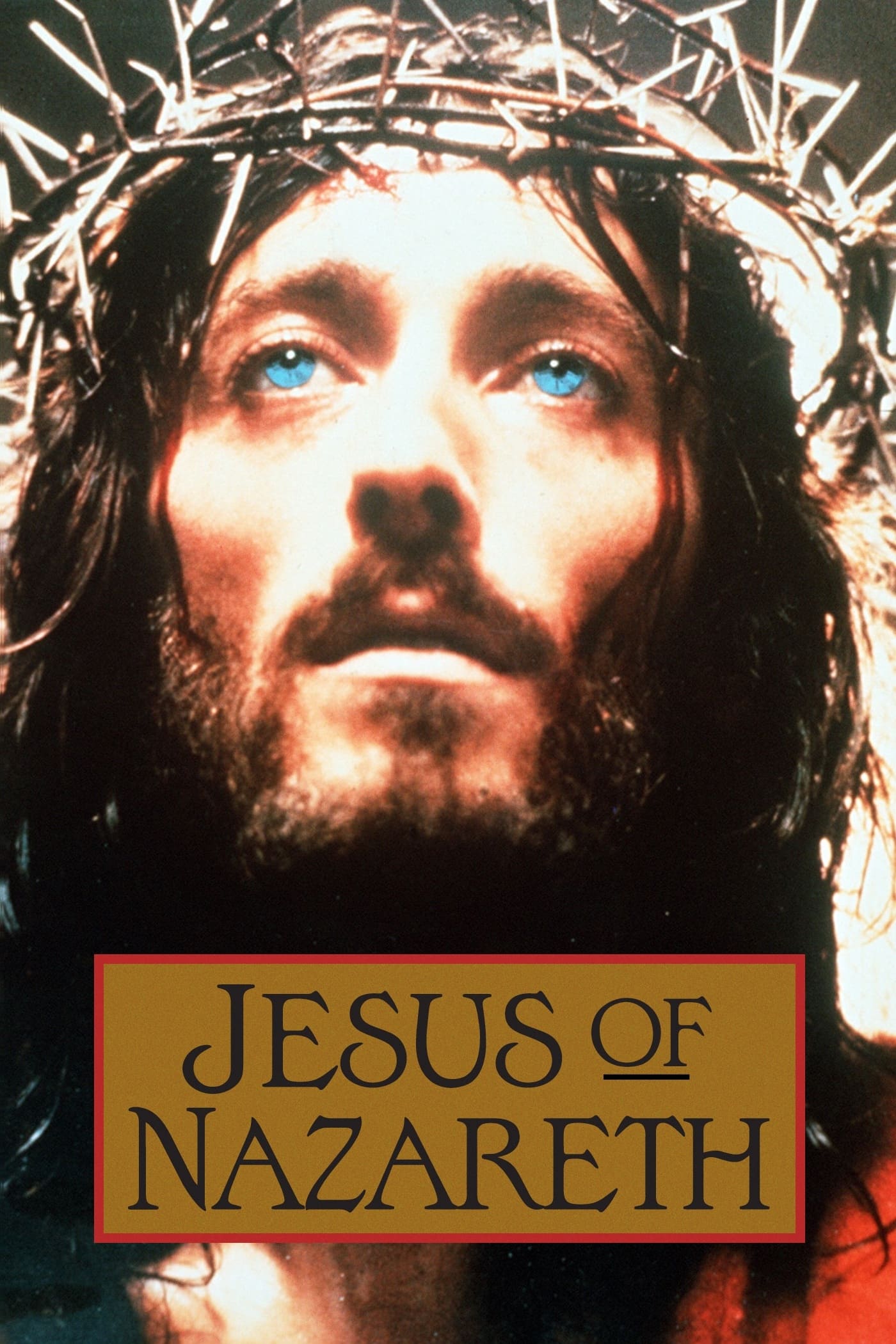
拿撒勒的耶稣 (1977) [剧集] TMDB IMDb
Jesus of Nazareth
导演: 佛朗哥·泽菲雷里 演员: Robert Powell / 奥丽维娅·赫西
其它标题: 나자렛 예수 / ナザレのイエス
  历史上最受争议的短篇电视连续剧之一,当导演佛朗哥.泽菲雷里公开宣布他在本片中是把耶稣当作一般人、而不是宗教偶像来描写时,电视剧遭到了有关方面的仔细检查并引起争议。宗教激进分子们甚至在电视剧于1977年4月3日在电视台首播之前就开始表示强烈的抗议,尽管很多赞助商表示不 再支持这部电视剧,但NBC还是决定如期播放它,结果取得了出人意料的效果,使得本片成为有史以来最成功的电视剧之一
The King of Ads (1991) [电影] IMDb
The King of Ads
导演: 让-吕克·戈达尔 / 马丁·斯科塞斯 演员: 格蕾丝·琼斯 / Vanessa Paradis
A collection of European T.V. commercials directed by a variety of well-known directors from across Europe and the U.S. Compiled and produced by Jean-Marie Boursicot.
The King of Ads (1991) [电影] TMDB
The King of Ads
导演: 让-吕克·戈达尔 / 马丁·斯科塞斯 演员: 格蕾丝·琼斯 / Vanessa Paradis
A collection of European T.V. commercials directed by a variety of well-known directors from across Europe and the U.S. Compiled and produced by Jean-Marie Boursicot.
卡门(维罗纳圆形竞技场LIVE) (2003) [电影] IMDb 豆瓣
Carmen
导演: George Blume / 佛朗哥·泽菲雷里 演员: Marina Domashenko / Maya Dashuk
其它标题: Carmen / Bizet: Carmen
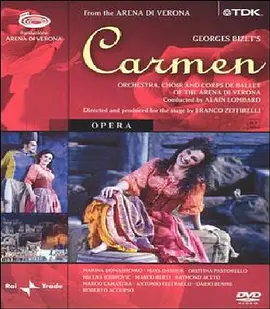
This 2003 performance of Georges Bizet's 19th century opera Carmen was produced and directed by filmmaker and stage director Franco Zeffirelli, best known to many for the Academy Award-winning big-screen adaptation of Shakespeare's Romeo and Juliet. Shot at the Arena di Verona, the production features Marina Domashenko in the title role and music by the Orchestra of the Arena di Verona under conductor Alain Lombard.
卡门(维罗纳圆形竞技场LIVE) (2003) [电影]
Carmen
导演: George Blume / 佛朗哥·泽菲雷里 演员: Marina Domashenko / Maya Dashuk
其它标题: Carmen
This 2003 performance of Georges Bizet's 19th century opera Carmen was produced and directed by filmmaker and stage director Franco Zeffirelli, best known to many for the Academy Award-winning big-screen adaptation of Shakespeare's Romeo and Juliet. Shot at the Arena di Verona, the production features Marina Domashenko in the title role and music by the Orchestra of the Arena di Verona under conductor Alain Lombard.