亚历山大·克鲁格 — 导演 (35)
蒙昧主义的低吟 (2007) [电影] 豆瓣
Finsterlinge singen Baß
导演:
亚历山大·克鲁格
其它标题:
Finsterlinge singen Baß
/
情感发电厂& 蒙昧主义的低吟
The Power Station of Emotions: For over 400 years, musical theatre has accompanied all the virtues and flaws of modern society. Here we cover Wagner, the relationship between the earliest operas (Monteverdi, Cavalli) to the most modern (Nono, Lachenmann, Rihm) and also Mozart, an operatic doctor, a chamber singer as the user of doping substances and rarities by Portici and Bizet. Villains Sing Bass: Why do male figures in opera kill the sopranos? For what reason is Evil always given the best melodies? The beauty of opera lies in these relationships and interconnections. The 80,000 operas in existence form one single score which accompanies the past 400 years of society like a distorted mirror: This is the thesis propounded in Xaver Holtzmann's imaginary opera guide.
Hitler's Bodyguard (2008) [电影] 豆瓣
导演:
Alexander Kluge
演员:
Robert Powell
Watch the series that goes in depth about Hitler, The Third Reich, and everyone involved. From the begginngs of back room small party politics, to the end as the most hated regime of all time. Watch the many conspiracies against Hitler, and the conspiracies Hitler hatches himself.
情感的力量 (1983) [电影] 豆瓣
Die Macht der Gefühle
导演:
Alexander Kluge
演员:
Hannelore Hoger
/
Alexandra Kluge
…
其它标题:
Die Macht der Gefühle
/
The Power of Emotion
The Power of Emotion explains that emotion isn't to be confused with sentimentality. Emotion is ancient and more powerful than any art form. The film looks at young couples who run into difficulties as they try to translate their experiences of love into clear decision-making. A woman who has shot her husband provides a judge with a puzzle. Those who love can bring the dead back to life by means of co-operation. That's the focus of the opera, "The Power Plant of Emotions" and the "Opera of the 20th Century" cinema.
Alexander Kluge: The Power of Feeling
When I started working on The Power of Feeling, I was not in a rational state. I did not say, I have a subject and now I will make a film about it. Instead I was spellbound and observed in my direct surroundings, for example, how feelings move. I have not really dealt with the theme of my mother's death and the fact that she was the one who taught me "how feelings move." Nor have I dealt with how she died. That was an entire palette of feelings: "All feelings believe in a happy end," and everyone believes tacitly that they will live forever: The entire palette is somehow optimistic, a positive attitude towards life having been put on the agendaas long as she was young, as long as her body held out, from one day to the next she collapsed. She just suddenly collapsed, like in an opera where disaster takes the stage in the fifth act. It felt as if I had observed an air raid or a disaster.
The film The Power of Feeling is not about feelings, but rather their organization: how they can be organized by chance, through outside factors, murder, destiny; how they are organized, how they encounter the fortune they are seeking.What is all this organization of feelings about? Generally feelings tend to be a dictatorship. It is a dictatorship of the moment. The strong feeling I am having right now suppresses the others. For thoughts this would not be the case. One thought attracts others like a magnet. People therefore need affirmation by other people to be sure about their own feelings (to counteract the acquisition of their feelings through outside forces). Through the interaction of many people, for example, in public, the various feelings also have a magnetic attraction to one another just like thoughts do. Feelings communicate through their manifestation in public.
The cinema is the public seat of feelings in the 20th century. The organization is set up thusly: Even sad feelings have a happy outcome in the cinema. It is about finding comfort: In the 19th century the opera house was the home to feelings. An overwhelming majority of operas had a tragic end. You observed a victim.
I am convinced that there is a more adventuresome combination: Feelings in both the opera and traditional cinema are powerless in the face of destiny's might. In the 20th century feelings barricaded themselves behind this comfort, in the 19th century they entrenched themselves in the validity of the lethal seriousness.
Alexander Kluge: The Power of Feeling
When I started working on The Power of Feeling, I was not in a rational state. I did not say, I have a subject and now I will make a film about it. Instead I was spellbound and observed in my direct surroundings, for example, how feelings move. I have not really dealt with the theme of my mother's death and the fact that she was the one who taught me "how feelings move." Nor have I dealt with how she died. That was an entire palette of feelings: "All feelings believe in a happy end," and everyone believes tacitly that they will live forever: The entire palette is somehow optimistic, a positive attitude towards life having been put on the agendaas long as she was young, as long as her body held out, from one day to the next she collapsed. She just suddenly collapsed, like in an opera where disaster takes the stage in the fifth act. It felt as if I had observed an air raid or a disaster.
The film The Power of Feeling is not about feelings, but rather their organization: how they can be organized by chance, through outside factors, murder, destiny; how they are organized, how they encounter the fortune they are seeking.What is all this organization of feelings about? Generally feelings tend to be a dictatorship. It is a dictatorship of the moment. The strong feeling I am having right now suppresses the others. For thoughts this would not be the case. One thought attracts others like a magnet. People therefore need affirmation by other people to be sure about their own feelings (to counteract the acquisition of their feelings through outside forces). Through the interaction of many people, for example, in public, the various feelings also have a magnetic attraction to one another just like thoughts do. Feelings communicate through their manifestation in public.
The cinema is the public seat of feelings in the 20th century. The organization is set up thusly: Even sad feelings have a happy outcome in the cinema. It is about finding comfort: In the 19th century the opera house was the home to feelings. An overwhelming majority of operas had a tragic end. You observed a victim.
I am convinced that there is a more adventuresome combination: Feelings in both the opera and traditional cinema are powerless in the face of destiny's might. In the 20th century feelings barricaded themselves behind this comfort, in the 19th century they entrenched themselves in the validity of the lethal seriousness.
我曾是希特勒的警卫 (2000) [电影] 豆瓣
Ich war Hitlers Bodyguard
导演:
Alexander Kluge
演员:
Peter Berling
其它标题:
Ich war Hitlers Bodyguard
This is an absolutely rarity about one of Kluges fictional interviews. Kluge interviews Peter Berling as Manfred Pichota. Pichota was the former chief bodyguard of Hitler.
Spinoza and the Modes of God (2007) [电影] 豆瓣
导演:
亚历山大·克鲁格
演员:
Stefano Bonaga
/
Alexandra Geese
其它标题:
Spinoza und die Modi Gottes
News from Ideological Antiquity: Marx – Eisenstein – The Capital (2008) [电影] Eggplant.place
Nachrichten aus der ideologischen Antike: Marx/Eisenstein/Das Kapital
导演:
Alexander Kluge
演员:
Sophie Rois
/
Hannelore Hoger
…
其它标题:
Nachrichten aus der ideologischen Antike: Marx/Eisenstein/Das Kapital
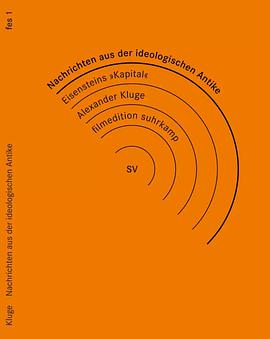
Alexander Kluge’s News from Ideological Antiquity begins with Russian filmmaker Sergei Eisenstein’s ambitious but unrealized plan to combine Karl Marx’s Capital and James Joyce’s Ulysses. For over nine hours, the film expands in concentric circles as Kluge, his guests, interlocutors and monologists make associative links on a range of topics that starts from a filmic discussion of Eisenstein’s notes.
电影洪荒蔓延时 (2025) [电影] 豆瓣
Primitive Diversity
导演:
亚历山大·克鲁格
其它标题:
Primitive Diversity
Filmmaker Alexander Kluge loves to use the expression ‘primitive diversity’ in relation to the origins of his art: the first films that were made, their genres, motives and moods. With the development of AI, Kluge asks, what could its primitive diversity look like?
Thanks to technological developments, film has been through many transformations. Now, with the development of Artificial Intelligence another begins. In this new age of image-making, Young German Cinema paragon Alexander Kluge finds himself experimenting with this latest tool of image creation. Diving into a world of pictures and views whose basis is not reality itself, but mankind’s digital repository of them.
“战旗飘扬”这首歌从何而来? (1994) [电影] 豆瓣
Woher stammt das Lied 'Die Fahne hoch'?
导演:
亚历山大·克鲁格
其它标题:
Woher stammt das Lied 'Die Fahne hoch'?
Der Mensch ist eine Bombe: Christoph Schlingensief im Zustand geglückter Erschöpfung (2016) [电影] 豆瓣
导演:
亚历山大·克鲁格
演员:
克里斯托弗·施林根西夫