Steven J. Zaloga — 作者 (150)
Tanks in Southern France 1944 [图书] 豆瓣
作者: Steven J. Zaloga 出版社: Osprey Publishing 2027 - 1
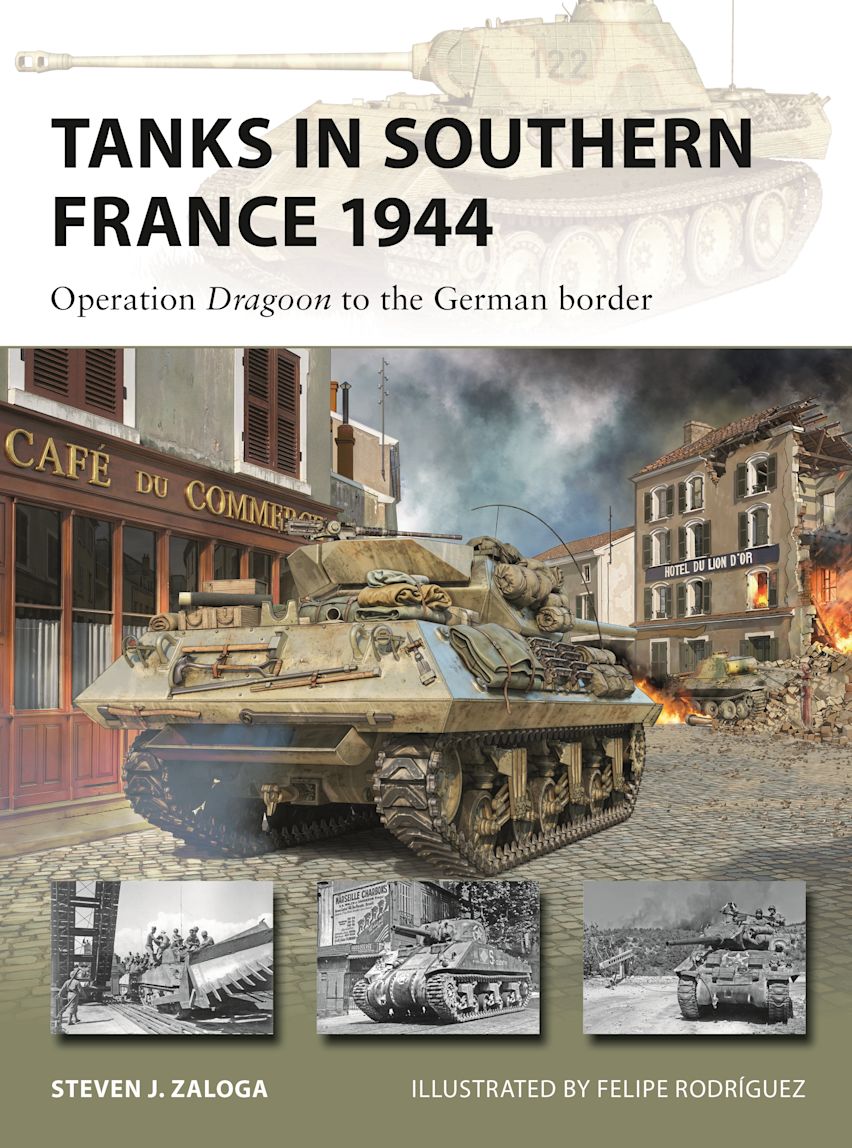
Two months after D-Day, the Allies began the liberation of southern France. Fully illustrated, this study explores the Allies' unique US/Free French tank force, and the Panzers they faced.
Much less known than the Normandy landings and the campaign in northern France, the second part of Operation Overlord began on August 15, 1944 with the Operation Dragoon landings in southern France. It involved a substantial Allied tank force that took part in the amphibious landings and the subsequent campaign via the Rhone valley to the German frontier in the summer and autumn of 1944.
In this book, world-leading armour expert Steven Zaloga examines the unique Allied tank force that fought this campaign, and the single Panzer division that the Germans could field against them. The Allied force consisted of two main elements: US army tank battalions and tank destroyer battalions of the Seventh US Army, and French tank divisions of the 1st French Army. The US Army units were battle-hardened veterans of the campaigns in North Africa, Sicily and Italy. The French tank units were raised with US aid and training in North Africa in 1943 and saw their combat debut during Operation Dragoon.
With rarely seen photos and meticulously detailed original illustrations, this book provides a fresh look at this largely-ignored subject. It also details the particularly colorful markings of the tank units involved in these campaigns.
Carentan 1944 [图书] 豆瓣
作者: Steven J. Zaloga / Graham Turner 出版社: Osprey Publishing 2026 - 10
An in-depth look at the US' desperate battle to secure Carentan and support the Normandy invasion and the elite German units that sought to repel them.
Although the US Army had successfully secured both Utah and Omaha Beach on D-Day, the next tactical problem was to connect the two beachheads. Utah and Omaha were separated by the Vire river estuary. Carentan was the first major town on the river, and as such was of vital tactical importance. However, this was not lost on the Germans, who dispatched their elite Fallschirmjager-Regiment 6 to hold the town. On the US side, the task of capturing Carentan fell to the 101st Airborne Division, and in the week following D-Day, US and German troops waged a battle for Carentan.
Here, expert historian Steven J. Zaloga goes in depth into the initial battle on June 10–12 , 1944, the German counterattack and the final Allied victory. With stunning artwork, detailed maps and BEVs, firsthand accounts, and period images, this study brings to life the fierce fighting between paratrooper forces and highlights how this Allied success led onto the next phase of Operation Overlord.
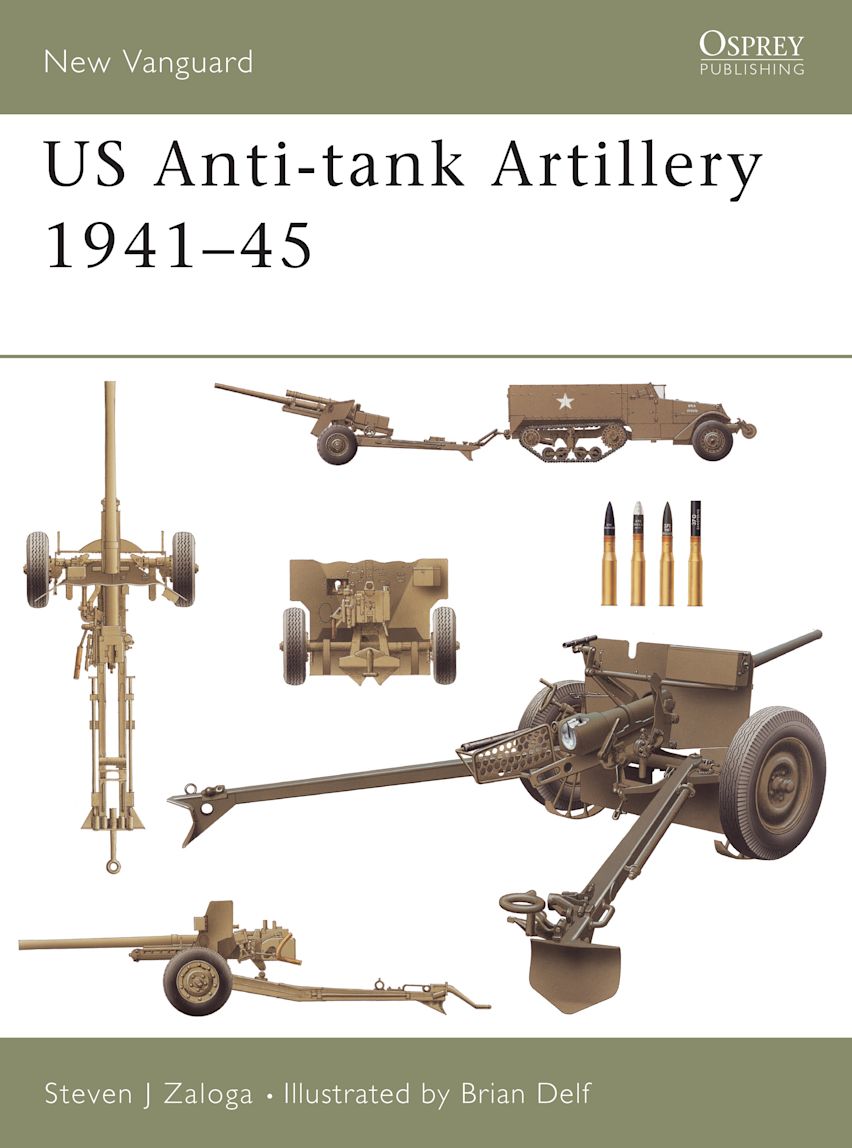
US Anti-tank Artillery 1941–45 [图书] 豆瓣 谷歌图书 Goodreads
作者: Steven J. Zaloga / Brian Delf 出版社: Osprey Publishing 2005 - 5
The US Army's development of the 37mm anti-tank gun began in response to needs identified during the Spanish Civil War. By the time it entered service in Tunisia in 1943, the gun was already obsolete, and the US began the licensed manufacture of the British 6-pdr in the hope of finding a quick solution to its artillery requirements. This in turn proved unequal to the demands of warfare in France in 1944, and further anti-tank measures were developed – rocket propelled grenades for infantry use, and weapons designed specifically for use by the Tank Destroyer Force.
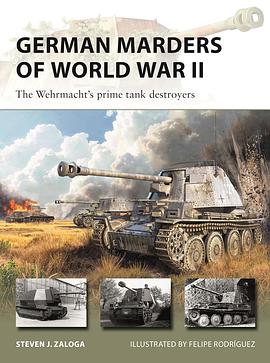
German Marders of World War II [图书] 豆瓣
作者: Steven J. Zaloga / Felipe Rodríguez 出版社: ‎ Osprey Publishing 2026 - 7
Built for mobile antitank firepower, the Marder family combined the superb 7.5cm antitank gun with existing light tank chassis. Fully illustrated, this studies their design and use.
The appearance of T-34 and KV tanks in 1941 forced the Wehrmacht to field a more powerful antitank gun, the 7.5cm PaK 40. Although an excellent weapon, the towed gun was heavy, awkward to employ, and vulnerable to enemy counter-fire. At the same time, many light tanks had become obsolete even though their chassis was still useful.
In this book, armor expert Steven J. Zaloga presents a study of how these obsolete tanks and the superb new gun were combined to create the Marder family of tank destroyers. The Marder I used captured French Chenilette Lorraine chassis, and subsequently other French light tanks such as the Hotchkiss H39 and FCM36, while the Marder II was based on the PzKpfw II chassis. The Marder III was the most significant of the new types, built on the Czech PzKpfw 38(t) chassis. The Marder family reached its peak production in 1942, constituting over 18 percent of new German Panzers, and production ended in 1944.
Packed with rare photos and original artwork, this book explores the designs, capabilities, and employment of the Marders, as well as the little-known and largely unsuccessful late-war attempts to produce further self-propelled 7.5cm PaK 40 vehicles on half-track, armoured car and tractor chassis.
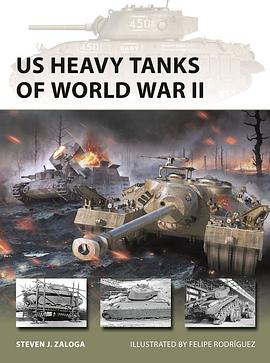
US Heavy Tanks of World War II [图书] 豆瓣
作者: Steven J. Zaloga / Felipe Rodríguez 出版社: Osprey Publishing 2026 - 5
Through World War II the US Army worked on projects for new heavy tanks, which are charted in this illustrated study of the M6 and the never-built T14, T28, and Pershing-derived designs.
In this book, world-renowned armour expert Steven J. Zaloga examines the US Army's efforts to field a heavy tank in World War II. The first design was the M6, which never saw combat use despite being type classified. The heavy T14 assault tank, earmarked for the British under Lend-Lease, was also developed, while the M4A3E2 assault tank went into production as a stopgap for the 1944 campaign in France. The most outrageous US tank project of the war was the T28/T95 superheavy tank, which was so large that it required four sets of suspension bogies instead of the usual two.
The M26 Pershing medium tank program also spawned a number of heavy tank projects, such as the T29, T30 and T34, which are also examined. Although production of these was envisioned in 1945–46, the end of the war put an end to any possibility of serial manufacture. Nevertheless, these tanks were heavily influenced by World War II lessons and their development and technical features are examined.
Illustrated with rarely seen archive photos and meticulously illustrated new profiles of the key designs, this book traces the US Army's efforts to develop heavy tanks comparable to the German Tigers, and the reasons why such monstrous machines were never required.
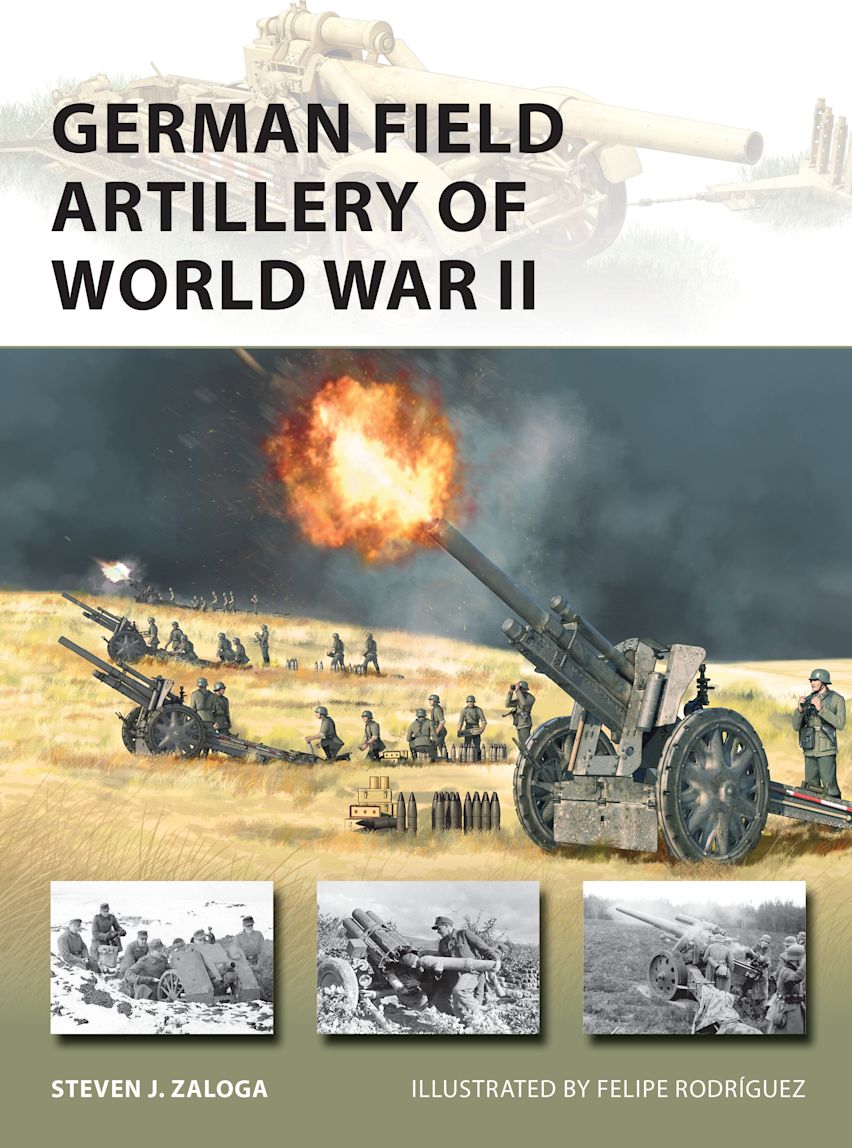
German Field Artillery of World War II [图书] 谷歌图书 Goodreads 豆瓣
作者: Steven J. Zaloga / Felipe Rodríguez 出版社: Osprey Publishing 2023
An illustrated study of the big guns of Hitler's army – the Wehrmacht's field artillery, its capabilities and its role in German fighting units of World War II.
Often overshadowed in military history by the tanks and aircraft of Blitzkrieg, Germany's artillery was key to its methods of waging war throughout World War II. Field artillery remained the primary killer on the battlefield, often responsible for three-quarters of combat casualties inflicted.
Redressing the balance, this book surveys the major Wehrmacht guns of the war, and the basic organizational structure of the German field artillery. Its primary focus is on the divisional field guns, especially the lFH 18 10.5cm field howitzer and the 15cm sFH 18 field howitzer that formed the backbone of German artillery. A brief survey is also made of the infantry guns used at the regimental level, and of corps-level heavy artillery. The issue of the use of"Beutewaffen,” captured war-booty field guns, is also looked at, as is the Nebelwerfer and schwere Wurfgerät rocket artillery.
With archive photos and meticulously detailed new illustrations, this book provides a concise study of the German Army's big guns of World War II, how they were organized and how they were used, both on the Eastern and Western fronts.
Tanks of D-Day 1944 [图书] 豆瓣 谷歌图书 Goodreads
作者: Steven J. Zaloga / Felipe Rodríguez 出版社: Osprey Publishing 2021 - 6
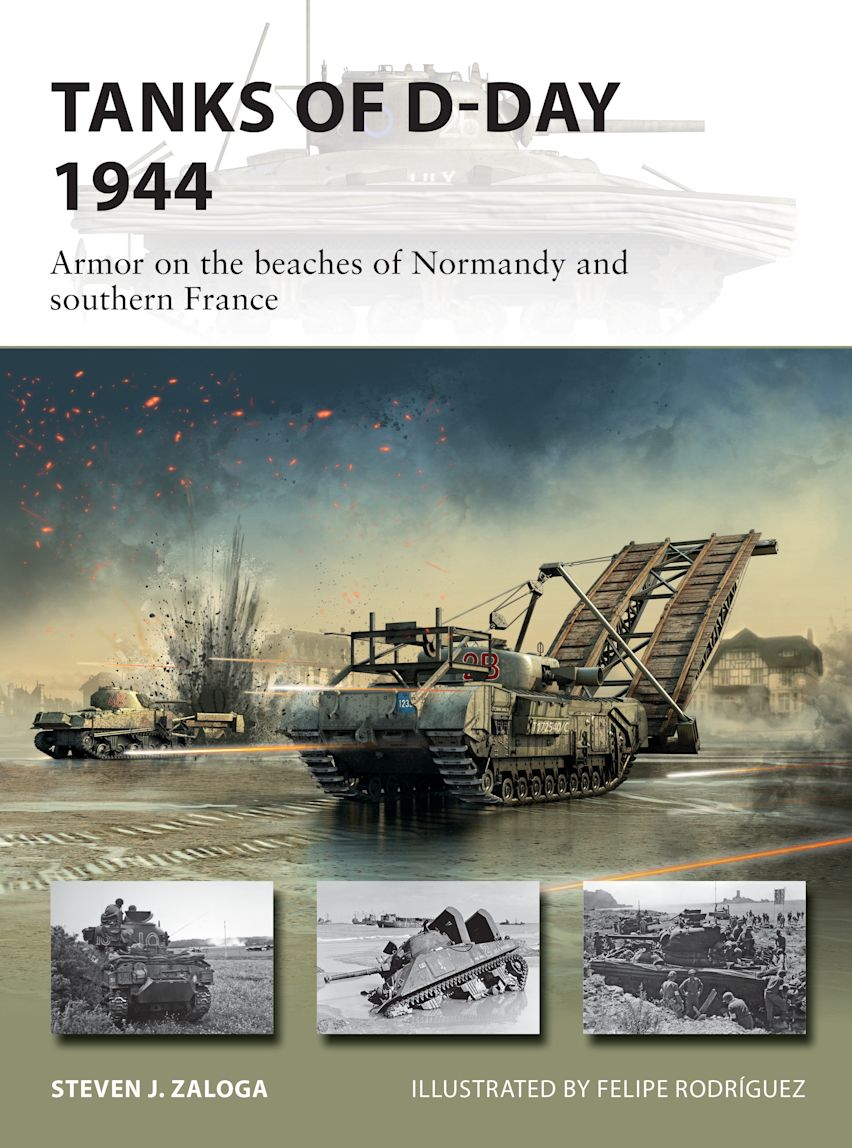
Allied success in invading Fortress Europe (the area of Continental Europe occupied by Nazi Germany) depended on getting armor onto the beaches as fast as possible. This book explains how the Allies developed the specialist tanks it needed, their qualities, deployment and numbers, and how they performed on the two crucial days when France was invaded, firstly in Normandy and then in Provence.
The focus of this volume will be on the specialized tanks developed for the Operation Neptune amphibious landings including the Duplex Drive amphibious Sherman tanks used on both the US and British/Canadian beaches. It also covers the specialized engineer tanks called ”Armoured Funnies” of the British 79th Armoured Division and addresses the popular myth that US Army refusal to employ the Armoured Funnies was a principal cause for the high casualties at Omaha Beach. There is also coverage of Operation Overlord's "Forgotten D-Day”, the amphibious landings of Operation Dragoon. This book addresses why there were so few Panzers opposing the landings from the German perspective as well as detailing the extent of German tank/assault gun activity on D-Day.
BT Fast Tank [图书] 谷歌图书 Goodreads 豆瓣
作者: Steven J. Zaloga / Henry Morshead 出版社: Osprey Publishing 2016 - 8
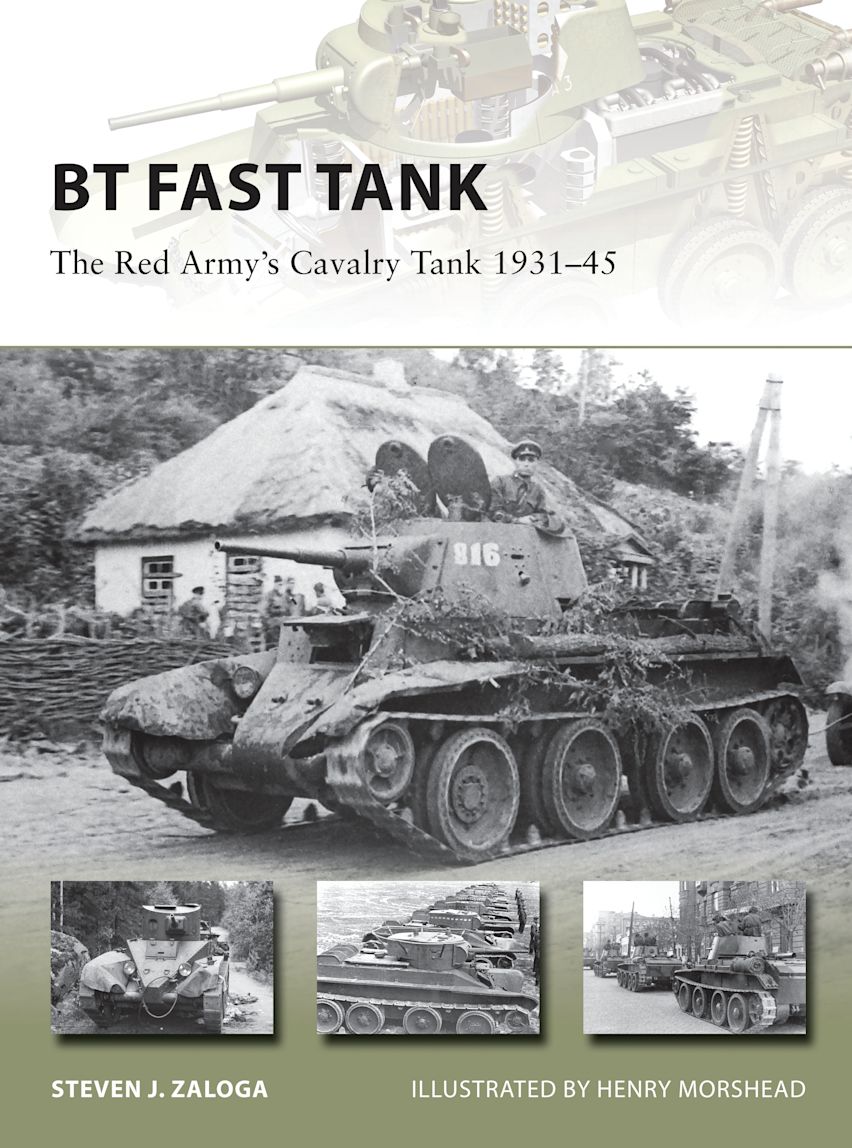
When the Red Army needed to mechanize its cavalry branch in the 1930s, the BT fast tank was its solution. Channeling the American Christie high-speed tank, the Red Army began a program to adapt the design to its own needs. Early versions were mechanically unreliable and poorly armed, but by the mid-1930s, the BT-5 emerged, armed with an excellent dual-purpose 45mm gun. It saw its combat debut in the Spanish Civil War in 1937 and was later used in the border battles with the Japanese Kwantung Army in the late 1930s. The final production series, the BT-7, was the most refined version of the family.

One of the most common types in Red Army service at the beginning of the Second World War, BT tanks saw extensive combat in Poland, Finland, the opening phases of Operation Barbarossa in 1941, and the 1945 campaign against the Japanese in Manchuria. This is the story of their design and development history.
T-26 Light Tank [图书] 谷歌图书 Goodreads 豆瓣
作者: Steven J. Zaloga / Henry Morshead 出版社: Osprey Publishing 2015 - 1 其它标题: T-26 Light Tank
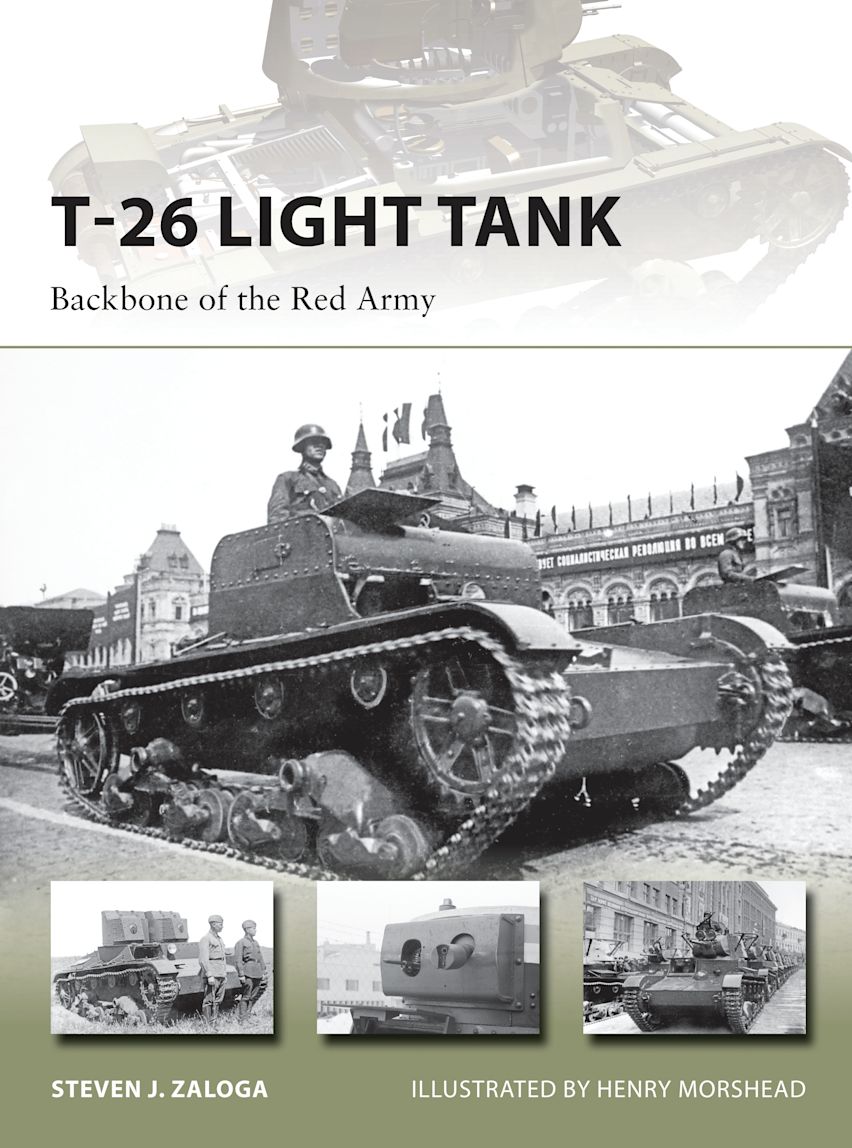
This book surveys the development of the T-26 as well as its combat record in the Spanish Civil War, the war in China, the border wars with Poland and Finland in 1939-40, and the disastrous battles of 1941 during Operation Barbarossa.

The T-26 was the first major Soviet program of the 1930s, beginning as a license-built version of the British Vickers 6-ton export tank. Although the T-26 retained the basic Vickers hull and suspension, the Red Army began to make extensive changes to the turret and armament, starting with the addition of a 45mm tank gun in 1933. The T-26 was built in larger numbers than any other tank prior to World War II. Indeed, more T-26 tanks were manufactured than the combined tank production of Germany, France, Britain, and the United States in 1931-40.
French Tanks of World War II (2) [图书] 谷歌图书 Goodreads 豆瓣
作者: Steven J. Zaloga / Ian Palmer 出版社: Osprey Publishing 2014 - 7
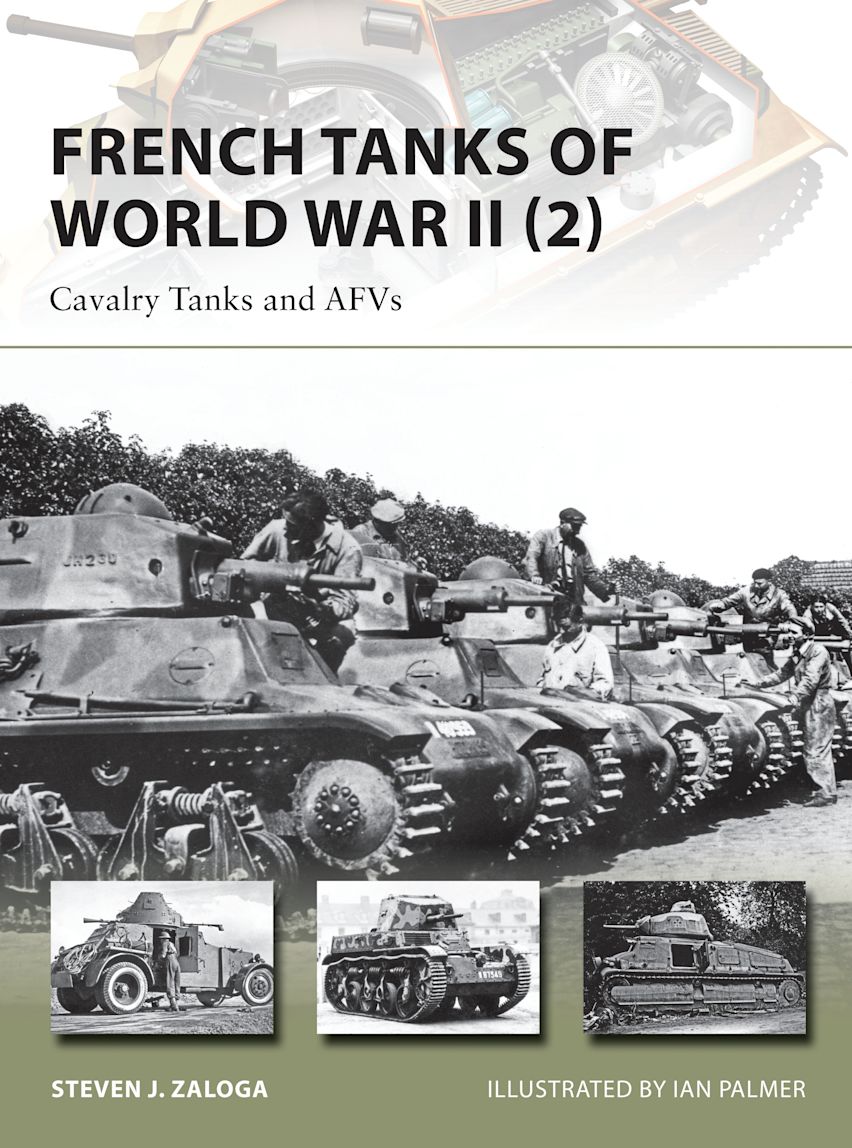
The design quality of France's armored vehicles is somewhat forgotten in light of the myth of superiority surrounding the German Panzers' role in the Blitzkrieg against France, Belgium and the Netherlands.
The second volume of two covering the French tanks of World War II, this title focuses primarily on the design, development, combat performance, and technical features of France's armored cavalry vehicles, including the AMR and AMC families of light reconnaissance tanks, and the famous Somua S.35 cavalry tank. Also examined are the wide array of armored cars and half-tracks employed by the French Cavalry, and the extensively produced Hotchkiss H-35/H-39 series that was designed for the Cavalry but also saw widespread use by the Infantry. This volume also looks at the specialized armored vehicles used by the French military, including the Chenillette US, Lorraine, and the various tank destroyer types brought hastily into service in 1940.
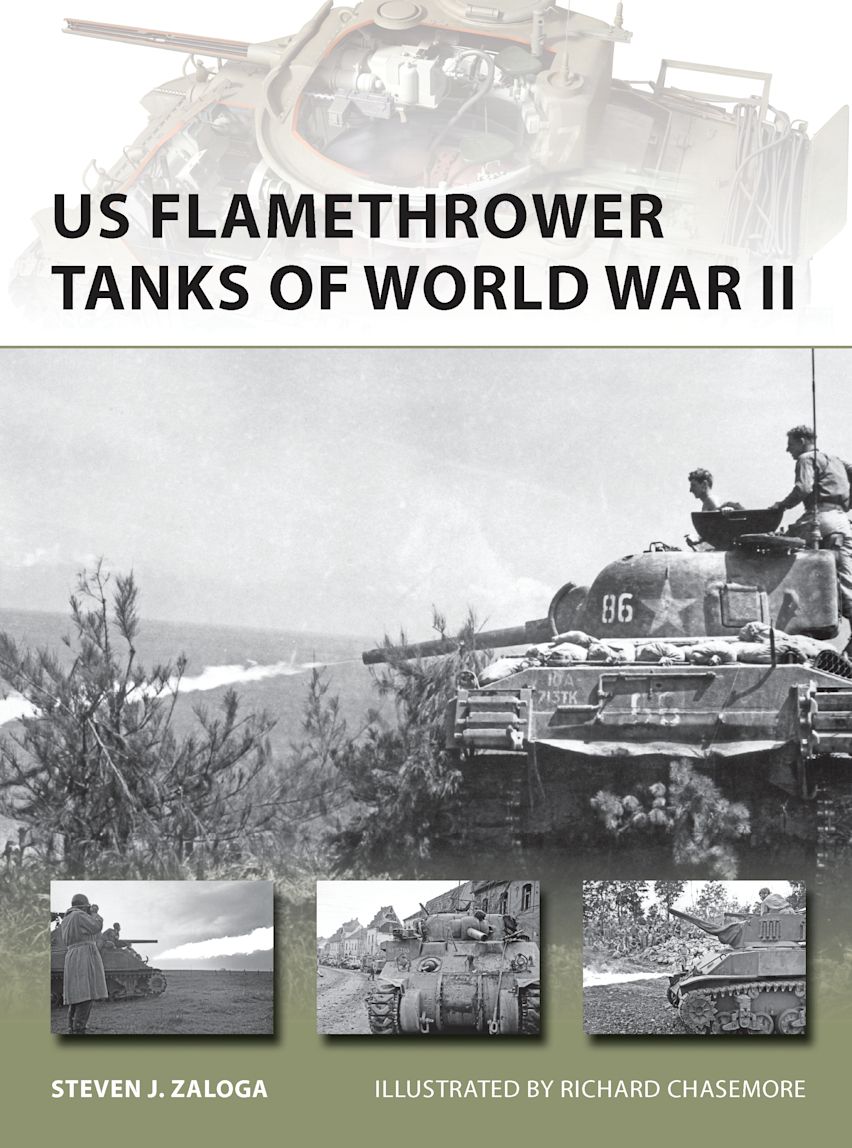
US Flamethrower Tanks of World War II [图书] Goodreads 豆瓣 谷歌图书
作者: Steven J. Zaloga / Richard Chasemore 出版社: Osprey Publishing 2013 - 10
American experience, from D-Day to dug-in Japanese defenders, went from British Crocodile to E4-7, USMC Satan, and the many POA-CWS (Pacific Area Operation-Chemical Warfare Section) flamethrower tank variants chronicled in this book.

The US Army and Marine Corps experimented with a wide range of flame-thrower tanks through World War II in both the European and Pacific theaters. This book will examine early efforts in the US, the ill-fated attempt to adopted the British Crocodile for D-Day in Normandy, the adoption of the auxiliary E4-7 in the European Theater, and the use of British Crocodile flamethrower units in the ETO. Although the US Army deployment of flame-thrower tanks in the ETO was problematic at best, flamethrowers were much more widely used in the Pacific theater and became ubiquitous by 1945, including an entire Army flamethrower tank battalion on Okinawa in 1945, the largest single use of flamethrower tanks in World War II. This will cover the initial attempts at the use of auxiliary flamethrowers by both the US Army and Marine Corps in 1943, the standardized adoption of the Satan flamethrower tank by the Marines in 1944, the development of main gun flamethrowers by the Marines and US Army based on the POA-CWS (Pacific Area Operation-Chemical Warfare Section) designs, and the myriad other types tested in combat including the powerful LVT-4 design using Navy flamethrowers at Peleliu in 1944. Due to the extensive Japanese use of fortifications in the final year of the Pacific war, Flamethrower tanks became one of the most important solutions in American tactics.
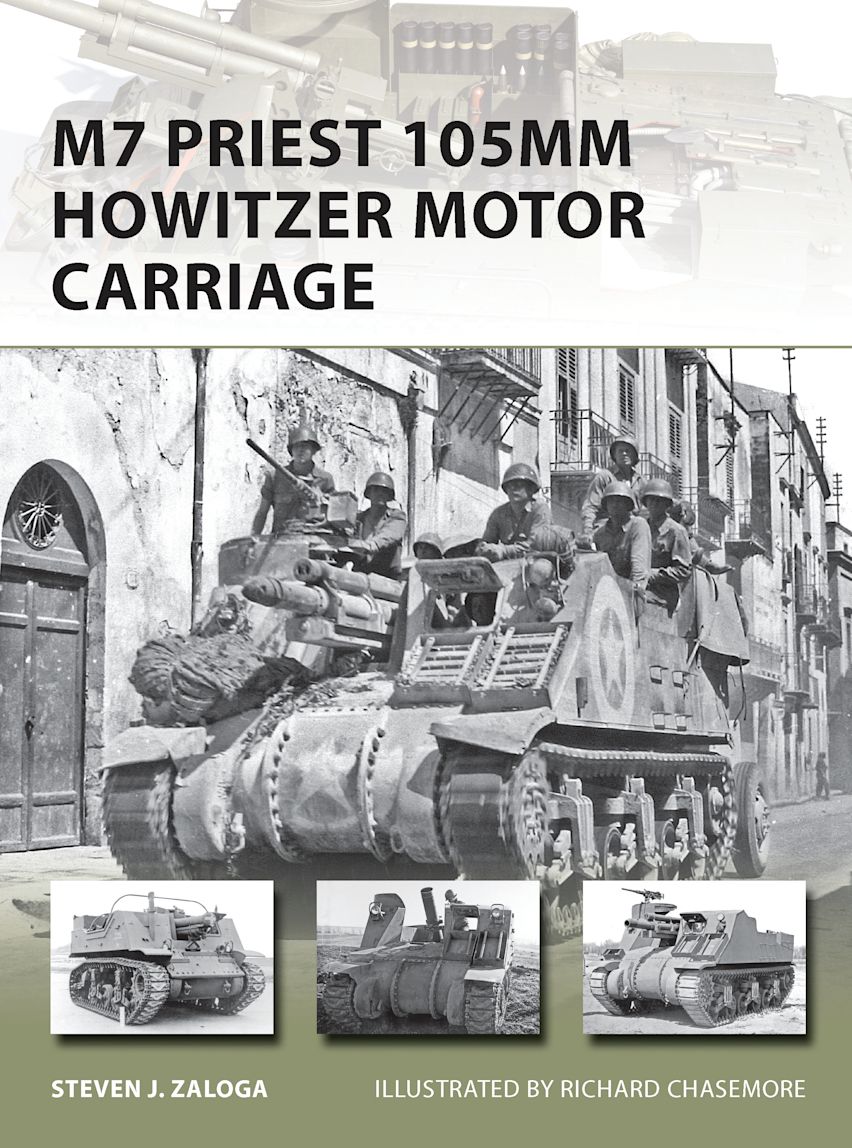
M7 Priest 105mm Howitzer Motor Carriage [图书] Goodreads 豆瓣 谷歌图书
作者: Steven J. Zaloga / Richard Chasemore 出版社: Osprey Publishing 2013 - 7
From El Alemein through Sicily, Italy, Normandy, the Ardennes, and Germany, the Allied M7 Priest self-propelled howitzer and its Canadian/British Sexton 25 pdr version became iconic. It was based on the ubiquitous Grant/Sherman tank and was the most widely manufactured vehicle of its type in World War II, being used by all major Allied armies including the US, British, Canadian and Free French forces. Besides covering the basic Priest, this book also deals with the major derivative including the British/Canadian Sexton with 25 pdr, and other US Sherman derivatives such as the M12 155mm GMC. The Priest has been widely kitted over the years including the recent Dragon kits (1/35), two Academy 1/35 kits, an older Italeri 1/35 kit (re-released by Tamiya), and numerous small scale offerings including Matchbox, Italeri, etc. and has been an evergreen modeling subject.
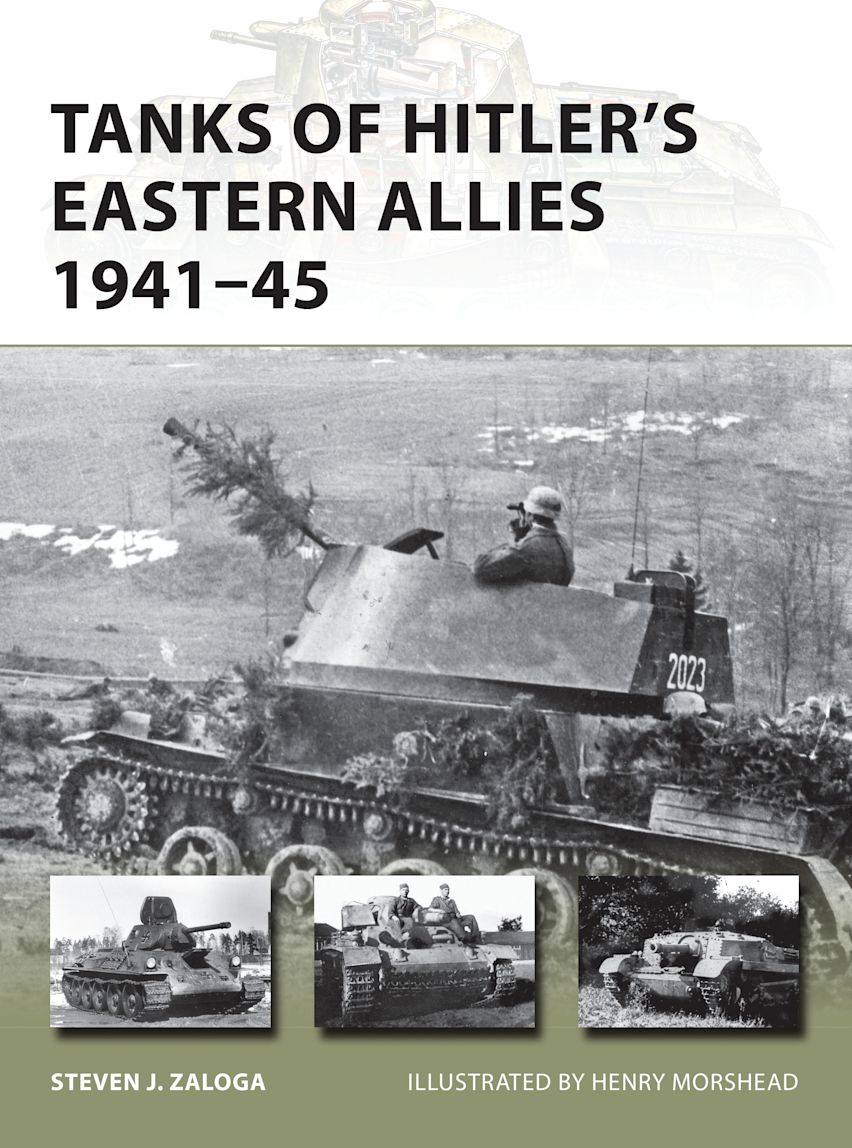
Tanks of Hitler’s Eastern Allies 1941–45 [图书] 谷歌图书 Goodreads 豆瓣
作者: Steven J. Zaloga / Henry Morshead 出版社: Osprey Publishing 2013 - 4
The titanic armor battles of the Russian Front are widely known, but the role of Germany's eastern allies is not as well known. Two of these countries, Romania and Hungary, manufactured their own tanks as well as purchasing tanks from Germany. These ranged from older, obsolete types such as the PzKpfw 35(t) all the way up to the latest and best German vehicles including the Tiger I and Hetzer. These tanks played a frequent role in the battles in southern Russia and Ukraine and were especially prominent in the disaster at Stalingrad where the Red Army specifically chose the weaker Romanian and Hungarian salients for their critical envelopment operation. This New Vanguard will provide a broad survey of the various and colorful tanks used. Besides covering the largest of these Axis tank forces, this book will cover the many smaller and lesser known forces including the Italian contingent in Russia, the Finnish armored force, and the small but interesting armored forces of the Russian Vlasov (RONA), Croatian, Bulgarian and Slovakian armies. This subject is seeing increasing interest in the modeling world; for example Tamiya recently announced a PzKpfw 35 (t) (suitable for Romanian, Slovak armies) a Finnish StuG III, and a Finnish BT-42.
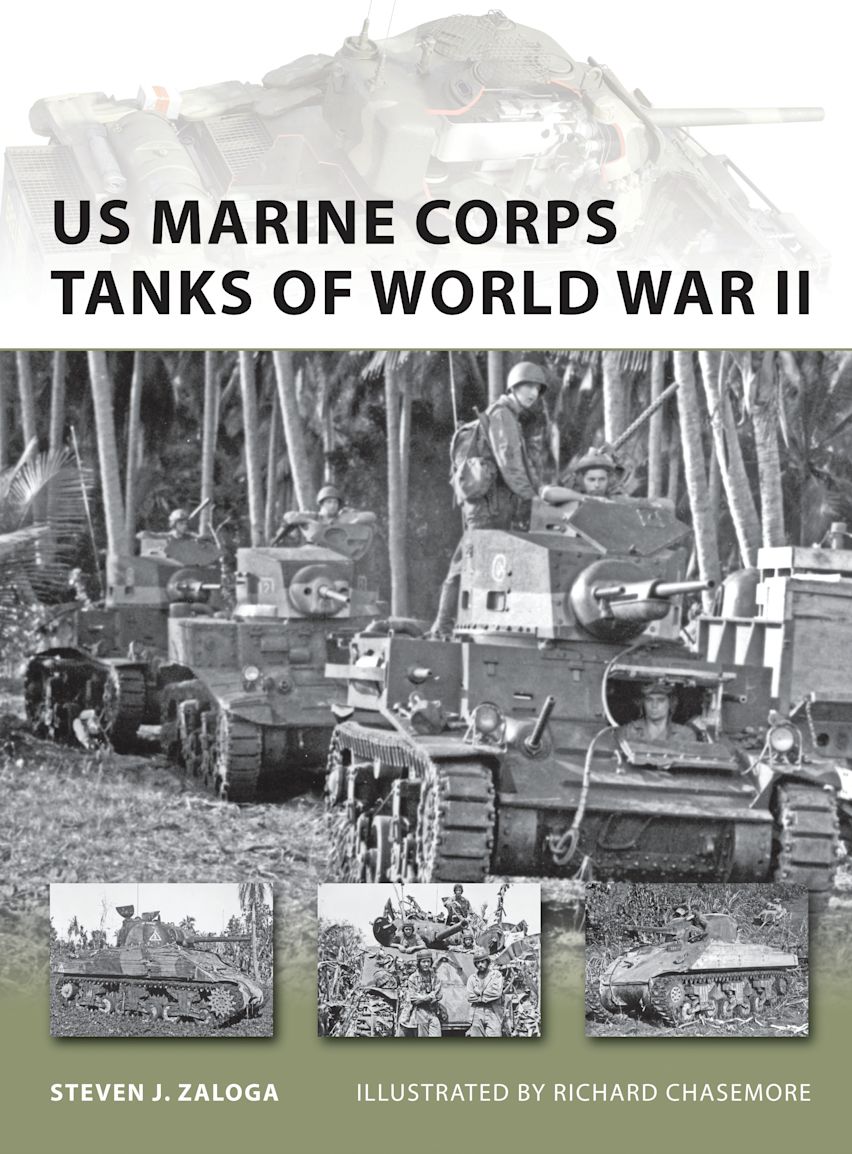
US Marine Corps Tanks of World War II [图书] Goodreads 豆瓣 谷歌图书
作者: Steven J. Zaloga / Richard Chasemore 出版社: Osprey Publishing 2012 - 1
The US Marine Corps formed six tank battalions in World War II which saw combat in some of the most varied and extreme conditions of the Pacific theater. The Marine tank battalions fought on small coral atolls such as Tarawa, in the fetid jungles of the south west Pacific including Guadalcanal, in the lush central Pacific islands of the Marianas such as Saipan and Guam, and on the volcanic deserts of the Bonin islands such as Iwo Jima. The tank equipment of the Marine Corps was essentially the same as that used by the US the M3 and M5A1 light tanks, and the M4 Sherman medium tanks. But the conditions and the opponent forced the Marine Corps to adapt both in terms of technical and tactical innovations. The numerous island landings forced the development of novel landing equipment, especially deep wading equipment to get the tanks safely ashore. Japanese defensive tactics in 1943-44 put a premium on American use of flamethrowers and the development of a variety of flamethrower tanks on the M3 light tank chassis. Deadly Japanese close-infantry tactics forced the development of novel methods of tank protection including the use of wooden armor to defeat the use of magnetic anti-tank devices. This book will examine the Marine use of tanks in World War II and the tactics and technology that made their experiences so unique in the annals of tank warfare.
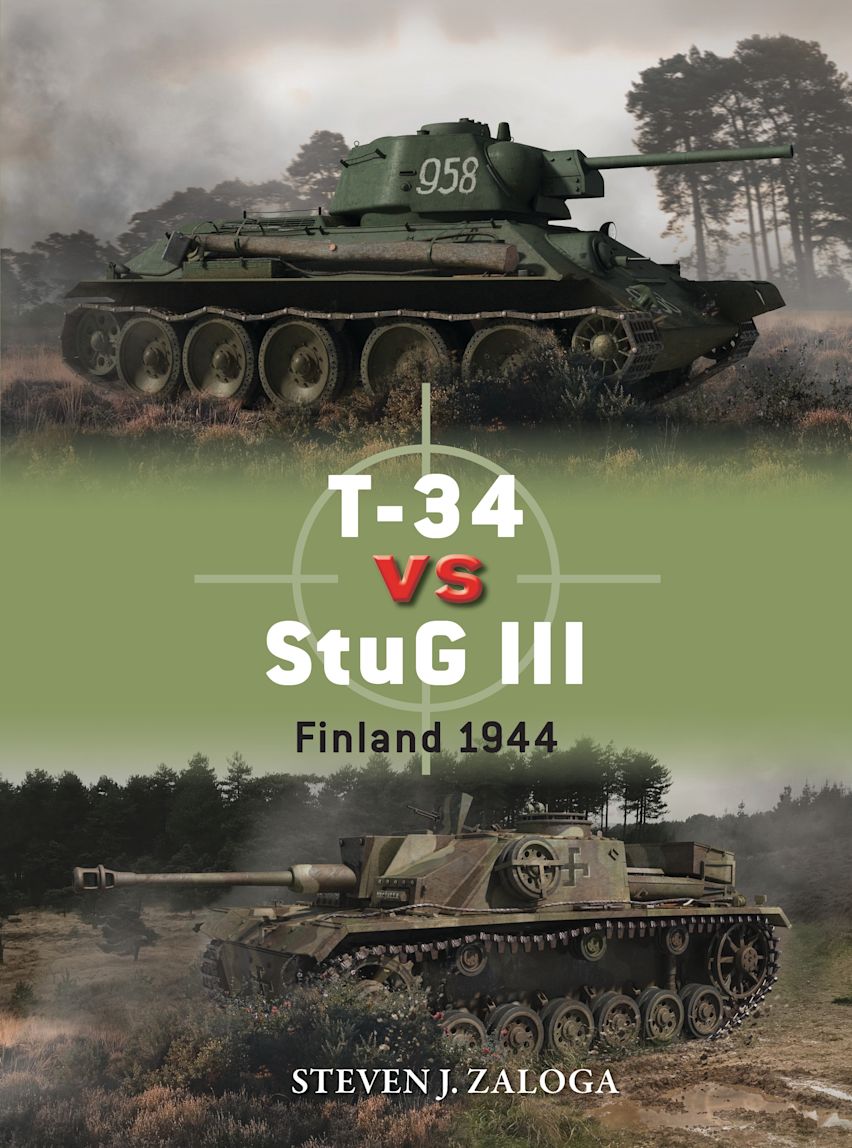
T-34 vs StuG III [图书] 谷歌图书 Goodreads 豆瓣
作者: Steven J. Zaloga / Richard Chasemore 出版社: Osprey Publishing 2019 - 8
Written by a noted authority, this fully illustrated book pits the StuG III assault gun in Finnish hands against the Soviet T-34-85 tank in the bitter armored clashes in Finland at the height of World War II.Featuring specially commissioned artwork and an array of archive photographs, T-34 vs StuG III is the absorbing story of the parts played by Soviet and Finnish armor in the epic battles in Finland during June and July 1944.In the summer of 1944, the Red Army staged a massive armored assault up the Karelian Isthmus with the intent of eliminating any remaining German and Finnish forces facing the Leningrad region. Most of the Soviet units sent into Finland were new to the region, moving mainly from the fighting in the Leningrad area. As a result, they had the latest types of Soviet equipment including the new T-34-85 tank. Germany refused to sell the Finns new tanks without a reinforced military alliance, but in 1943 began selling them a few dozen StuG III assault guns. This made the StuG III battalion the most modern and powerful element of the Finnish armored division, and it saw very extensive combat in the June–July summer battles.
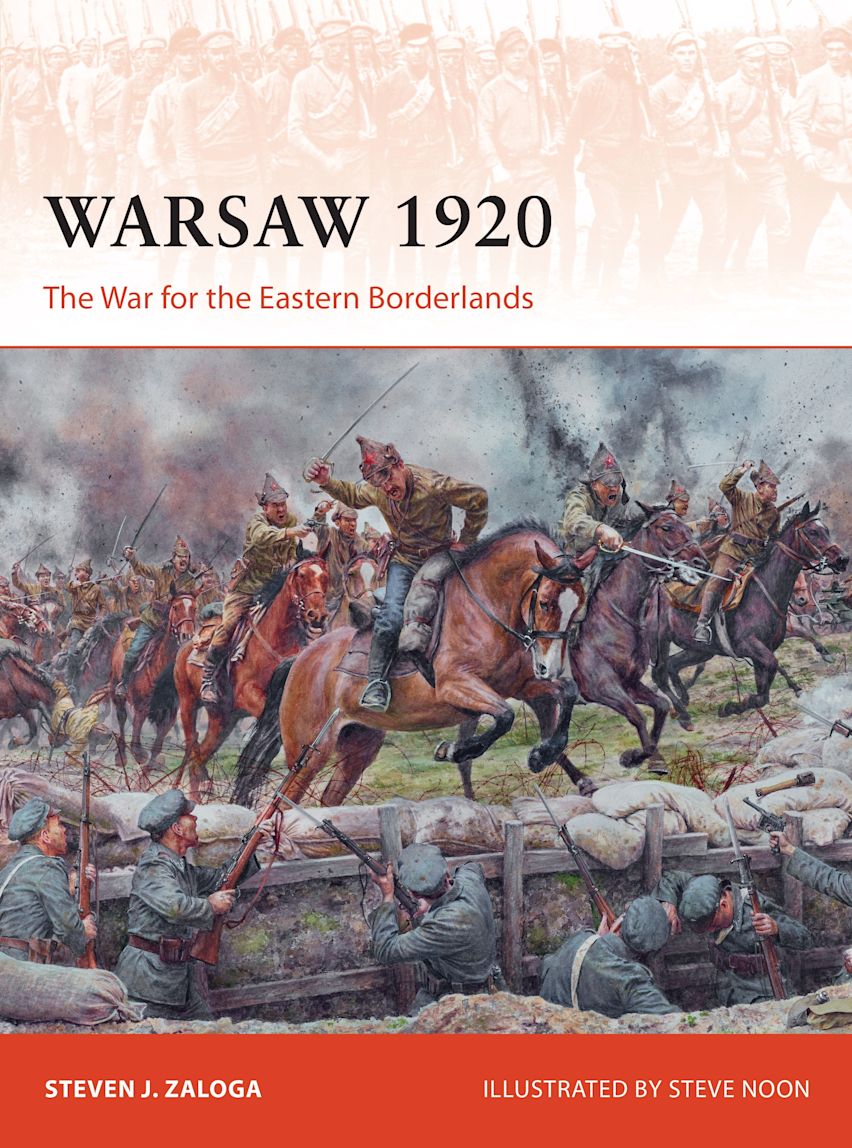
Warsaw 1920 [图书] Goodreads 豆瓣 谷歌图书
作者: Steven J. Zaloga 出版社: Osprey Publishing 2020 - 5
Published to coincide with the centenary of the campaign, this highly illustrated book from Steven Zaloga explores a David and Goliath conflict which saw the survival of the newly independent Poland in the face of the Soviet Red Army.

The Battle of Warsaw in August 1920 has been described as one of the decisive battles of European history. At the start of the battle, the Red Army appeared to be on the verge of advancing through Poland into Germany to expand the Soviet revolution. Had the war spread into Germany, another great European war would have ensued, dragging in France and Britain. However, the Red Army was defeated by 'the miracle on the Vistula'.

This campaign title explores the origins and outcomes of this momentous battle. In May 1920, the Polish Army intervened in war-torn Ukraine, pushing all the way to Kiev, but the Red Army, by now triumphant in most of the theatres of the Russian Civil War, turned its attention to this new threat. By the late summer of 1920, two Soviet armies had advanced into Poland and the overconfident Soviet leadership dreamed of advancing over a prostrate Polish Army into neighbouring Germany to ignite a Communist revolution in the heart of Europe.

Thanks to the low density of forces on both sides and the huge distances involved, the conflict was a war of manoeuvre, with a curious mixture of traditional and advanced tactics. Horse cavalry played a dominant role in the fighting, but aeroplanes, tanks, and armoured trains lent the war an air of modernity. This illustrated study explores the war through the lens of the Battle of Warsaw, the turning point when, after a summer of disastrous retreat, the Polish army rallied and repulsed the Red Army at Warsaw and Lwow.
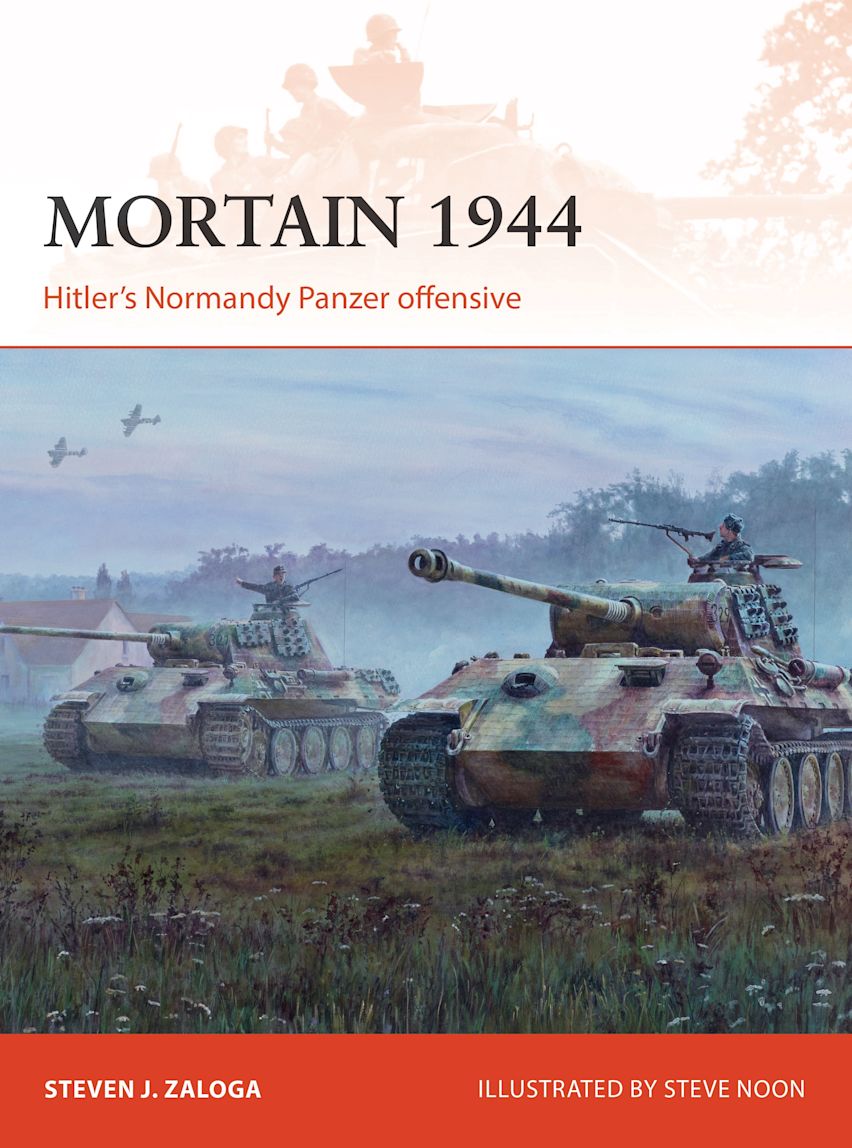
Mortain 1944 [图书] 谷歌图书 豆瓣 Goodreads
作者: Steven J. Zaloga 出版社: Osprey Publishing 2019 - 5
Following the successful landings in Normandy on D-Day and consolidation during Operation Cobra, the Wehrmacht was ordered to begin a counter-offensive named Operation Lüttich.
The plan was to send a large Panzer force across the First US Army sector, cutting off its spearheads, and finally reach Avranches on the coast. Had this succeeded, it not only would have cut off the First US Army spearheads, but also Patton's newly deployed Third US Army operating in Brittany.
However, thanks to an intercepted radio message, the Allies were well-prepared for the offensive and not only repelled the oncoming panzers, but went on a counter-attack that would lead to a whole German army becoming encircled in the Falaise Pocket.
Fully illustrated with stunning full-colour artwork, this book tells the story of Operation Lüttich, the failed offensive which ended any prospect of Germany winning the battle of Normandy.
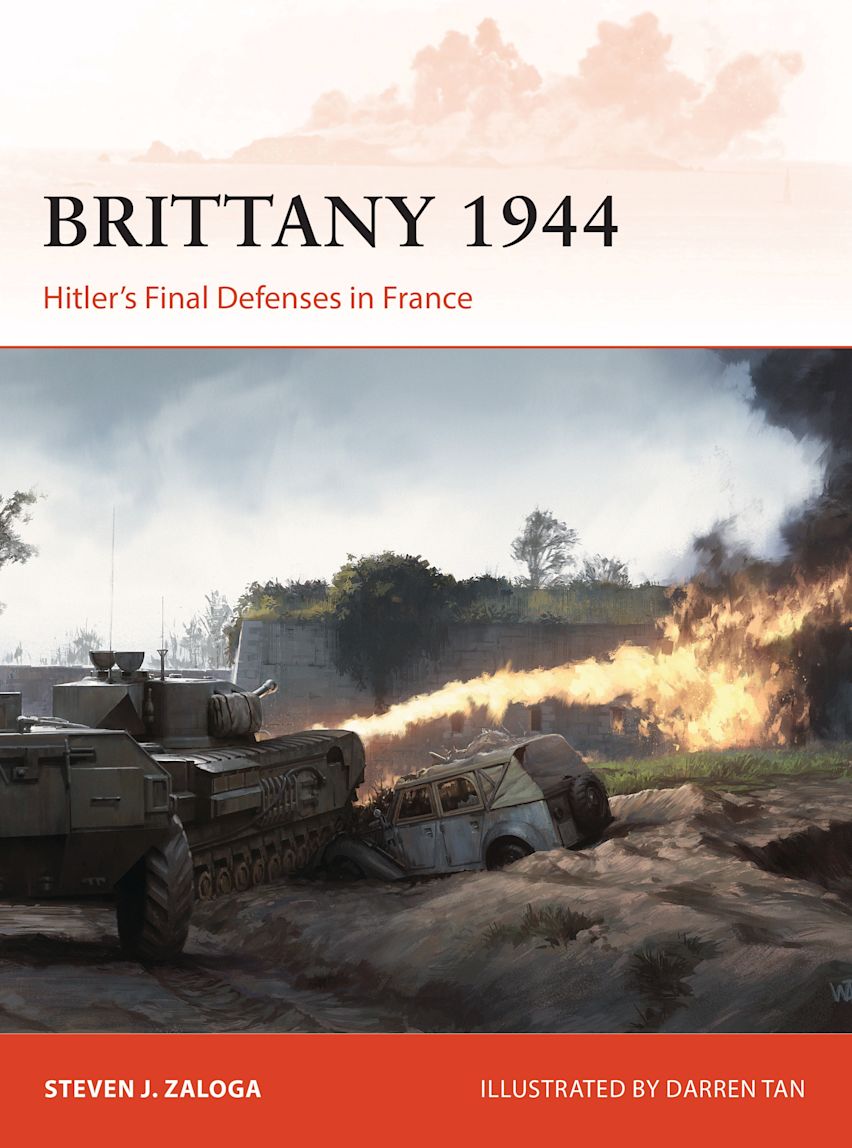
Brittany 1944 [图书] 谷歌图书 Goodreads 豆瓣
作者: Steven J. Zaloga 出版社: Osprey Publishing 2018 - 4 其它标题: Brittany 1944
One of the prime objectives for the Allies following the D-Day landings was the capture of sufficient ports to supply their armies. The original Overlord plans assumed that ports along the Breton coast would be essential to expansion of the Normandy beach-head. This included the major ports at Brest and on Quiberon Bay.

The newly arrived Third US Army (TUSA) under Lt. Gen. George S. Patton was delegated to take on the Brittany mission. In one of the most rapid mechanized advances of the war, TUSA had the ports of Avranches and Quiberon encircled by the second week of August 1944.

But changing priorities meant that most of TUSA was redeployed, meaning only a single corps was left to take the Breton port cities. The fight would drag into 1945, long after German field armies had been driven from France. Using full color maps and artwork as well as contemporary accounts and photographs, Brittany 1944 is the fascinating story of the siege of Germany's last bastions on the French Atlantic coast.
St Lô 1944 [图书] Goodreads 豆瓣
作者: Steven J. Zaloga / Johnny Shumate 出版社: Osprey Publishing 2017 - 6 其它标题: St Lô 1944
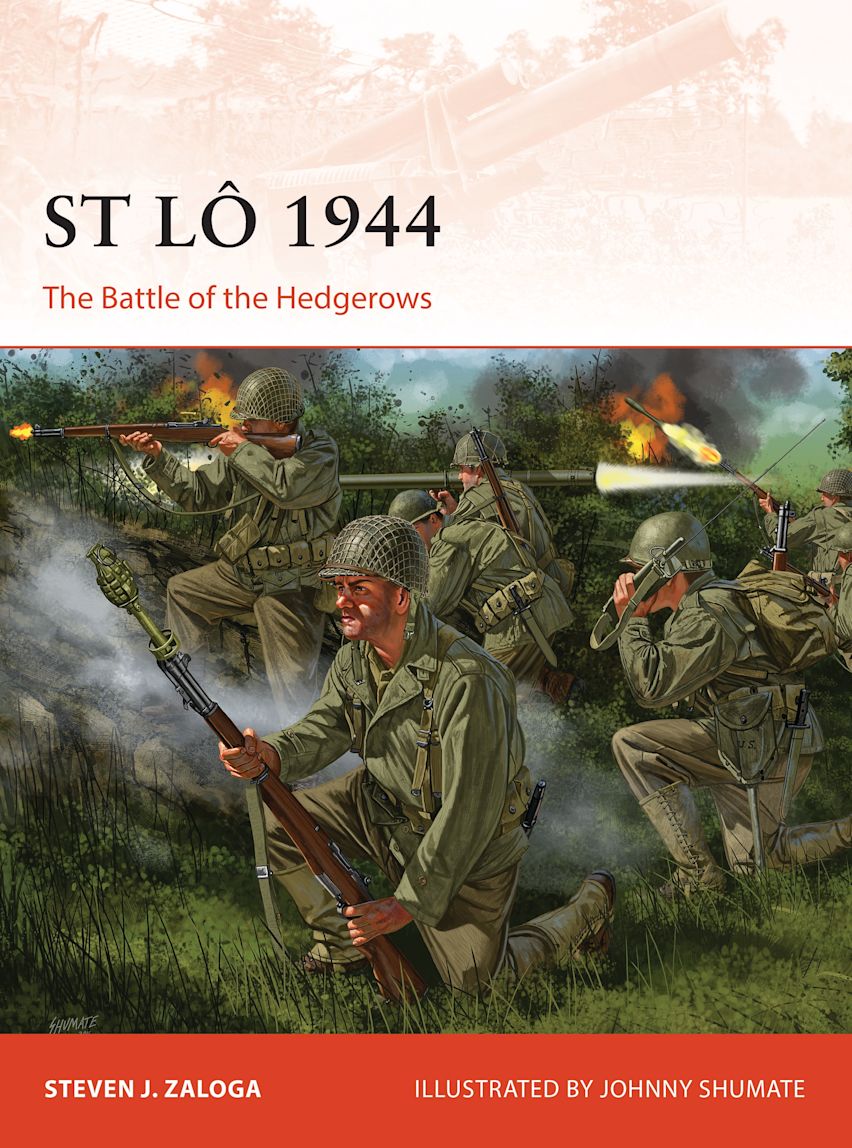
Following the D-Day landings on June 6, 1944, the First US Army engaged in a six-week struggle to break out of the Normandy beach-head. The hedgerow country of lower Normandy, called the Bocage, presented unanticipated tactical problems since it proved to be ideal for German infantry defense.

This book examines the brutal attritional struggle in June-July 1944 to overcome the determined German defense and secure St Lô. The city was the site of a crucial cross-roads and was thus a vital target for the invading Allied forces; the initial bombing attacks were so severe that the writer Samuel Beckett would later report that it had been 'bombed out of existence in one night'. The attack by ground forces turned into a brutal attritional struggle to overcome the determined German defense. Using full-color artwork, photographs and maps, this is the engaging story of one of the key engagements in the Battle of Normandy.
Downfall 1945 [图书] Goodreads 豆瓣
作者: Steven J. Zaloga / Steve Noon 出版社: Osprey Publishing 2016 - 5 其它标题: Downfall 1945
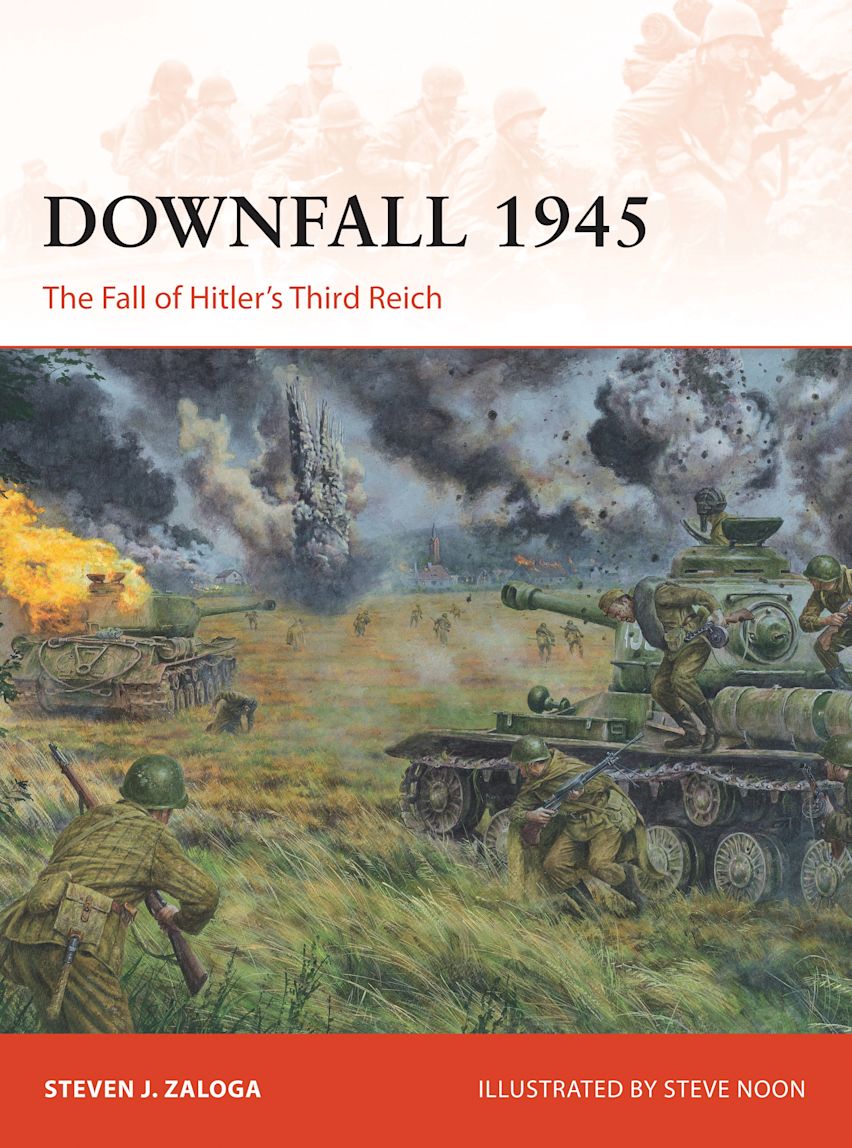
As the final month of fighting in Europe in 1945 dawned, the Allies embarked upon a series of mopping-up operations, destroying the last centers of German resistance as the essentially defeated Wehrmacht fought on in increasingly desperate conditions, driven by the explicit no-surrender order issued by Hitler.

Yet at the same time, the Allies were already on shaky ground--as German resistance was crushed, the Allies began to eye one another nervously across a battle-torn Europe. These politically driven military decisions would have a huge impact on the future of the continent.

This book traces the final operations of the war, from the liberation of Denmark, the Allied drive toward the Baltic straits, incursions in Yugoslavia, Hungary, Czechoslovakia, and engagements in Eastern and Western Germany, while also analyzing how the Allied strategies in the final days of the war were a hint of the future difficulties that would drive the Cold War.