John Ellis — 作者 (3)
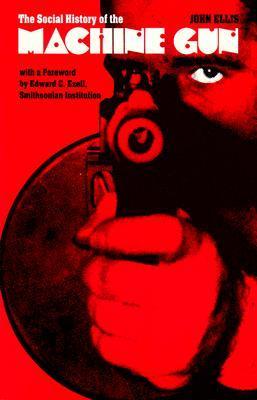
The Social History of the Machine Gun [图书] Goodreads
作者: John Ellis publishing house: Johns Hopkins University Press 1986 - 8
In this stunning account of the human impact of a single machine, John Ellis argues that the history of technology and military history are "part and parcel of social history in general." The Social History of the Machine Gun , now with a new foreword by Edward C. Ezell, provides an original and fascinating interpretation of weaponry, warfare, and society in nineteenth-and twentieth-century Europe and America. From its beginning, the machine gun threatened established assumptions about the nature of war. In spite of its highly effective use in the European colonization of Africa, the machine gun was resisted by military elites, who clung to "the old certanties of the battlefield—the glorious change and opportunities for individual heroism." These values were carried into the trenches of World War I and swept away along with a generation of soldiers. After the war, machine guns became commercially availble in America and in many ways became a symbol of the times. Advertisements touted the Thompson submachine gun as the ideal weapon for protecting factory and farm, while "tommy guns" entered the culture's imagination with Machine Gun Kelly and Boonie and Clyde. More significantly, Ellis suggests, the machine gun was the catalyst for the modern arms race. It necessitated a technological response: first the armored tank, then the jet fighter, and, perhaps ultimately, the hydrogen bomb.
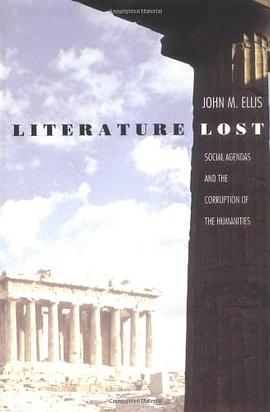
Literature Lost [图书] 豆瓣
作者: John Ellis publishing house: Yale University Press 1999 - 4
In the span of less than a generation, university humanities departments have experienced an almost unbelievable reversal of attitudes, now attacking and undermining what had previously been considered best and most worthy in the Western tradition. John M. Ellis here scrutinizes the new regime in humanistic studies. He offers a careful, intelligent analysis that exposes the weaknesses of notions that are fashionable in humanities today. In a clear voice, with forceful logic, he speaks out against the orthodoxy that has installed race, gender, and class perspectives at the center of college humanities curricula. Ellis begins by showing that political correctness is a recurring impulse of Western society and one that has a discouraging history. He reveals the contradictions and misconceptions that surround the new orthodoxy and demonstrates how it is most deficient just where it imagines itself to be superior. Ellis contends that humanistic education today, far from being historically aware, relies on anachronistic thinking; far from being skeptical of Western values, represents a ruthless and unskeptical Western extremism; far from being valuable in bringing political perspectives to bear, presents politics that are crude and unreal; far from being sophisticated in matters of "theory", is largely ignorant of the range and history of critical theory; far from valuing diversity, is unable to respond to the great sweep of literature. In a concluding chapter, Ellis surveys the damage that has been done to higher education and examines the prospects for change. "Ellis's book is a powerful and extremely lucid analysis of what has been going on -- and what has been wrong with what is goingon -- in the study of the humanities in universities over the past decade and a half. His argument is always logical, his writing refreshingly direct and free of jargon". -- John Hollander, Yale University