Giorgio Agamben — Author (102)
Walter Benjamin and Theology [Book] Douban
In the Arcades Project, Walter Benjamin writes that his work is “related to theology as blotting pad is related to ink. It is saturated with it.” For a thinker so decisive to critical literary, cultural, political, and aesthetic writings over the past half-century, Benjamin’s relationship to theological matters has been less observed than it should, even despite a variety of attempts over the last four decades to illuminate the theological elements latent within his eclectic and occasional writings. Such attempts, though undeniably crucial to comprehending his thought, remain in need of deepened systematic analysis. In bringing together some of the most renowned experts from both sides of the Atlantic, Walter Benjamin and Theology seeks to establish a new site from which to address both the issue of Benjamin’s relationship with theology and all the crucial aspects that Benjamin himself grappled with when addressing the field and operations of theological inquiry.
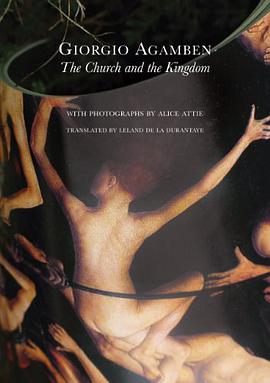
The Church and the Kingdom [Book] Douban
Italian philosopher Giorgio Agamben is the rare writer whose ideas and works have a broad appeal across many fields, and his devoted fans are not just philosophers, but readers of political and legal theory, sociology, and literary criticism as well. In March 2009, Agamben was invited to speak in Paris' Notre-Dame Cathedral in the presence of the bishop of Paris and a number of other high-ranking church officials. His resulting speech, a stunningly lucid and provocative look at the history and state of the church and its role in society, is presented here. "The Church and its Reign" is at once a pointed attack on the institutional structure of the Catholic Church and a theoretical excursus on the concepts of messianic time and economy. Presenting an exegesis of certain key passages in the New Testament, Agamben examines the philology and philosophy at the root of the church and of its earthly reign. With its examinations of the foundational texts of the church, which are also the foundational texts of our modern idea of economy, "The Church and its Reign" reveals significant connections and parallel ideologies which are imperative to understanding the current global situation. This edition of Agamben's text is accompanied by photographs by artist Alice Attie. Made from folded and twisted reproductions of paintings culled from Christian iconography, these works of art evoke the restless challenge that characterizes Agamben's four decades of philosophy and critique. This book will be welcomed by Agamben's many readers across the disciplines.
Karman [Book] Douban
Azione e colpa sono concetti-soglia, a tal punto fondativi del pensiero giuridico, morale e politico dell'Occidente da rimanere oscurati dalla loro stessa costitutività. Il carattere liminare di entrambi viene però in luce non appena si rifletta sulla corrispondenza stringente tra il latino "crimen", che designa l'azione umana in quanto imputabile e sanzionata, ossia chiamata in causa nell'ordine della responsabilità e del diritto, e il sanscrito "karman", che contrassegna l'agire generatore di conseguenze. Con mossa disvelatrice, Giorgio Agamben individua nel "karman/crimen" la chiave di volta indoeuropea senza la quale crollerebbero sia l'edificio dell'etica e della politica occidentali sia il soggetto libero e responsabile che ne è il presupposto e l'effetto. Questa archeologia pragmatica, più che gnoseologica, della soggettività, rende evidente quanto la presa dell'azione sanzionata sull'agente si rinsaldi sempre più proprio nel momento in cui - con la patristica - la nozione di libero arbitrio intende assicurare la sovranità della volontà, spodestando il primato aristotelico della potenza. Secondo Agamben, non si riuscirà a inceppare il dispositivo volontà-azione-imputazione se non si uscirà dal paradigma della finalità: contro la signoria dei fini va ripensata una politica di mezzi puri, che già Benjamin affidava al gesto inoperoso, capace di disattivare le opere umane e destinarle "a un nuovo, possibile uso".
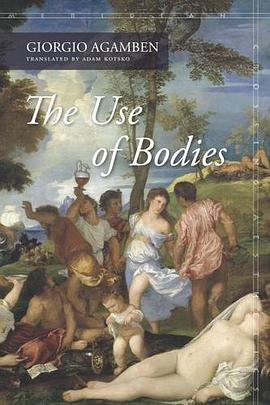
The Use of Bodies [Book] Douban
author:
Giorgio Agamben
translator:
Adam Kotsko
publishing house:
Stanford University Press
2016
- 3
Image et Mémoire [Book] Douban
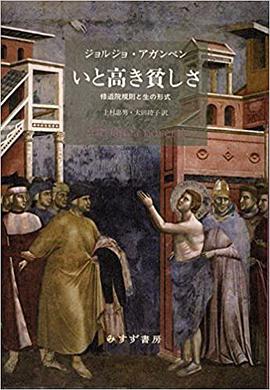
いと高き貧しさ――修道院規則と生の形式 [Book] Douban
Altissima povertà. Regole monastiche e forma di vita
もしもふるまいや言葉において、生と規則が区別できないとしたら。そして物の使用が所有と無関係で、
法の外にある生活が可能だとしたら、どうだろう。
神的なものと人間的なものが織りなす修道院の規則は、教義や掟ではなく、
生の次元に位置する体験であった。それは西洋の政治と倫理に影響を与えつづけてきたが、
現代はその遺産を考察さえできないでいる。
砂漠の聖者アントニオス。東西教会の代表的教父・バシレイオスとアウグスティヌス。
アッシジのフランチェスコと後継の理論家たち。神秘家オリヴィ。イエスの〈貧しさ〉に従う修道者たちは、
異端の疑いと背中合わせの中で、清貧の思想を鍛えぬいてきた。
とりわけフランシスコ会の兄弟たちは、所有権を拒否するだけでなく、「いかなる権利ももたない権利」を掲げて、
法の外で生きようとした。アガンベンは彼らの言論に、大量消費社会を超える可能性を見る。
生きることがたんなる事実ではなく、生の可能性であるような生。国家という形態をとらない
政治の可能性を考えるべく、アガンベンがかねて予告していた〈生のかたち〉、すなわち
分離できないほど形式と固く結びつき、「生政治」に回収されない生を構築する探求が、
ここに手がけられた。「ホモ・サケル」シリーズの一冊。
法の外にある生活が可能だとしたら、どうだろう。
神的なものと人間的なものが織りなす修道院の規則は、教義や掟ではなく、
生の次元に位置する体験であった。それは西洋の政治と倫理に影響を与えつづけてきたが、
現代はその遺産を考察さえできないでいる。
砂漠の聖者アントニオス。東西教会の代表的教父・バシレイオスとアウグスティヌス。
アッシジのフランチェスコと後継の理論家たち。神秘家オリヴィ。イエスの〈貧しさ〉に従う修道者たちは、
異端の疑いと背中合わせの中で、清貧の思想を鍛えぬいてきた。
とりわけフランシスコ会の兄弟たちは、所有権を拒否するだけでなく、「いかなる権利ももたない権利」を掲げて、
法の外で生きようとした。アガンベンは彼らの言論に、大量消費社会を超える可能性を見る。
生きることがたんなる事実ではなく、生の可能性であるような生。国家という形態をとらない
政治の可能性を考えるべく、アガンベンがかねて予告していた〈生のかたち〉、すなわち
分離できないほど形式と固く結びつき、「生政治」に回収されない生を構築する探求が、
ここに手がけられた。「ホモ・サケル」シリーズの一冊。
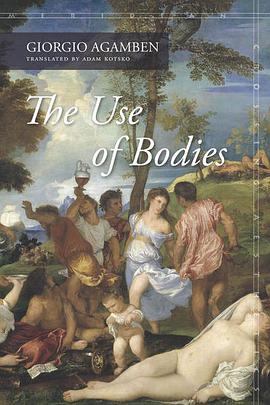
The Use of Bodies [Book] Douban
author:
Giorgio Agamben
translator:
Adam Kotsko
publishing house:
Stanford University Press
2016
- 3
Giorgio Agamben's Homo Sacer was one of the seminal works of political philosophy in recent decades. It was also the beginning of a series of interconnected investigations of staggering ambition and scope, investigating the deepest foundations of Western politics and thought.
The Use of Bodies represents the ninth and final volume in this twenty-year undertaking, breaking considerable new ground while clarifying the stakes and implications of the project as a whole. It comprises three major sections. The first uses Aristotle's discussion of slavery as a starting point for radically rethinking notions of selfhood; the second calls for a complete reworking of Western ontology; and the third explores the enigmatic concept of "form-of-life," which is in many ways the motivating force behind the entire Homo Sacer project. Interwoven between these major sections are shorter reflections on individual thinkers (Debord, Foucault, and Heidegger), while the epilogue pushes toward a new approach to political life that breaks with the destructive deadlocks of Western thought. The Use of Bodies represents a true masterwork by one of our greatest living philosophers.
The Use of Bodies represents the ninth and final volume in this twenty-year undertaking, breaking considerable new ground while clarifying the stakes and implications of the project as a whole. It comprises three major sections. The first uses Aristotle's discussion of slavery as a starting point for radically rethinking notions of selfhood; the second calls for a complete reworking of Western ontology; and the third explores the enigmatic concept of "form-of-life," which is in many ways the motivating force behind the entire Homo Sacer project. Interwoven between these major sections are shorter reflections on individual thinkers (Debord, Foucault, and Heidegger), while the epilogue pushes toward a new approach to political life that breaks with the destructive deadlocks of Western thought. The Use of Bodies represents a true masterwork by one of our greatest living philosophers.

When the House Burns Down [Book] Douban
Giorgio Agamben tackles our crisis-ridden world in a series of powerful philosophical essays.
“Which house is burning?” asks Giorgio Agamben. “The country where you live, or Europe, or the whole world? Perhaps the houses, the cities have already burnt down—who knows how long ago?—in a single immense blaze that we pretended not to see.” In this collection of four luminous, lyrical essays, Agamben brings his characteristic combination of philosophical acuity and poetic intensity to bear on a world in crisis. Whether surveying the burning house of our culture in the title essay, the architecture of pure exteriority in “Door and Threshold,” the language of prophecy in “Lessons in the Darkness,” or the word of the witness in “Testimony and Truth,” Agamben’s insights throw a revealing light on questions both timeless and topical. Written in dark times over the past year, and rich with the urgency of our moment, the essays in this volume also seek to show how what appears to be an impasse can, with care and attention, become the door leading to a way out.
“Which house is burning?” asks Giorgio Agamben. “The country where you live, or Europe, or the whole world? Perhaps the houses, the cities have already burnt down—who knows how long ago?—in a single immense blaze that we pretended not to see.” In this collection of four luminous, lyrical essays, Agamben brings his characteristic combination of philosophical acuity and poetic intensity to bear on a world in crisis. Whether surveying the burning house of our culture in the title essay, the architecture of pure exteriority in “Door and Threshold,” the language of prophecy in “Lessons in the Darkness,” or the word of the witness in “Testimony and Truth,” Agamben’s insights throw a revealing light on questions both timeless and topical. Written in dark times over the past year, and rich with the urgency of our moment, the essays in this volume also seek to show how what appears to be an impasse can, with care and attention, become the door leading to a way out.
A che punto siamo? [Book] Douban
author:
Giorgio Agamben
publishing house:
Quodlibet
Agamben ha raccolto in questo libro tutti i suoi interventi sull’emergenza sanitaria che stiamo attraversando. Al di là di denunce e descrizioni puntuali, i testi propongono in varia forma una riflessione sulla Grande Trasformazione in corso nelle democrazie occidentali. In nome della biosicurezza e della salute, il modello delle democrazie borghesi coi loro diritti, i loro parlamenti e le loro costituzioni sta ovunque cedendo il posto a un nuovo dispotismo in cui i cittadini sembrano accettare limitazioni delle libertà senza precedenti. Di qui l’urgenza della domanda che dà il titolo alla raccolta: a che punto siamo? Fino a quando saremo disposti a vivere in uno stato di eccezione che viene continuamente prolungato e di cui non si riesce a intravedere la fine?
Idea of Prose [Book] Douban
author:
Giorgio Agamben
translator:
Michael Sullivan
publishing house:
State University of New York Press
1995
- 5
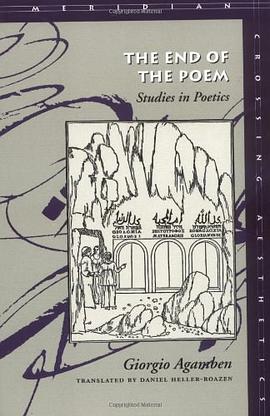
The End of the Poem [Book] Douban
Categorie italiane
author:
Giorgio Agamben
translator:
Daniel Heller-Roazen
publishing house:
Stanford University Press
1999
- 6
This book, by one of Italy's most important and original contemporary philosophers, represents a broad, general, and ambitious undertaking--nothing less than an attempt to rethink the nature of poetic language and to rearticulate relationships among theology, poetry, and philosophy in a tradition of literature initiated by Dante. The author presents "literature" as a set of formal or linguistic genres that discuss or develop theological issues at a certain distance from the discourse of theology. This distance begins to appear in Virgil and Ovid, but it becomes decisive in Dante and in his decision to write in the vernacular. His vernacular Italian reaches back through classical allusion to the Latin that was in his day the language of theology, but it does so with a difference. It is no accident that in the "Commedia" Virgil is Dante's guide. The book opens with a discussion of just how Dante's poem is a "comedy," and it concludes with a discussion of the "ends of poetry" in a variety of senses: enjambment at the ends of lines, the concluding lines of poems, and the end of poetry as a mode of writing this sort of literature. Of course, to have poetry "end" does not mean that people stop writing it, but that literature passes into a period in which it is concerned with its own ending, with its own bounds and limits, historical and otherwise. Though most of the essays make specific reference to various authors of the Italian literary tradition (including Dante, Polifilo, Pascoli, Delfini, and Caproni), they transcend the confines of Italian literature and engage several other literary and philosophical authors (Plato, Aristotle, the Stoics, Boethius, the Provencal poets, Mallarme, and Holderlin, among others).

Remnants of Auschwitz [Book] Douban
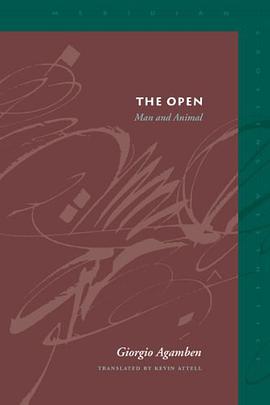
The Open [Book] Douban
author:
Giorgio Agamben
translator:
Kevin Attell
publishing house:
Stanford University Press
2003
- 10
The end of human history is an event that has been foreseen or announced by both messianics and dialecticians. But who is the protagonist of that history that is coming--or has come--to a close? What is man? How did he come on the scene? And how has he maintained his privileged place as the master of, or first among, the animals? In "The Open," contemporary Italian philosopher Giorgio Agamben considers the ways in which the "human" has been thought of as either a distinct and superior type of animal, or a kind of being that is essentially different from animal altogether. In an argument that ranges from ancient Greek, Christian, and Jewish texts to twentieth-century thinkers such as Heidegger, Benjamin, and Kojeve, Agamben examines the ways in which the distinction between man and animal has been manufactured by the logical presuppositions of Western thought, and he investigates the profound implications that the man/animal distinction has had for disciplines as seemingly disparate as philosophy, law, anthropology, medicine, and politics.
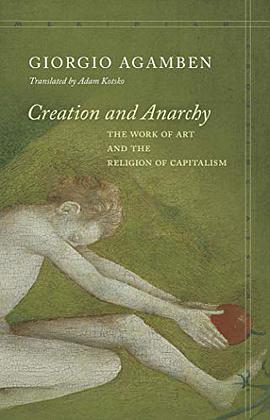
Creation and Anarchy [Book] Douban
author:
Giorgio Agamben
translator:
Adam Kotsko
publishing house:
Stanford University Press
2019
- 5