迈克尔·格罗斯 — 作者 (4)
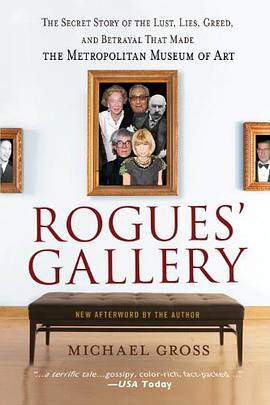
Rogues' Gallery [图书] 豆瓣
作者: Michael Gross 出版社: Broadway 2009 - 5
“Behind almost every painting is a fortune and behind that a sin or a crime.”
With these words as a starting point, Michael Gross, leading chronicler of the American rich, begins the first independent, unauthorized look at the saga of the nation’s greatest museum, the Metropolitan Museum of Art. In this endlessly entertaining follow-up to his bestselling social history 740 Park , Gross pulls back the shades of secrecy that have long shrouded the upper class’s cultural and philanthropic ambitions and maneuvers. And he paints a revealing portrait of a previously hidden face of American wealth and power.
The Metropolitan, Gross writes, “is a huge alchemical experiment, turning the worst of man’s attributes—extravagance, lust, gluttony, acquisitiveness, envy, avarice, greed, egotism, and pride—into the very best, transmuting deadly sins into priceless treasure.” The book covers the entire 138-year history of the Met, focusing on the museum’s most colorful characters. Opening with the lame-duck director Philippe de Montebello, the museum’s longest-serving leader who finally stepped down in 2008, Rogues’ Gallery then goes back to the very beginning, highlighting, among many others: the first director, Luigi Palma di Cesnola, an Italian-born epic phony, whose legacy is a trove of plundered ancient relics, some of which remain on display today; John Pierpont Morgan, the greatest capitalist and art collector of his day, who turned the museum from the plaything of a handful of rich amateurs into a professional operation dedicated, sort of, to the public good; John D. Rockefeller Jr., who never served the Met in any official capacity but who, during the Great Depression, proved the only man willing and rich enough to be its benefactor, which made him its behind-the-scenes puppeteer; the controversial Thomas Hoving, whose tenure as director during the sixties and seventies revolutionized museums around the world but left the Met in chaos; and Jane Engelhard and Annette de la Renta, a mother-daughter trustee tag team whose stories will astonish you (think Casablanca rewritten by Edith Wharton).
With a supporting cast that includes artists, forgers, and looters, financial geniuses and scoundrels, museum officers (like its chairman Arthur Amory Houghton, head of Corning Glass, who once ripped apart a priceless and ancient Islamic book in order to sell it off piecemeal), trustees (like Jayne Wrightsman, the Hollywood party girl turned society grand dame), curators (like the aging Dietrich von Bothmer, a refugee from Nazi Germany with a Bronze Star for heroism whose greatest acquisitions turned out to be looted), and donors (like Irwin Untermyer, whose collecting obsession drove his wife and children to suicide), and with cameo appearances by everyone from Vogue editors Anna Wintour and Diana Vreeland to Sex Pistols front man Johnny Rotten, Rogues’ Gallery is a rich, satisfying, alternately hilarious and horrifying look at America’s upper class, and what is perhaps its greatest creation.
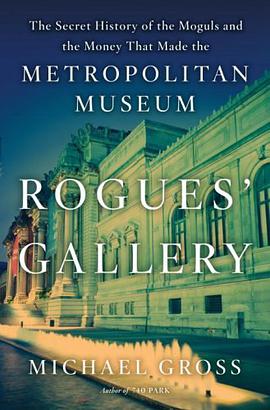
Rogues' Gallery [图书] 豆瓣
作者: Michael Gross 出版社: Broadway 2010 - 5
“Behind almost every painting is a fortune and behind that a sin or a crime.”
With these words as a starting point, Michael Gross, leading chronicler of the American rich, begins the first independent, unauthorized look at the saga of the nation’s greatest museum, the Metropolitan Museum of Art. In this endlessly entertaining follow-up to his bestselling social history 740 Park , Gross pulls back the shades of secrecy that have long shrouded the upper class’s cultural and philanthropic ambitions and maneuvers. And he paints a revealing portrait of a previously hidden face of American wealth and power.
The Metropolitan, Gross writes, “is a huge alchemical experiment, turning the worst of man’s attributes—extravagance, lust, gluttony, acquisitiveness, envy, avarice, greed, egotism, and pride—into the very best, transmuting deadly sins into priceless treasure.” The book covers the entire 138-year history of the Met, focusing on the museum’s most colorful characters. Opening with the lame-duck director Philippe de Montebello, the museum’s longest-serving leader who finally stepped down in 2008, Rogues’ Gallery then goes back to the very beginning, highlighting, among many others: the first director, Luigi Palma di Cesnola, an Italian-born epic phony, whose legacy is a trove of plundered ancient relics, some of which remain on display today; John Pierpont Morgan, the greatest capitalist and art collector of his day, who turned the museum from the plaything of a handful of rich amateurs into a professional operation dedicated, sort of, to the public good; John D. Rockefeller Jr., who never served the Met in any official capacity but who, during the Great Depression, proved the only man willing and rich enough to be its benefactor, which made him its behind-the-scenes puppeteer; the controversial Thomas Hoving, whose tenure as director during the sixties and seventies revolutionized museums around the world but left the Met in chaos; and Jane Engelhard and Annette de la Renta, a mother-daughter trustee tag team whose stories will astonish you (think Casablanca rewritten by Edith Wharton).
With a supporting cast that includes artists, forgers, and looters, financial geniuses and scoundrels, museum officers (like its chairman Arthur Amory Houghton, head of Corning Glass, who once ripped apart a priceless and ancient Islamic book in order to sell it off piecemeal), trustees (like Jayne Wrightsman, the Hollywood party girl turned society grand dame), curators (like the aging Dietrich von Bothmer, a refugee from Nazi Germany with a Bronze Star for heroism whose greatest acquisitions turned out to be looted), and donors (like Irwin Untermyer, whose collecting obsession drove his wife and children to suicide), and with cameo appearances by everyone from Vogue editors Anna Wintour and Diana Vreeland to Sex Pistols front man Johnny Rotten, Rogues’ Gallery is a rich, satisfying, alternately hilarious and horrifying look at America’s upper class, and what is perhaps its greatest creation.
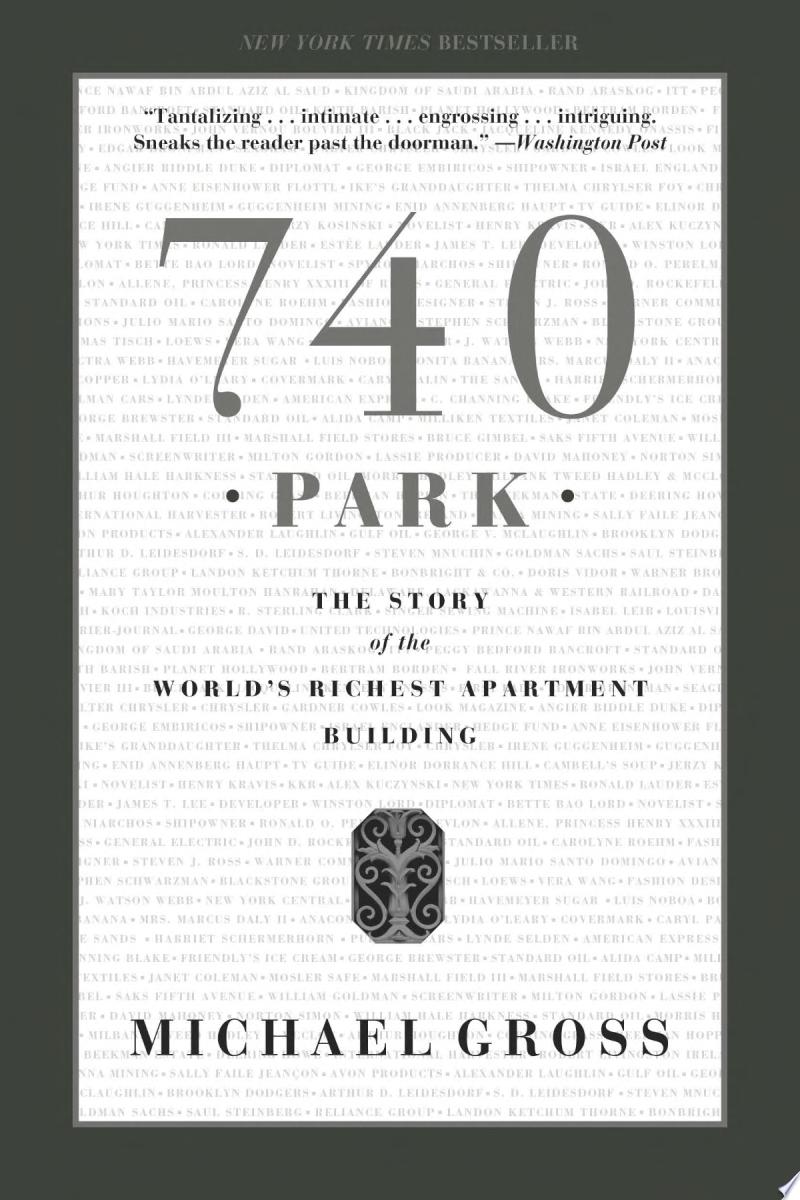
740 Park [图书] 谷歌图书
作者: Michael Gross 出版社: Crown 2006 - 10
From the author of House of Outrageous Fortune

For seventy-five years, it’s been Manhattan’s richest apartment building, and one of the most lusted-after addresses in the world. One apartment had 37 rooms, 14 bathrooms, 43 closets, 11 working fireplaces, a private elevator, and his-and-hers saunas; another at one time had a live-in service staff of 16. To this day, it is steeped in the purest luxury, the kind most of us could only imagine, until now.

The last great building to go up along New York’s Gold Coast, construction on 740 Park finished in 1930. Since then, 740 has been home to an ever-evolving cadre of our wealthiest and most powerful families, some of America’s (and the world’s) oldest money—the kind attached to names like Vanderbilt, Rockefeller, Bouvier, Chrysler, Niarchos, Houghton, and Harkness—and some whose names evoke the excesses of today’s monied elite: Kravis, Koch, Bronfman, Perelman, Steinberg, and Schwarzman. All along, the building has housed titans of industry, political power brokers, international royalty, fabulous scam-artists, and even the lowest scoundrels.

The book begins with the tumultuous story of the building’s construction. Conceived in the bubbling financial, artistic, and social cauldron of 1920’s Manhattan, 740 Park rose to its dizzying heights as the stock market plunged in 1929—the building was in dire financial straits before the first apartments were sold. The builders include the architectural genius Rosario Candela, the scheming businessman James T. Lee (Jacqueline Kennedy Onassis’s grandfather), and a raft of financiers, many of whom were little more than white-collar crooks and grand-scale hustlers.

Once finished, 740 became a magnet for the richest, oldest families in the country: the Brewsters, descendents of the leader of the Plymouth Colony; the socially-registered Bordens, Hoppins, Scovilles, Thornes, and Schermerhorns; and top executives of the Chase Bank, American Express, and U.S. Rubber. Outside the walls of 740 Park, these were the people shaping America culturally and economically. Within those walls, they were indulging in all of the Seven Deadly Sins.

As the social climate evolved throughout the last century, so did 740 Park: after World War II, the building’s rulers eased their more restrictive policies and began allowing Jews (though not to this day African Americans) to reside within their hallowed walls. Nowadays, it is full to bursting with new money, people whose fortunes, though freshly-made, are large enough to buy their way in.

At its core this book is a social history of the American rich, and how the locus of power and influence has shifted haltingly from old bloodlines to new money. But it’s also much more than that: filled with meaty, startling, often tragic stories of the people who lived behind 740’s walls, the book gives us an unprecedented access to worlds of wealth, privilege, and extraordinary folly that are usually hidden behind a scrim of money and influence. This is, truly, how the other half—or at least the other one hundredth of one percent—lives.
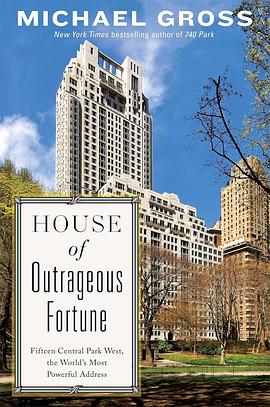
House of Outrageous Fortune [图书] 豆瓣
作者: Michael Gross
In real estate–obsessed New York, no new building has captured the city’s imagination—or as many of its richest residents—as Fifteen Central Park West.
In House of Outrageous Fortune, America’s foremost chronicler of the upper crust, journalist and bestselling author Michael Gross, turns his gimlet eye on the new-money wonderland that’s sprung up on the southwest rim of Central Park. Mixing an absorbing business epic with hilarious social comedy, Gross creates a dishy exposé of today’s wealthiest and most famous. This colorful story recounts the recordsetting building’s inspired genesis, costly construction, and the flashy international lifestyle it has brought to a once benighted and socially déclassé Manhattan neighborhood.
With two concierge-staffed lobbies, a walnut-lined library, a lavish screening room, a private sixty-seat restaurant offering residents room service, a health club complete with a seventy-foot swimming pool, and penthouses that cost almost $100 million, Fifteen is the most outrageously successful, insanely expensive, titanically tycoon-stuffed real estate development of the twenty-first century. And any building that’s home to such unimaginable wealth and heavyweight egos—its cast of characters includes Denzel Washington, Sting, Alex Rodriguez, Norman Lear, NASCAR’s Jeff Gordon, hedge fund heads Daniel Loeb and Daniel Och, Russian and Chinese oligarchs, and top executives of Citibank, JPMorgan Chase, AIG, Disney, Google, and Yahoo!, among many more—will be chock-full of jaw-dropping excess.
Gross won unprecedented access to the people behind this instantly legendary building, including the scions of the fabled Zeckendorf real estate dynasty; their financial backers, Goldman Sachs and Israeli billionaire Eyal Ofer; and their “starchitect,” Robert A. M. Stern. Then he drilled past its limestone façade to ferret out the stories Fifteen’s fathers and its residents don’t want told.
More than just an apartment building, 15CPW represents a massive paradigm shift in the lifestyle of New York’s rich and famous—and is a bellwether of the city’s changing social and financial landscape. With its dazzling detail, House of Outrageous Fortune is a sweeping history of those changes, and it pulls open wide the gilded walls of Fifteen to reveal the private lives of that .01 percent.