Jean Cocteau — Director (10)

让·谷克多致辞2000年 (1962) [Movie] Douban
Jean Cocteau s'adresse... à l'an 2000
other title:
Jean Cocteau s'adresse... à l'an 2000
This is not the end of the Cocteau story, of course, for as we have constantly witnessed, he is always oriented towards the future due to his undimmed faith in the creative act, and none more so than in the medium of film. Indeed, he was even more advanced in his preparations for death and the after-life of his work than originally thought.
Just a couple of months before his death, in August 1963, he made one last film: a 25-minute short entitled Jean Cocteau s’adresse à l’an 2000 (Cocteau addresses the year 2000). The film comprises one still and highly sober shot of Cocteau facing the camera head-on to address the youth of the future. Once recorded, this spoken message for the 21st century was wrapped up, sealed and posted on the understanding that it would be opened only in the year 2000 (as it turned out, it was discovered and exhumed a few years shy of that date). If in The Testament Cocteau portrays himself as a living anachronism, a lonesome classical modernist loitering in space-time in the same buckskin jacket and tie while lost in the spectral light of his memories, here he acknowledges explicitly the irony of his phantom-like state: by the time the viewer sees this image, he, J. C., our saviour Poet, will long be dead.
Temporality is typically skewed: speaking from both 1963 and 2000 Cocteau is at once nostalgic for the present that will have passed and prophetic about the future. There is thus both a documentary aspect and projective thrust to the film, another new configuration of ‘superior realism’ and fantasy enhanced by Cocteau’s seamless performance as himself and his now ‘immortal’ status as a member of the Académie Française. He reiterates some of his long-standing artistic themes and principles: death is a form of life; poetry is beyond time and a kind of superior mathematics; we are all a procession of others who inhabit us; errors are the true expression of an individual, and so on. The tone is at once speculative and uncompromising, as when Cocteau pours vitriolic scorn on the many awards bestowed upon him, which he calls ‘transcendent punishments’. He also revels in the fact that he can say now what he likes with absolute freedom and impunity since he will not be around to suffer the consequences.
The status of Jean Cocteau s’adresse à l’an 2000 remains ultimately unclear. Is it a new testament or confession, or a heroic demonstration of the need for human endurance, or a pure ‘farce of anti-gravitation’ as he puts it? Or everything at once? It is entirely characteristic of Cocteau to leave us hanging on this suspended paradox. What is certain, however, and what we have consistently seen, is that Cocteau’s life and body are his work, and his work in turn is always mysteriously alive. This is Cocteau’s final gift to his fellow human beings. Let us retain and celebrate the force of that gesture. He is resurrected before our eyes, ever-present, defiant and joyfully queer.
Jean Cocteau is dead, long live Cocteau!
(James S. Williams)
Just a couple of months before his death, in August 1963, he made one last film: a 25-minute short entitled Jean Cocteau s’adresse à l’an 2000 (Cocteau addresses the year 2000). The film comprises one still and highly sober shot of Cocteau facing the camera head-on to address the youth of the future. Once recorded, this spoken message for the 21st century was wrapped up, sealed and posted on the understanding that it would be opened only in the year 2000 (as it turned out, it was discovered and exhumed a few years shy of that date). If in The Testament Cocteau portrays himself as a living anachronism, a lonesome classical modernist loitering in space-time in the same buckskin jacket and tie while lost in the spectral light of his memories, here he acknowledges explicitly the irony of his phantom-like state: by the time the viewer sees this image, he, J. C., our saviour Poet, will long be dead.
Temporality is typically skewed: speaking from both 1963 and 2000 Cocteau is at once nostalgic for the present that will have passed and prophetic about the future. There is thus both a documentary aspect and projective thrust to the film, another new configuration of ‘superior realism’ and fantasy enhanced by Cocteau’s seamless performance as himself and his now ‘immortal’ status as a member of the Académie Française. He reiterates some of his long-standing artistic themes and principles: death is a form of life; poetry is beyond time and a kind of superior mathematics; we are all a procession of others who inhabit us; errors are the true expression of an individual, and so on. The tone is at once speculative and uncompromising, as when Cocteau pours vitriolic scorn on the many awards bestowed upon him, which he calls ‘transcendent punishments’. He also revels in the fact that he can say now what he likes with absolute freedom and impunity since he will not be around to suffer the consequences.
The status of Jean Cocteau s’adresse à l’an 2000 remains ultimately unclear. Is it a new testament or confession, or a heroic demonstration of the need for human endurance, or a pure ‘farce of anti-gravitation’ as he puts it? Or everything at once? It is entirely characteristic of Cocteau to leave us hanging on this suspended paradox. What is certain, however, and what we have consistently seen, is that Cocteau’s life and body are his work, and his work in turn is always mysteriously alive. This is Cocteau’s final gift to his fellow human beings. Let us retain and celebrate the force of that gesture. He is resurrected before our eyes, ever-present, defiant and joyfully queer.
Jean Cocteau is dead, long live Cocteau!
(James S. Williams)
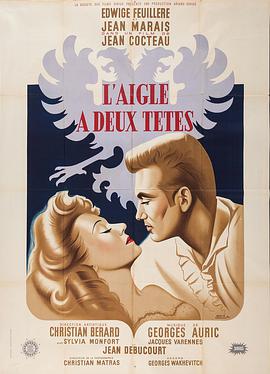
The Eagle has Two Heads (1948) [Movie] Douban TMDB IMDb WikiData
L'aigle à deux têtes
other title:
双头鹰之死
/
L'aigle à deux têtes
…
Political intrigue and psychological drama run parallel. The queen is in seclusion, veiling her face for the ten years since her husband's assassination, longing to join him in death. Stanislas, a poet whose pen name is Azrael, is a suicidal anarchist, his imagination haunted into hate by longing for this queen who's drawn apart. He enters her private quarters intent on killing her then himself, but they fall in love, in part because he looks like the king. Stanislas wants her to regain political power by appearing to the public, and she tries to convince him to find hope and escape. All the while, the queen's enemies plot to keep the lovers together but to thwart their plans.
A Chess Sonata in 8 Movements (1957) [Movie] Douban
A Chess Sonata in 8 Movements
director:
Jean Cocteau
/
汉斯·李希特
actor:
让·科克托
/
Jean Arp
…
other title:
棋盘奏鸣曲
/
8 X 8
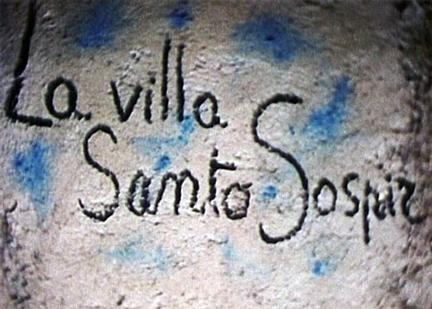
La Villa Santo-Sospir (1952) [Movie] Douban TMDB IMDb WikiData
La Villa Santo-Sospir
director:
Jean Cocteau
actor:
Jean Cocteau
/
Édouard Dermithe
…
other title:
圣多-索斯比别墅
/
A Vila Santo-Sospir Brazil
…
Short about Mrs. Weisweiller's Villa in Saint-Jean-Cap-Ferat, on Côte d'Azur, which was decorated by Jean Cocteau.
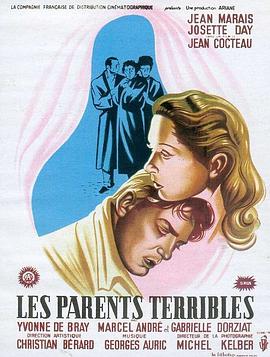
The Storm Within (1948) [Movie] Douban TMDB IMDb WikiData
Les Parents Terribles
other title:
可怕的父母
/
Les Parents Terribles
…
Young Michel is in love with the attractive Madeleine, so he decides to tell his parents of his intention to marry her. He thinks his announcement is innocent enough; his engagement, however, threatens to reveal dark secrets lurking within his family's home. Yvonne, Michel's overbearing mother, concocts an elaborate scheme to drive Madeleine away, thus keeping uncomfortable household truths from being exposed.
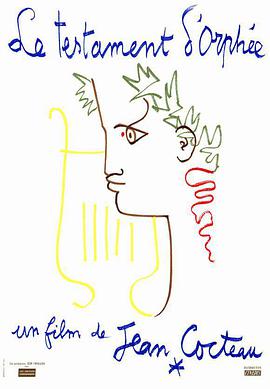
Testament of Orpheus (1960) [Movie] Douban IMDb TMDB WikiData
Le testament d'Orphée, ou ne me demandez pas pourquoi!
other title:
奥菲斯的遗嘱
/
Le testament d'Orphée, ou ne me demandez pas pourquoi!
…
An 18th century poet travels through time in search of divine wisdom. In a mysterious wasteland, he has a series of enigmatic encounters with symbolic phantoms with whom he muses about the nature of art and his own career. Ultimately, the poet strives to achieve his rebirth as a celestial being.
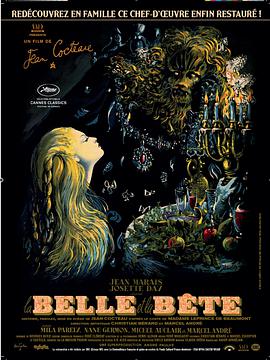
Beauty and the Beast (1946) [Movie] Douban IMDb Min reol TMDB WikiData
La belle et la bête
other title:
미녀와 야수
/
La Belle et la Bête
…
The story of a gentle-hearted beast in love with a simple and beautiful girl. She is drawn to the repellent but strangely fascinating Beast, who tests her fidelity by giving her a key, telling her that if she doesn't return it to him by a specific time, he will die of grief. She is unable to return the key on time, but it is revealed that the Beast is the genuinely handsome one. A simple tale of tragic love that turns into a surreal vision of death, desire, and beauty.