Lee Kuan Yew — 作者 (7)
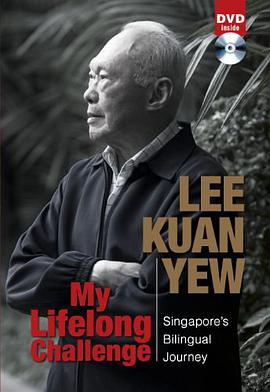
My Lifelong Challenge Singapore's Bilingual Journey [图书] 豆瓣
作者: Lee Kuan Yew 出版社: Straits Times Press 2011
My Lifelong Challenge is also the story of Mr Lee's own personal struggle to learn the Chinese language, which began when he was six years old and his Hakka maternal grandmother enrolled him in a Chinese class with fishermen's children. In evocative detail, the man born to English-speaking parents recounts his own feelings of rebellion and humiliation at different points in his life, when faced with the Chinese language and his own inadequacy in it.
This book describes in matter-of-fact yet vivid fashion his steely determination to improve his Chinese and reclaim his Chinese heritage, right up to the present when he is well into his eighties. In this book, we learn of Mr Lee's belief in a fundamental difference between the Chinese-educated and the English-educated and how it came about. He describes a scene of English-speaking students at the University of Singapore hostel revelling in party games even as Chinese-speaking students in the Chinese High School nearby were locked in a deadly face-off with the police in 1956, and gives the dire warning that "if Singapore students all turned out like those in the university hostel, Singapore would fail." Finally, Mr Lee distils his experiences of 50 years into eight precepts which he spells out at the end of his narrative.
The second half of this book is a compilation of essays by 22 Singaporeans. They include Mr Lee Hsien Loong, the current prime minister and son of Mr Lee Kuan Yew, and Ms Stephanie Sun, the well-known pop star. In these essays, the 22 recount their own language journeys, imbuing flesh and blood meaning to cold policy measures wrought over more than four decades.
This book is essential reading for anyone wanting to find more about Singapore's bilingualism policy and its chief architect. It breaks new ground by putting into the public domain information about education matters that has never been publicised. It is also an invaluable resource for all who are interested in the primeval interplay between language and politics.
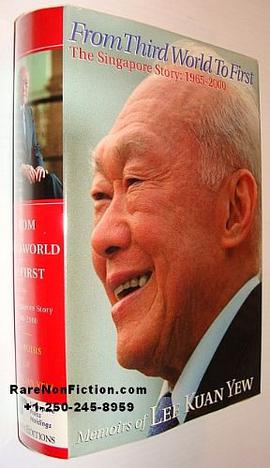
From Third World to First [图书] 豆瓣
作者: Lee Kuan Yew 出版社: Harper 2000 - 10
Lee Kuan Yew is one of the most influential leaders in Asia. In this illuminating account, Lee writes frankly about his disapproving approach to political opponents and his often unorthodox views on human rights, democracy, and inherited intelligence, aiming always “to be correct, not politically correct.” Since it’s independence in 1965, tiny Singapore – once a poor and decrepit colony – has risen to become a rich and thriving Asian metropolis. From Third World to First is a fascinating and insightful account of Singapore’s survival from a history of oppressive colonialism, the Second World War and major poverty and disorder. Lee also uses previously unpublished official government reports and papers to explain how he led a tiny country into becoming a prosperous and secure modern society, amid the constant hostility of world politics. Today Singapore boasts not only to have the busiest port of trade, best airport with the world’s number one airline, but also the world’s fourth-highest per capita real income? An Island hailed as the city of the future, Singapore’s miraculous history is dramatically recounted by the man who not only lived through it all but fearlessly forged ahead and brought about most of the changes. Lee highlights is relationships with his political peers from Margaret Thatcher and Ronald Reagan to George Bush and poetry-spouting Jiang Zemin. Also a father of three Lee writes warmly of his family life. From Third World to First offers readers a compelling glimpse not only into the heart but also the mind of an incredibly influential man who is impossible to ignore in Asian and international politics.
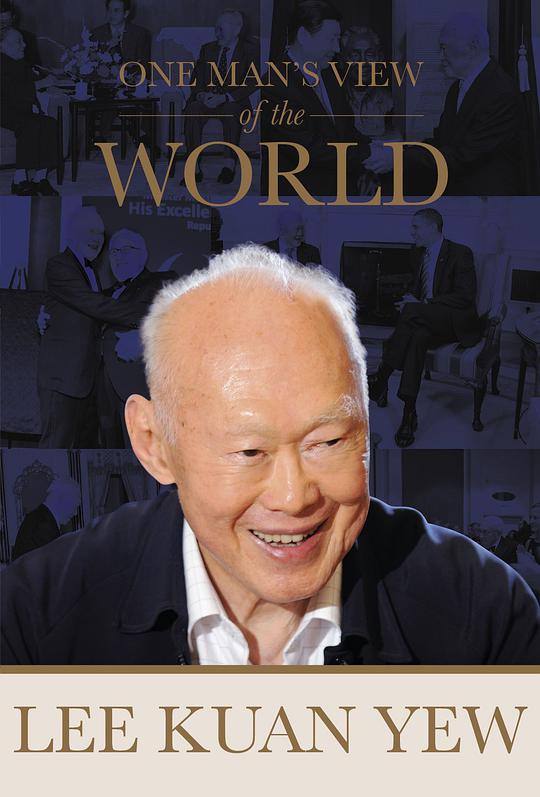
One Man's View of the World [图书] 豆瓣 Goodreads Goodreads
One Man's View of the World
作者: Lee Kuan Yew / 李光耀 出版社: Straits Times Press Pte Ltd 2013 - 8
In this book, Lee draws on that wealth of experience and depth of insight to offer his views on today’s world and what it might look like in 20 years. This is no dry geopolitical treatise. Nor is it a thematic account of the twists and turns in global affairs. Instead, in this broad-sweep narrative that takes in America, China, Asia and Europe, he parses their society, probes the psyche of the people and draws his conclusions about their chances for survival and just where they might land in the hierarchy of tomorrow’s balance of power. What makes a society tick? What do its people really believe? Can it adapt?
In spare, unflinching prose that eschews political correctness, he describes a China that remains obsessed with control from the centre on its way to an unstoppable rise; an America that will have to share its pre-eminence despite its never-say-die dynamism; and a Europe that struggles with the challenges of keeping its union intact. His candid and often startling views – on why Japan is closed to foreigners, why the Arab Spring won’t bring one man, one vote to the Middle East, and why preventing global warming is not going to be as fruitful as preparing for it – make this a fresh and gripping read. Lee completes the book by looking into the future of Singapore – his enduring concern – and by offering the reader a glimpse into his personal life and his view of death. The book is interspersed with a Q&A section in each chapter, gleaned from conversations he had with journalists from The Straits Times.
From Third World to First, The Singapore Story [图书] 豆瓣
作者: Lee Kuan Yew 出版社: Times Media Private Limited 2000
He will go down in history as one of Asia's most famous (or infamous) statesmen. "The Singapore Story" tells one side of the story - Lee's. Former Singaporean prime minister Lee Kuan Yew has long been acclaimed for his outspoken persona and alert and thorough intellect. However, it is not certain that he is fully aware of his impact (or maybe he is) on other people - specially on Tunku Abdul Rahman. With this, the inaugural volume of his autobiography, he also proves himself as an charming and pleasant narrator - and therein lies the problem. The tone of the book is almost benign - but was her really. His tale begins as an distinguished student from a non pretentious bourgeois, English speaking home (this proves problematic in the future as Lee makes his way around the Chinese speaking communities)...
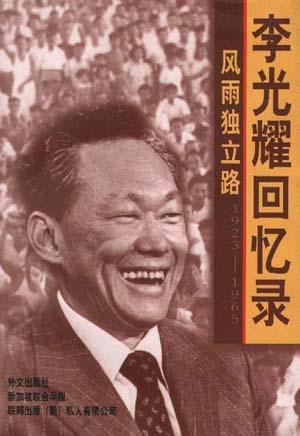
风雨独立路--李光耀回忆录(1923-1965) [图书]
The Singapore Story: Memoirs of Lee Kuan Yew
作者: Lee Kuan Yew / 李光耀 出版社: 外文出版社 1998 - 9
李光耀纪事年表
1923年9月16日在新加坡甘榜爪哇路92号住宅出生。
1936―1939年
1940―1942年 在莱佛士书院和莱佛士学院求学。
1946―1950年 留学英国剑桥大学攻读法律,并在伦敦获得执业律师资格。
1950年9月 同柯玉芝小姐结婚。
1954年11月 人民行动党正式成立,当选秘书长。
1959年6月5日 人民行动党执政。宣誓就任新加坡自治邦首任总理,时年35岁。
1965年8月9日 新加坡脱离马来西亚独立。
1990年11月28日 吴作栋接任总理。继续留在内阁,担任内阁资政。自1959年6月起,担任总理长达31年又5个月。
1998年 续任内阁资政至今。
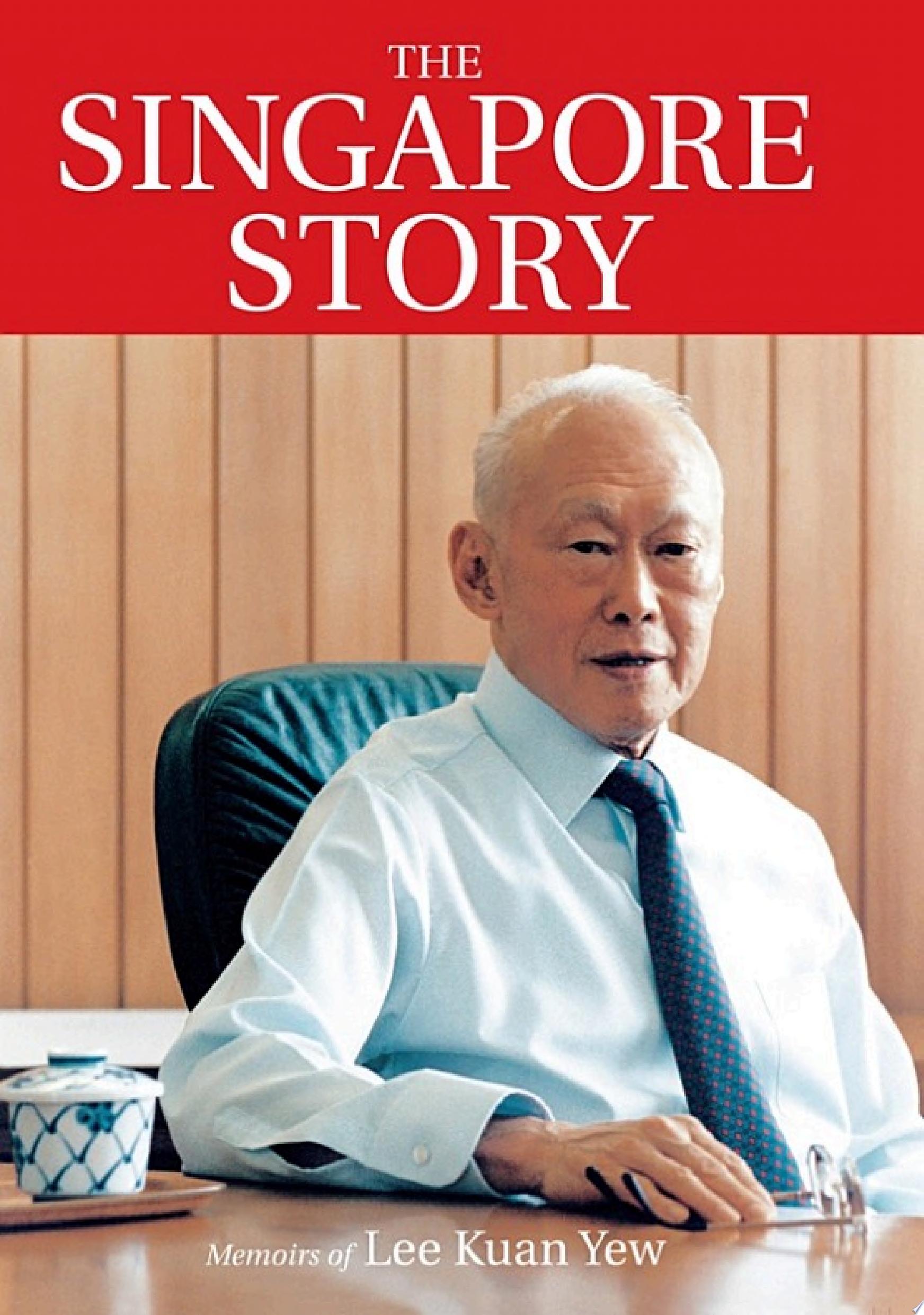
The Singapore Story: Memoirs of Lee Kuan Yew [图书] 谷歌图书
作者: Lee Kuan Yew 出版社: Marshall Cavendish International Asia Pte Ltd 2012 - 09
The Singapore Story is the first volume of the memoirs of Lee Kuan Yew, the man who planted the island state of Singapore firmly on the map of the world. It was first published in 1999. In intimate detail, Lee recounts the battles against colonialists, communists and communalists that led to Singapore’s independence. With consummate political skill, he countered adversaries, sometimes enlisting their help, at others opposing them, in the single-minded pursuit of Singapore’s interests. We read how he led striking unionists against the colonial government, how over tea and golf he fostered ties with key players in Britain and Malaya, of secret midnight meetings in badly lit rooms, drinking warm Anchor beer with a communist underground leader, of his purposeful forging of an alliance with communists to gain the support of the Chinese-educated masses. Readers will find inspiration in his tenacity as he fought for the people’s hearts and minds against first the communists and later the communalists – in parliament, on the streets and through the media. Drawing on unpublished Cabinet papers, archives in Singapore, Britain, Australia, New Zealand and the United States, as well as personal correspondence, he gives us a vivid picture of how others viewed him: determined (“Lee will bluff, bully and blackmail up to the eleventh hour”), motivated (“Choo knew I sweated blood to master Hokkien”), ambitious (“He would think himself as legitimate as I was to be the leader of Malaya”), dangerous (“Crush Lee! Put him inside”). It is a sometimes controversial yet strangely consistent portrait of this Asian statesman. These experiences and his dealings with the political leaders were to shape his views and policies, which have had a major impact on Singapore and the region.