斯科特·帕特森 — 作者 (4)
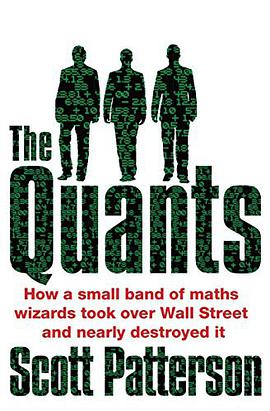
The Quants [图书] 豆瓣
作者: Scott Patterson 出版社: Crown Business 2010 - 2
“Beware of geeks bearing formulas.”
--Warren Buffett

In March of 2006, the world’s richest men sipped champagne in an opulent New York hotel. They were preparing to compete in a poker tournament with million-dollar stakes, but those numbers meant nothing to them. They were accustomed to risking billions.

At the card table that night was Peter Muller, an eccentric, whip-smart whiz kid who’d studied theoretical mathematics at Princeton and now managed a fabulously successful hedge fund called PDT…when he wasn’t playing his keyboard for morning commuters on the New York subway. With him was Ken Griffin, who as an undergraduate trading convertible bonds out of his Harvard dorm room had outsmarted the Wall Street pros and made money in one of the worst bear markets of all time. Now he was the tough-as-nails head of Citadel Investment Group, one of the most powerful money machines on earth. There too were Cliff Asness, the sharp-tongued, mercurial founder of the hedge fund AQR, a man as famous for his computer-smashing rages as for his brilliance, and Boaz Weinstein, chess life-master and king of the credit default swap, who while juggling $30 billion worth of positions for Deutsche Bank found time for frequent visits to Las Vegas with the famed MIT card-counting team.

On that night in 2006, these four men and their cohorts were the new kings of Wall Street. Muller, Griffin, Asness, and Weinstein were among the best and brightest of a new breed, the quants . Over the prior twenty years, this species of math whiz --technocrats who make billions not with gut calls or fundamental analysis but with formulas and high-speed computers-- had usurped the testosterone-fueled, kill-or-be-killed risk-takers who’d long been the alpha males the world’s largest casino. The quants believed that a dizzying, indecipherable-to-mere-mortals cocktail of differential calculus, quantum physics, and advanced geometry held the key to reaping riches from the financial markets. And they helped create a digitized money-trading machine that could shift billions around the globe with the click of a mouse.

Few realized that night, though, that in creating this unprecedented machine, men like Muller, Griffin, Asness and Weinstein had sowed the seeds for history’s greatest financial disaster.

Drawing on unprecedented access to these four number-crunching titans, The Quants tells the inside story of what they thought and felt in the days and weeks when they helplessly watched much of their net worth vaporize – and wondered just how their mind-bending formulas and genius-level IQ’s had led them so wrong, so fast. Had their years of success been dumb luck, fool’s gold, a good run that could come to an end on any given day? What if The Truth they sought -- the secret of the markets -- wasn’t knowable? Worse, what if there wasn’t any Truth?

In The Quants , Scott Patterson tells the story not just of these men, but of Jim Simons, the reclusive founder of the most successful hedge fund in history; Aaron Brown, the quant who used his math skills to humiliate Wall Street’s old guard at their trademark game of Liar’s Poker, and years later found himself with a front-row seat to the rapid emergence of mortgage-backed securities; and gadflies and dissenters such as Paul Wilmott, Nassim Taleb, and Benoit Mandelbrot.

With the immediacy of today’s NASDAQ close and the timeless power of a Greek tragedy, The Quants is at once a masterpiece of explanatory journalism, a gripping tale of ambition and hubris…and an ominous warning about Wall Street’s future.
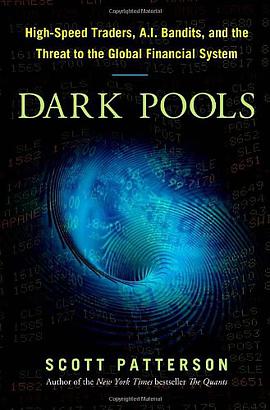
Dark Pools [图书] 豆瓣
作者: Scott Patterson 出版社: Crown Business 2012 - 6
A news-breaking account of the global stock market's subterranean battles, Dark Pools portrays the rise of the "bots"- artificially intelligent systems that execute trades in milliseconds and use the cover of darkness to out-maneuver the humans who've created them.
In the beginning was Josh Levine, an idealistic programming genius who dreamed of wresting control of the market from the big exchanges that, again and again, gave the giant institutions an advantage over the little guy. Levine created a computerized trading hub named Island where small traders swapped stocks, and over time his invention morphed into a global electronic stock market that sent trillions in capital through a vast jungle of fiber-optic cables.
By then, the market that Levine had sought to fix had turned upside down, birthing secretive exchanges called dark pools and a new species of trading machines that could think, and that seemed, ominously, to be slipping the control of their human masters.
Dark Pools is the fascinating story of how global markets have been hijacked by trading robots--many so self-directed that humans can't predict what they'll do next.
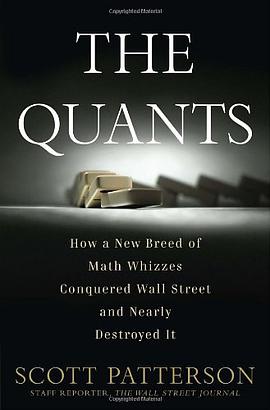
The Quants [图书] 豆瓣
作者: Scott Patterson 出版社: Random House Business 2011 - 4
You're a genius. Nobody plays the financial markets better than you. What could possibly go wrong? Quants - quantitative analysts - were the maths masterminds let loose on Wall Street in the belief that their brilliant, impregnable computer programs would always beat the market. But as the catastrophic events of 2007 and 2008 showed, their seemingly failproof methods were little more than ticking timebombs. Inspired by the 'Godfather of Quants' - maths-professor-turned-gambler Ed Thorp, who began applying skills learned at the Vegas tables to the financial markets back in the 1950s - the quants achieved extraordinary success and massive wealth. This book charts their rise from obscurity to boom and then to bust, explaining why they were so confident - and how they got it so disastrously wrong.
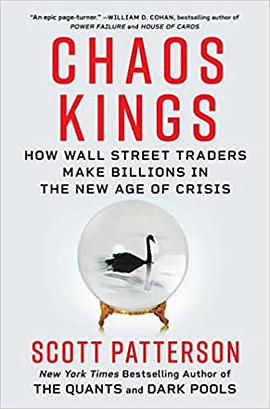
Chaos Kings [图书] 豆瓣
作者: Scott Patterson 出版社: Scribner 2023 - 6
Written by a veteran Wall Street Journal reporter, this is a fascinating deep dive into the world of billion-dollar traders and high-stakes crisis predictors who strive to turn extreme events into financial windfalls.
There’s no doubt that our world has gotten more extreme. Pandemics, climate change, superpower rivalries, cyberattacks, political radicalization—virtually, everywhere we look there is mayhem bearing down on us, putting trillions of assets at risk.
And at least two factions have formed around how to respond. In Chaos Kings, Scott Patterson depicts how one faction, led by Nassim Nicholas Taleb, bestselling author of The Black Swan, believes humans can never see the big disaster coming. In their view, extreme events—so-called Black Swans—while inevitable, will always catch us by surprise. In 2007, Taleb’s longtime collaborator, Mark Spitznagel, launched the Universa hedge fund, which would go on to make billions protecting investors against unforeseen chaos in the market.
A second faction, which relies on complex formulas, believes looming chaos can be detected. Chief among these risk prognosticators is Didier Sornette, a colorful French mathematician who enjoys riding his motorcycle at speeds in excess of 170 miles per hour. When Sornette looks out from what he calls his Financial Crisis Observatory in Zurich, Switzerland, what he sees are Dragon Kings—punishing events that are unlikely to occur but have probabilities that can be predicted…and defended against.
Which faction is right? All of our financial futures may depend on the answer.