Mikio Naruse — Playwright (25)
Wakare mo tanoshi (1947) [Movie] IMDb Douban
別れも愉し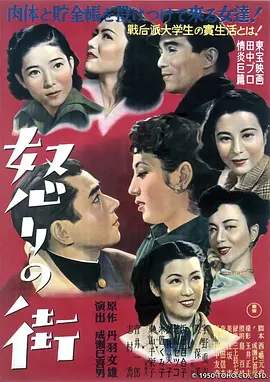
The Angry Street (1950) [Movie] IMDb Douban
怒りの街
other title:
愤怒之街
/
怒りの街
…
The Angry Street includes a great deal of location shooting in the rebuilt city, including downtown streets, residential neighborhoods, the campus of the University of Tokyo, and the high life of jazzy dance halls. Sudo (Hara Yasumi) and Mori (Uno Jukichi) are two university students who make money by picking up rich girls in dance clubs and conning them into giving them cash. Mori is the brains of the operation, and Sudo is the suave dancer who picks up the girls. Over the course of the film, Sudo becomes involved with three different girls and is drawn into the gangster milieu, which he seems unable to resist even though he is responsible for his mother, grandmother, and sister, Masako (Wakayama Setsuko). In this world of bad boys and girls, Masako is the pillar of strength and moral virtue who finally enables Mori to straighten out.
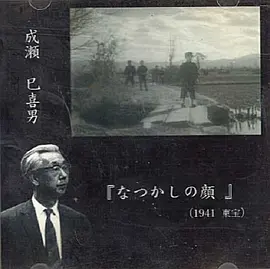
A Fond Face from the Past (1941) [Movie] Douban TMDB IMDb WikiData
なつかしの顔
director:
Mikio Naruse
actor:
馬場都留子
/
Ranko Hanai
…
other title:
怀念的容颜
/
なつかしの顔
…
A Fond Face from the Past is also set in a rural community, specifically a village outside Kameoka, near Kyoto. In some ways this short, thirty-six-minute film is Naruse's most moving negotiation of the militarist restrictions of the time, perhaps because it is also his most direct engagement with the culture of war. When a newsreel comes to Kameoka featuring a local man named Yoichi, it causes some excitement in the community and, of course, in Yoichi's own family. First of all his mother makes the newsreel (Nippon News, no. 14), which begins with the same marching music that opens his own film, followed by a curious baby judging context in Los Angeles featuring two hundred Japanese babies. Released in January 1941, almost a year before the pacific war begins, this “found footage” is indicative of Japanese imperialist ambitions beyond Asia long before Pearl Harbor.
White Beast (1950) [Movie] Douban TMDB WikiData IMDb
白い野獣
director:
Mikio Naruse
actor:
山村聡
/
饭野公子
…
other title:
白色猛兽
/
白い野獣
…
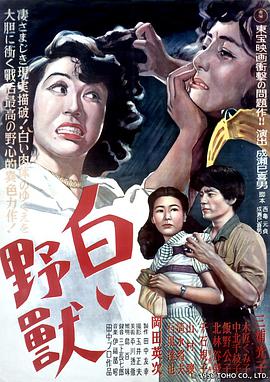
The third film that Naruse made in 1950, White Beast (Shiroi yaji, 1950), was described by Kinema Junpo critic Tsumura Hideo three years later as "so indescribably miserable as to haunt me even today." Tsumura represents the bulk of Japanese critics of the time, who felt that Naruse experienced a terrible slump throughout the 1940s and this film seemed to be the "bottom of the ocean." The critical establishment was clearly not prepared to accept a woman's prison film featuring former prostitutes recovering from venereal diseases, unwanted pregnancies, and estranged lovers. With its catfights, hysterical tantrums, film noir lighting, and dramatic music, White Beast is indicative of the new influences of the Hollywood psychological thriller on Naruse. Caged (John Cromwell, 1950) initiated a cycle of women's prison movies in the United States that may or may not have been shown in Japan, but the stylistics of White Beast draw on the same paranoid woman's films and film noir conventions that preceded the American cycle.
This Happy Life (1944) [Movie] Douban
愉しき哉人生
Travelling Actors (1940) [Movie] Douban
旅役者
director:
成濑巳喜男
actor:
Kamatari Fujiwara
/
Taizô Fukami
other title:
旅行艺人
/
旅役者
旅役者
Evening Stream (1960) [Movie] Douban
夜の流れ
Flunky, Work Hard (1931) [Movie] Douban WikiData IMDb TMDB
腰辨頑張れ
other title:
小人物,加油吧!
/
腰辨頑張れ
…
1931 film by Mikio Naruse
Every Night Dreams (1933) [Movie] Douban
夜ごとの夢
director:
成濑巳喜男
actor:
栗島すみ子
/
小島照子
…
other title:
夜夜作梦
/
夜ごとの夢
…
她是一家酒吧的侍酒女郎,夜幕降临以后,她带着浅吟低笑走入这片声色场所,周旋在各色人等之间。这是一份颇让人瞧不起的工作,然而没有其他技能的她只能继续流连于此,只为赚取足够的生活费养活尚且年幼的儿子。白日里,她拖着疲惫的身体返回破落的居所,从邻居好心的大叔大婶手中领会孩子,男孩活泼可爱,是母亲于这艰难世上仅有的慰籍与欢乐。
某天,销声匿迹已有三年之久的丈夫返回家中,虽然一万个憎恨与不情愿,但是妻子还是接受了丈夫。他发誓改过自新,尽快找到工作,无奈天不遂人愿,日子一天天过去,他始终未找到一份合适的营生,而她也不得不在丈夫复杂的目光注视下继续抛头露面……
某天,销声匿迹已有三年之久的丈夫返回家中,虽然一万个憎恨与不情愿,但是妻子还是接受了丈夫。他发誓改过自新,尽快找到工作,无奈天不遂人愿,日子一天天过去,他始终未找到一份合适的营生,而她也不得不在丈夫复杂的目光注视下继续抛头露面……

The Girl in the Rumour (1935) [Movie] Douban
噂の娘
Three Sisters with Maiden Hearts (1935) [Movie] Douban
乙女ごころ三人娘
The Road I Travel with You (1936) [Movie] Douban TMDB WikiData IMDb
君と行く路
director:
Mikio Naruse
actor:
Heihachirō Ōkawa
/
佐伯秀男
…
other title:
与君同行路
/
君と行く路
…
Otherwise promising young man Asaji and his younger brother Yuji face blighted lives due of society's disapproval of their illegitmacy and déclassé family.
Man of the House (1936) [Movie] Douban
桃中軒雲右衛門
Morning's Tree-Lined Street (1936) [Movie] Douban TMDB IMDb WikiData
朝の並木路
director:
Mikio Naruse
actor:
千叶早智子
/
御橋公
other title:
早晨的林荫路
/
朝の並木路
…
After some fruitless career hunting in downtown Tokyo, Chiyo accepts a job as a bar hostess in Shiba ward. Well away from glamorous Asakusa and Ginza, this is a neighbourhood tavern where the women are dirt poor, each having only one kimono to their name...
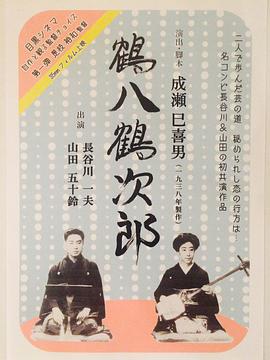
Tsuruhachi and Tsurujiro (1938) [Movie] Douban TMDB IMDb WikiData
鶴八鶴次郎
director:
Mikio Naruse
actor:
Kazuo Hasegawa
/
Isuzu Yamada
…
other title:
鹤八鹤次郎
/
鶴八鶴次郎
…
Mr. Tsurujiro is a Japanese folk singer assisted by Ms. Tsuruhachi on the shamisen. The pair is popular, but he often nitpicks her music and so they split. She marries a benefactor, but after a joint show, feels music is above marriage.