亚历山大·索科洛夫 — Director (58)
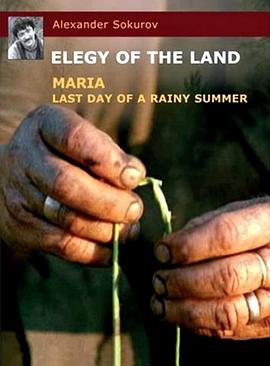
玛利亚·瓦茵诺娃之夏 (1975) [Movie] Douban
Лето Марии Войновой
director:
Aleksandr Sokurov
other title:
Leto Marii Voynovoy
/
Лето Марии Войновой
…
TV原版的《玛利亚》
退化 (1980) [Movie] Douban
Разжалованный
director:
亚历山大·索科洛夫
actor:
Ilya Rivin
/
N. Krayeva
…
other title:
Разжалованный
It was the debut of young director at Russia's oldest "Lenfilm" studio. The basis of short films put the story of contemporary Soviet writer Grigory Baklanov, though, which removed his name from the title, as a writer, he said, were "entirely different motives for writing this story." Director of prose in his film took only one motive that will attract his usual - the motif of the "transition period": in this case, the transition from the helm to prostrate submission. Traffic inspector, demoted to the taxi driver - accidentally whipped egg primary link in the chain of power. It was the first sign of the coming breakup of the entire system. But not so much surprising that motive in those pre-perestroika years, but with what a close, inside man was revealed, feeling a loss of power as a catastrophic injustice.
7333 Seconds of Johanna (2001) [Movie] Douban
director:
亚历山大·索科洛夫
actor:
Anette Skåhlberg
/
Robert Fransson
…
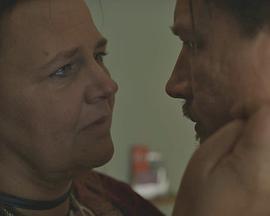
Swedish film 7333 Seconds of Johanna will soon replace Aleksandr Sokurov’s Russian Ark as the longest single take film in the Guinness Book of World Records.
Swedish director Anette Skahlberg, working with a team of 65 cast and crew members, achieved the feat on her fourth attempt in the presence of Guinness World Records officials.
Skahlberg’s 2 hour – 2 minute – 3 second production beats Aleksandr Sokurov’s Russian Ark that was 1 hour 30 minutes long, made in 2001.
Skahlberg has also written the script and acted in the film that narrates the chaotic situation in the life of Johanna: her jealous husband wants the custody of their only child after divorce while her new lover has just proposed to her.
Swedish director Anette Skahlberg, working with a team of 65 cast and crew members, achieved the feat on her fourth attempt in the presence of Guinness World Records officials.
Skahlberg’s 2 hour – 2 minute – 3 second production beats Aleksandr Sokurov’s Russian Ark that was 1 hour 30 minutes long, made in 2001.
Skahlberg has also written the script and acted in the film that narrates the chaotic situation in the life of Johanna: her jealous husband wants the custody of their only child after divorce while her new lover has just proposed to her.
人间最关心 (1974) [Movie] Douban
Самые земные заботы
director:
亚历山大·索科洛夫
other title:
Самые земные заботы
/
Samye zemnye zaboty
…
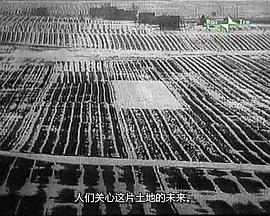
One of the first films of Alexander Sokurov, shot him in the period at the Gorky television, even before the receipt of the Film Institute. The film tells about agriculture Gorky region, its achievements and problems. The director asks of it as ordinary workers and managers, shows the first results of automation, high raw-material potential of the region and its future prospe
An Example of Intonation (1991) [Movie] WikiData Douban IMDb TMDB
Пример интонации (Ельцин)
director:
亚历山大·索科洛夫
actor:
鲍里斯·尼古拉耶维奇·叶利钦
other title:
关于叶利钦的纪录片
/
Пример интонации (Ельцин)
…
“The film An Example of Intonation should not be seen as edification for colleagues or spectators — in order to teach them how to watch, speak, think, how to show. By “an example” I mean experience, a trial, an attempt.
I do not hide my good feelings for my principal character — neither do I hide the feeling of foreboding that certainly may not coincide with the real status quo. If you have discerned a Man in the leader of the Russian Parliament, a character of “big politics“, that is enough for me”.
Alexander Sokurov (the author's intonation)
The second film by Sokurov featuring Boris Eltsin as the principal character. Now he is the President of Russia, invested with power, the man, bearing the full responsibility for the destinies of his distant compatriots as well as his closest kin and friends. Conducting a conversation with him among the members of his family, the filmmaker (second character of this film) manages to reveal his interlocutor's vulnerability and anguish — features that are “human, too human”.
Alexandra Tuchinskaya
I do not hide my good feelings for my principal character — neither do I hide the feeling of foreboding that certainly may not coincide with the real status quo. If you have discerned a Man in the leader of the Russian Parliament, a character of “big politics“, that is enough for me”.
Alexander Sokurov (the author's intonation)
The second film by Sokurov featuring Boris Eltsin as the principal character. Now he is the President of Russia, invested with power, the man, bearing the full responsibility for the destinies of his distant compatriots as well as his closest kin and friends. Conducting a conversation with him among the members of his family, the filmmaker (second character of this film) manages to reveal his interlocutor's vulnerability and anguish — features that are “human, too human”.
Alexandra Tuchinskaya
汽车的稳定性能是如何炼成的 (1974) [Movie] Douban
Автомобиль набирает надежность
director:
亚历山大·索科洛夫
other title:
Avtomobil nabiraet nadezhnost
/
L'automobile acquista affidabilità
…
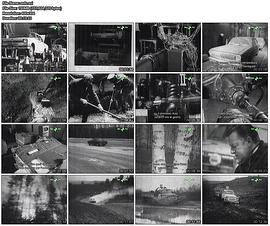
This film was created by Sokurov before or during his VGIK student years for the regional TV of Gorki. He does not consider it a part of his filmography. For its creators, it was just a TV program, and the people who worked on it most often were being given no distinction in the credits. This document of the very origins of Sokurov gives us a notion of his "pre-stylistic" period, where the personality of the future great filmmaker reveals itself in spite of means and circumstances.
Boris Godunov (2007) [Movie] Douban
Борис Годунов
director:
亚历山大·索科洛夫
actor:
Alexander Vedernikov
/
The Bolshoi Theatre Chorus and Orchestra
…
other title:
Борис Годунов
/
鲍里斯·戈多诺夫
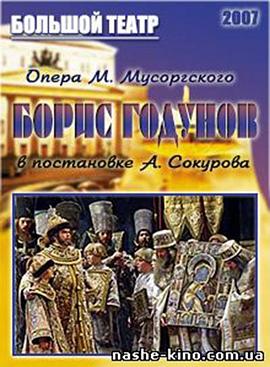
Description: Premiere of this production: April 25, 2007
Libretto by Modest Mussorgsky, based on Alexander Pushkin’s play of the same name
Sung in Russian.
Presented with three interval (with Sokurov explaining the process of work on the play)
For this wholly new production of Musorgsky's Boris Godunov, conductor Alexander Vedernikov and film director Alexander Sokurov chose the 1871 redaction of the opera, with nine scenes in five acts. The major differences from the more commonly performed versions are a smaller orchestra and the omission of the Kromy scene.
Libretto by Modest Mussorgsky, based on Alexander Pushkin’s play of the same name
Sung in Russian.
Presented with three interval (with Sokurov explaining the process of work on the play)
For this wholly new production of Musorgsky's Boris Godunov, conductor Alexander Vedernikov and film director Alexander Sokurov chose the 1871 redaction of the opera, with nine scenes in five acts. The major differences from the more commonly performed versions are a smaller orchestra and the omission of the Kromy scene.
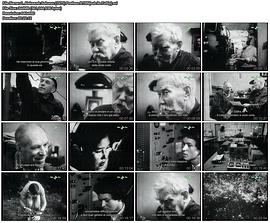
Calls R1NN (1975) [Movie] Douban
director:
亚历山大·索科洛夫
actor:
Fyodor Lbov
other title:
Позывные Р1НН
The film tells the story of Theodore foreheads, radio and eksperementatore with short waves.
On the official site of Alexander Sokurov, unfortunately, no information about this tape.
On the official site of Alexander Sokurov, unfortunately, no information about this tape.
Patience Labour (1987) [Movie] Douban TMDB IMDb
Терпение труд
director:
亚历山大·索科洛夫
other title:
耐性劳力
/
Patience Labor
…
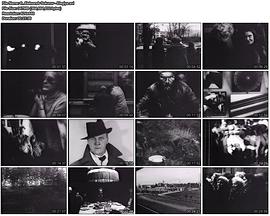
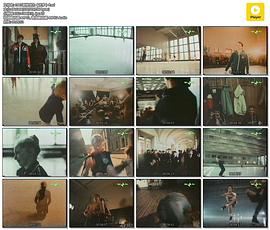
Leningrad Studio of Documentary Films offered Sokurov the order for a film about Leningrad Figure Skating School in the period when he had no work. The result of his work on this film in no ways could be considered apotheosis of sport and sport victories. His undivided attention to the skaters' training, their daily routine, their hard, exhausting work, their injuries and failures alongside the poetry of overcoming their own bodies in order to express the will of their hearts made his film a real work of art which did not satisfy those who had made the order.
Therefore, intending not to bring the studio into trouble, Sokurov in a short period of time arranged the rest of the material into some sort of publicity film, and this film was presented to the "client" (director's name withdrawn from the titles). Original film was shown to the audience only in the years of Perestroika.
Therefore, intending not to bring the studio into trouble, Sokurov in a short period of time arranged the rest of the material into some sort of publicity film, and this film was presented to the "client" (director's name withdrawn from the titles). Original film was shown to the audience only in the years of Perestroika.
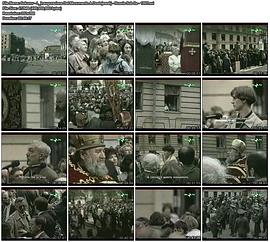
The Diary of St. Petersburg: Inauguration of the Monument to Dostoevsky (1997) [Movie] Douban
Петербургский дневник. Открытие памятника достоевскому
director:
Aleksandr Sokurov
other title:
Peterburgskiy dnevnik: Otkritie pamyatnika Dostoeskomu
/
Петербургский дневник. Открытие памятника достоевскому
…
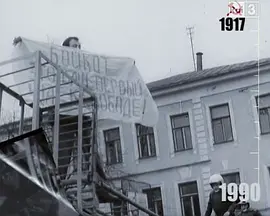
列宁格勒的前朝往事(1957年~1990年) (1990) [Movie] Douban
Ленинградская ретроспектива (1957–1990)
director:
Aleksandr Sokurov
actor:
N/A
other title:
Ленинградская ретроспектива (1957–1990)
/
列寧格勒的前朝往事(1957年~1990年)
Fifteen-part series from the life of the city. Hundreds of scenes from the life of the city. Thirty-four years of city life in a little over ten hours. The length of the film as such, Sokurov is multiplied on the calendar cycle of stories, trying to achieve and work towards the viewer's perception of a certain effect. This effect is defined as breaking and lifting it, the viewer, the physical time. Time the natural course of his audience, and life. The ten and a half his audience, personal hours to dissolve the thirty-four years of city life. Ten hours with a small and thirty-four years of mutually belong to each other. As well as belong to the past and the future. And eternity belong to all people without distinction, whose faces are replaced, replace, replace each other in the film "Leningrad retrospective." (Dmitry Saveliev)
The Diary of St. Petersburg: Kozintsev's Flat (1998) [Movie] Douban
Петербургский дневник: Квартира Козинцева
director:
Aleksandr Sokurov
other title:
圣彼得堡日记:柯静采夫的公寓
/
Петербургский дневник: Квартира Козинцева
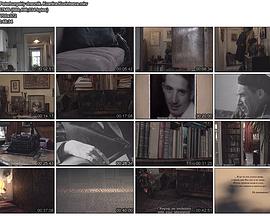
The second film in the “Diary of St. Petersburg” documentary cycle is dedicated to the outstanding Soviet filmmaker Grigory Kosintsev, whose professional life was entirely devoted to the Lenfilm Studios. His flat is not far from the Studios in Vasiliev Brothers Street and in it now lives the late film-maker's widow. It is deserted, almost a museum, and comes across as a shelter for memories. This emptiness is full of memories, and the intensive looking at and listening to this emptiness reveals a respect and gratitude for the life of another man, a life of constant creative activity, and for the photographs, books and the acclaimed films that have been left behind. The special manner of Sokurov's looking and listening is dictated by such memories.
These memories are not so much those of the woman now living in the apartment. Rather, it our reminiscences, we the spectators of Kosintsev, that are made real by Sokurov's camera. Although he has left this life, Grigory Kosintsev, the director of the films of the Maxim Trilogy, adaptations of Hamlet and King Lear, the latter a classic of the Soviet cinema, still occupies his place as before. It is a place reserved for him alone, both in the history of cinema and in his apartment. His presence remains.
These memories are not so much those of the woman now living in the apartment. Rather, it our reminiscences, we the spectators of Kosintsev, that are made real by Sokurov's camera. Although he has left this life, Grigory Kosintsev, the director of the films of the Maxim Trilogy, adaptations of Hamlet and King Lear, the latter a classic of the Soviet cinema, still occupies his place as before. It is a place reserved for him alone, both in the history of cinema and in his apartment. His presence remains.
We Need Happiness (2011) [Movie] Douban
Il nous faut du bonheur
director:
亚历山大·索科洛夫
/
Alexei Jankowski
actor:
Aleksandar Sokorov(叙述)
other title:
我们需要欢乐
/
Il nous faut du bonheur
The story of a Russian woman who, years ago, moved to Kurdistan for love. Far from her country, in a faraway place, the woman has withstood physical pain, wartime violence, the death of loved ones. Now she’s grown old. Her movements are calm, measured, full of wisdom and determination. Her life story offers up to the camera a not standard figure, simple and poetic at the same time, transparent, yet full of profound mystery.
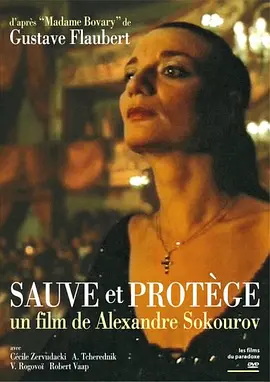
Save and Protect (1989) [Movie] Douban
Спаси и сохрани
director:
亚历山大·索科洛夫
actor:
Robert Vaap
/
Tsetsiliya Zervudaki
…
other title:
包法利夫人
/
Спаси и сохрани
…
当代俄罗斯影坛最重要的导演亚历山大·索科洛夫,于1989年将《包法利夫人》创造性地改编成《拯救与保护》,其作品的典型主题和特征都出现在这部影片中:宗教思想,灵与肉的剧烈斗争,对死亡的迷恋,以及细致的心理物理学。
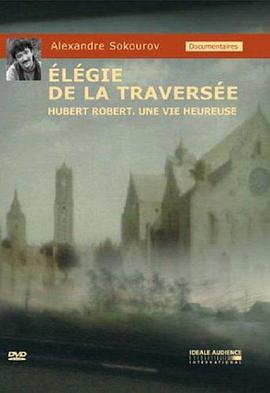
休伯特.罗伯特的幸福一生 (1996) [Movie] Douban
Робер. Счастливая жизнь
director:
Aleksandr Sokurov
other title:
Робер. Счастливая жизнь
/
Hubert Robert. A Fortunate Life
1996, full version – 26 min. (short – 12 min.), colour, BETACAM SP Hermitage Bridge Studio
scenario: A. Sokurov
camera: A. Fedorov
sound: V. Persov
editor: L. Semenova
producer: A. Deryabin
“…the ruins of villas or palaces, castles, bridges, ancient vaults appear one by one before my eyes, like dreams; ghostly landscapes with grey trees…
I enter the Hermitage's halls, and nothing prevents me from approaching any picture, and the very vaults of this famous palace help me to see the canvasses better — small and big ones, almost gigantic ones, painted by this happy master.”
Alexander Sokurov (from the film script)
This is the first film of, and as of yet the only film in, a series planned by Hermitage Bridge Studios dedicated to the most important masters of European painting, whose works are included in the collection of the Hermitage Museum, the most famous of Russian museums. It in envisaged that the films will be made by the most prestigious of St. Petersburg's film directors. Only Sokurov has already made his film.
From the enormous list of celebrated names, Sokurov has chosen one — and a very modest one indeed: Hubert Robert, a French painter who worked between the end of the eighteenth century and the beginning of the nineteenth. He painted ruins in landscapes.
The formal pretext — the museum's request, intended to popularise its treasures — coincided with the film–maker's deepest need: to create a “cultural context” for his own lyrical confession. Hence, Sokurov makes the film both about the canvasses and about the fate of an artist possessed by the idea of the search for harmony. In this respect, Hubert Robert was a man of his time, a time which found its classical ideals in the ways of life of an ancient city, an ancient personality and an ancient ruler. But the contented life of the artist, like his Age, finished with the collapse of the Napoleonic empire — it ended in disaster for his family and for himself. But he lives on in the majestic ruins in the nostalgic landscapes. These were particularly popular in nineteenth century Russia. Their vogue reflects the astonishment and delight of Russians in the face of a Western civilisation that had already followed the path from formation and development to death and destruction. Russia herself was in that very period of formation in the nineteenth century — the apocalyptic impulses were already present in the culture and social life of the Golden Age of Russia. For this reason, Sokurov places Dostoevsky and Gogol's reminiscences in his narrative, as well as images of traditional Japanese theatre — a firm bulwark to this harmonic cultural tradition, since lost by Europe.
scenario: A. Sokurov
camera: A. Fedorov
sound: V. Persov
editor: L. Semenova
producer: A. Deryabin
“…the ruins of villas or palaces, castles, bridges, ancient vaults appear one by one before my eyes, like dreams; ghostly landscapes with grey trees…
I enter the Hermitage's halls, and nothing prevents me from approaching any picture, and the very vaults of this famous palace help me to see the canvasses better — small and big ones, almost gigantic ones, painted by this happy master.”
Alexander Sokurov (from the film script)
This is the first film of, and as of yet the only film in, a series planned by Hermitage Bridge Studios dedicated to the most important masters of European painting, whose works are included in the collection of the Hermitage Museum, the most famous of Russian museums. It in envisaged that the films will be made by the most prestigious of St. Petersburg's film directors. Only Sokurov has already made his film.
From the enormous list of celebrated names, Sokurov has chosen one — and a very modest one indeed: Hubert Robert, a French painter who worked between the end of the eighteenth century and the beginning of the nineteenth. He painted ruins in landscapes.
The formal pretext — the museum's request, intended to popularise its treasures — coincided with the film–maker's deepest need: to create a “cultural context” for his own lyrical confession. Hence, Sokurov makes the film both about the canvasses and about the fate of an artist possessed by the idea of the search for harmony. In this respect, Hubert Robert was a man of his time, a time which found its classical ideals in the ways of life of an ancient city, an ancient personality and an ancient ruler. But the contented life of the artist, like his Age, finished with the collapse of the Napoleonic empire — it ended in disaster for his family and for himself. But he lives on in the majestic ruins in the nostalgic landscapes. These were particularly popular in nineteenth century Russia. Their vogue reflects the astonishment and delight of Russians in the face of a Western civilisation that had already followed the path from formation and development to death and destruction. Russia herself was in that very period of formation in the nineteenth century — the apocalyptic impulses were already present in the culture and social life of the Golden Age of Russia. For this reason, Sokurov places Dostoevsky and Gogol's reminiscences in his narrative, as well as images of traditional Japanese theatre — a firm bulwark to this harmonic cultural tradition, since lost by Europe.
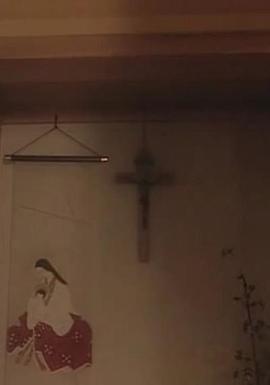
轻柔 (2000) [Movie] Douban
Дольче
director:
Aleksandr Sokurov
other title:
Дольче
/
Dolce...
…
dolce…
1999, 60 min, colour, Betacam SP, Stereo
Studio Bereg
Quest (Japan)
producer: Yudji Kogure
international project manager Hiroko Kodjima
written by Alexander Sokurov
camera: Koshiro Otsu
sound: Sergei Moshkov
editors: Alexei Jankowski, Sergei Ivanov
Summary
The film deals with real people: the well–known Japanese writer Toshio Shimao, who died in 1986, his widow and their daughter. Yet the film's documentary approach is only the framework for a penetrating biographical portrait; video is used here in an “intimate” way, to capture the inner worlds of the characters. The dramatic events of the writer's life and work make for a story which itself reveals the quintessence of the film–maker's reflections on Japan and the Japanese people. The principal narrative strand is a lyrical monologue, that of the heroine, Miho Shimao, the writer's wife. She lives on a solitary island far into the ocean, with her handicapped daughter, shunning visitors.
She discovers herself through self–analysis, a form of catharsis brought on by the spiritual denudation of this existence. This proves to be the pivotal event in her life — a confined life, where actions have come to mean less than emotions.
The film–maker here reveals the contours of memory, the contrasts of feelings and the nuances of the psyche in an impressionist manner. The only way to enter this world, to be able to approach its exquisite flavour and perverse pain, is to make a film akin to a lyrical piece of music, with tenderness, “dolce.”
Alexandra Tuchniskaya
Translated into English with assistance from Benjamin Halligan.
1999, 60 min, colour, Betacam SP, Stereo
Studio Bereg
Quest (Japan)
producer: Yudji Kogure
international project manager Hiroko Kodjima
written by Alexander Sokurov
camera: Koshiro Otsu
sound: Sergei Moshkov
editors: Alexei Jankowski, Sergei Ivanov
Summary
The film deals with real people: the well–known Japanese writer Toshio Shimao, who died in 1986, his widow and their daughter. Yet the film's documentary approach is only the framework for a penetrating biographical portrait; video is used here in an “intimate” way, to capture the inner worlds of the characters. The dramatic events of the writer's life and work make for a story which itself reveals the quintessence of the film–maker's reflections on Japan and the Japanese people. The principal narrative strand is a lyrical monologue, that of the heroine, Miho Shimao, the writer's wife. She lives on a solitary island far into the ocean, with her handicapped daughter, shunning visitors.
She discovers herself through self–analysis, a form of catharsis brought on by the spiritual denudation of this existence. This proves to be the pivotal event in her life — a confined life, where actions have come to mean less than emotions.
The film–maker here reveals the contours of memory, the contrasts of feelings and the nuances of the psyche in an impressionist manner. The only way to enter this world, to be able to approach its exquisite flavour and perverse pain, is to make a film akin to a lyrical piece of music, with tenderness, “dolce.”
Alexandra Tuchniskaya
Translated into English with assistance from Benjamin Halligan.
Petersburg Elegy (1989) [Movie] Douban TMDB IMDb
Петербургская элегия
director:
亚历山大·索科洛夫
actor:
Aleksandr Sokurov
/
Feodor Chaliapin Jr.
other title:
圣彼得堡挽歌
/
Петербургская элегия
…
The story about the life of Shaliapin’s family, and an emotional generalization of the life of people in modern Leningrad.