克里斯·米勒 — 作者 (9)
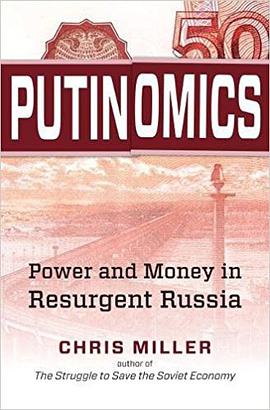
Putinomics [图书] 豆瓣
When Vladimir Putin first took power in 1999, he was a little-known figure ruling a country that was reeling from a decade and a half of crisis. In the years since, he has reestablished Russia as a great power. How did he do it? What principles have guided Putin's economic policies? What patterns can be discerned? In this new analysis of Putin's Russia, Chris Miller examines its economic policy and the tools Russia's elite have used to achieve its goals. Miller argues that despite Russia's corruption, cronyism, and overdependence on oil as an economic driver, Putin's economic strategy has been surprisingly successful.
Explaining the economic policies that underwrote Putin's two-decades-long rule, Miller shows how, at every juncture, Putinomics has served Putin's needs by guaranteeing economic stability and supporting his accumulation of power. Even in the face of Western financial sanctions and low oil prices, Putin has never been more relevant on the world stage.
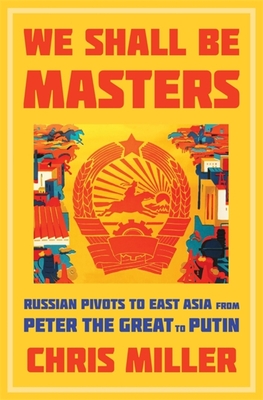
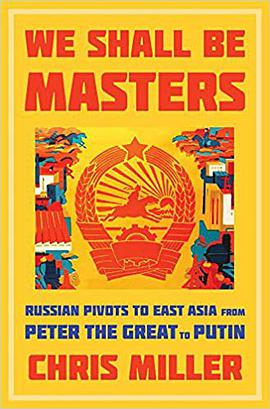
We Shall Be Masters: Russian Pivots to East Asia from Peter the Great to Putin [图书] Goodreads
Since Peter the Great, Russian leaders have been lured by opportunity to the East. Under the tsars, Russians colonized Alaska, California, and Hawaii. The Trans-Siberian Railway linked Moscow to Vladivostok. And Stalin looked to Asia as a sphere of influence, hospitable to the spread of Soviet Communism. In Asia and the Pacific lay territory, markets, security, and glory.
But all these expansionist dreams amounted to little. In
, Chris Miller explores why, arguing that Russia's ambitions have repeatedly outstripped its capacity. With the core of the nation concentrated thousands of miles away in the European borderlands, Russia's would-be pioneers have always struggled to project power into Asia and to maintain public and elite interest in their far-flung pursuits. Even when the wider population professed faith in Asia's promise, few Russians were willing to pay the steep price. Among leaders, too, dreams of empire have always been tempered by fears of cost. Most of Russia's pivots to Asia have therefore been halfhearted and fleeting.
Today the Kremlin talks up the importance of "strategic partnership" with Xi Jinping's China, and Vladimir Putin's government is at pains to emphasize Russian activities across Eurasia. But while distance is covered with relative ease in the age of air travel and digital communication, the East remains far off in the ways that matter most. Miller finds that Russia's Asian dreams are still restrained by the country's firm rooting in Europe.
But all these expansionist dreams amounted to little. In
, Chris Miller explores why, arguing that Russia's ambitions have repeatedly outstripped its capacity. With the core of the nation concentrated thousands of miles away in the European borderlands, Russia's would-be pioneers have always struggled to project power into Asia and to maintain public and elite interest in their far-flung pursuits. Even when the wider population professed faith in Asia's promise, few Russians were willing to pay the steep price. Among leaders, too, dreams of empire have always been tempered by fears of cost. Most of Russia's pivots to Asia have therefore been halfhearted and fleeting.
Today the Kremlin talks up the importance of "strategic partnership" with Xi Jinping's China, and Vladimir Putin's government is at pains to emphasize Russian activities across Eurasia. But while distance is covered with relative ease in the age of air travel and digital communication, the East remains far off in the ways that matter most. Miller finds that Russia's Asian dreams are still restrained by the country's firm rooting in Europe.
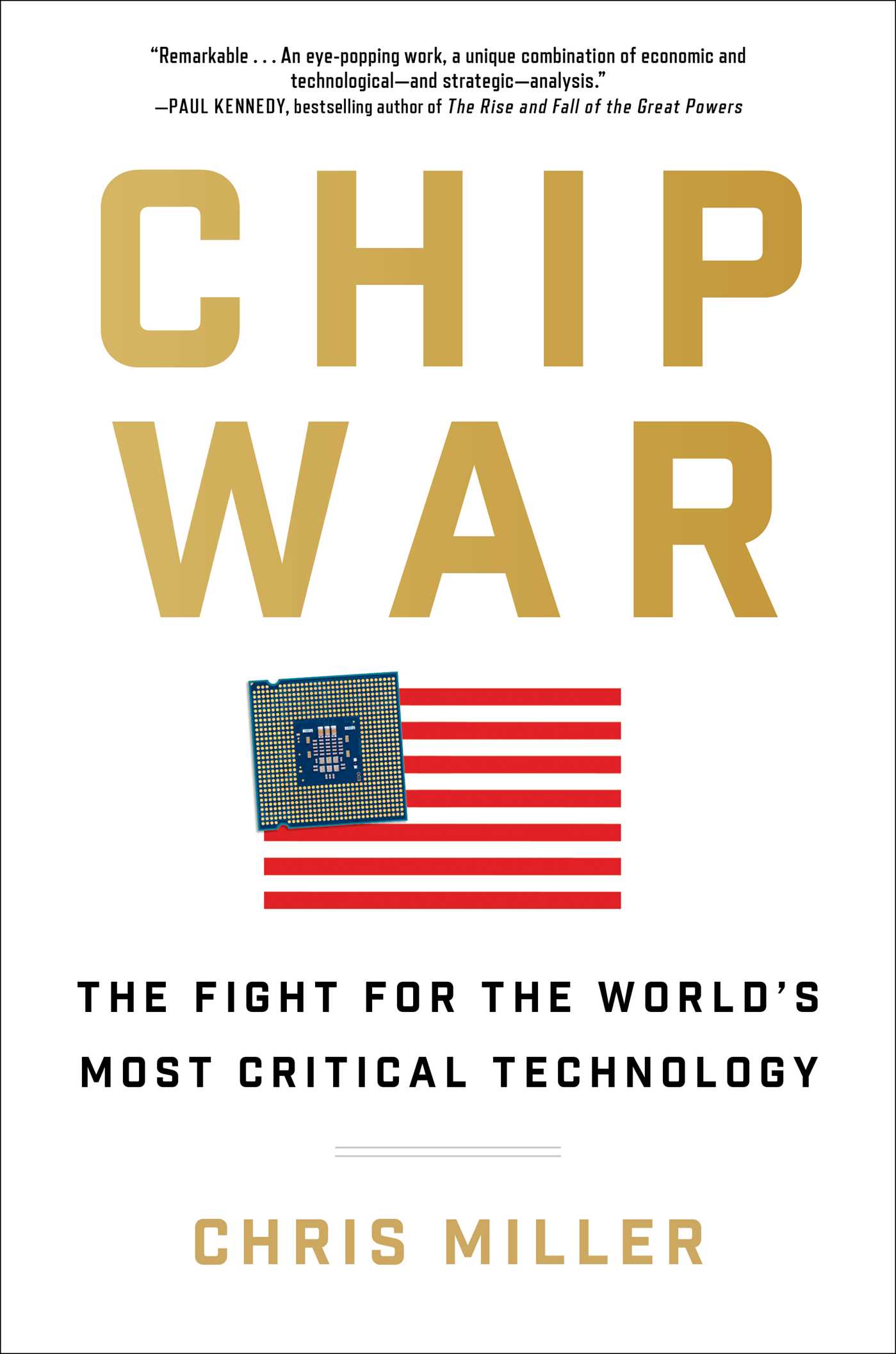
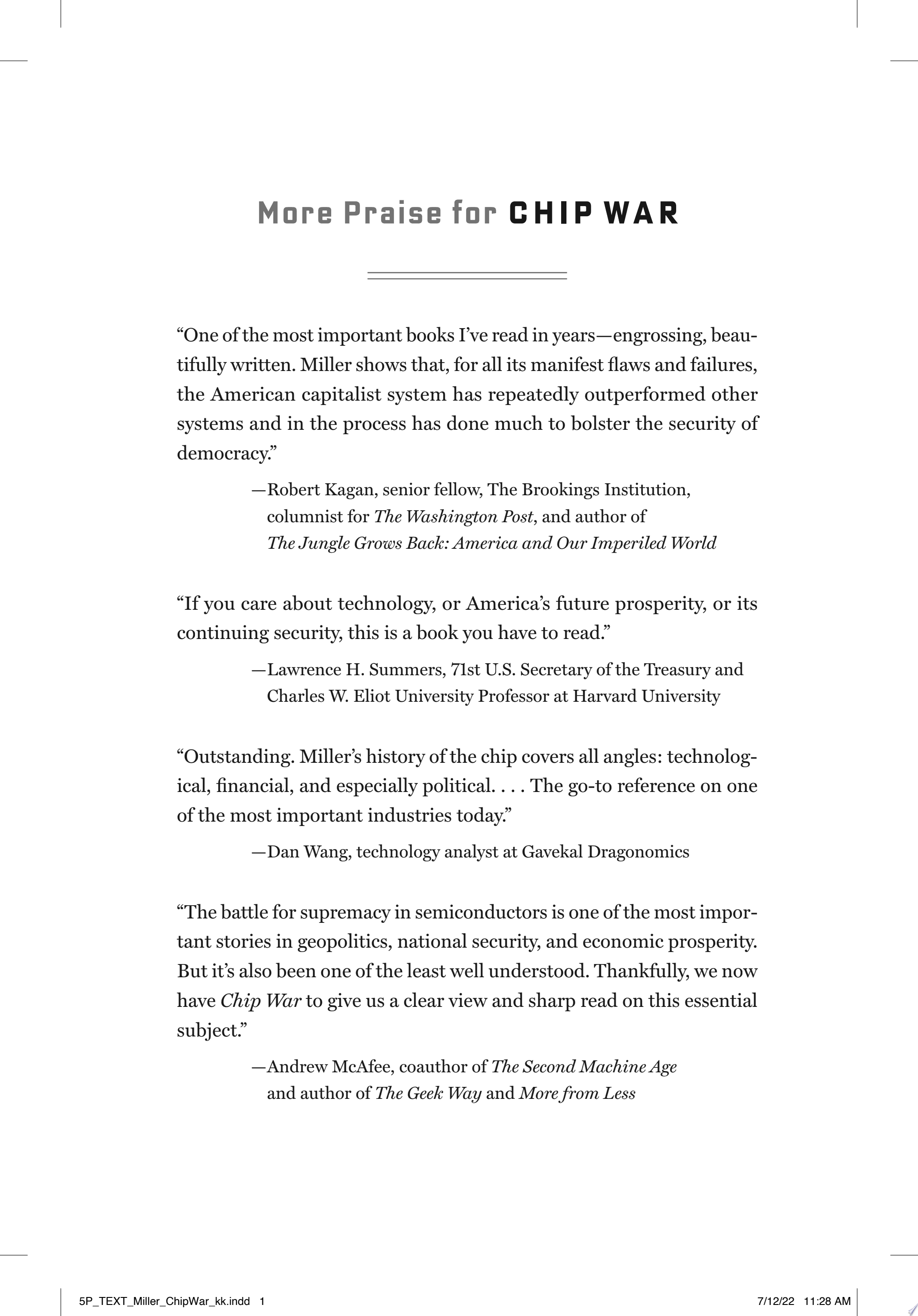
Chip War: The Fight for the World's Most Critical Technology [图书]
You may be surprised to learn that microchips are the new oil—the scarce resource on which the modern world depends. Today, military, economic, and geopolitical power are built on a foundation of computer chips. Virtually
from missiles to microwaves
runs on chips, including cars, smartphones, the stock market, even the electric grid. Until recently, America designed and built the fastest chips and maintained its lead as the #1 superpower, but America’s edge is in danger of slipping, undermined by players in Taiwan, Korea, and Europe taking over manufacturing. Now, as
reveals, China, which spends more on chips than any other product, is pouring billions into a chip-building initiative to catch up to the US. At stake is America’s military superiority and economic prosperity.
Economic historian Chris Miller explains how the semiconductor came to play a critical role in modern life and how the U.S. became dominant in chip design and manufacturing and applied this technology to military systems. America's victory in the Cold War and its global military dominance stems from its ability to harness computing power more effectively than any other power. But here, too, China is catching up, with its chip-building ambitions and military modernization going hand in hand. America has let key components of the chip-building process slip out of its grasp, contributing not only to a worldwide chip shortage but also a new Cold War with a superpower adversary that is desperate to bridge the gap.
Illuminating, timely, and fascinating,
shows that, to make sense of the current state of politics, economics, and technology, we must first understand the vital role played by chips.
from missiles to microwaves
runs on chips, including cars, smartphones, the stock market, even the electric grid. Until recently, America designed and built the fastest chips and maintained its lead as the #1 superpower, but America’s edge is in danger of slipping, undermined by players in Taiwan, Korea, and Europe taking over manufacturing. Now, as
reveals, China, which spends more on chips than any other product, is pouring billions into a chip-building initiative to catch up to the US. At stake is America’s military superiority and economic prosperity.
Economic historian Chris Miller explains how the semiconductor came to play a critical role in modern life and how the U.S. became dominant in chip design and manufacturing and applied this technology to military systems. America's victory in the Cold War and its global military dominance stems from its ability to harness computing power more effectively than any other power. But here, too, China is catching up, with its chip-building ambitions and military modernization going hand in hand. America has let key components of the chip-building process slip out of its grasp, contributing not only to a worldwide chip shortage but also a new Cold War with a superpower adversary that is desperate to bridge the gap.
Illuminating, timely, and fascinating,
shows that, to make sense of the current state of politics, economics, and technology, we must first understand the vital role played by chips.
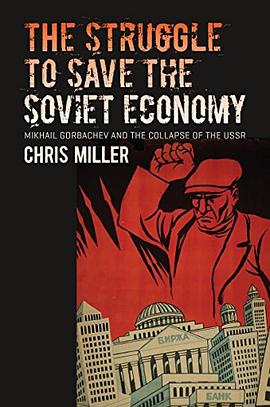
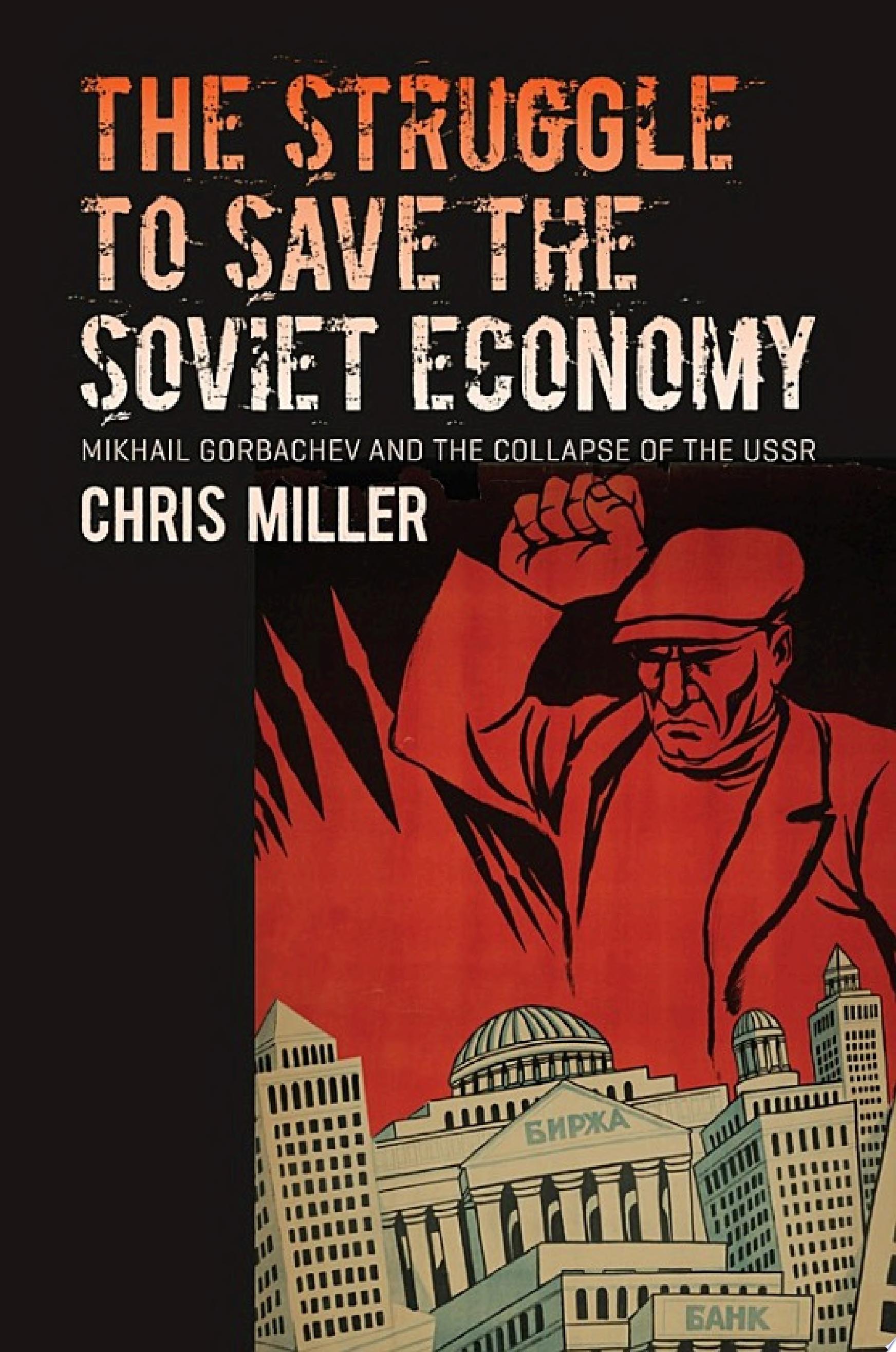
The Struggle to Save the Soviet Economy [图书] 豆瓣
For half a century the Soviet economy was inefficient but stable. In the late 1980s, to the surprise of nearly everyone, it suddenly collapsed. Why did this happen? And what role did Soviet leader Mikhail Gorbachev's economic reforms play in the country's dissolution? In this groundbreaking study, Chris Miller shows that Gorbachev and his allies tried to learn from the great success story of transitions from socialism to capitalism, Deng Xiaoping's China. Why, then, were efforts to revitalize Soviet socialism so much less successful than in China?
Making use of never-before-studied documents from the Soviet politburo and other archives, Miller argues that the difference between the Soviet Union and China--and the ultimate cause of the Soviet collapse--was not economics but politics. The Soviet government was divided by bitter conflict, and Gorbachev, the ostensible Soviet autocrat, was unable to outmaneuver the interest groups that were threatened by his economic reforms. Miller's analysis settles long-standing debates about the politics and economics of perestroika, transforming our understanding of the causes of the Soviet Union's rapid demise.
Chip war [图书] 豆瓣
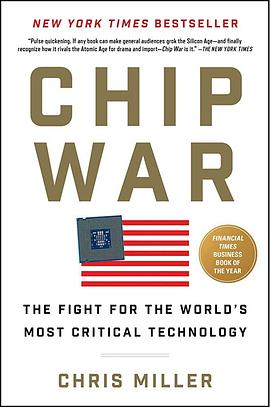
An epic account of the decades-long battle to control what has emerged as the world's most critical resource—microchip technology—with the United States and China increasingly in conflict.
You may be surprised to learn that microchips are the new oil—the scarce resource on which the modern world depends. Today, military, economic, and geopolitical power are built on a foundation of computer chips. Virtually everything—from missiles to microwaves, smartphones to the stock market—runs on chips. Until recently, America designed and built the fastest chips and maintained its lead as the #1 superpower. Now, America's edge is slipping, undermined by competitors in Taiwan, Korea, Europe, and, above all, China. Today, as Chip War reveals, China, which spends more money each year importing chips than it spends importing oil, is pouring billions into a chip-building initiative to catch up to the US. At stake is America's military superiority and economic prosperity.
Economic historian Chris Miller explains how the semiconductor came to play a critical role in modern life and how the U.S. become dominant in chip design and manufacturing and applied this technology to military systems. America's victory in the Cold War and its global military dominance stems from its ability to harness computing power more effectively than any other power. But here, too, China is catching up, with its chip-building ambitions and military modernization going hand in hand. America has let key components of the chip-building process slip out of its grasp, contributing not only to a worldwide chip shortage but also a new Cold War with a superpower adversary that is desperate to bridge the gap.
Illuminating, timely, and fascinating, Chip War shows that, to make sense of the current state of politics, economics, and technology, we must first understand the vital role played by chips.
You may be surprised to learn that microchips are the new oil—the scarce resource on which the modern world depends. Today, military, economic, and geopolitical power are built on a foundation of computer chips. Virtually everything—from missiles to microwaves, smartphones to the stock market—runs on chips. Until recently, America designed and built the fastest chips and maintained its lead as the #1 superpower. Now, America's edge is slipping, undermined by competitors in Taiwan, Korea, Europe, and, above all, China. Today, as Chip War reveals, China, which spends more money each year importing chips than it spends importing oil, is pouring billions into a chip-building initiative to catch up to the US. At stake is America's military superiority and economic prosperity.
Economic historian Chris Miller explains how the semiconductor came to play a critical role in modern life and how the U.S. become dominant in chip design and manufacturing and applied this technology to military systems. America's victory in the Cold War and its global military dominance stems from its ability to harness computing power more effectively than any other power. But here, too, China is catching up, with its chip-building ambitions and military modernization going hand in hand. America has let key components of the chip-building process slip out of its grasp, contributing not only to a worldwide chip shortage but also a new Cold War with a superpower adversary that is desperate to bridge the gap.
Illuminating, timely, and fascinating, Chip War shows that, to make sense of the current state of politics, economics, and technology, we must first understand the vital role played by chips.
Chip War [图书] 谷歌图书
The Financial Times Business Book of the Year, this epic account of the decades-long battle to control one of the world’s most critical resources—microchip technology—with the United States and China increasingly in fierce competition is “pulse quickening…a nonfiction thriller” (The New York Times).
You may be surprised to learn that microchips are the new oil—the scarce resource on which the modern world depends. Today, military, economic, and geopolitical power are built on a foundation of computer chips. Virtually everything—from missiles to microwaves—runs on chips, including cars, smartphones, the stock market, even the electric grid. Until recently, America designed and built the fastest chips and maintained its lead as the #1 superpower, but America’s edge is in danger of slipping, undermined by players in Taiwan, Korea, and Europe taking over manufacturing. Now, as Chip War reveals, China, which spends more on chips than any other product, is pouring billions into a chip-building initiative to catch up to the US. At stake is America’s military superiority and economic prosperity.
Economic historian Chris Miller explains how the semiconductor came to play a critical role in modern life and how the US became dominant in chip design and manufacturing and applied this technology to military systems. America’s victory in the Cold War and its global military dominance stems from its ability to harness computing power more effectively than any other power. Until recently, China had been catching up, aligning its chip-building ambitions with military modernization.
Illuminating, timely, and fascinating, Chip War is “an essential and engrossing landmark study" (London Times).
You may be surprised to learn that microchips are the new oil—the scarce resource on which the modern world depends. Today, military, economic, and geopolitical power are built on a foundation of computer chips. Virtually everything—from missiles to microwaves—runs on chips, including cars, smartphones, the stock market, even the electric grid. Until recently, America designed and built the fastest chips and maintained its lead as the #1 superpower, but America’s edge is in danger of slipping, undermined by players in Taiwan, Korea, and Europe taking over manufacturing. Now, as Chip War reveals, China, which spends more on chips than any other product, is pouring billions into a chip-building initiative to catch up to the US. At stake is America’s military superiority and economic prosperity.
Economic historian Chris Miller explains how the semiconductor came to play a critical role in modern life and how the US became dominant in chip design and manufacturing and applied this technology to military systems. America’s victory in the Cold War and its global military dominance stems from its ability to harness computing power more effectively than any other power. Until recently, China had been catching up, aligning its chip-building ambitions with military modernization.
Illuminating, timely, and fascinating, Chip War is “an essential and engrossing landmark study" (London Times).
The Struggle to Save the Soviet Economy [图书] 谷歌图书
For half a century the Soviet economy was inefficient but stable. In the late 1980s, to the surprise of nearly everyone, it suddenly collapsed. Why did this happen? And what role did Soviet leader Mikhail Gorbachev's economic reforms play in the country's dissolution? In this groundbreaking study, Chris Miller shows that Gorbachev and his allies tried to learn from the great success story of transitions from socialism to capitalism, Deng Xiaoping's China. Why, then, were efforts to revitalize Soviet socialism so much less successful than in China?
Making use of never-before-studied documents from the Soviet politburo and other archives, Miller argues that the difference between the Soviet Union and China--and the ultimate cause of the Soviet collapse--was not economics but politics. The Soviet government was divided by bitter conflict, and Gorbachev, the ostensible Soviet autocrat, was unable to outmaneuver the interest groups that were threatened by his economic reforms. Miller's analysis settles long-standing debates about the politics and economics of perestroika, transforming our understanding of the causes of the Soviet Union's rapid demise.