古英语
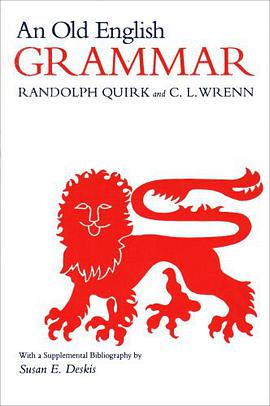
An Old English Grammar 豆瓣
作者: Randolph Quirk / C. L. Wrenn 出版社: Northern Illinois University Press 1994 - 4
Once again available in paperback, Quirk and Wrenn's "Old English Grammar" is a convenient reference tool to complement readings in Old English. Appropriate for basic or advanced study of Old English language and literature, this brief modern grammar covers orthography, pronunciation, inflection, syntax, word formation, and phonology. The authors provide a clear overview of Late West Saxon, with notes that open up the complexities of the language for those who wish to pursue them. The supplemental bibliography added to this edition by Susan Deskis reflects the most relevant recent contributions to the study of Old English.
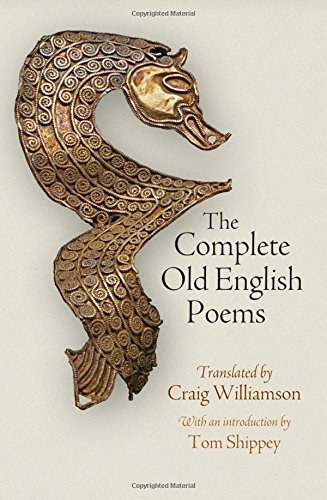
The Complete Old English Poems 豆瓣
作者: Craig Williamson 译者: Craig Williamson 出版社: University of Pennsylvania Press 2017 - 2
From the riddling song of a bawdy onion that moves between kitchen and bedroom to the thrilling account of Beowulf's battle with a treasure-hoarding dragon, from the heart-rending lament of a lone castaway to the embodied speech of the cross upon which Christ was crucified, from the anxiety of Eve, who carries "a sumptuous secret in her hands / And a tempting truth hidden in her heart," to the trust of Noah who builds "a sea-floater, a wave-walking / Ocean-home with rooms for all creatures," the world of the Anglo-Saxon poets is a place of harshness, beauty, and wonder.
Now for the first time, the entire Old English poetic corpus—including poems and fragments discovered only within the past fifty years—is rendered into modern strong-stress, alliterative verse in a masterful translation by Craig Williamson.
Accompanied by an introduction by noted medievalist Tom Shippey on the literary scope and vision of these timeless poems and Williamson's own introductions to the individual works and his essay on translating Old English poetry, the texts transport us back to the medieval scriptorium or ancient mead-hall, to share a herdsman's recounting of the story of the world's creation or a people's sorrow at the death of a beloved king, to be present at the clash of battle or to puzzle over the sacred and profane answers to riddles posed over a thousand years ago. This is poetry as stunning in its vitality as it is true to its sources. Were Williamson's idiom not so modern, we might think that the Anglo-Saxon poets had taken up the lyre again and begun to sing once more.