巴赫
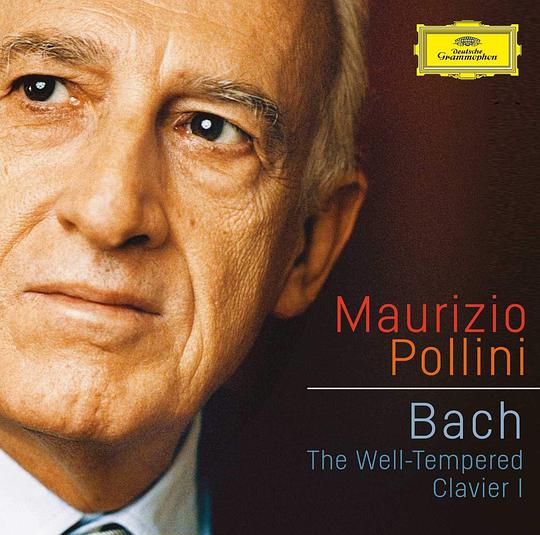
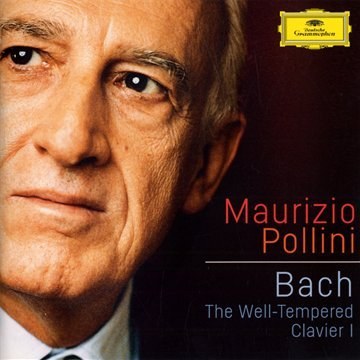
波利尼:巴赫平均律第1集 豆瓣
9.8 (9 个评分) Maurizio Pollini 类型: 古典
发布日期 2009年11月17日 出版发行: Deutsche Grammophon
Maurizio Pollini, a living legend of the piano, records the benchmark repertoire of the Well-Tempered Clavier for the first time in his storied career. Thus, this album is an event--a summit meeting of masters. Despite having played the Well-Tempered Clavier in concert halls for more than twenty years, Pollini intensively restudied the music before consenting to record it. His humility and dedication result in a transcendent performance that is less an interpretation than a revelation. Hugely popular in its own right, as a Pollini project the Well-Tempered Clavier will excite critics and his fan base alike as a crown jewel of the Bach discography on any label. Contained on 2 CDs, this recording includes all 24 Preludes and Fugues.
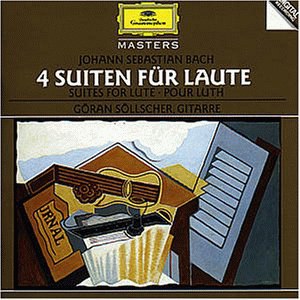
巴赫:4首鲁特琴组曲 豆瓣
Göran Söllscher 类型: 古典
发布日期 1995年8月29日 出版发行: Deutsche Grammophon Production
鲁特琴(Lute)是欧洲音乐故乡之一的南欧古国意大利的传统乐器,也是现今风行世界的乐器——吉它的前身。在十六世纪和十七世纪,鲁特琴曾是欧洲最为流行的伴奏乐器之一。因为魏斯是巴赫的好友,所以巴赫写作了不少的鲁特琴曲,经典程度不下于他的无伴奏小提琴和大提琴,但因为乐器的缘由,听到并了解的人不多,很值得细听。
鲁特琴是一种古老的乐器,其中长颈的长鲁特的历史至少可推溯到公元前2000年,短颈的短鲁特约自公元前800年起诞生。大约14世纪从西班牙演变为颈项上有7条弦的欧洲鲁特,16世纪,发展成6个弦组11条弦。16、17世纪的鲁特琴分为曼多拉、曼多林、安杰利卡等。巳赫为鲁特琴所作的组曲共有:《G小调组曲》,BWV995,大约作于1727—1731年,莱比锡;《E小调组曲》,BWV996、大约作于1708—1717年,魏玛;《C小调组曲》,BWV997,大约作于1737—1741年,莱比锡;《E大调组曲》,BWV1006a,大约作于1725年,莱比锡。为鲁特琴而作的音乐,另外还有《降E大调前奏曲、赋格和快板》BWV998,大约作于1740年,莱比锡;《C小凋前奏曲》,BWV999,大约作于1720年,克滕;《G小调赋格》,BWV1000,大约作于1725年,莱比锡。
巴赫的4首鲁待琴组曲分别是:第一号,E小调,BWV996,共包括:1.前奏曲,急板,2.阿勒曼舞曲,3.库朗舞曲,4.萨拉班德舞曲,5.布列舞曲,6.吉格舞曲。第二号,C小调,BWV997,共包括:1.前奏曲,赋格,2.萨拉班德舞曲,3.吉格舞曲。第三号,G小调,BWV995,共包括:1.前奏曲,急板,2.阿勒曼舞曲,3.库朗舞曲,4.萨拉班德舞曲,5.嘉禾舞曲,6.吉格舞曲。第四号,E大调,BWV1006a;共包括:1.前奏曲,2.路尔舞曲,3.嘉禾舞曲和回旋曲,4.小步舞曲1和2,5.布列舞曲,6.吉格舞曲。
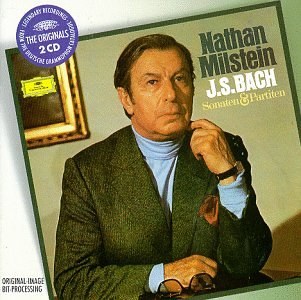
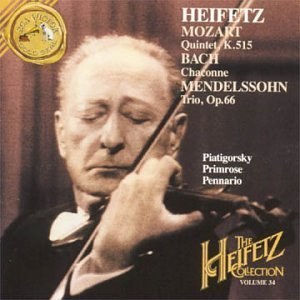
Bach: Sonatas and Partitas for Solo Violin 豆瓣
9.4 (30 个评分) Nathan Milstein 类型: 古典
发布日期 1998年2月10日 出版发行: Deutsche Grammophon
Bar code:
STEREO 289 457 701-2
0 28945 77012 3

--------------------------

NATHAN MILSTEIN, Violine

Milstein on Recording Bach

“I just stopped making records about ten years ago. I don’t enjoy recording much; it makes me very nervous. When I play for a live audience I am nervous only until I get to the stage; once I’m on stage I feel like a fish in water. Recording does make me nervous, with the extra emphasis on perfection, but I do want to leave a record of my thoughts on the music that has meant most to me. I am not adding new material to my repertoire now; instead, I devote myself to the music I have lived with and loved for a half-century and more. I like the way my sessions are handled by Deutsche Grammophon. Where there is an error or some reason for a re-take, I won’t do a ‘surgical’ job, slipping in a note here or there: repairs must be co-ordinated so the emotional impact, the instinctive quality will be continuous, so the idea, the fire, the lyricism will not be interrupted by patches. If something has to be re-taken, I play a big part of it, for the sake of the continuity. I think the Bach Sonatas and Partitas I recorded for Deutsche Grammophon in London actually are clearly superior to the set I did in the ‘50s. There is nothing in my repertoire that I don’t play better now than I did before — simply because of the added experience I have now — and it is especially gratifying to be able to record these works under today’s technical conditions.”

The Bach solo works [...] have been Milstein specialties for years. [...] Bach, though, was something he had to discover on his own: “In Russia we didn’t have respect for Bach as a great composer. Of all his works, only a single fugue was included in our curriculum. In my Bach playing I stress the bass and the middle voices separately, with particular emphasis on the bass almost as a separate entity.” In Milstein’s definition, “virtuosity” has nothing to do with mere display, but indicates “the highest degree of professional excellence — in any sort of undertaking, not only a musical one. I think War and Peace is a virtuoso work.” He also distinguishes technique from mere dexterity: “technique is not just a matter of muscular control — technique means adjusting the medium to what I want to do.” The instrument Milstein plays is a 1716 Stradivarius he acquired in 1945, formerly known as the “ex Goldmann”. He has renamed it the “Maria Teresa”, in honor of his daughter Maria and his wife Teresa.

From a conversation with Nathan Milstein (1975)
Richard Freed

--------------------------

This is marvellous violin playing... Milstein’s special virtues are those of commanding technique: never is a note out of true in pitch or in rhythm.
Gramophone (1975)

... this is a magnificent set by any standard; from a performer close on 70 it is an achievement bordering on the miraculous.
Records and Recording (1975)

...this must surely rank as the seventy-year-old Odessa-born violinist’s crowning achievement. His interpretation, immaculately recorded by DG in a penetratingly clear yet warm ambiance, is so extraordinary that this three-disc album not only must be rated as one of this year’s finest releases but deserves to take its place among the greatest Bach recordings ever made. First, Milstein playing is impressive on purely technical grounds. So often these works tend to sound as though the performer is just barely going to make it through, especially in the contrapuntal convolutions of the sonatas’ three fugues; even at best, the rapid arpeggiation necessary to sustain three or four melodic lines all at once frequently results in an unpleasant scratchiness [...].
Technique aside, Milstein renditions have an unusually human quality. I find these to be warmly expressive readings in which the music is allowed to flow forward sensibly and the rhythms evoke all their dance origins. Slow movements, too, are handled in a wonderfully graceful manner. Finally, there is Milstein sense of pacing, which is something quite apart from his judicious choice of tempos. Rather it is revealed in a subtle rhetoric that causes a movement such as the Chaconne to build and grow from one climax to another. The pulse is always strong, the architecture always apparent, and the rubato-like inflections clarify the sentence structure of Bach’s phrases. Tonally, Milstein’s playing is quite beautiful.
Stereo Review (1976)

Every Phrase is shaped with meaning, every line is musically alive and in matters of technique there are no question marks either.
Gramophone (1976)

The Milstein set is the finest to have appeared in recent years. Every phrase is beautifully shaped and keenly alive; there is a highly developed feeling for line, and no want of virtuosity. ... Milstein is excellently served by the DG engineers, and the sound is natural and lifelike.
Penguin Guide (1977)

Milstein’s performances achieve both authority and spontaneity: the phrasing is supple, and the playing deeply felt without any suggestion of romantic indulgence. This is wholly admirable and can be recommended without reservation of any kind.
Gramophone (1977)

----------------------------

MILSTEIN PLAYS BACH

To understand the fascination that the solo Sonatas and Partitas of Bach had for Nathan Milstein, we first have to consider the works themselves. They were written in 1720, at a time when the composer was concentrating on instrumental music in his role as Kapellmeister to the court of Cöthen. As in so many other spheres, Bach did not invent a genre but improved immeasurably on the solo violin music written by some of his German contemporaries and predecessors. He was a good player of the violin and viola himself and in his Sonatas and Partitas he created abstract shapes and forms in which the player could seem almost to be communing with himself, yet still dazzle the audience. This is music in which the spiritual and virtuosic elements of the performance are so finely balanced that it is difficult to say where one ends and the other begins. Bach is not satisfied with a single line of music but throws in chords and even counterpoint, in which the harmonic drift of the music implies extra voices which are not actually present. The most amazing displays of this counterpoint come in the great fugues of the three Sonatas. The Partitas are at first glance simply suites of dances. Yet they demand many techniques which express the very soul of the violin — the exciting bariolage in the ebullient opening Preludio of the E major Partita, for instance; and the D minor Partita culminates in a Chaconne, a basically slow dance built on a repeated bass, which is perhaps the mightiest single movement the composer ever created. Here, using one small violin, Bach traces out one of his most amazing edifices in sound.

The 19th century did not really comprehend this music, and various attempts were made to fit piano accompaniments to the Sonatas and Partitas. Only with the emergence of Joseph Joachim did a major virtuoso grapple with the vast possibilities of these works; and by then problems had arisen through the steady evolution of the violin and the bow. Bach used a bow with a convex stick and his violin was strung across a flatter, shallower bridge, with tar less tension, because the neck of the violin was shorter and less angled. In the search for more volume, most of the old violins were modified to take a higher tension. The bow evolved into using a concave stick, which again allowed for greater tension. These factors made it harder to play Bach’s chords and most violinists of the early 20th century worked out compromises between Bach’s demands and their own capabilities. There were aberrations such as the Vega bow, a contraption by which the player could sound every note of a chord, even on a modern violin; but until the rise of the period instrument movement, playing Bach on the violin was a struggle. It is one of the imponderable paradoxes of music that although a number of “authentic” violinists have tackled the Sonatas and Partitas in recent years, their best efforts have not so far eclipsed the finest “compromise” players. Among the latter Nathan Milstein (1904-1992) held an honoured place. He brought to Bach the same instincts for style and taste that made him an outstanding interpreter of Mozart and Beethoven. In addition he had a technical facility and fluency second to none.

The surprising thing was that Milstein emerged from a milieu, the Russian bourgeoisie, in which Bach was not appreciated. Under his famous teachers, Pyotr Stolyarsky in Odessa and Leopold Auer in St. Petersburg, he played virtually no Bach, nor was he taught to understand the style. He eventually developed his own view of Bach through playing the marvellous solo violin works of Max Reger, in which Bach’s style was seen through the prism of a modern German intellect. Once Milstein came to the West in the mid1920s, he quickly assimilated what he needed to learn from his fellow fiddlers. Pre-war recordings show that by the end of the 1930s, he was already a nonpareil Bach violinist. He came to esteem Bach, alongside Paganini, as the finest writer for the violin — not that he equated the two composers in terms of quality — and he named the Chaconne as his favourite piece of music, sometimes programming it on its own. He recorded the Sonatas and Partitas in the 1 950s but felt that in this second cycle for Deutsche Grammophon he had said his last word on the music.

Milstein’s Bach is based on a secure sense of rhythm — vital for the slow movements as much as the fast ones. The dance movements really dance but always in an aristocratic way. Milstein’s tone, although of great beauty, never draws attention to itself through the overuse of vibrato. The listener’s attention is always focused on the musical line, because the player’s feeling for line and legato is so strong and his tone is so well focused. The big fugues and the Chaconne are spaciously laid out but urgently played, with such a comprehensive intellectual grip that the interest never flags. The same intellectual grasp ensures that Bach’s counterpoint is fully realized. The quieter, more inward moments are not italicized by romantic rallentandi. Instead Milstein relies on gradations of tone and volume and the tension of the musical line. Above all, these interpretations have the “size” of a great actor’s soliloquy: using no props other than his bow and his 1716 Stradivarius, Milstein comes before his audience with complete confidence that he can hold the stage. And because he is a musician of refinement and elevated ideals, the spiritual charge that should always inhabit Bach’s greatest music is present, alongside those equally characteristic outbursts of joy and exhilaration.
Tully Potter

--------------------------------

ADD
Produced by Werner Mayer
Tonmeister (Balance Engineer): Klaus Hiemann
Recording Engineers: Joachim Niss/Volker Martin
® 1975 Polydor International GmbH, Hamburg
© 1998 Deutsche Grammophon GmbH, Hamburg Cover &Artist Photo: Siegfried Lauterwasser
Art Direction: Hartmut Pfeiffer

--------------------------------

THE ORIGINALS
LEGENDARY RECORDINGS FROM THE DEUTSCHE GRAMMOPHON CATALOGUE
Deutsche Grammophon ORIGINALS — milestone recordings from our LP catalogue, now reproduced with unprecedented fidelity on CD. This new series of critically acclaimed performances features the great names of Deutsche Grammophon’s past and present: celebrated interpreters whose recording careers flourished at 33 rpm, as well as outstanding artists of today whose early achievements were documented on black vinyl. All recordings in the series have been newly refurbished using Deutsche Grammophon’s latest technology in order to “recreate” the original sound-image of these legendary interpretations.

ORIGINAL-IMAGE BIT-PROCESSING
To reproduce the original sound-image of a recorded performance as faithfully as possible: this has been the aim of Deutsche Grammophon Gesellschaft in developing its innovative digital mixdown technology ORIGINAL-IMAGE BIT-PROCESSING.
This technology, developed in conjunction with Deutsche Grammophon’s new 4D Audio Recording system at the company’s Recording Centre in Hanover, is based on the notion that the technical medium itself should become inaudible. It is only the means to an end, that of allowing the listener to enjoy an entirely natural sound quality.
ORIGINAL-IMAGE BIT-PROCESSING now makes it possible to remix older recordings in order to “recreate” the original sound- image. This recreation employs—wherever possible — physio-acoustical principles to compensate for delay factors (such as the time required for sounds to reach the main microphone) as well as an extremely high-resolution processing of the musical signals.
Authentic Bit Imaging, the requantizing procedure developed by Deutsche Grammophon, allows the extraordinarily high quality of this mixdown to be transferred optimally to digital sound carriers.
It is Deutsche Grammophon’s philosophy that technology alone is never sufficient. Optimal sound quality can only be achieved when technology is guided by the trained ear of an experienced Tonmeister Deutsche Grammophon’s Tonmeister combine technical expertise with a solid musical education.
For the listener to these performances, the audible results of this latest alliance of modern technology with traditional craftsmanship will be greater presence and brilliance and a more natural spatial balance than previously attainable.

-------------------------

WARNING! All rights reserved.
Unauthorized copying, reproduction, hiring, lending, public performance and broadcasting prohibited.
Manufactured and Marketed by PolyGram Classics & Jazz, a Division of PolyGram Records, Inc., New York, N.Y.

-------------------------

LP released 1975
Grammy 1975
Grand Premio del Disco “Ritmo” (Madrid) 1985
Recording: London, Conway Hall (Wembley, Brent Town Hall), 2, 4 & 9/1973
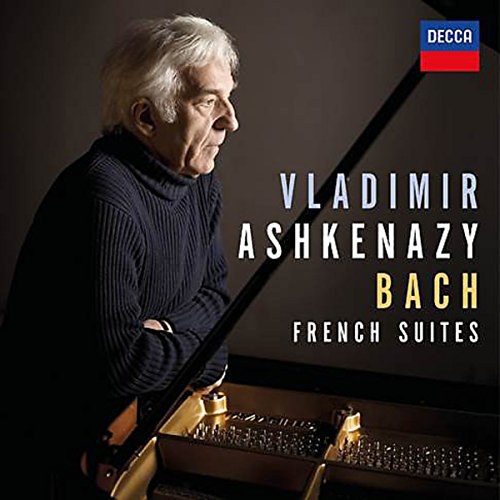
巴赫:法国组曲 豆瓣
Vladimir Ashkenazy 类型: 古典
发布日期 2017年6月30日 出版发行: Decca
Released in celebration of the great Russian pianist’s 80th birthday (06 July) this set of the French Suites continues Ashkenazy’s extraordinary journey through the major keyboard works of JS Bach.
A legendary DECCA artist for more than half a century with over 8.5 million units sold worldwide on CD.
Bach’s six French Suites complete on a single CD; the latest in Ashkenazy’s ongoing and critically acclaimed series of Bach recordings.
The release comes together with the Complete Concerto Recordings, also released on 30 June. 46 CDs in original jackets - every concerto recording ever made for Decca with Ashkenazy as pianist.
The Guardian wrote of his set of the 48: “merits a place alongside the finest versions of this much-recorded cycle, those by interpreters such as Edwin Fischer, Sviatoslav Richter and Glenn Gould”
“Ashkenazy's approach is closest to that of Edwin Fischer in his directness, articulation and absolute trust in the music's own poetic strengths” The Guardian
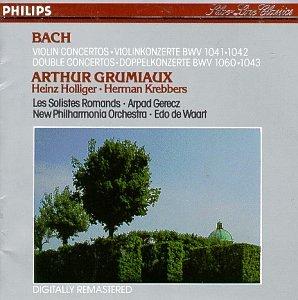
Bach Concertos 豆瓣
8.9 (36 个评分) Allan Vogel / Hilary Hahn 类型: 古典
发布日期 2003年9月9日 出版发行: Deutsche Grammaphon
Hilary Hahn (born November 27, 1979) is an American violinist. She has performed throughout the world both as a soloist with leading orchestras and conductors and as a recitalist. She has also built a reputation as a champion of contemporary music. Several composers have written works for her, including concerti by Edgar Meyer and Jennifer Higdon, partitas by Antón García Abril, and a violin and piano sonata by Lera Auerbach.
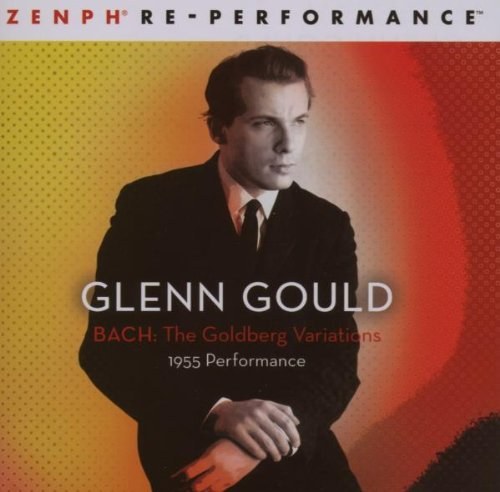
哥德堡变奏曲1955录音重建版 豆瓣
9.8 (9 个评分) Glenn Gould 类型: 古典
发布日期 2007年5月29日 出版发行: Sony Classics
古尔德在1955年录制的巴赫哥德堡变奏曲,不仅是这位加拿大钢琴怪杰音乐事业的分水岭,也让世人听到巴赫音乐的不同阐述样貌:深刻、微妙、澄净,节奏动态分明,旋律令人迷醉。这首原本是贵族安眠乐的秘藏曲目因此洛阳纸贵,掀起的古尔德热潮,至今依然风靡全球。
位于北卡罗莱纳州的ZENPH Studios是一家音乐科技公司,创办人渥克(John Q. Walker)拥有软体工程与钢琴演奏双博士学位,他与同样拥有科技与钢琴双博士学位的三位同事成功开发一种能够精准模拟钢琴录音中,包括音准,触鍵等等纯粹钢琴演奏要素的软体,转化成Yamaha Disklavier Pro grand piano可辨识的超高解析度数位音乐档案,如此,典型在夙昔的钢琴巨匠宛如亲临录音室,以毫厘不差的精准度重現录音演奏現场。2006年9 月25日,古尔德74岁冥诞那天,曾获得11次葛莱美奖的唱片制作人Steve Epstein、古尔德生前专任调音師Verne Edquist,來自YAMAHA的技术人員,古尔德的同事与朋友,齐聚在加拿大的古尔德录音室里,亲临见证这一场划时代的录音工程。本辑特別采用SACD Hybrid形式发行,还特別收录「终级耳机体验完整版」,聆听者帶上耳机,就能够原音重現1955年古尔德在录音室弹奏哥德堡变奏曲時,他的耳机里所听到的音乐,这绝对是所有爱乐者此生从未有过的新鲜体验。(SONY/BMG)
Bach - Complete Organ Works /Marie-Claire Alain 豆瓣
9.2 (5 个评分) Marie-Claire Alain 类型: 古典
发布日期 2007年8月27日 出版发行: Erato
Marie-Claire Geneviève Alain est une organiste concertiste française, née à Saint-Germain-en-Laye le 10 août 1926, et morte au Pecq le 26 février 20131.
Elle compte parmi les plus illustres organistes de sa génération, de réputation internationale. Les critiques sont unanimes à louer la clarté lumineuse de son jeu, la pureté de son style, la musicalité intense et vivante de son interprétation et sa maîtrise dans l’art de la registration.
Articles rédigés par Marie-Claire Alain :
Le Positif Haerpfer-Erman. L’Orgue, 1959, no 91, p. 75-79.
Notes de voyages au Danemark (août 1959). L’Orgue, 1960, no 96, p. 112-117.
Les Grands Organistes français. Musique de tous les temps : l’Orgue, avril 1962, no 18, p. 1-7.
Appunti sulla « maniera francese ». L’Organo, V, 1967, 6* 19.
L’Œuvre d’orgue de Jehan Alain - Conseils pour l’exécution. L’Organo, 1968, VI, p. 181-220.
L.-N. Clérambault - Premier livre d’orgue : critique de la réédition chez Schott. L’Organo, 1968, VI, p. 237- 244.
Ce que pensent les organistes. L’orgue en France. L’état des questions, la vérité. Rambervillers (88), 1968, p. 15-17.
Un trésor caché : le grand orgue de St-Guéraud d’Aurillac. In Revue de Haute-Auvergne, tome 47, 1980.
« Réflexions sur le Livre d’Orgue de N. de Grigny d’après la copie de J.S. Bach ». In L’Orgue à notre époque, Montréal, 1981, p. 91-105, (Symposium à McGill University) D. Mackey (éd.), McGill University Montréal.
Souvenirs et témoignages sur l’orgue callinet de Masevaux. In Les Orgues de Masevaux des origines à nos jours. Édition Festival de Masevaux, 1986, p. 29.
Why an acquaintance with early organs is essential for playing Bach ? In J.S.Bach as organist, 1986, p. 48-53, G. Stauffer et E. May (éd.), Indiana University Press, Bloomington.
Jehan Alain et l’orgue de St-Ferjeux à Besançon. La Tribune de l’orgue, septembre 1988, p. 14.
Éditions, manuscrits et brouillons de Jehan Alain. L’Orgue, 1990, no 215, p. 5-12.
L’Orgue idéal en conservatoire (avec I. Zanko). In Guide de l’orgue et de l’organiste en Île-de-France, éd. Ariam-Cenam, 1991, p. 34-35.
Notes sur la manière française. L’Orgue, 1995, no 234, p. 3-14.
L’Ornementation. L’Orgue, 1995, no 236, p. 28-43.
Marie-Claire Alain : Repères chronologiques (avec Aurélie Decourt). L’Orgue, 1996, CM no 56, p. 7- 27.
Évolution (s). L’Orgue, 1996, CM no 56, p. 32-41.
Souvenirs d’enregistrement. L’Orgue, 1996, CM no 56, p. 72-76.
L’Orgue de Saint-Louis-en-l’Isle de Paris. Le Monde, 17 janvier 1997
La Famille Alain. Colloque « 30 ans d’orgue », Académie de l’orgue de Saint-Dié-des-Vosges, 1998, p. 146- 155.
« Organiste, un métier ». Préludes, janvier 2000
Témoignage sur Claude Delvincourt. Cahiers Boëllmann-Gigout, 2000, no 4-5, p. 95-96.
Notes critiques sur l’œuvre d’orgue de Jehan Alain. Éditions musicales Alphonse Leduc, AL 29253, 2001
Réflexions sur la Passacaille de J. S. Bach. Ostinato rigore, 2001, no 16, J.-M. Place.
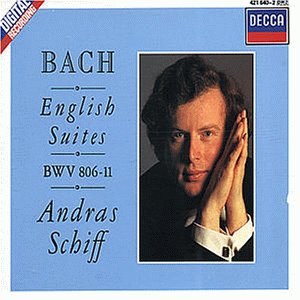
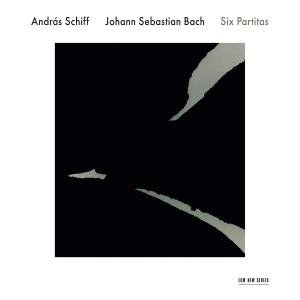
Bach: Six Partitas, BWV 825-830 豆瓣 Spotify
9.6 (5 个评分) Andras Schiff 类型: 古典
发布日期 2009年9月7日 出版发行: ECM - NEW SERIES
Following last year’s completion of his highly-praised Beethoven cycle András Schiff returns to Bach with a superb interpretation of the six “Partitas”, recorded live in September 2007 at Neumarkt Reitstadl one of the best piano music venues in Eurpoe. The cycle, which in 1731 was the first group of works to be published by Bach himself, represents a unique stylistic synthesis of the suite form with a particular emphasis on most varied and imaginative opening movements. In his 1802 biography of Bach, Nikolaus Forkel famously wrote that “such splendid compositions for the clavier had not been seen or heard before… so brilliant, harmonious, expressive and constantly novel are they.” Compared to his London studio recording of 1983 this second rendering on disc demonstrates Schiff’s stylistic development towards more freedom, sonic depth and sheer pleasure of phrasing. The rather unorthodox sequence of partitas – 5 – 3 – 1 – 2 – 4 – 6 – draws an ascending line of keys leading from G major to e minor.
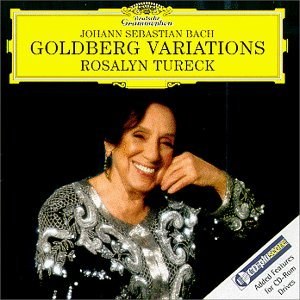
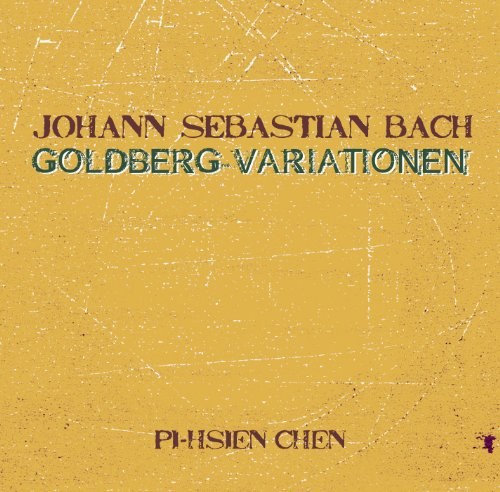
Johann Sebastian Bach: Goldberg Variations 豆瓣
9.5 (28 个评分) Johann Sebastian Bach / Rosalyn Tureck 类型: 古典
发布日期 1999年3月9日 出版发行: Deutsche Grammophon
专辑介绍:
提起巴赫的键盘曲《哥德堡变奏曲》,人们首先想起的多半是已故加拿大钢琴家古尔德(Glenn Gould)对它传奇性的演奏。就象这首变奏曲以主题开始,经过30个变奏后又以同样的主题结束一样,古尔德的录音生涯也从1955年录制《哥德堡变奏曲》开始,在1981年以再次录制这首曲子而结束,完成了一个生命的大循环. 很多人曾问过古尔德:“你最欣赏谁演奏的巴赫?”每一次古尔德的回答总是:“女钢琴家图雷克(Rosalyn Tureck,1914~)。”这个很陌生的名字是谁?恐怕知者不多。
有一种说法:《哥德堡变奏曲》是由古尔德首先推广开来的。其实并非如此。著名女羽管键琴演奏家兰多芙斯卡(Wanda Landowska,1879~1959)才是名副其实的先驱。正是她的演奏和1933年灌制的著名唱片使这首曲子逐渐传播开来,被钢琴家和大众所接受。图雷克也是最早演奏《哥德堡变奏曲》的钢琴家之一。早在30年代,她的音乐会曲目中就已包括了这首作品。那时,古尔德才刚刚降生呢!由于作品的原谱上很少有速度表情记号,留给演奏家们很大的自由发挥空间,所以各个演奏家的处理方式差别很大。从30年代至今,上百种唱片版本先后涌现,可见它受欢迎的程度。其中最著名的一直是兰多芙斯卡的两种羽管键琴版(EMI和RCA各一)、古尔德的两种版本(Sony)以及匈牙利钢琴家希夫的版本(DECCA)。
根据最早的巴赫传记《天才巴赫的一生及其作品》(弗克尔1802年出版)中的说法,《哥德堡变奏曲》是为身患失眠症的凯塞林克伯爵所作的,目的仅仅是为了帮助他消磨漫漫长夜,减轻失眠的痛苦。“哥德堡”是伯爵身边的羽管键琴演奏家的名字,也是巴赫的学生。变奏曲由一个主题及其30个变奏组成,在30个变奏之后,主题再现,圆满地完成一个循环。伯爵对这首曲子着了迷,慷慨地赐给巴赫100个金路易,相当于巴赫一年的工资。《哥德堡变奏曲》这个曲名并不是巴赫起的,而是传记作者弗克尔在巴赫死后起的。巴赫自己称它为“包括一首咏叹调及其变奏的键盘练习曲,为有两个键盘的羽管键琴而作”(现在一般都用钢琴演奏)。
这首作品看似平常的变奏曲,实际上却是精心安排的。它的变奏都建筑在主题(咏叹调)的32个小节的低音线上,这个数字正好是作品的段落总数(30段变奏加上首尾两段主题)。更奇妙的是,主题低音线上的音符数也是32个!在30个变奏中,大多数变奏的长度是30小节。第3、9、21、30变奏是其一半(16小节)。唯一的例外是第16变奏。这是一首47小节的法国式序曲。
以第16变奏为分界,30个变奏可分为两组。第二组明显比第一组复杂。也就是说音乐的进行渐趋复杂,直到最后骤然回到平静朴素的主题,给人“绚烂之极归于平淡”的奇妙感受。更奇妙的是,第3、第6、第9、第12变奏直到第27变奏,每隔3首就出现一首卡农(严格的对位模仿,合唱中常见的轮唱即为一例)。这些卡农的音程渐渐扩大,从同度卡农(第3变奏)直到9度卡农(第27变奏)。象这样精心构思的作品是极为少见的。穿插在这些卡农曲间的是一些较为自由的变奏,有的是技巧难度很大的双键盘曲,有的近似托卡塔,有的犹如小赋格曲(第10变奏),有的是舞曲风格(第4变奏是帕斯皮耶舞曲,第7变奏是吉格舞曲),有的是古协奏曲形式。第30变奏特别引人注目,它活象一个音乐玩笑,将两首民歌(“我好久没和你在一起”和“卷心菜和萝卜把我赶走”)的旋律和咏叹调主题交织在一起。
古尔德演奏的《哥德堡变奏曲》虽然魅力非凡,但不容否认,它带有明显的古尔德个人标记,并不是很纯净的巴赫风格。与之相比,美国女钢琴家图雷克的演绎显然更合巴赫的原意,难怪古尔德也对她大加赞赏。今年85岁的图雷克60多年来一直以演奏巴赫作品闻名,曾被著名乐评家哈罗德-勋伯格誉为“巴赫音乐的女大祭司”。很可惜,她以前的唱片都是小公司出版的,国内见不到,故此名气很小。事实上,她可能是钢琴家中录制《哥德堡变奏曲》次数最多的一个,也是演奏它时间最长的一个(长达60多年)。
和许多钢琴家一样,图雷克在晚年渐渐进入了更平静、更深邃的升华境界。每个音符、每个变奏都被她处理得异常清晰、端庄。由于她严格遵守巴赫的反复记号(很多钢琴家省略了反复部分),所以演奏时间也比绝大多数版本长。在敏感的指触、纯正的风格感中,我们丝毫感觉不出演奏家是位84岁的老人。这是稳重内敛、宁静致远的演绎。正如她本人所说:“我从不把这部作品当成炫人耳目的技巧表演。它是生命的体验”。现在就让我们聆听这位“巴赫音乐的女大祭司”、曾任纽约爱乐首位女指挥、朱利亚德学校教授的图雷克来演奏,在《哥德堡变奏曲》中体验生命的多姿多彩吧。(摘自视听技术,作者孙皓,有删节)
专辑曲目:
CD1
01 01Aria
02 02Variato 1 - a 1 Clav.
03 03Variato 2 - a 1 Clav.
04 04Variato 3 - Canone all'Unisuono a 1 Clav.
05 05Variato 4 - a 1 Clav.
06 06Variato 5 - a 1 o vero 2 Clav.
07 07Variato 6 - Canone alla Seconda a 1 Clav.
08 08Variato 7 - a 1 o vero Clav. (at tempo di Giga)
09 09Variato 8 - a 2 Clav.
10 10Variato 9 - Canone alla Terza a 1 Clav.
11 11Variato 10 - Fugetta a 1 Clav.
12 12Variato 11 - a 2 Clav.
13 13Variato 12 - Canone alla Quarta (a 1 Clav.)
14 14Variato 13 - a 2 Clav.
15 15Variato 14 - a 2 Clav.
16 16Variato 15 - Canone alla Quinta (a 1 Clav. andante)
CD 2
01 01Variatio 16 - Ouverture a 1 Clav.
02 02Variatio 17 - a 2 Clav.
03 03Variatio 18 - Canone alla Sesta a 1 Clav.
04 04Variatio 19 - a 1 Clav.
05 05Variatio 20 - a 2 Clav.
06 06Variatio 21 - Canone alla Settima (a 1 Clav.)
07 07Variatio 22 - a 1 Clav. (alla breve)
08 08Variatio 23 - a 2 Clav.
09 09Variatio 24 - Canone all'Ottava a 1 Clav.
10 10Variatio 25 - a 2 Clav. (Adagio)
11 11Variatio 26 - a 2 Clav.
12 12Variatio 27 - Canone alla Nona a 2 Clav.
13 13Variatio 28 - a 2 Clav.
14 14Variatio 29 - a 1 o vero 2 Clav.
15 15Variatio 30 - Quodlibet a 1 Clav.
16 16Aria
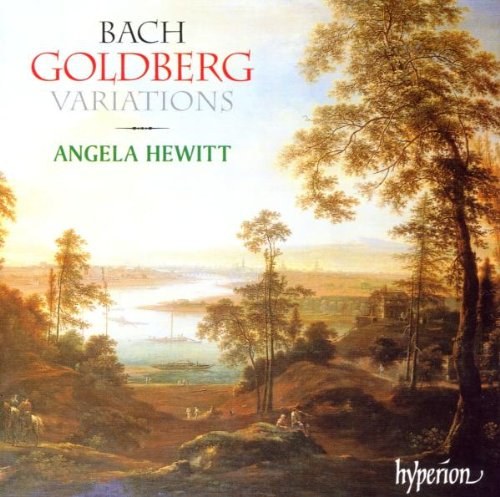
Bach: Goldberg Variations 豆瓣
8.0 (5 个评分) Angela Hewitt 类型: 古典
发布日期 2000年4月11日 出版发行: Hyperion UK
'It is a remarkable achievement, arguably the best to appear on disc since Glenn Gould's second celebrated recording from 1981 ... [It] is the sheer technical command of her playing, coupled with such elegantly supple musicianship, that makes the performance so compelling ... Everything is right, everything is natural - this is Bach on the piano of the highest quality imaginable' (The Guardian)
'After five days of recording sessions last August, Angela Hewitt returned in the small hours of September 1 to give a complete "performance" for a few friends of the Bach's Aria with Diverse Variations. Fortunately, the engineers decided to keep the tapes rolling, for this, according to Hyperion's executive director, Ted Perry, is the "take" Hewitt and Hyperion decided to release. The resulting record is a miracle of music-making at its most instinctive and spontaneous. Even by Hewitt's exalted standards it is extraordinary: in the brilliant toccatas, she creates, with her amazing articulation, the illusion of the music being plucked by the modern piano's hammers; her virtuosity and joie de vivre in the fast variations - try 1, 14 and "the most dangerous of all the toccatas", No 20 - take the breath away. She also penetrates the heart of the great 13th and 25th variations without false romantic sentiment. The reprise of the Aria at the close - after a majestic variation 29 - is shattering. If you only buy one Bach album in this anniversary year, let it be this one. A desert-island disc!' (The Sunday Times)
'Outstanding...Hewitt's disc, exquisite artistry commingling with infectious exhilaration gives me the most pleasure' (BBC Music Magazine)
'Beautifully co-ordinated Bach playing, with all voices colourfully defined and spontaneity as a constant virtue. In my view, she has never made a better CD. Strongly recommended' (Gramophone)
'This is as fine a version of Bach's inventive Goldberg Variations as there is' (The Express)
'Hewitt is one of the very finest Bach interpreters around. She possesses all the mechanical skills needed to master the difficulties facing the soloist, but never loses sight of the humanity that is evident in every note ... Playing of the highest order, and one of the finest recordings of this work you're ever likely to hear' (The Scotsman)
'The most recent in a series of wonderfully compelling Bach recordings by pianist Angela Hewitt. She seems to do everything right ... simply one of the best piano versions available' --(Fanfare, USA)
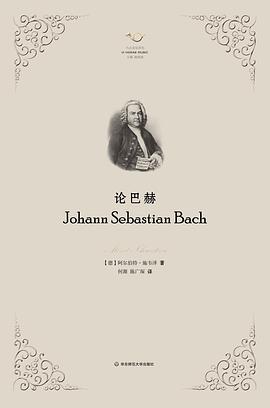
论巴赫 豆瓣
Johann Sebastian Bach
8.3 (7 个评分) 作者: [德] 阿尔伯特·施韦泽 译者: 何源 / 陈广琛 出版社: 华东师范大学出版社 2017 - 9
本书是阿尔伯特•施韦泽,诺贝尔和平奖获得者,为音乐大师巴赫书写的一部传记。它是西方音乐研究中的必读巨著、经典,甚至,它是一座里程碑。迄今,它已被译成10余种语言文字,在全世界范围内出版发行。
施韦泽的《论巴赫》为历代的巴赫研究者所青睐,深受专家们的好评。该书在美学理论与实践两端皆具有极高价值,为诸多巴赫研究中的晦涩地带带来曙光。作者论证了巴赫作品的来源、他的管风琴作品、受难曲和康塔塔,分析了巴赫乐思中的图像化倾向,引导人们重新调整对音乐美学的总体观念。此外,施韦泽对巴赫作品的正确演奏方法进行了推敲与讨论,尤其为该领域带来了新曙光。本书的出版将填补国内巴赫研究中长期存在的极大空白。
毫无疑问,施韦泽的《论巴赫》是整个历史上影响最深远的巴赫巨作。
——C.伍尔夫(莱比锡巴赫档案馆前馆长,哈佛大学音乐学教授)
这是一本经典名著——两位伟人,一位是音乐家,另一位是哲学家和宗教学家,他们代表了西方文化的一个重要人文传统,而后者研究前者,其心得远远超过一般水平。译者也是学问渊博的年轻学者,精通音乐和文学,相得益彰。此书值得精读。
——李欧梵(香港中文大学讲座教授
2017年12月17日 已读
巴赫就是这么一个终结点。他没有散发出一切,反而是一切最终都走向他。巴赫生活在一个萎靡的时代,一个诗歌和音乐互相引诱对方走进歧途的时代,一个充满乱弹琴的虚假艺术的时代,一个能让凯泽这样有才华的人都走向堕落的时代,一个注定了无力创造任何恒久价值的时代。在别的地方或者别的时代,一个伟大的艺术家就好像天河中众多明星的其中一颗,若是旁边的星光比他黯淡,他也不会将其遮蔽。巴赫只不过被团团鬼火围住罢了,但是他的时代,包括他自己,都错把这些鬼火当成明星。那个时代有浩如烟海的康塔塔,但只有巴赫一人的作品能力挽狂澜,盘活全局。尽管如此,还是能从他的作品中——无论是形式还是文本——感受到它们出自一个灰暗的时代。证明巴赫之伟大最有说服力的事实是,即使生活在一个谬误的时代且他还承载了这些谬误,他仍能写出不朽的作品。
传记 古典音乐 哲学 巴赫 文化