数学




神经科学中的数学 豆瓣
作者:
F. Gabbiani
出版社:
科学出版社
2012
- 1
《神经科学中的数学(导读版)》通过Matlab编程语言在众多模拟中的应用来介绍计算方法。这些程序为新的课程和研究提供有益的跳板。作者从介绍微分方程和线性代数在细胞、亚细胞和突起模型的应用开始,然后介绍概率论在突触传递和单细胞噪声中的应用,最后将信号处理理论应用于系统神经科学中。
神经科学依赖众多数学工具表达已有的理论、分析数据并提出新的实验。本书采用一系列扎实的计算模型将该领域最令人瞩目的工具由浅入深地介绍给读者。旨在为神经科学专业的本科生和研究生,以及对神经科学感兴趣的数学、物理和工程背景的学生提供一本教科书,亦可为进行神经科学相关研究的工作者提供有用的参考。
神经科学依赖众多数学工具表达已有的理论、分析数据并提出新的实验。本书采用一系列扎实的计算模型将该领域最令人瞩目的工具由浅入深地介绍给读者。旨在为神经科学专业的本科生和研究生,以及对神经科学感兴趣的数学、物理和工程背景的学生提供一本教科书,亦可为进行神经科学相关研究的工作者提供有用的参考。


复杂系统理论基础 豆瓣
作者:
[美] 欧阳莹之
译者:
田宝国
/
周亚
…
出版社:
上海科技教育出版社
2002
- 10
本书的相当大部分致力于对科学理论和模型的表述,从而为进行哲学分析提供素材。由于多体系统的复杂性,诸学科基本上依赖于理想化和近似,各学科部分成了许多强调系统不同假面的模型。我将尽力展开模型。背扣的假设和预设,便于读者评价它们那些通常是有文化影响的声称。除了对一般概念进行澄清,我希望本书可以激起不同领域科学家之间的相互对话,不仅关于他们正在研究什么,还关于他们正在如何进行。因此,我努力使本书的内容易于一般读者理解,把诸学科的概念结构(conceptual struc-tures)尽可能解释清楚,尽量少引用行话,并在每一专业术语第一次出现时予以解释。由于本书的覆盖面很广,我将力求简明,使主要思想凸现出来,而不拘泥于细节。
科学主义过分炫耀科学且背离科学精神,这激起了让许多科学家吃惊的对科学的敌意。祸起萧墙。我们不要仅仅抱怨公众不愿意支持科学研究,或许我们应当检查自己,看看是不是我们做得太过分了,而成了科学主义。
——欧阳莹之
科学主义过分炫耀科学且背离科学精神,这激起了让许多科学家吃惊的对科学的敌意。祸起萧墙。我们不要仅仅抱怨公众不愿意支持科学研究,或许我们应当检查自己,看看是不是我们做得太过分了,而成了科学主义。
——欧阳莹之

丘成桐談空間的內在形狀 豆瓣
作者:
丘成桐(Shing-Tung Yau);
/
史蒂夫.納迪斯(Steve Nadis)
译者:
翁秉仁、
/
趙學信
出版社:
遠流出版




拉普拉斯概率理论的历史研究 豆瓣
作者:
王幼军
出版社:
上海交通大学
2007
- 1
拉普拉斯侯爵,一个一生充满传奇色彩的人物,也是学数学或天文的人都非常熟悉的名字。他被视为伟大的数学家、天文学家、物理学家,甚至化学家,同时又被视为一个趋炎附势、见风使舵的势利小人。 在天文学上,拉普拉斯的《天体力学》堪称不朽巨著,集那个时代天体力学之大成,他被称为“法国的牛顿”。在数学上,他被视为现代概率论的奠基人,他的《分析概率论》是这个领域的里程碑式的著作。 本书在作者多年研究的基础上对拉普拉斯概率理论的历史研究作了概述和总结,这是数学史上又一力作之一。主要内容包括介绍拉普拉斯生平、拉普拉斯之前概率论研究的历史回顾、近年关于拉普拉斯概率论历史研究的新成果、新进展,以及拉普拉斯概率理论在中国的传播和影响。 本书读者对象:科学史、数学史研究人员,以及概率论与数理统计的教学和研究人员等。


R语言实战 豆瓣
R in Action
9.3 (6 个评分)
作者:
卡巴科弗
译者:
高涛
/
肖楠
…
出版社:
人民邮电出版社
2013
- 1
数据时代已经到来,但数据分析、数据挖掘人才却十分短缺。由于“大数据”对每个领域的决定性影响, 相对于经验和直觉,在商业、经济及其他领域中基于数据和分析去发现问题并作出科学、客观的决策越来越重要。开源软件R是世界上最流行的数据分析、统计计算及制图语言,几乎能够完成任何数据处理任务,可安装并运行于所有主流平台,为我们提供了成千上万的专业模块和实用工具,是从大数据中获取有用信息的绝佳工具。 本书从解决实际问题入手,尽量跳脱统计学的理论阐述来讨论R语言及其应用,讲解清晰透澈,极具实用性。作者不仅高度概括了R语言的强大功能、展示了各种实用的统计示例,而且对于难以用传统方法分析的凌乱、不完整和非正态的数据也给出了完备的处理方法。通读本书,你将全面掌握使用R语言进行数据分析、数据挖掘的技巧,并领略大量探索和展示数据的图形功能,从而更加高效地进行分析与沟通。想要成为倍受高科技企业追捧的、炙手可热的数据分析师吗?想要科学分析数据并正确决策吗?不妨从本书开始,挑战大数据,用R开始炫酷的数据统计与分析吧! 本书内容: R安装与操作
数据导入/导出及格式化双变量关系的描述性分析回归分析
模型适用性的评价方法以及结果的可视化
用图形实现变量关系的可视化
在给定置信度的前提下确定样本量
高级统计分析方法和高级绘图
数据导入/导出及格式化双变量关系的描述性分析回归分析
模型适用性的评价方法以及结果的可视化
用图形实现变量关系的可视化
在给定置信度的前提下确定样本量
高级统计分析方法和高级绘图
Theorie Analytique Des Probabilites 豆瓣
作者:
Laplace, Pierre Simon
2010
- 2


10000个科学难题(数学卷) 豆瓣
作者:
“10000个科学难题”数学编委会
出版社:
科学出版社
2009
- 5
《10000个科学难题·数学卷》是教育部、科学技术部、中国科学院和国家自然科学基金委员会联合组织开展的“10000个科学难题”征集活动的重要成果,书中的题目均由国内国际知名的数学专家撰写。书中收集了有关数学很多分支学科及数学的应用等方面的大量问题,以及当今一些重要的数学问题。
该书可供高等院校和科研单位数学领域的研究生、科研人员阅读参考,也可供对数学感兴趣的其他读者阅读。有兴趣的读者可以在此基础上就其中的某一问题进行深入探索和研究,一些研究生也可以在导师的指导下选择其中的某一问题作为自己的研究课题。
该书可供高等院校和科研单位数学领域的研究生、科研人员阅读参考,也可供对数学感兴趣的其他读者阅读。有兴趣的读者可以在此基础上就其中的某一问题进行深入探索和研究,一些研究生也可以在导师的指导下选择其中的某一问题作为自己的研究课题。
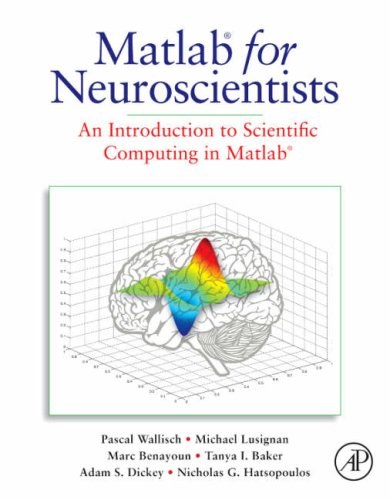
MATLAB for Neuroscientists 豆瓣
作者:
Pascal Wallisch
/
Michael Lusignan
…
出版社:
Academic Press
2008
- 11
Matlab is the accepted standard for scientific computing, used globally in virtually all Neuroscience and Cognitive Psychology laboratories. For instance, SPM, the most used software for the analysis and manipulation of fMRI images in research and clinical practice is fully programmed in matlab, and its use of the possibility to allow for sophisticated software modules to be freely added to the software has established it as the by far dominant software in the field. Many universities now offer, or are beginning to offer matlab introductory courses in their neuroscience and psychology programs. Nevertheless, so far there hasn't been a textbook specific to this market, and the use of the plethora of existing engineering focused Matlab textbooks is notoriously difficult for teaching the package in those environments.
This is the first comprehensive teaching resource and textbook for the teaching of Matlab in the Neurosciences and in Psychology. Matlab is unique in that it can be used to learn the entire empirical and experimental process, including stimulus generation, experimental control, data collection, data analysis and modeling. Thus a wide variety of computational problems can be addressed in a single programming environment. The idea is to empower advanced undergraduates and beginning graduate students by allowing them to design and implement their own analytical tools. As students advance in their research careers, they will have achieved the fluency required to understand and adapt more specialized tools as opposed to treating them as "black boxes".
Virtually all computational approaches in the book are covered by using genuine experimental data that are either collected as part of the lab project or were collected in the labs of the authors, providing the casual student with the look and feel of real data. In some rare cases, published data from classical papers are used to illustrate important concepts, giving students a computational understanding of critically important research.
The ability to effectively use computers in research is necessary in an academic environment that is increasingly focused on quantitative issues. Matlab represents an ideal language of scientific computing. It is based on powerful linear algebra structures which lend themselves to empirical problems on the one hand, while at the same time allowing the student to make rapid problem-oriented progress (particularly in terms of visualization of data points) without having to lose focus by worrying too much about memory allocation and other "plumbing" minutiae as would be required in other, more low-level programming languages such as C or C++.
Currently, there are several books that provide introductions to Matlab that are either too generic and fundamental or too irrelevant for neuroscientists and cognitive psychologists who typically face a very circumscribed range of problems in data collection, data analysis and signal processing. Some non-book tutorials and primers that are in use in the community are typically out of date. Matlab versions are usually not backwards compatible. Many commands and functions used in older tutorials and primers, such as "flops" won't work in current versions of Matlab, necessitating a book that is timely and up-to-date.
The complete lack of a relevant resource in this area, combined with a clearly felt need for such a text provided the primary and initial impetus for this project.
The authors provide such a dearly needed resource adapting and pooling materials that developed for and used in highly rated courses involving the use of Matlab in Neuroscience at the University of Chicago. Two co-authors (PW and NH) have presented their respective work on teaching Matlab at national meetings and two of the co-authors (PW and MB) were awarded the coveted University of Chicago's Booth Prize for excellence in teaching these courses. (http://chronicle.uchicago.edu/070524/boothprize.shtml ).
* The first comprehensive textbook on Matlab with a focus for its application in Neuroscience
* Problem based educational approach with many examples from neuroscience and cognitive psychology using real data
* Authors are award winning educators with strong teaching experience
* Instructor's Website with figurebank, additional problems and examples, solutions, etc
This is the first comprehensive teaching resource and textbook for the teaching of Matlab in the Neurosciences and in Psychology. Matlab is unique in that it can be used to learn the entire empirical and experimental process, including stimulus generation, experimental control, data collection, data analysis and modeling. Thus a wide variety of computational problems can be addressed in a single programming environment. The idea is to empower advanced undergraduates and beginning graduate students by allowing them to design and implement their own analytical tools. As students advance in their research careers, they will have achieved the fluency required to understand and adapt more specialized tools as opposed to treating them as "black boxes".
Virtually all computational approaches in the book are covered by using genuine experimental data that are either collected as part of the lab project or were collected in the labs of the authors, providing the casual student with the look and feel of real data. In some rare cases, published data from classical papers are used to illustrate important concepts, giving students a computational understanding of critically important research.
The ability to effectively use computers in research is necessary in an academic environment that is increasingly focused on quantitative issues. Matlab represents an ideal language of scientific computing. It is based on powerful linear algebra structures which lend themselves to empirical problems on the one hand, while at the same time allowing the student to make rapid problem-oriented progress (particularly in terms of visualization of data points) without having to lose focus by worrying too much about memory allocation and other "plumbing" minutiae as would be required in other, more low-level programming languages such as C or C++.
Currently, there are several books that provide introductions to Matlab that are either too generic and fundamental or too irrelevant for neuroscientists and cognitive psychologists who typically face a very circumscribed range of problems in data collection, data analysis and signal processing. Some non-book tutorials and primers that are in use in the community are typically out of date. Matlab versions are usually not backwards compatible. Many commands and functions used in older tutorials and primers, such as "flops" won't work in current versions of Matlab, necessitating a book that is timely and up-to-date.
The complete lack of a relevant resource in this area, combined with a clearly felt need for such a text provided the primary and initial impetus for this project.
The authors provide such a dearly needed resource adapting and pooling materials that developed for and used in highly rated courses involving the use of Matlab in Neuroscience at the University of Chicago. Two co-authors (PW and NH) have presented their respective work on teaching Matlab at national meetings and two of the co-authors (PW and MB) were awarded the coveted University of Chicago's Booth Prize for excellence in teaching these courses. (http://chronicle.uchicago.edu/070524/boothprize.shtml ).
* The first comprehensive textbook on Matlab with a focus for its application in Neuroscience
* Problem based educational approach with many examples from neuroscience and cognitive psychology using real data
* Authors are award winning educators with strong teaching experience
* Instructor's Website with figurebank, additional problems and examples, solutions, etc



实变函数论与泛函分析(上册) 豆瓣
作者:
曹广福 编
出版社:
高等教育出版社
2004
- 5
《实变函数论与泛函分析(上册)(第2版)》是普通高等教育“十五”国家级规划教材,在《实变函数论》(高等教育出版社2000年出版)的基础上修订而成。本版保留了第一版的风格:注重问题的提出与分析,从分析问题的过程中寻找解决问题的方法,着重培养学生解决问题的能力,对概念、定理的背景与意义交待得比较清楚,介绍了新旧知识之间、实变函数与其它数学分支之间的内在联系。全书围绕Lebesgue测度、可测函数、可测函数的Lebesgue积分展开;语言流畅,逻辑严谨、具有较强的可读性。全书共分五章:集合、测度论、可测函数、Lebesgue积分,以及抽象测度与积分。《实变函数论与泛函分析(上册)(第2版)》适合综合性大学.师范院校数学系各专业本科生作为教材使用,也适合于理、工科部分专业的本科生及研究生阅读。