早期现代
"Qazaqliq," or "Ambitious Brigandage," and the Formation of the Qazaqs 豆瓣
作者: Joo-Yup Lee 出版社: Brill 2015
In Qazaqliq, or Ambitious Brigandage, and the Formation of the Qazaqs Joo-Yup Lee examines the formation of new group identities, with a focus on the Qazaqs, in post-Mongol Central Eurasia within the context of qazaqliq, or the qazaq way of life, a custom of political vagabondage widespread among the Turko-Mongolian peoples of Central Asia and the Qipchaq Steppe during the post-Mongol period. Utilizing a broad range of original sources, the book suggests that the Qazaqs, as well as the Shibanid Uzbeks and Ukrainian Cossacks, came into existence as a result of the qazaq, or ambitious brigand, activities of their founders, providing a new paradigm for understanding state formation and identity in post-Mongol Central Eurasia."
The Blue Frontier 豆瓣
作者: Ronald C. Po 出版社: Cambridge University Press 2018 - 8
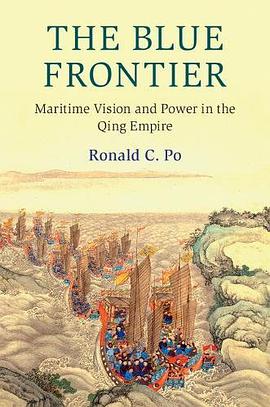
In this revisionist history of the eighteenth-century Qing Empire from a maritime perspective, Ronald C. Po argues that it is reductive to view China over this period exclusively as a continental power with little interest in the sea. With a coastline of almost 14,500 kilometers, the Qing was not a landlocked state. Although it came to be known as an inward-looking empire, Po suggests that the Qing was integrated into the maritime world through its naval development and customs institutionalization. In contrast to our orthodox perception, the Manchu court, in fact, deliberately engaged with the ocean politically, militarily, and even conceptually. The Blue Frontier offers a much broader picture of the Qing as an Asian giant responding flexibly to challenges and extensive interaction on all frontiers - both land and sea - in the long eighteenth century.
2019年5月24日 想读 “The Blue Frontier: Maritime Vision and Power in the Qing Empire”, has been longlisted by the International Convention of Asia Scholars for the 2019 Humanities English Edition book prize.
Early_Modern 东亚史 布琮任 早期现代 明清
The Crisis of the Seventeenth Century 豆瓣 Goodreads
作者: Hugh Trevor-Roper 出版社: Liberty Fund Inc 2001 - 1
The Crisis of the Seventeenth Century collects nine essays by Trevor-Roper on the themes of religion, the Reformation, and social change. In his longest essay, “The European Witch-craze of the Sixteenth and Seventeenth Centuries,” Trevor-Roper points out that “in England the most active phase of witch-hunting coincided with times of Puritan pressure―the reign of Queen Elizabeth and the period of the civil wars―and some very fanciful theories have been built on this coincidence. But . . . the persecution of witches in England was trivial compared with the experience of the Continent and of Scotland. Therefore . . . [one must examine] the craze as a whole, throughout Europe, and [seek] to relate its rise, frequency, and decline to the general intellectual and social movements of the time.” Because Trevor-Roper believes that “the English Revolution of the seventeenth century cannot be isolated from a general crisis in Europe,” he devotes the longest of his essays to the European Witch-craze. Events in England―and the intellectual currents from which they emerged and to which they gave impetus―cannot be understood apart from events and intellectual currents on the Continent. Trevor-Roper acknowledges that the belief in witches, and the persecution of people believed to be witches, may be, to some at least, “a disgusting subject, below the dignity of history.” However, he goes on, “[I]t is also a historical fact, of European significance, and its rise precisely in the years of the Renaissance and Reformation is a problem which must be faced by anyone who is tempted to overemphasize the ‘modernity’ of that period.” Hugh Trevor-Roper, Lord Dacre (1914–2003) was Regius Professor of Modern History at the University of Oxford.