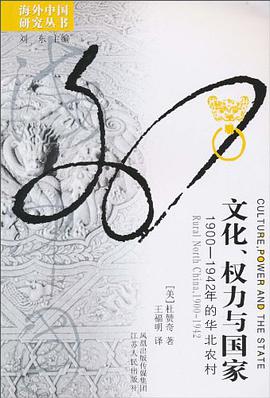
杜赞奇
文化、权力与国家 豆瓣
8.4 (16 个评分) 作者: [美国] 杜赞奇 译者: 王福明 出版社: 江苏人民出版社 2003 - 8
《文化、权力与国家》是以乡村的文化网络为基本结构并考察其功能,这一点和作者第二本书《从国族中拯救历史》(中译本即出)的结构形态似乎相差不少,但他所关注的主题却在继续延伸:现代国家如何构造新的文化,以及民间团体如何“抵抗”从上面来的“攻击”,是第二本书所讨论的一个主要问题。
最重要的一点是,作者在他的著述里贯穿了一种方法论:在考虑话语—主体—制度这三者对历史的建构时应该加入许多外来事物和偶然因素,因为参与主体和主体性构成的不仅有话语,还有外来事物;而由主体构建的制度还应包括制度本身的逻辑和偶然性。因此,所谓“拯救历史”其实是一个方法的问题,而不是一个带有实体的目的。作者认为当民族国家成为现代性之下的历史主体时,其它历史就没有了,因为写历史的不同方法带有不同的目的性——以民族国家为对象的历史自然会排除掉其他可能的历史。所以,他从民族国家中要拯救的不是某种实体,而是一种方法,这种方法表明,我们本来就应该有许多种历史,它们是交织在一起的。对杜赞奇这样的研究者来讲,他最关注的就是在民族国家之外的历史是如何被压下去的,乡村仍然是他的立场。
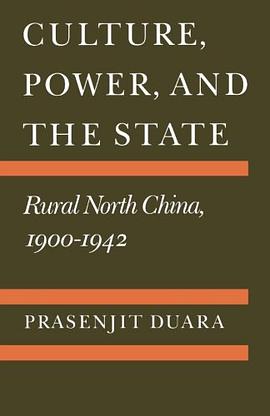
Culture, Power, and the State 豆瓣
作者: Prasenjit Duara 出版社: Stanford University Press 1991 - 4
In the early twentieth century, the Chinese state made strenuous efforts to broaden and deepen its authority over rural society. This book is an ambitious attempt to offer both a method and a framework for analyzing Chinese social history in the state-making era.The author constructs a prismatic view of village-level society that shows how marketing, kinship, water control, temple patronage, and other structures of human interaction overlapped to form what he calls the cultural nexus of power in local society. The author's concept of the cultural nexus and his tracing of how it was altered enables us for the first time to grapple with change at the village level in all its complexity.The author asserts that the growth of the state transformed and delegitimized the traditional cultural nexus during the Republican era, particularly in the realm of village leadership and finances. Thus, the expansion of state power was ultimately and paradoxically responsible for the revolution in China as it eroded the foundations of village life, leaving nothing in its place.The problems of state-making in China were different from those of eighteenth- and nineteenth-century Europe; the Chinese experience heralds the process that would become increasingly common in the emergent states of the developing world under the very different circumstances of the twentieth century.