歐洲
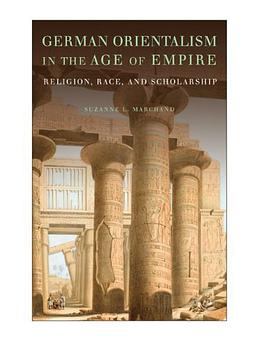
German Orientalism in the Age of Empire 豆瓣
作者: Suzanne L. Marchand 出版社: Cambridge University Press 2009
Nineteenth-century studies of the Orient changed European ideas and cultural institutions in more ways than we usually recognize. 'Orientalism' certainly contributed to European empire-building, but it also helped to destroy a narrow Christian-classical canon. This carefully researched book provides the first synthetic and contextualized study of German Orientalistik, a subject of special interest because German scholars were the pacesetters in oriental studies between about 1830 and 1930, despite entering the colonial race late and exiting it early. The book suggests that we must take seriously German orientalism's origins in Renaissance philology and early modern biblical exegesis and appreciate its modern development in the context of nineteenth- and early twentieth-century debates about religion and the Bible, classical schooling, and Germanic origins. In ranging across the subdisciplines of Orientalistik, German Orientalism in the Age of Empire introduces readers to a host of iconoclastic characters and forgotten debates, seeking to demonstrate both the richness of this intriguing field and its indebtedness to the cultural world in which it evolved.
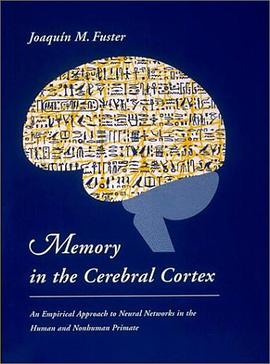
Memory in the Cerebral Cortex 豆瓣
作者: Joaquín M. Fuster 出版社: The MIT Press 1999 - 6
In Memory in the Cerebral Cortex, Joaquin M. Fuster presents the insights of more than three decades of empirical research on the neural processes by which memory is formed, stored, and retrieved. Spanning the field from neuroanatomy to modeling, this book brings together all that we presently know about the role of the cerebral cortex of the primate in memory.
The Printing Revolution in Early Modern Europe 豆瓣
作者: Elizabeth L. Eisenstein 出版社: Cambridge University Press 2005 - 9
Although the importance of the advent of printing for the Western world has long been recognized, it was Elizabeth Eisenstein, in her monumental, two-volume work, The Printing Revolution in Early Modern Europe, who provided the first full-scale treatment of the subject. This illustrated and abridged edition gives a stimulating survey of the communications revolution of the fifteenth century. After summarizing the initial changes introduced by the establishment of printing shops, it goes on to discuss how printing affected three major cultural movements: the Renaissance, the Reformation, and the rise of modern science. This new edition includes a new essay discussing recent controversies provoked by the first edition and reaffirms the thesis that the advent of printing entailed a communications revolution. Fully-illustrated and annotated, the book argues that the cumulative processes set in motion with the advent of printing are likely to persist despite the recent development of new communications technologies.
Two's Company, Three Is Complexity 豆瓣
作者: Neil F. Johnson 出版社: Oneworld Publications 2007
Preface
It is 2050, and you are watching Who Wants to be a Billionaire? The contestant is one question away from the jackpot. Up comes his
question: “What is the name of the theory that scientists started developing at the beginning of the twenty-first century, and
which helped the world overcome traffic congestion, financial market crashes, terrorist attacks, pandemic viruses, and cancer?” The contestant cannot believe his luck. What an easy question! But he is so nervous that his mind temporarily goes blank. He starts to consider option A: “They are all still unsolved problems” – but then quickly realizes that this is a dumb answer. Instead, he uses his last lifeline to ask the audience. The audience responds unanimously and instantaneously with option B: “The Theory of Complexity”. Without hesitation, he goes with option B. The host hands him the cheque, and the world has yet another billionaire.
Pure fantasy? Maybe not.
In this book, we will go on a journey to the heart of Complexity, an emerging science which looks set to trigger the next great wave of advances in everything from medicine and biology through to economics and sociology. Complexity Science also comes with the
prospect of solving a wide range of important problems which face us as individuals and as a Society. Consequently, it is set to permeate through every aspect of our lives.
There is, however, one problem. We don’t yet have a fullyfledged “theory” of Complexity. Instead, I will use this book to assemble all the likely ingredients of such a theory within a common framework, and then analyze a wide range of real-world applications within this same common framework. It will then require someone from the future – perhaps one of the younger readers of this book – to finally put all these pieces into place.
Complexity Science is a double-edged sword in the best possible sense. It is truly “big science” in that it embodies some of the hardest, most fundamental and most challenging open problems in academia. Yet it also manages to encapsulate the major practical issues which face us every day from our personal lives and health, through to global security. Making a pizza is complicated, but not complex. The same holds for filling out your tax return, or mending a bicycle puncture. Just follow the instructions step by step, and you will eventually be able to go from start to finish without too much trouble. But imagine trying to do all three at the same time. Worse still, suppose that the sequence of steps that you follow in one task actually depends on how things are progressing with the other two. Difficult? Well, you now have an indication of what Complexity is all about. With that in mind, now substitute those three interconnected tasks for a situation in which three interconnected people each try to follow their own instincts and strategies while reacting to the actions of the others. This then gives an idea of just how Complexity
might arise all around us in our daily lives.
While I was writing this book, I had the following “wish-list” in my head concerning its goals:
1. To provide a book which a wide cross-section of people would want to read and would enjoy reading – regardless of age,
background or level of scientific knowledge.
2. To introduce readers to the exciting range of real-world scenarios in which Complexity Science can prove its worth.
3. To provide the book on Complexity that “I never had but always needed”. In other words, to provide an easily readable yet thorough guide to this important scientific revolution.
4. To provide a book that my kids could read – or rather, a book that they would actually choose to read all by themselves. This is a very important goal, since Complexity will likely become the science of interest for future generations.
5. To provide a book which is just as readable on a plane or bus as in a library. As such, it should also make sense when read in short chunks.
6. To provide a book which provides professional scientists,economists, and policy-makers with a new perspective on
open problems in their field, and to help stimulate new Complexity-based interdisciplinary research projects.
However, as I finish the book and offer it up to potential readers,I realize that the above wish-list can essentially be reduced to just
one item: I would wish that you enjoy reading this book, and that it might provide you with fresh thoughts and insights for dealing
with the complex world in which we live, and which our children will inherit.
There are some practicalities concerning the book’s content and layout which I would like to explain. The language, examples and
analogies are kept simple since the focus of the book is to explain what Complexity Science is all about, and why it is so important for
us all. I therefore avoid delving into too much detail in the main text. Instead, the Appendix describes how to access the technical
research papers upon which the discussions in the book are based, and gives a list of Internet websites containing additional information about Complexity research around the world. Having said this, I won’t pull any punches in the sense that I tackle all the topics
which I believe to be relevant. Part 1 of the book takes us through the theoretical underpinnings of Complexity, while Part 2
delves into its real-world applications. Some of the territory is only just beginning to be explored, with very few answers available
for the questions being posed. From the perspective of other scientific revolutions throughout history this might seem to be par
for the course. However we are not talking about history here –instead, we are looking at work which is emerging at the forefront
of a new discipline. For this reason we will be highlighting where such research is heading, rather than where it has been.
But why should you believe what I write about Complexity? This is a crucially important question given that Complexity Science is still being developed and its potential applications explored. Unfortunately many accounts of Complexity in the popular press are second-hand, i.e. they are typically written by people who have done little, if any, research on Complexity themselves and are instead reporting on their interpretation of
other people’s work. Given the relatively immature nature of the field, I believe that such indirect interpretations are potentially
dangerous. For this reason, I will base the book’s content around my own research group’s experience in Complexity. This has
various advantages: (i) it reflects my own understanding of the Complexity field; (ii) it represents what I believe to be the most
relevant and important topics; (iii) it will hopefully give the reader a sense of what it is like to be at the “pit-face” in such a
challenging area of research; and (iv) it ensures that any reader can challenge me directly on any claims that I make, and can
demand an informed answer. To facilitate this process of public scrutiny, a complete list of the relevant scientific research reports
is presented in the latter part of the Appendix. I also encourage any readers who wish to email me with questions, to do so at
n.johnson@physics.ox.ac.uk

Metric Structures for Riemannian and Non-Riemannian Spaces 豆瓣
作者: Mikhail Gromov 译者: S. M. Bates 出版社: Birkhäuser Boston 2006
This book is an English translation of the famous "Green Book" by Lafontaine and Pansu (1979). It has been enriched and expanded with new material to reflect recent progress. Additionally, four appendices, by Gromov on Levy's inequality, by Pansu on "quasiconvex" domains, by Katz on systoles of Riemannian manifolds, and by Semmes overviewing analysis on metric spaces with measures, as well as an extensive bibliography and index round out this unique and beautiful book.
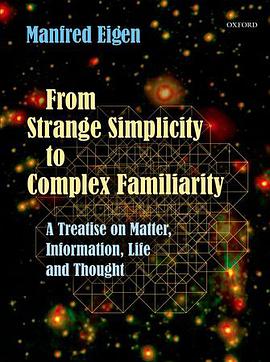
From Strange Simplicity to Complex Familiarity 豆瓣
作者: Manfred Eigen 出版社: Oxford University Press 2013 - 3
- Presents the life's work of a Nobel Laureate and internationally recognised leader in the field
- Builds new bridges between physics and biology
- Provides a physical basis for Darwin's principle of natural selection
- Presents a new theory of information including semantics
This book presents a vivid argument for the almost lost idea of a unity of all natural sciences. It starts with the "strange" physics of matter, including particle physics, atomic physics and quantum mechanics, cosmology, relativity and their consequences (Chapter I), and it continues by describing the properties of material systems that are best understood by statistical and phase-space concepts (Chapter II). These lead to entropy and to the classical picture of quantitative information, initially devoid of value and meaning (Chapter III). Finally, "information space" and dynamics within it are introduced as a basis for semantics (Chapter IV), leading to an exploration of life and thought as new problems in physics (Chapter V).
Dynamic equations - again of a strange (but very general) nature - bring about the complex familiarity of the world we live in. Surprising new results in the life sciences open our eyes to the richness of physical thought, and they show us what can and what cannot be explained by a Darwinian approach. The abstract physical approach is applicable to the origins of life, of meaningful information and even of our universe.
Who Paid the Piper? 豆瓣
作者: Frances Stonor Saunders 出版社: Granta Books 2000 - 4
Amazon.co.uk Review
In the post-war period, the CIA funded not just the right-wing bits of European intellectual life but also the centre, in order to detach intellectuals from the Left, and this book tells us how. It is touching on the career of Michael Josselson, the principal intellectual bagman who in 1950 became the Congress' Administrative Secretary, and his eventual betrayal by various people like Stephen Spender who scapegoated him. Sanders demonstrates that, in the early days, the Office of Strategic Services (OSS) and the emergent CIA were less dominated by the far right than they later became, and that the idea of helping out progressive moderates--rather than being Machiavellian--actually appealed to the men at the top.
Many intellectuals were still drawn to Stalin's Russia. Saunders superbly traces the crisis of conscience that McCarthyism and its associated bookburning in US libraries caused, and the subsequent rise of more moderate ideals. Saunders does not discuss the way the cult of Kennedy grows out of the same soil as a lot of this stuff--he was an excuse to love America after all. This is an exhaustive account, which, despite neglecting some important side issues, is an essential book. --Roz Kaveney --This text refers to an out of print or unavailable edition of this title.
Synopsis
During the Cold War, writers and artists were faced with a huge challenge. In the Soviet world, they were expected to turn out works that glorified militancy, struggle and relentless optimism. In the West, freedom of expression was vaunted as liberal democracy's most cherished possession. But such freedom could carry a cost. This book documents the extraordinary energy of a secret campaign in which some of the most vocal exponents of intellectual freedom in the West were instruments - whether they knew it or not, whether they liked it or not - of America's secret service.
Genetic Algorithms + Data Structures = Evolution Programs 豆瓣
作者: Zbigniew Michalewicz 出版社: Springer 1998
Genetic algorithms are founded upon the principle of evolution, i.e., survival of the fittest. Hence evolution programming techniques, based on genetic algorithms, are applicable to many hard optimization problems, such as optimization of functions with linear and nonlinear constraints, the traveling salesman problem, and problems of scheduling, partitioning, and control. The importance of these techniques is still growing, since evolution programs are parallel in nature, and parallelism is one of the most promising directions in computer science.
The book is self-contained and the only prerequisite is basic undergraduate mathematics. This third edition has been substantially revised and extended by three new chapters and by additional appendices containing working material to cover recent developments and a change in the perception of evolutionary computation.
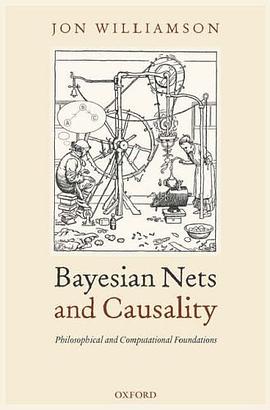
Bayesian Nets and Causality 豆瓣
作者: Jon Williamson 出版社: OUP Oxford 2004
Bayesian nets are widely used in artificial intelligence as a calculus for causal reasoning, enabling machines to make predictions, perform diagnoses, take decisions and even to discover causal relationships. But many philosophers have criticised and ultimately rejected the central assumption on which such work is based - the Causal Markov Condition. So should Bayesian nets be abandoned? What explains their success in artificial intelligence? This book argues that the Causal Markov Condition holds as a default rule: it often holds but may need to be repealed in the face of counterexamples. Thus Bayesian nets are the right tool to use by default but naively applying them can lead to problems. The book develops a systematic account of causal reasoning and shows how Bayesian nets can be coherently employed to automate the reasoning processes of an artificial agent. The resulting framework for causal reasoning involves not only new algorithms but also new conceptual foundations. Probability and causality are treated as mental notions - part of an agent's belief state.Yet probability and causality are also objective - different agents with the same background knowledge ought to adopt the same or similar probabilistic and causal beliefs. This book, aimed at researchers and graduate students in computer science, mathematics and philosophy, provides a general introduction to these philosophical views as well as an exposition of the computational techniques that they motivate.
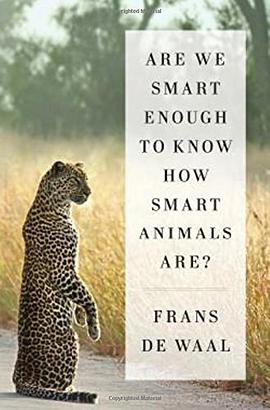
Are We Smart Enough to Know How Smart Animals Are? 豆瓣
作者: Frans de Waal 出版社: W. W. Norton & Company 2016 - 4
What separates your mind from an animal's? Maybe you think it's your ability to design tools, your sense of self, or your grasp of past and future – all traits that have helped us define ourselves as the planet's preeminent species. But in recent decades, these claims have been eroded, or even disproven, by a revolution in the study of animal cognition: take the octopuses that use coconut shells as tools; the elephants that classify humans by age, gender, and language; or Ayumu, the young male chimpanzee at Kyoto University whose flash memory puts that of humans to shame. Based on research involving crows, dolphins, parrots, sheep, wasps, bats, whales, and of course chimpanzees and bonobos, Frans de Waal demonstrates that we have grossly underestimated both the scope and the depth of animal intelligence. He offers a firsthand account of how science has stood traditional behaviorism on its head by revealing how smart animals really are.
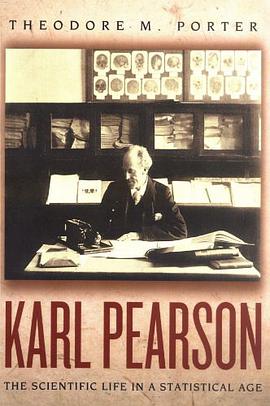
Karl Pearson 豆瓣
作者: Theodore M. Porter 出版社: Princeton University Press 2005
Manfred D. Laubichler, Science
[A] brilliant biography, one can hardly imagine a better summary of Karl Pearson's fascinating life and complicated persona. --This text refers to the Hardcover edition.
Review
John Aldrich American Scientist : Exceeds all expectations in recreating the intellectual worlds in which Pearson tried to find a home.
Manfred D. Laubichler Science : [A] brilliant biography, one can hardly imagine a better summary of Karl Pearson's fascinating life and complicated persona.
Peter J. Bowler Nature : Highlights the complex route by which [Pearson's] quest for emotional and intellectual satisfaction led him towards . . . modern statistics.
Jenny Marie Journal of the History of Biology : This book is a remarkable achievement.
Richard J. Cleary The American Statistician : Very effectively conveys . . . that . . . [statistics allows students] to see the world in a new and beautiful way.
Ramachandran Bharath MAA Reviews : Theodore Porter's Karl Pearson explores the fullness and richness of Pearson's intellectual and emotional life.
Steps to an Ecology of Mind 豆瓣 Goodreads
作者: Gregory Bateson 出版社: University Of Chicago Press 2000 - 3 其它标题: Steps to an Ecology of Mind: Collected Essays in Anthropology, Psychiatry, Evolution, and Epistemology
Gregory Bateson was a philosopher, anthropologist, photographer, naturalist, and poet, as well as the husband and collaborator of Margaret Mead. With a new foreword by his daughter Mary Katherine Bateson, this classic anthology of his major work will continue to delight and inform generations of readers.

"This collection amounts to a retrospective exhibition of a working life. . . . Bateson has come to this position during a career that carried him not only into anthropology, for which he was first trained, but into psychiatry, genetics, and communication theory. . . . He . . . examines the nature of the mind, seeing it not as a nebulous something, somehow lodged somewhere in the body of each man, but as a network of interactions relating the individual with his society and his species and with the universe at large."—D. W. Harding, New York Review of Books

"[Bateson's] view of the world, of science, of culture, and of man is vast and challenging. His efforts at synthesis are tantalizingly and cryptically suggestive. . . .This is a book we should all read and ponder."—Roger Keesing, American Anthropologist