歐洲


Der Steppenwolf Goodreads Douban
<i>Der Steppenwolf</i> ist die Geschichte von Harry Haller, der sich im Zustand völliger Entfremdung von seiner bürgerlichen Welt „eine geniale, eine unbegrenzte furchtbare Leidensfähigkeit herangebildet“ hat. Die innere Zerrissenheit Hallers spiegelt die Erscheinungen der modernen Massen- und Industriegesellschaft wider und reflektiert kultur- und zivilisationskritische Strömungen des 20. Jahrhunderts.

Science, Technology, and Reparations Douban
author:
John Gimbel
publishing house:
Stanford University Press
1990
- 5

Philosophy as a Way of Life Douban
author:
Pierre Hadot
publishing house:
Wiley-Blackwell
1995
- 8
This book presents a history of spiritual exercises from Socrates to early Christianity, an account of their decline in modern philosophy, and a discussion of the different conceptions of philosophy that have accompanied the trajectory and fate of the theory and practice of spiritual exercises. Hadot's book demonstrates the extent to which philosophy has been, and still is, above all else a way of seeing and of being in the world.

Ästhetische Theorie Douban
author:
Theodor W. Adorno
publishing house:
Suhrkamp Verlag
2010

Geschlecht und Charakter. Sonderausgabe Douban
author:
Otto Weininger
publishing house:
Matthes & Seitz Berlin
1980

Erinnerungen aus meinem Leben Douban
author:
Felix Somary
publishing house:
Neue Zürcher Zeitung NZZ Libro
2014
- 1

Krise und Zukunft der Demokratie Douban
author:
Felix Somary
publishing house:
TvR Medienverlag Jena
2010
- 1

Universal Artificial Intelligence Douban
author:
Marcus Hutter
publishing house:
Springer
2004
- 11

R.A. Fisher: The Life of a Scientist Douban
author:
Joan Fisher Box
publishing house:
John Wiley & Sons Inc
1978
An exclusive insight -- by Fisher's daughter -- of a man whose achievements in mathematical statistics continue to dominate the age. Traces his mobilization and extension of the resources of mathematics to solve the problems of estimation, analysis and design of experiments, and inductive inference. Reflecting the vitality of Fisher's immense pleasure in the process of thinking, the play of ideas, and the solution of puzzles, this biography introduces a complex and fascinating personality.

An Introduction to the Theory of Mechanism Design Douban
author:
Tilman Borgers
/
Daniel Krahmer
…
publishing house:
Oxford University Press
2015
- 6
What is the best way to auction an asset? How should a group of people organize themselves to ensure the best provision of public goods? How should exchanges be organized? In An Introduction to the Theory of Mechanism Design, Tilman Börgers addresses these questions and more through an exploration of the economic theory of mechanism design. Mechanism design is reverse game theory. Whereas game theory takes the rules of the game as a given and makes predictions about the behavior of strategic players, the theory of mechanism design goes a step further and selects the optimal rules of the game.
A relatively new economic theory, mechanism design studies the instrument itself as well as the results of the instrument. An Introduction to the Theory of Mechanism Design provides rigorous but accessible explanations of classic results in the theory of mechanism design, such as Myerson's theorem on expected revenue maximizing auctions, Myerson and Satterthwaite's theorem on the impossibility of ex post efficient bilateral trade with asymmetric information, and Gibbard and Satterthwaite's theorem on the non-existence of dominant strategy voting mechanisms. Börgers also provides an examination of the frontiers of current research in the area with an original and unified perspective that will appeal to advanced students of economics.
"Tilman Borgers offers the first book-length introduction into the theory of mechanism design. Written in a very personal and masterful style, he carefully covers the main developments in theory of mechanism design-the theory of how to choose the rules of the game-over the past decades. It will be an ideal textbook for advanced undergraduate and graduate courses for many years to come."
Dirk Bergemann, Douglass and Marion Campbell Professor of Economics and Chair, Yale University
"Tilman Borgers gives a beautifully lucid and elegant development of mechanism design in this wonderful book. His masterful exposition provides a unified and cohesive treatment of modern mechanism design, starting from first principles and working through topics at the leading edge of the research frontier. This book is a delight and an invaluable resource for those new to the field and experts alike."
Chris Shannon, Richard and Lisa Steiny Professor of Economics and Professor of Mathematics, University of California, Berkeley
"This book provides an integrated treatment of the theory of mechanism design by a leading practitioner in this area. It covers the core theory together with chapters on recent developments in robust mechanism design and dynamic mechanism design. The core theory is built up in an original and pedagogically successful way, starting with screening in chapter 2 and immediately using those tools to develop leading applications of Bayesian mechanism design-auctions, bilateral trade, and public goods-in chapter 3. These results can then naturally be adapted to dominant strategies in chapter 4. Chapters 5, 6, and 7 then deal with the general theories of incentive compatibility, Bayesian mechanism design, and dominant strategy mechanism design.
The first seven chapters of the book focus on the quasi-linear environments studied in most economic applications, with more general environments ('non-transferable utility') postponed to chapter 8. This ordering of material reflects not the historical development of the subject but a natural and effective path to learn the material. Borgers develops a unified treatment of core material without attempting to be exhaustive. Valuable endnotes at the end of each chapter then explain the historical context and relation to the literature more broadly. It will serve as an excellent textbook for graduate students and advanced undergraduates, and an invaluable reference for researchers."
Stephen Morris, Professor of Economics, Princeton University
A relatively new economic theory, mechanism design studies the instrument itself as well as the results of the instrument. An Introduction to the Theory of Mechanism Design provides rigorous but accessible explanations of classic results in the theory of mechanism design, such as Myerson's theorem on expected revenue maximizing auctions, Myerson and Satterthwaite's theorem on the impossibility of ex post efficient bilateral trade with asymmetric information, and Gibbard and Satterthwaite's theorem on the non-existence of dominant strategy voting mechanisms. Börgers also provides an examination of the frontiers of current research in the area with an original and unified perspective that will appeal to advanced students of economics.
"Tilman Borgers offers the first book-length introduction into the theory of mechanism design. Written in a very personal and masterful style, he carefully covers the main developments in theory of mechanism design-the theory of how to choose the rules of the game-over the past decades. It will be an ideal textbook for advanced undergraduate and graduate courses for many years to come."
Dirk Bergemann, Douglass and Marion Campbell Professor of Economics and Chair, Yale University
"Tilman Borgers gives a beautifully lucid and elegant development of mechanism design in this wonderful book. His masterful exposition provides a unified and cohesive treatment of modern mechanism design, starting from first principles and working through topics at the leading edge of the research frontier. This book is a delight and an invaluable resource for those new to the field and experts alike."
Chris Shannon, Richard and Lisa Steiny Professor of Economics and Professor of Mathematics, University of California, Berkeley
"This book provides an integrated treatment of the theory of mechanism design by a leading practitioner in this area. It covers the core theory together with chapters on recent developments in robust mechanism design and dynamic mechanism design. The core theory is built up in an original and pedagogically successful way, starting with screening in chapter 2 and immediately using those tools to develop leading applications of Bayesian mechanism design-auctions, bilateral trade, and public goods-in chapter 3. These results can then naturally be adapted to dominant strategies in chapter 4. Chapters 5, 6, and 7 then deal with the general theories of incentive compatibility, Bayesian mechanism design, and dominant strategy mechanism design.
The first seven chapters of the book focus on the quasi-linear environments studied in most economic applications, with more general environments ('non-transferable utility') postponed to chapter 8. This ordering of material reflects not the historical development of the subject but a natural and effective path to learn the material. Borgers develops a unified treatment of core material without attempting to be exhaustive. Valuable endnotes at the end of each chapter then explain the historical context and relation to the literature more broadly. It will serve as an excellent textbook for graduate students and advanced undergraduates, and an invaluable reference for researchers."
Stephen Morris, Professor of Economics, Princeton University
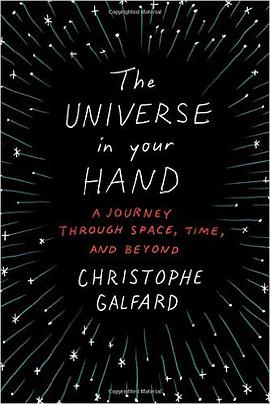
The Universe in Your Hand Douban
author:
[法]Christophe Galfard
publishing house:
Flatiron Books
2016
- 4
"If Ms. Frizzle were a physics student of Stephen Hawking, she might have written THE UNIVERSE IN YOUR HAND, a wild tour through the reaches of time and space, from the interior of a proton to the Big Bang to the rough suburbs of a black hole. It's friendly, excitable, erudite, and cosmic."
—Jordan Ellenberg, New York Times besteselling author of How Not To Be Wrong
Quantum physics, black holes, string theory, the Big Bang, dark matter, dark energy, parallel universes: even if we are interested in these fundamental concepts of our world, their language is the language of math. Which means that despite our best intentions of finally grasping, say, Einstein's Theory of General Relativity, most of us are quickly brought up short by a snarl of nasty equations or an incomprehensible graph.
Christophe Galfard's mission in life is to spread modern scientific ideas to the general public in entertaining ways. Using his considerable skills as a brilliant theoretical physicist and successful young adult author, The Universe in Your Hand employs the immediacy of simple, direct language to show us, not explain to us, the theories that underpin everything we know about our universe. To understand what happens to a dying star, we are asked to picture ourselves floating in space in front of it. To get acquainted with the quantum world, we are shrunk to the size of an atom and then taken on a journey. Employing everyday similes and metaphors, addressing the reader directly, and writing stories rather than equations renders these astoundingly complex ideas in an immediate and visceral way.
Utterly captivating and entirely unique, The Universe in Your Hand will find its place among other classics in the field
—Jordan Ellenberg, New York Times besteselling author of How Not To Be Wrong
Quantum physics, black holes, string theory, the Big Bang, dark matter, dark energy, parallel universes: even if we are interested in these fundamental concepts of our world, their language is the language of math. Which means that despite our best intentions of finally grasping, say, Einstein's Theory of General Relativity, most of us are quickly brought up short by a snarl of nasty equations or an incomprehensible graph.
Christophe Galfard's mission in life is to spread modern scientific ideas to the general public in entertaining ways. Using his considerable skills as a brilliant theoretical physicist and successful young adult author, The Universe in Your Hand employs the immediacy of simple, direct language to show us, not explain to us, the theories that underpin everything we know about our universe. To understand what happens to a dying star, we are asked to picture ourselves floating in space in front of it. To get acquainted with the quantum world, we are shrunk to the size of an atom and then taken on a journey. Employing everyday similes and metaphors, addressing the reader directly, and writing stories rather than equations renders these astoundingly complex ideas in an immediate and visceral way.
Utterly captivating and entirely unique, The Universe in Your Hand will find its place among other classics in the field

Dangerous Nation Douban
author:
Robert Kagan
publishing house:
Alfred A Knopf
2006
- 10
From the author of the immensely influential and best-selling Of Paradise and Power— a major reevaluation of America’s place in the world from the colonial era to the turn of the twentieth century.
Robert Kagan strips away the myth of America’s isolationist tradition and reveals a more complicated reality: that Americans have been increasing their global power and influence steadily for the past four centuries. Even from the time of the Puritans, he reveals, America was no shining “city up on a hill” but an engine of commercial and territorial expansion that drove Native Americans, as well as French, Spanish, Russian, and ultimately even British power, from the North American continent. Even before the birth of the nation, Americans believed they were destined for global leadership. Underlying their ambitions, Kagan argues, was a set of ideas and ideals about the world and human nature. He focuses on the Declaration of Independence as the document that firmly established the American conviction that the inalienable rights of all mankind transcended territorial borders and blood ties. American nationalism, he shows, was always internationalist at its core. He also makes a startling discovery: that the Civil War and the abolition of slavery—the fulfillment of the ideals of the Declaration—were the decisive turning point in the history of American foreign policy as well. Kagan's brilliant and comprehensive reexamination of early American foreign policy makes clear why America, from its very beginning, has been viewed worldwide not only as a wellspring of political, cultural, and social revolution, but as an ambitious and, at times, dangerous nation.
Robert Kagan strips away the myth of America’s isolationist tradition and reveals a more complicated reality: that Americans have been increasing their global power and influence steadily for the past four centuries. Even from the time of the Puritans, he reveals, America was no shining “city up on a hill” but an engine of commercial and territorial expansion that drove Native Americans, as well as French, Spanish, Russian, and ultimately even British power, from the North American continent. Even before the birth of the nation, Americans believed they were destined for global leadership. Underlying their ambitions, Kagan argues, was a set of ideas and ideals about the world and human nature. He focuses on the Declaration of Independence as the document that firmly established the American conviction that the inalienable rights of all mankind transcended territorial borders and blood ties. American nationalism, he shows, was always internationalist at its core. He also makes a startling discovery: that the Civil War and the abolition of slavery—the fulfillment of the ideals of the Declaration—were the decisive turning point in the history of American foreign policy as well. Kagan's brilliant and comprehensive reexamination of early American foreign policy makes clear why America, from its very beginning, has been viewed worldwide not only as a wellspring of political, cultural, and social revolution, but as an ambitious and, at times, dangerous nation.

Der Briefwechsel zwischen Schiller und Goethe Douban
author:
Johann Wolfgang Goethe
/
Friedrich Schiller
publishing house:
Insel Verlag
2005
- 2
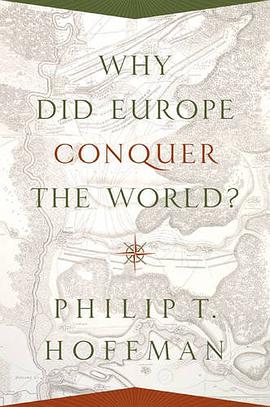
Why Did Europe Conquer the World? Douban
author:
Philip T. Hoffman
publishing house:
Princeton University Press
2015
- 6
Between 1492 and 1914, Europeans conquered 84 percent of the globe. But why did Europe rise to the top, when for centuries the Chinese, Japanese, Ottomans, and South Asians were far more advanced? Why didn't these powers establish global dominance? In Why Did Europe Conquer the World?, distinguished economic historian Philip Hoffman demonstrates that conventional responses--such as geography, epidemic disease, and the Industrial Revolution--fail to provide answers. Arguing instead for the pivotal role of economic and political history, Hoffman shows that if variables had been at all different, Europe would not have achieved critical military innovations, and another power could have become master of the world.
In vivid detail, Hoffman sheds light on the two millennia of economic, political, and historical changes that set European states on a distinctive path of development and military rivalry. Compared to their counterparts in China, Japan, South Asia, and the Middle East, European leaders--whether chiefs, lords, kings, emperors, or prime ministers--had radically different incentives, which drove them to make war. These incentives, which Hoffman explores using an economic model of political costs and financial resources, resulted in astonishingly rapid growth in Europe's military sector from the Middle Ages on, and produced an insurmountable lead in gunpowder technology. The consequences determined which states established colonial empires or ran the slave trade, and even which economies were the first to industrialize.
Debunking traditional arguments, Why Did Europe Conquer the World? reveals the startling reasons behind Europe's historic global supremacy.
In vivid detail, Hoffman sheds light on the two millennia of economic, political, and historical changes that set European states on a distinctive path of development and military rivalry. Compared to their counterparts in China, Japan, South Asia, and the Middle East, European leaders--whether chiefs, lords, kings, emperors, or prime ministers--had radically different incentives, which drove them to make war. These incentives, which Hoffman explores using an economic model of political costs and financial resources, resulted in astonishingly rapid growth in Europe's military sector from the Middle Ages on, and produced an insurmountable lead in gunpowder technology. The consequences determined which states established colonial empires or ran the slave trade, and even which economies were the first to industrialize.
Debunking traditional arguments, Why Did Europe Conquer the World? reveals the startling reasons behind Europe's historic global supremacy.

A History of Britain Volume 2 Douban
author:
Simon Schama
publishing house:
BBC Books
2001
- 10