睡眠

Dangerously Sleepy 豆瓣
作者:
Alan Derickson
出版社:
University of Pennsylvania Press
2013
- 10
Workers in the United States are losing sleep. In the global economy a growing number of employees hold jobs—often more than one at once—with unpredictable hours. Even before the rise of the twenty-four-hour workplace, the relationship between sleep and industry was problematic: sleep is frequently cast as an enemy or a weakness, while constant productivity and flexibility are glorified at the expense of health and safety.
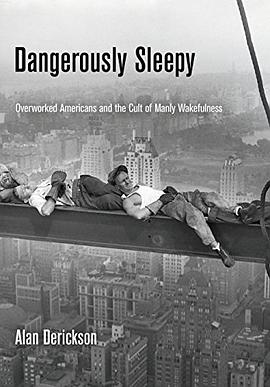
Dangerously Sleepy is the first book to track the longtime association of overwork and sleep deprivation from the nineteenth century to the present. Health and labor historian Alan Derickson charts the cultural and political forces behind the overvaluation—and masculinization—of wakefulness in the United States. Since the nineteenth century, men at all levels of society have toiled around the clock by necessity: steel workers coped with rotating shifts, Pullman porters grappled with ever-changing timetables and unrelenting on-call status, and long-haul truckers dealt with chaotic life on the road. But the dangerous realities of exhaustion were minimized and even glamorized when the entrepreneurial drive of public figures such as Thomas Edison and Donald Trump encouraged American men to deny biological need in the name of success. For workers, resisting sleep became a challenge of masculine strength.
This lucid history of the wakeful work ethic suggests that for millions of American men and women, untenable work schedules have been the main factor leading to sleep loss, newer ailments such as shift work sleep disorder, and related morbidity and mortality. Dangerously Sleepy places these public health problems in historical context.
Dangerously Sleepy is the first book to track the longtime association of overwork and sleep deprivation from the nineteenth century to the present. Health and labor historian Alan Derickson charts the cultural and political forces behind the overvaluation—and masculinization—of wakefulness in the United States. Since the nineteenth century, men at all levels of society have toiled around the clock by necessity: steel workers coped with rotating shifts, Pullman porters grappled with ever-changing timetables and unrelenting on-call status, and long-haul truckers dealt with chaotic life on the road. But the dangerous realities of exhaustion were minimized and even glamorized when the entrepreneurial drive of public figures such as Thomas Edison and Donald Trump encouraged American men to deny biological need in the name of success. For workers, resisting sleep became a challenge of masculine strength.
This lucid history of the wakeful work ethic suggests that for millions of American men and women, untenable work schedules have been the main factor leading to sleep loss, newer ailments such as shift work sleep disorder, and related morbidity and mortality. Dangerously Sleepy places these public health problems in historical context.
Why We Sleep 豆瓣
9.0 (22 个评分)
作者:
Matthew Walker PhD
出版社:
Scribner
2017
- 10
The first sleep book by a leading scientific expert—Professor Matthew Walker, Director of UC Berkeley’s Sleep and Neuroimaging Lab—reveals his groundbreaking exploration of sleep, explaining how we can harness its transformative power to change our lives for the better.
Sleep is one of the most important but least understood aspects of our life, wellness, and longevity. Until very recently, science had no answer to the question of why we sleep, or what good it served, or why we suffer such devastating health consequences when we don't sleep. Compared to the other basic drives in life—eating, drinking, and reproducing—the purpose of sleep remained elusive.
An explosion of scientific discoveries in the last twenty years has shed new light on this fundamental aspect of our lives. Now, preeminent neuroscientist and sleep expert Matthew Walker gives us a new understanding of the vital importance of sleep and dreaming. Within the brain, sleep enriches our ability to learn, memorize, and make logical decisions. It recalibrates our emotions, restocks our immune system, fine-tunes our metabolism, and regulates our appetite. Dreaming mollifies painful memories and creates a virtual reality space in which the brain melds past and present knowledge to inspire creativity.
Walker answers important questions about sleep: how do caffeine and alcohol affect sleep? What really happens during REM sleep? Why do our sleep patterns change across a lifetime? How do common sleep aids affect us and can they do long-term damage? Charting cutting-edge scientific breakthroughs, and synthesizing decades of research and clinical practice, Walker explains how we can harness sleep to improve learning, mood, and energy levels; regulate hormones; prevent cancer, Alzheimer’s, and diabetes; slow the effects of aging; increase longevity; enhance the education and lifespan of our children, and boost the efficiency, success, and productivity of our businesses. Clear-eyed, fascinating, and accessible, Why We Sleep is a crucial and illuminating book
Sleep is one of the most important but least understood aspects of our life, wellness, and longevity. Until very recently, science had no answer to the question of why we sleep, or what good it served, or why we suffer such devastating health consequences when we don't sleep. Compared to the other basic drives in life—eating, drinking, and reproducing—the purpose of sleep remained elusive.
An explosion of scientific discoveries in the last twenty years has shed new light on this fundamental aspect of our lives. Now, preeminent neuroscientist and sleep expert Matthew Walker gives us a new understanding of the vital importance of sleep and dreaming. Within the brain, sleep enriches our ability to learn, memorize, and make logical decisions. It recalibrates our emotions, restocks our immune system, fine-tunes our metabolism, and regulates our appetite. Dreaming mollifies painful memories and creates a virtual reality space in which the brain melds past and present knowledge to inspire creativity.
Walker answers important questions about sleep: how do caffeine and alcohol affect sleep? What really happens during REM sleep? Why do our sleep patterns change across a lifetime? How do common sleep aids affect us and can they do long-term damage? Charting cutting-edge scientific breakthroughs, and synthesizing decades of research and clinical practice, Walker explains how we can harness sleep to improve learning, mood, and energy levels; regulate hormones; prevent cancer, Alzheimer’s, and diabetes; slow the effects of aging; increase longevity; enhance the education and lifespan of our children, and boost the efficiency, success, and productivity of our businesses. Clear-eyed, fascinating, and accessible, Why We Sleep is a crucial and illuminating book