老电影
The Spring River Flows East (1947) Douban TMDB WikiData IMDb
一江春水向東流
8.2 (71 ratings) director: 蔡楚生 / Zheng Jun-li actor: Yang Bai / Tao Jin
other title: 一江春水向东流 / 一江春水向東流
1930's China. The village of a poor family is taken over by the occupying Japanese army. One son, Zhongliang, leaves his wife and young son to join a medic group for the Chinese Army. The other son, Zhangmin goes into hiding to protect his family. The focus shifts back and forth from the brothers' parents and Zhongliang's wife and son to Zhongliang's newfound life of luxury in a town not too far away. The plight of Zhongliang's mother, his wife, Sufan and her son, Kongeson is contrasted with Zhongliang's rise in a flourishing company.
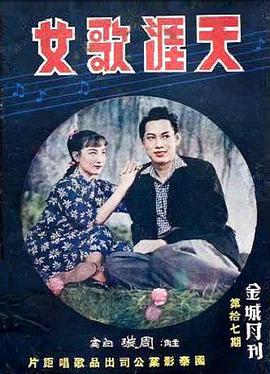
天涯歌女 (1940) Douban
director: 吴村 actor: 周璇 / 慕容婉儿
other title: Singing Girl
歌女小兰与盲母靠街头卖唱度日,生活艰难。青年白龙曾因驾车撞人入狱,出狱时听到小兰在唱《街头月》。小兰的歌声十分动听,白龙很感动,将身上所有的钱都给了盲母。一个流浪儿将钱抢走,盲母拼命争夺受伤,白龙将钱追回,二人交往渐多,互生好感。电台举办歌唱比赛,白龙鼓励小兰参加,听了小兰的试唱,电台执事十分高兴。小兰回到家中,盲母疑心她在外不轨,小兰负屈离家出走与白龙纵酒。白龙酒后驾车再次撞人入狱,小兰去参加比赛,却昏倒当场……
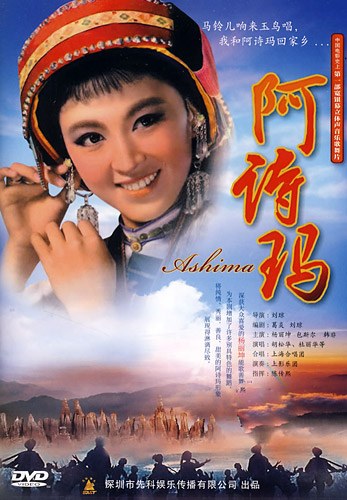
Ashima (1964) Douban TMDB IMDb
阿诗玛
7.4 (28 ratings) director: 刘琼 actor: 杨丽坤 / 包斯尔
other title: 阿诗玛 / アシマ
Ashima is a brave and beautiful girl of the Sani people, beloved by all. One day as she is down at the lake to fetch water, she hears the sound of a shepherd's flute coming from the hills across the lake. She replies in song.
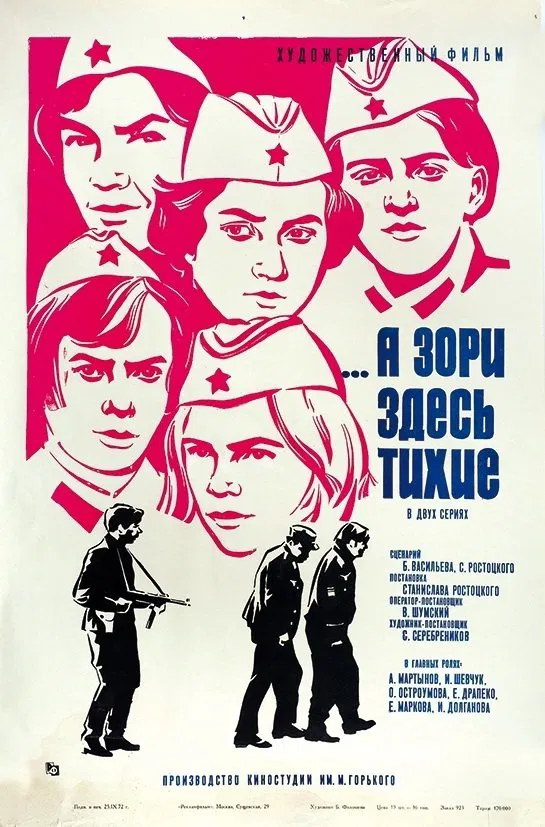
The Dawns Here Are Quiet (1972) Douban WikiData IMDb TMDB
А зори здесь тихие
other title: 这里的黎明静悄悄 / А зори здесь тихие
In a remote village in Karelia, Sergeant Vaskov commands an anti-aircraft unit that protects a rail depot. While his men are transferred to the front line, he is reprimanded for their unruly behavior. He retorts that he wants replacements that aren't drunks or womanizers. In response, he is assigned a unit made up entirely of young women, fresh from training.
绰克图台吉 (1945) Douban
Tsogt taij
director: T. Khurlee actor: Ts. Tsegmid / A. Tserendendev
other title: Tsogt taij
Choghtu Khong Tayiji, born Tümengken (1581-1637), was a ruler of the Khalkha Mongols. He expanded into Amdo (present-day Qinghai) to help the Karma sect of Tibetan Buddhism but was overthrown by Güüshi Khan, who supported the rival Geluk sect.
He established a base on the Tula river. Known as an intellectual he embraced the Karma sect and built monasteries and castles.
He submitted himself to Lingdan Khan, last grand khan of the Mongols. He took part in Lingdan's campaign to Tibet to help the Karma sect although Lingdan Khan died in 1634 before they joined together. But he pursued the campaign. In the same year he conquered the Tümed around Kokonor (Qinghai Lake) and moved his base there. By request from Shamar Rabjampa he sent an army under his son Arslan to central Tibet in 1635. However, Arslan attacked his ally Tsang army. He met the fifth Dalai Lama and paid homage to Gelukpa monasteries instead of destructing them. Arslan was eventually assassinated by Choghtu's order.
The Geluk sect asked for help Törü Bayikhu (Güüshi Khan), the leader of the Khoshuud tribe of the Oirat confederation. In 1636 Törö Bayikhu led the Khoshuud and the Dzungars to Tibet. In the next year a decisive war between Choghtu Khong Tayiji and Törü Bayikhu ended in the latter's victory and Choght was killed.
Descendants of Sutai Yeldeng, Choghtu's grandson, succeeded the jasagh of a banner in Sayin Noyan Ayimagh.
He has traditionally been portrayed as evil by the Geluk sect. On the other hand, the Mongolian movie "Tsogt tayj" (1945) treated him as a national hero. It reflected the communist regime's attitude toward Tibetan Buddhism.
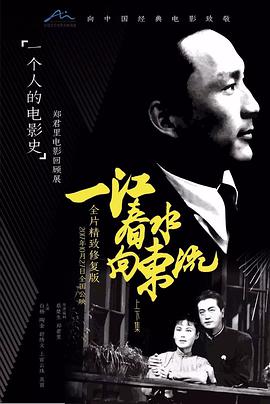
Third Sister Liu (1960) Douban TMDB WikiData IMDb
刘三姐
8.0 (97 ratings) director: 苏里 actor: 黄婉秋 / 刘世龙
other title: 刘三姐 / 劉三姐
Liu Sanjie is a story that originates from the Zhuang minority people; the largest of the minority groups in China. It’s based on the legend of a woman called Liu Sanjie (literally meaning “third sister of Liu family”). Across generations, the story has become an oral tradition amongst these people and similar characters have even been found to exist in other minority cultures. According to legend, Liu Sanjie had the gift of a beautiful singing voice from a very early age. So beautiful was her voice, she could quell anger and raise the spirits of the people around her. The story became famous around China when the movie Liu Sanjie was released in 1960 – a rare musical production in Chinese cinema.