英文原版
Stylish Academic Writing 豆瓣 Goodreads
作者: Helen Sword 出版社: Harvard University Press 2012 - 4
Elegant data and ideas deserve elegant expression, argues Helen Sword in this lively guide to academic writing. For scholars frustrated with disciplinary conventions, and for specialists who want to write for a larger audience but are unsure where to begin, here are imaginative, practical, witty pointers that show how to make articles and books a pleasure to read - and to write. Dispelling the myth that you cannot get published without writing wordy, impersonal prose, Sword shows how much journal editors and readers welcome work that avoids excessive jargon and abstraction. Sword's analysis of more than a thousand peer-reviewed articles across a wide range of fields documents a startling gap between how academics typically describe good writing and the turgid prose they regularly produce. "Stylish Academic Writing" showcases a range of scholars from the sciences, humanities, and social sciences who write with vividness and panache. Individual chapters take up specific elements of style, such as titles and headings, chapter openings, and structure, and close with examples of transferable techniques that any writer can master.
娱乐产业经济学 豆瓣
作者: Harold L.Vogel 译者: 支庭荣 / 陈致中 出版社: 中国人民大学出版社 2013 - 10
美国顶级娱乐产业分析师的最新著作。娱乐产业是美国经济中最大的部门之一,而且在全球范围内,它正迅速地取得了同等重要的地位。本书对先前各版本中的材料进行了更新,新增的章节探讨了这一“体验性”产业法律层面的问题、常见的限制,也涵括了新兴的娱乐心理学领域。此外,本书探讨的音乐、广告、博彩和投注、体育和融资的内容,都有所扩展和丰富。 对于美国和海外娱乐、传媒产业的经济、融资、产制和营销,本书是一份全面的参考和指南。投资者、企业高管、会计师、律师、艺术管理人员以及一般的读者会发现,对于娱乐和传媒产业是如何运营的,本书提供了无价的指引。本书是以下人员的必读书:投资与分析师 法律顾问业务主管 新闻工作者会计师 艺术管理人员经济学者 监管机构人员立法者。
The Government of Desire 豆瓣
作者: Miguel de Beistegui 出版社: University Of Chicago Press 2018 - 4
Liberalism, Miguel de Beistegui argues in The Government of Desire, is best described as a technique of government directed towards the self, with desire as its central mechanism. Whether as economic interest, sexual drive, or the basic longing for recognition, desire is accepted as a core component of our modern self-identities, and something we ought to cultivate. But this has not been true in all times and all places. For centuries, as far back as late antiquity and early Christianity, philosophers believed that desire was an impulse that needed to be suppressed in order for the good life, whether personal or collective, ethical or political, to flourish. Though we now take it for granted, desire as a constitutive dimension of human nature and a positive force required a radical transformation, which coincided with the emergence of liberalism.
By critically exploring Foucault’s claim that Western civilization is a civilization of desire, de Beistegui crafts a provocative and original genealogy of this shift in thinking. He shows how the relationship between identity, desire, and government has been harnessed and transformed in the modern world, shaping our relations with others and ourselves, and establishing desire as an essential driving force for the constitution of a new and better social order. But is it? The Government of Desire argues that this is precisely what a contemporary politics of resistance must seek to overcome. By questioning the supposed universality of a politics based on recognition and the economic satisfaction of desire, de Beistegui raises the crucial question of how we can manage to be less governed today, and explores contemporary forms of counter-conduct.
Drawing on a host of thinkers from philosophy, political theory, and psychoanalysis, and concluding with a call for a sovereign and anarchic form of desire, The Government of Desire is a groundbreaking account of our freedom and unfreedom, of what makes us both governed and ungovernable.
Raising China's Revolutionaries 豆瓣
作者: Margaret Mih Tillman 出版社: Columbia University Press 2018 - 9
A widespread conviction in the need to rescue China’s children took hold in the early twentieth century. Amid political upheaval and natural disasters, neglected or abandoned children became a humanitarian focal point for Sino-Western cooperation and, ultimately, intervention in family life. Chinese academics and officials sought new scientific measures, educational institutions, and social reforms to improve children’s welfare. Successive regimes encouraged teachers to shape children into Qing subjects, Nationalist citizens, or Communist comrades.
In Raising China’s Revolutionaries, Margaret Mih Tillman offers a novel perspective on the political and scientific dimensions of experiments with early childhood education from the early Republican period through the first decade of the People’s Republic. She traces transnational advocacy for child welfare and education, examining Christian missionaries, philanthropists, and the role of international relief during World War II. Tillman provides in-depth analysis of similarities and differences between Nationalist and Communist policy and cultural notions of childhood. While both drew on preschool institutions to mobilize the workforce and shape children’s political subjectivity, the PRC rejected the Nationalists’ commitment to the modern, bourgeois family. With new insights into the roles of experts, the cultural politics of fundraising, and child welfare as a form of international exchange, Raising China’s Revolutionaries is an important work of institutional and transnational history that illuminates the evolution of modern concepts of childhood in China.
Adam Smith's Politics 豆瓣
作者: Donald Winch 出版社: Cambridge University Press 1978 - 7
For most of the two hundred years or so that have passed since the publication of the Wealth of Nations, Adam Smith's writings on political and economic questions have been viewed within a liberal capitalist perspective of nineteenth- and twentieth- century provenance. This essay in interpretation seeks to provide a more historical reading of certain political themes which recur in Smith's writings by bringing eighteenth-century perspectives to bear on the problem. Contrary to the view that sees Smith's work as marking the point at which 'politics' was being eclipsed by 'economics', it claims that Smith has a 'politics' which goes beyond certain political attitudes connected with the role of the state in economic affairs. It argues that he employs a consistent mode of political analysis which cannot be encompassed within the standard liberal capitalist categories, but can be understood by reference to the language and qualities of contemporary political debate, and of the eighteenth-century science of politics cultivated by Montesquieu and, above all, Hume, particularly as revealed by recent scholarship. A concluding chapter draws the various strands of the interpretation together to form a portrait of what Smith might legitimately be said to have been doing when he wrote on these matters.
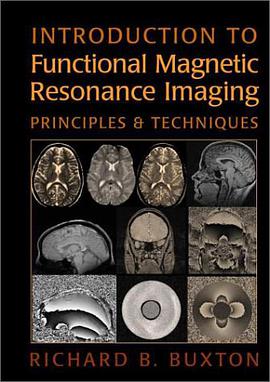
Introduction to Functional Magnetic Resonance Imaging 豆瓣
作者: Buxton, R.B. 出版社: Cambridge Univ Pr 2002 - 1
Functional Magnetic Resonance Imaging (fMRI) is now a standard tool for mapping activation patterns in the human brain. This highly interdisciplinary field involves neuroscientists and physicists as well as clinicians, and the range, flexibility and sophistication of the techniques being used are increasing rapidly. In this book, Richard Buxton, a leading authority on fMRI, provides an invaluable introduction to how fMRI works, from basic principles and the underlying physics and physiology, to newer techniques such as arterial spin labeling and diffusion tensor imaging. The book also includes discussion of how fMRI relates to other imaging techniques (such as Positron Emission Tomography, or PET) and a guide to the statistical analysis of fMRI data. This book will be useful both to the experienced researcher using fMRI, and the clinician or researcher with no previous knowledge of the technology.
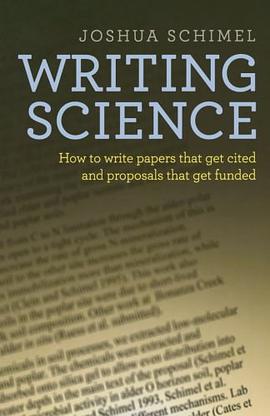
Writing Science 豆瓣
9.8 (10 个评分) 作者: Joshua Schimel 出版社: Oxford University Press 2011 - 11
As a scientist, you are a professional writer: your career is built on successful proposals and papers. Success isn't defined by getting papers into print, but by getting them into the reader's consciousness. Writing Science is built upon the idea that successful science writing tells a story. It uses that insight to discuss how to write more effectively. Integrating lessons from other genres of writing with those from the author's years of experience as author, reviewer, and editor, the book shows scientists and students how to present their research in a way that is clear and that will maximize reader comprehension. The book takes an integrated approach, using the principles of story structure to discuss every aspect of successful science writing, from the overall structure of a paper or proposal to individual sections, paragraphs, sentences, and words. It begins by building core arguments, analyzing why some stories are engaging and memorable while others are quickly forgotten, and proceeds to the elements of story structure, showing how the structures scientists and researchers use in papers and proposals fit into classical models. The book targets the internal structure of a paper, explaining how to write clear and professional sections, paragraphs, and sentences in a way that is clear and compelling. The ideas within a paper should flow seamlessly, drawing readers along. The final section of the book deals with special challenges, such as how to discuss research limitations and how to write for the public. Writing Science is a much-needed guide to succeeding in modern science. Its insights and strategies will equip science students, scientists, and professionals across a wide range of scientific and technical fields with the tools needed to communicate effectively.
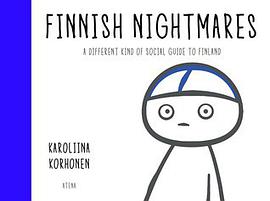
Finnish Nightmares 豆瓣 Goodreads
作者: Karoliina Korhonen 出版社: Atena 2016 - 2
When they have to promote themselves. When an acquaintance says hello by kissing them on a cheek. When they owe a favour. When they wait for a bus in pouring rain, but there´s already someone under the pentice. When they run out of coffee.
That´s when it happens. A finnish awkward moment.
The character of Karoliina Korhonen´s comic strips is finnish Matti, who loves silence and personal space. If someone gets angry or is behaving badly, he wonders what he has done wrong.
Finnish Nightmares is a book about what it is like to be a finn in social occasions. For a foreigner the book opens implied codes that can be difficult to understand but are shared with all finns.
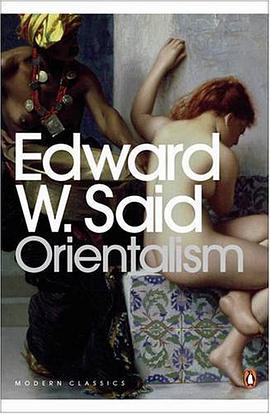
Orientalism 豆瓣
作者: Edward W. Said 出版社: Penguin Classics 2007 - 6
Said is best known for describing and critiquing "Orientalism", which he perceived as a constellation of false assumptions underlying Western attitudes toward the East. In Orientalism (1978), Said described the "subtle and persistent Eurocentric prejudice against Arabo-Islamic peoples and their culture."[12] He argued that a long tradition of false and romanticized images of Asia and the Middle East in Western culture had served as an implicit justification for Europe and America's colonial and imperial ambitions. Just as fiercely, he denounced the practice of Arab elites who internalized the American and British orientalists' ideas of Arabic culture.
In 1980 Said criticized what he regarded as poor understanding of the Arab culture in the West:
“ So far as the United States seems to be concerned, it is only a slight overstatement to say that Moslems and Arabs are essentially seen as either oil suppliers or potential terrorists. Very little of the detail, the human density, the passion of Arab-Moslem life has entered the awareness of even those people whose profession it is to report the Arab world. What we have instead is a series of crude, essentialized caricatures of the Islamic world presented in such a way as to make that world vulnerable to military aggression.[13] ”
[edit] The argument
Orientalism has had a significant impact on the fields of literary theory, cultural studies and human geography, and to a lesser extent on those of history and oriental studies. Taking his cue from the work of Jacques Derrida and Michel Foucault, and from earlier critics of western Orientalism such as A. L. Tibawi,[14] Anouar Abdel-Malek,[15] Maxime Rodinson,[16] and Richard William Southern,[17] Said argued that Western writings on the Orient, and the perceptions of the East purveyed in them, are suspect, and cannot be taken at face value. According to Said, the history of European colonial rule and political domination over the East distorts the writings of even the most knowledgeable, well-meaning and sympathetic Western ‘Orientalists’ (a term that he transformed into a pejorative):
“ I doubt if it is controversial, for example, to say that an Englishman in India or Egypt in the later nineteenth century took an interest in those countries which was never far from their status in his mind as British colonies. To say this may seem quite different from saying that all academic knowledge about India and Egypt is somehow tinged and impressed with, violated by, the gross political fact – and yet that is what I am saying in this study of Orientalism. (Said, Orientalism 11) ”
Said contended that Europe had dominated Asia politically so completely for so long that even the most outwardly objective Western texts on the East were permeated with a bias that even most Western scholars could not recognise. His contention was not only that the West has conquered the East politically but also that Western scholars have appropriated the exploration and interpretation of the Orient’s languages, history and culture for themselves. They have written Asia’s past and constructed its modern identities from a perspective that takes Europe as the norm, from which the "exotic", "inscrutable" Orient deviates.
Said concludes that Western writings about the Orient depict it as an irrational, weak, feminised "Other", contrasted with the rational, strong, masculine West, a contrast he suggests derives from the need to create "difference" between West and East that can be attributed to immutable "essences" in the Oriental make-up. In 1978, when the book was first published, with memories of the Yom Kippur war and the OPEC crisis still fresh, Said argued that these attitudes still permeated the Western media and academia. After stating the central thesis, Orientalism consists mainly of supporting examples from Western texts.
My Stroke of Insight 豆瓣
作者: Jill Bolte Taylor 出版社: Viking Adult 2008 - 5
在线阅读本书
A brain scientist's journey from a debilitating stroke to full recovery becomes an inspiring exploration of human consciousness and its possibilities
On the morning of December 10, 1996, Jill Bolte Taylor, a thirty-seven-year-old Harvard-trained brain scientist, experienced a massive stroke when a blood vessel exploded in the left side of her brain. A neuroanatomist by profession, she observed her own mind completely deteriorate to the point that she could not walk, talk, read, write, or recall any of her life, all within the space of four brief hours. As the damaged left side of her brain--the rational, grounded, detail- and time-oriented side--swung in and out of function, Taylor alternated between two distinct and opposite realties: the euphoric nirvana of the intuitive and kinesthetic right brain, in which she felt a sense of complete well-being and peace; and the logical, sequential left brain, which recognized Jill was having a stroke, and enabled her to seek help before she was lost completely.
In My Stroke of Insight , Taylor shares her unique perspective on the brain and its capacity for recovery, and the sense of omniscient understanding she gained from this unusual and inspiring voyage out of the abyss of a wounded brain. It would take eight years for Taylor to heal completely. Because of her knowledge of how the brain works, her respect for the cells composing her human form, and most of all an amazing mother, Taylor completely repaired her mind and recalibrated her understanding of the world according to the insights gained from her right brain that morning of December 10th.
Today Taylor is convinced that the stroke was the best thing that could have happened to her. It has taught her that the feeling of nirvana is never more than a mere thought away. By stepping to the right of our left brains , we can all uncover the feelings of well-being and peace that are so often sidelined by our own brain chatter. A fascinating journey into the mechanics of the human mind, My Stroke of Insight is both a valuable recovery guide for anyone touched by a brain injury, and an emotionally stirring testimony that deep internal peace truly is accessible to anyone, at any time. Questions for Jill Bolte Taylor Amazon.com: Your first reaction when you realized what was happening to your body was one you would expect: "Oh my gosh, I'm having a stroke!" Your second, though, was a little more surprising: "Wow, this is so cool!" What could be cool about a stroke? Taylor: I grew up to study the brain because I have a brother who is only 18 months older than I am. He was very different in the way he perceived experiences and then chose to behave. As a result, I became fascinated with the human brain and how it creates our perception of reality. He was eventually diagnosed with the brain disorder schizophrenia, and I dedicated my career to the postmortem investigation of the human brain in an attempt to understand, at a biological level, what are the differences between my brain and my brothers brain. On the morning of the stroke, I realized that my brain was no longer functioning like a "normal" brain and this insight into my brother's reality excited me. I was fascinated to intimately understand what it might be like on the inside for someone who would not be diagnosed as normal. Through the eyes of a curious scientist, this was an absolutely rare and fascinating experience for me to witness the breakdown of my own mind. Amazon.com: What did you learn about the brain from your stroke and your recovery that your scientific training hadn't prepared you for? Taylor: My scientific training did not teach me anything about the human spirit and the value of compassion. I had been trained as a scientist, not as a clinician. I can only hope that we are teaching our future physicians about compassion in medicine, and I know that some medical schools, including the Indiana University School of Medicine, have created a curriculum with this intention. My training as a scientist, however, did provide me with a roadmap to how the body and brain work. And although I lost my left cognitive mind that thinks in language, I retained my right hemisphere that thinks in pictures. As a result, although I could not communicate with the external world, I had an intuitive understanding about what I needed to do in order to create an environment in which the cells in my brain could be happy and healthy enough that they could regain their function. In addition, because of my training, I had an innate trust in the ability of my brain to be able to recover itself and my mother and I respected the organ by listening to it. For example, when I was tired, I allowed my brain to sleep, and when I was fresh and capable of focusing my attention, we gave me age-appropriate toys and tools with which to work. Amazon.com: Your stroke affected functions in your left brain, leaving you to what you call the "la-la land" of your right hemisphere. What was it like to live in your right brain, and then to rebuild your left? Taylor: When the cells in my left brain became nonfunctional because they were swimming in a pool of blood, they lost their ability to inhibit the cells in my right hemisphere. In my right brain, I shifted into the consciousness of the present moment. I was in the right here, right now awareness, with no memories of my past and no perception of the future. The beauty of La-la land (my right hemisphere experience of the present moment) was that everything was an explosion of magnificent stimulation and I dwelled in a space of euphoria. This is great way to exist if you don't have to communicate with the external world or care whether or not you have the capacity to learn. I found that in order for me to be able to learn anything, however, I had to take information from the last moment and apply it to the present moment. When my left hemisphere was completely nonfunctional early on, it was impossible for me to learn, which was okay with me, but I am sure it was frustrating for those around me. A simple example of this was trying to put on my shoes and socks. I eventually became physically capable of putting my shoes and socks on, but I had no ability to understand why I would have to put my socks on before my shoes. To me they were simply independent actions that were not related and I did not have the cognitive ability to figure out the appropriate sequencing of the events. Over time, I regained the ability to weave moments back together to create an expanse of time, and with this ability came the ability to learn methodically again. Life in La-la land will always be just a thought away, but I am truly grateful for the ability to think with linearity once again. Amazon.com: What can we learn about our brains and ourselves from your experience, even if we haven't lived through the kind of brain trauma you have? Taylor: I learned that I have much more say about what goes on between my ears than I was ever taught and I believe that this is true for all of us. I used to understand that I had the ability to stop thinking about one thing by consciously choosing to preoccupy my mind with thinking about something else. But I had no idea that it only took 90 seconds for me to have an emotional circuit triggered, flush a physiological response through my body and then flush completely out of me. We can all learn that we can take full responsibility for what thoughts we are thinking and what emotional circuitry we are feeling. Knowing this and acting on this can lead us into feeling a wonderful sense of well-being and peacefulness. Amazon.com: You are the "Singin' Scientist" for Harvard's Brain Bank (just as you were before your stroke). Could you tell us about the Brain Bank (in song or not)? Taylor: There is a long-term shortage of brain tissue donated for research into the severe mental illnesses. Most people dont realize that when you sign the back of your license as an organ donor, the brain is not included. If you would like to donate your brain for research, you must contact a brain bank directly. There is also a shortage of "normal control" tissue for research. The bottom line reality is that if there were more tissue available for research, then more scientists would be dedicating their careers to the study of the severe mental illnesses and we would have more answers about what is going on with these disorders. The numbers of mentally ill individuals in our society are staggering. The most serious and disabling conditions affect about 6 percent--or one in 17--adults and 9-13 percent of children in the United States. Half of all lifetime conditions of mental illness start by age 14 years, and three-fourths by age 24 years. For more information about brain donation to the Harvard brain bank, please call 1-800-BRAINBANK or visit them at: www.brainbank.mclean.org If you would like to hear me sing the brain bank jingle, please visit www.drjilltaylor.com!
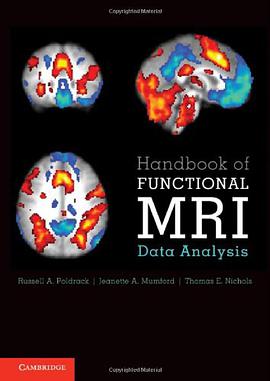
Handbook of Functional MRI Data Analysis 豆瓣
作者: Russell A. Poldrack / Jeanette A. Mumford 出版社: Cambridge University Press 2011 - 8
Functional magnetic resonance imaging (fMRI) has become the most popular method for imaging brain function. Handbook of Functional MRI Data Analysis provides a comprehensive and practical introduction to the methods used for fMRI data analysis. Using minimal jargon, this book explains the concepts behind processing fMRI data, focusing on the techniques that are most commonly used in the field. This book provides background about the methods employed by common data analysis packages including FSL, SPM and AFNI. Some of the newest cutting-edge techniques, including pattern classification analysis, connectivity modeling and resting state network analysis, are also discussed. Readers of this book, whether newcomers to the field or experienced researchers, will obtain a deep and effective knowledge of how to employ fMRI analysis to ask scientific questions and become more sophisticated users of fMRI analysis software.
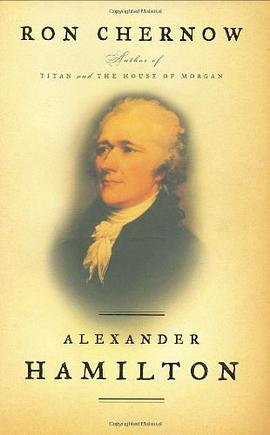
Alexander Hamilton 豆瓣
9.8 (8 个评分) 作者: Ron Chernow 出版社: The Penguin Press 2004 - 4
From National Book Award winner Ron Chernow, a landmark biography of Alexander Hamilton, the Founding Father who galvanized, inspired, scandalized, and shaped the newborn nation.
Ron Chernow, whom the New York Times called "as elegant an architect of monumental histories as we've seen in decades," now brings to startling life the man who was arguably the most important figure in American history, who never attained the presidency, but who had a far more lasting impact than many who did.
An illegitimate, largely self-taught orphan from the Caribbean, Hamilton rose with stunning speed to become George Washington's aide-de-camp, a member of the Constitutional Convention, coauthor of The Federalist Papers , leader of the Federalist party, and the country's first Treasury secretary. With masterful storytelling skills, Chernow presents the whole sweep of Hamilton's turbulent life: his exotic, brutal upbringing; his brilliant military, legal, and financial exploits; his titanic feuds with Jefferson, Madison, Adams, and Monroe; his illicit romances; and his famous death in a duel with Aaron Burr in July 1804.
For the first time, Chernow captures the personal life of this handsome, witty, and perennially controversial genius and explores his poignant relations with his wife Eliza, their eight children, and numberless friends. This engrossing narrative will dispel forever the stereotype of the Founding Fathers as wooden figures and show that, for all their greatness, they were fiery, passionate, often flawed human beings.
Alexander Hamilton was one of the seminal figures in our history. His richly dramatic saga, rendered in Chernow's vivid prose, is nothing less than a riveting account of America's founding, from the Revolutionary War to the rise of the first federal government.
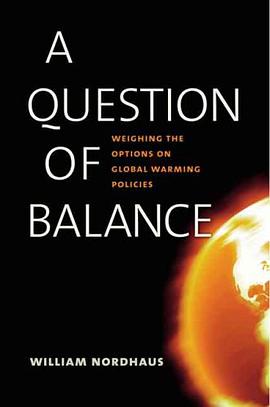
A Question of Balance 豆瓣
作者: William D. Nordhaus 出版社: Yale University Press 2008 - 6
As scientific and observational evidence on global warming piles up every day, questions of economic policy in this central environmental topic have taken centre stage. But as author and prominent Yale economist William Nordhaus observes, the issues involved in understanding global warming and slowing its harmful effects are complex and cross disciplinary boundaries. Ecologists see global warming as a threat to ecosystems, utilities as a debit to their balance sheets, and farmers as a hazard to their livelihoods.In this important work, William Nordhaus integrates the entire spectrum of economic and scientific research to weigh the costs of reducing emissions against the benefits of reducing the long-run damages from global warming. The book offers one of the most extensive analyses of the economic and environmental dynamics of greenhouse-gas emissions and climate change and provides the tools to evaluate alternative approaches to slowing global warming. The author emphasizes the need to establish effective mechanisms, such as carbon taxes, to harness markets and harmonize the efforts of different countries.
An Introduction to Dynamic Meteorology 豆瓣
作者: James R. Holton 出版社: Academic Press 2004 - 4
This revised text presents a cogent explanation of the fundamentals of meteorology, and explains storm dynamics for weather-oriented meteorologists. It discusses climate dynamics and the implications posed for global change. The Fourth Edition features a CD-ROM with MATLAB® exercises and updated treatments of several key topics. Much of the material is based on a two-term course for seniors majoring in atmospheric sciences.
* Provides clear physical explanations of key dynamical principles
* Contains a wealth of illustrations to elucidate text and equations, plus end-of-chapter problems
* Holton is one of the leading authorities in contemporary meteorology, and well known for his clear writing style
* Instructor's Manual available to adopters
Economic Growth 豆瓣 Goodreads
作者: Robert J Barro 出版社: The MIT Press 2003 - 11
This graduate level text on economic growth surveys neoclassical and more recent growth theories, stressing their empirical implications and the relation of theory to data and evidence. The authors have undertaken a major revision for the long-awaited second edition of this widely used text, the first modern textbook devoted to growth theory. The book has been expanded in many areas and incorporates the latest research.After an introductory discussion of economic growth, the book examines neoclassical growth theories, from Solow-Swan in the 1950s and Cass-Koopmans in the 1960s to more recent refinements; this is followed by a discussion of extensions to the model, with expanded treatment in this edition of heterogenity of households. The book then turns to endogenous growth theory, discussing, among other topics, models of endogenous technological progress (with an expanded discussion in this edition of the role of outside competition in the growth process), technological diffusion, and an endogenous determination of labor supply and population. The authors then explain the essentials of growth accounting and apply this framework to endogenous growth models. The final chapters cover empirical analysis of regions and empirical evidence on economic growth for a broad panel of countries from 1960 to 2000. The updated treatment of cross-country growth regressions for this edition uses the new Summers-Heston data set on world income distribution compiled through 2000.
Under Three Flags 豆瓣
作者: Benedict Anderson 出版社: Verso 2007 - 11
The origins of nationalism and anti-globalization are traced by the bestselling author of Imagined Communities.
In this sparkling new work, Benedict Anderson provides a radical recasting of themes from Imagined Communities, his classic book on nationalism, through an exploration of fin-de-siècle politics and culture that spans the Caribbean, Imperial Europe and the South China Sea.
A jewelled pomegranate packed with nitroglycerine is primed to blow away Manila's 19th-century colonial elite at the climax of El Filibusterismo, whose author, the great political novelist José Rizal, was executed in 1896 by the Spanis authorities in the Philippines at the age of 35. Anderson explores the impact of avant-garde European literature and politics on Rizal and his contemporary, the pioneering folklorist Isabelo de los Reyes, who was imprisoned in Manila after the violent uprisings of 1896 and later incarcerated, together with Catalan anarchists, in the prison fortress of Montjuich in Barcelona. On his return to the Philippines, by now under American occupation, Isabelo formed the first militant trade unions under the influence of Malatesta and Bakunin.
Anderson considers the complex intellectual interactions of these young Filipinos with the new "science" of anthropology in Germany and Austro-Hungary, and with post-Communard experimentalists in Paris, against a background of militant anarchism in Spain, France, Italy and the Americas, José Marti's armed uprising in Cuba and anti-imperialist protests in China and Japan. In doing so, he depicts the dense intertwining of anarchist internationalism and radical anti-colonialism.
Under Three Flags is a brilliantly original work on the explosive history of national independence and global politics.