英文版
The Invention of Religion in Japan Goodreads 豆瓣
作者: Josephson, Jason Ananda 出版社: University of Chicago Press 2012 - 10
Throughout its long history, Japan had no concept of what we call “religion.” There was no corresponding Japanese word, nor anything close to its meaning. But when American warships appeared off the coast of Japan in 1853 and forced the Japanese government to sign treaties demanding, among other things, freedom of religion, the country had to contend with this Western idea.

In this book, Jason Ananda Josephson reveals how Japanese officials invented religion in Japan and traces the sweeping intellectual, legal, and cultural changes that followed. More than a tale of oppression or hegemony, Josephson’s account demonstrates that the process of articulating religion offered the Japanese state a valuable opportunity. In addition to carving out space for belief in Christianity and certain forms of Buddhism, Japanese officials excluded Shinto from the category. Instead, they enshrined it as a national ideology while relegating the popular practices of indigenous shamans and female mediums to the category of “superstitions”—and thus beyond the sphere of tolerance.

Josephson argues that the invention of religion in Japan was a politically charged, boundary-drawing exercise that not only extensively reclassified the inherited materials of Buddhism, Confucianism, and Shinto to lasting effect, but also reshaped, in subtle but significant ways, our own formulation of the concept of religion today. This ambitious and wide-ranging book contributes an important perspective to broader debates on the nature of religion, the secular, science, and superstition.
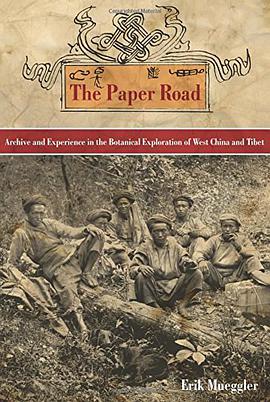
The Paper Road 豆瓣
作者: Erik Mueggler 出版社: University of California Press 2011 - 11
This interesting book interweaves the stories of two early twentieth century botanists to explore the collaborative relationships each formed with Yunnan villagers in gathering botanical specimens from the borderlands between China, Tibet, and Burma. Mueggler introduces Scottish botanist George Forrest, who employed native ethnic Naxi adventurers in his fieldwork from 1906 until his death in 1932. We also meet American Joseph Francis Charles Rock, who, in 1924, undertook a dangerous expedition to Gansu and Tibet with the sons and nephews of Forrest's workers. Mueggler describes how the Naxi workers and their Western employers rendered the earth into specimens, notes, maps, diaries, letters, books, photographs, and ritual manuscripts. Drawing on an ancient metaphor of the earth as a book, Mueggler provides a sustained meditation on what can be copied, translated, and revised, and what can be folded back into the earth.
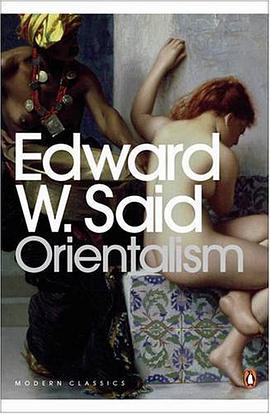
Orientalism 豆瓣
作者: Edward W. Said 出版社: Penguin Classics 2007 - 6
Said is best known for describing and critiquing "Orientalism", which he perceived as a constellation of false assumptions underlying Western attitudes toward the East. In Orientalism (1978), Said described the "subtle and persistent Eurocentric prejudice against Arabo-Islamic peoples and their culture."[12] He argued that a long tradition of false and romanticized images of Asia and the Middle East in Western culture had served as an implicit justification for Europe and America's colonial and imperial ambitions. Just as fiercely, he denounced the practice of Arab elites who internalized the American and British orientalists' ideas of Arabic culture.
In 1980 Said criticized what he regarded as poor understanding of the Arab culture in the West:
“ So far as the United States seems to be concerned, it is only a slight overstatement to say that Moslems and Arabs are essentially seen as either oil suppliers or potential terrorists. Very little of the detail, the human density, the passion of Arab-Moslem life has entered the awareness of even those people whose profession it is to report the Arab world. What we have instead is a series of crude, essentialized caricatures of the Islamic world presented in such a way as to make that world vulnerable to military aggression.[13] ”
[edit] The argument
Orientalism has had a significant impact on the fields of literary theory, cultural studies and human geography, and to a lesser extent on those of history and oriental studies. Taking his cue from the work of Jacques Derrida and Michel Foucault, and from earlier critics of western Orientalism such as A. L. Tibawi,[14] Anouar Abdel-Malek,[15] Maxime Rodinson,[16] and Richard William Southern,[17] Said argued that Western writings on the Orient, and the perceptions of the East purveyed in them, are suspect, and cannot be taken at face value. According to Said, the history of European colonial rule and political domination over the East distorts the writings of even the most knowledgeable, well-meaning and sympathetic Western ‘Orientalists’ (a term that he transformed into a pejorative):
“ I doubt if it is controversial, for example, to say that an Englishman in India or Egypt in the later nineteenth century took an interest in those countries which was never far from their status in his mind as British colonies. To say this may seem quite different from saying that all academic knowledge about India and Egypt is somehow tinged and impressed with, violated by, the gross political fact – and yet that is what I am saying in this study of Orientalism. (Said, Orientalism 11) ”
Said contended that Europe had dominated Asia politically so completely for so long that even the most outwardly objective Western texts on the East were permeated with a bias that even most Western scholars could not recognise. His contention was not only that the West has conquered the East politically but also that Western scholars have appropriated the exploration and interpretation of the Orient’s languages, history and culture for themselves. They have written Asia’s past and constructed its modern identities from a perspective that takes Europe as the norm, from which the "exotic", "inscrutable" Orient deviates.
Said concludes that Western writings about the Orient depict it as an irrational, weak, feminised "Other", contrasted with the rational, strong, masculine West, a contrast he suggests derives from the need to create "difference" between West and East that can be attributed to immutable "essences" in the Oriental make-up. In 1978, when the book was first published, with memories of the Yom Kippur war and the OPEC crisis still fresh, Said argued that these attitudes still permeated the Western media and academia. After stating the central thesis, Orientalism consists mainly of supporting examples from Western texts.
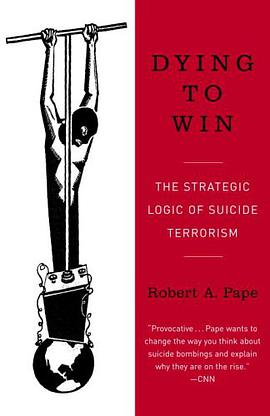
Dying to Win 豆瓣
作者: Robert Pape 出版社: Random House Trade Paperbacks 2006 - 7
Includes a new Afterword
Finalist for the Council on Foreign Relations Arthur Ross Book Award
One of the world’s foremost authorities on the subject of suicide terrorism, the esteemed political scientist Robert Pape has created the first comprehensive database of every suicide terrorist attack in the world from 1980 until today. In Dying to Win , Pape provides a groundbreaking demographic profile of modern suicide terrorist attackers–and his findings offer a powerful counterpoint to what we now accept as conventional wisdom on the topic. He also examines the early practitioners of this guerrilla tactic, including the ancient Jewish Zealots, who in A.D. 66 wished to liberate themselves from Roman occupation; the Ismaili Assassins, a Shi’ite Muslim sect in northern Iran in the eleventh and twelfth centuries; World War II’s Japanese kamikaze pilots, three thousand of whom crashed into U.S. naval vessels; and the Tamil Tigers in Sri Lanka, a secular, Marxist-Leninist organization responsible for more suicide terrorist attacks than any other group in history.
Dying to Win is a startling work of analysis grounded in fact, not politics, that recommends concrete ways for states to fight and prevent terrorist attacks now. Transcending speculation with systematic scholarship, this is one of the most important studies of the terrorist threat to the United States and its allies since 9/11.
“Invaluable . . . gives Americans an urgently needed basis for devising a strategy to defeat Osama bin Laden and other Islamist militants.”
–Michael Scheuer, author of Imperial Hubris
“Provocative . . . Pape wants to change the way you think about suicide bombings and explain why they are on the rise.”
–Henry Schuster, CNN.com

“Enlightening . . . sheds interesting light on a phenomenon often mistakenly believed to be restricted to the Middle East.”
–The Washington Post Book World
“Brilliant.”
–Peter Bergen, author of Holy War, Inc.
Why We Sleep 豆瓣
9.0 (22 个评分) 作者: Matthew Walker PhD 出版社: Scribner 2017 - 10
The first sleep book by a leading scientific expert—Professor Matthew Walker, Director of UC Berkeley’s Sleep and Neuroimaging Lab—reveals his groundbreaking exploration of sleep, explaining how we can harness its transformative power to change our lives for the better.
Sleep is one of the most important but least understood aspects of our life, wellness, and longevity. Until very recently, science had no answer to the question of why we sleep, or what good it served, or why we suffer such devastating health consequences when we don't sleep. Compared to the other basic drives in life—eating, drinking, and reproducing—the purpose of sleep remained elusive.
An explosion of scientific discoveries in the last twenty years has shed new light on this fundamental aspect of our lives. Now, preeminent neuroscientist and sleep expert Matthew Walker gives us a new understanding of the vital importance of sleep and dreaming. Within the brain, sleep enriches our ability to learn, memorize, and make logical decisions. It recalibrates our emotions, restocks our immune system, fine-tunes our metabolism, and regulates our appetite. Dreaming mollifies painful memories and creates a virtual reality space in which the brain melds past and present knowledge to inspire creativity.
Walker answers important questions about sleep: how do caffeine and alcohol affect sleep? What really happens during REM sleep? Why do our sleep patterns change across a lifetime? How do common sleep aids affect us and can they do long-term damage? Charting cutting-edge scientific breakthroughs, and synthesizing decades of research and clinical practice, Walker explains how we can harness sleep to improve learning, mood, and energy levels; regulate hormones; prevent cancer, Alzheimer’s, and diabetes; slow the effects of aging; increase longevity; enhance the education and lifespan of our children, and boost the efficiency, success, and productivity of our businesses. Clear-eyed, fascinating, and accessible, Why We Sleep is a crucial and illuminating book
Genealogies of Religion 豆瓣
作者: Talal Asad 出版社: Johns Hopkins University Press 1993 - 8
In Geneologies of Religion, Talal Asad explores how religion as a historical category emerged in the West and has come to be applied as a universal concept.
The idea that religion has undergone a radical change since the Christian Reformation―from totalitarian and socially repressive to private and relatively benign―is a familiar part of the story of secularization. It is often invokved to explain and justify the liberal politics and world view of modernity. And it leads to the view that "politicized religions" threaten both reason and liberty. Asad's essays explore and question all these assumptions. He argues that "religion" is a construction of European modernity, a construction that authorizes―for Westerners and non-Westerners alike―particular forms of "history making."
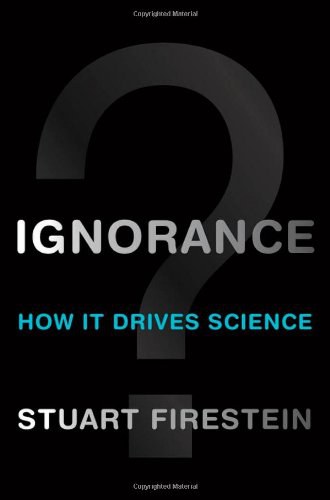
Ignorance: How it drives science Goodreads 豆瓣
作者: Stuart Firestein 出版社: Oxford University Press 2012 - 7 其它标题: Ignorance
- The book argues that ignorance, not knowledge, is what drives science
- The book provides a fascinating inside-view of the way every-day science is actually done
- The book features intriguing case histories of how individual scientists use ignorance to direct their research
Knowledge is a big subject, says Stuart Firestein, but ignorance is a bigger one. And it is ignorance—not knowledge—that is the true engine of science.
Most of us have a false impression of science as a surefire, deliberate, step-by-step method for finding things out and getting things done. In fact, says Firestein, more often than not, science is like looking for a black cat in a dark room, and there may not be a cat in the room. The process is more hit-or-miss than you might imagine, with much stumbling and groping after phantoms. But it is exactly this "not knowing," this puzzling over thorny questions or inexplicable data, that gets researchers into the lab early and keeps them there late, the thing that propels them, the very driving force of science. Firestein shows how scientists use ignorance to program their work, to identify what should be done, what the next steps are, and where they should concentrate their energies. And he includes a catalog of how scientists use ignorance, consciously or unconsciously—a remarkable range of approaches that includes looking for connections to other research, revisiting apparently settled questions, using small questions to get at big ones, and tackling a problem simply out of curiosity. The book concludes with four case histories—in cognitive psychology, theoretical physics, astronomy, and neuroscience—that provide a feel for the nuts and bolts of ignorance, the day-to-day battle that goes on in scientific laboratories and in scientific minds with questions that range from the quotidian to the profound.
Turning the conventional idea about science on its head, Ignorance opens a new window on the true nature of research. It is a must-read for anyone curious about science.
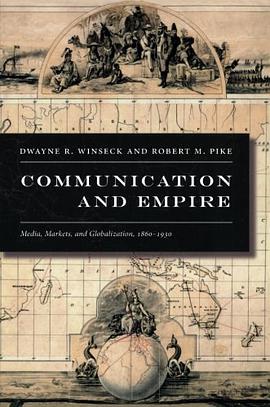
Communication and Empire 豆瓣
作者: Dwayne R. Winseck / Robert M. Pike 出版社: Duke University Press Books 2007 - 7
Filling in a key chapter in communications history, Dwayne R. Winseck and Robert M. Pike offer an in-depth examination of the rise of the "global media" between 1860 and 1930. They analyze the connections between the development of a global communication infrastructure, the creation of national telegraph and wireless systems, and news agencies and the content they provided. Conventional histories suggest that the growth of global communications correlated with imperial expansion: an increasing number of cables were laid as colonial powers competed for control of resources. Winseck and Pike argue that the role of the imperial contest, while significant, has been exaggerated. They emphasize how much of the global media system was in place before the high tide of imperialism in the early twentieth century, and they point to other factors that drove the proliferation of global media links, including economic booms and busts, initial steps toward multilateralism and international law, and the formation of corporate cartels. Drawing on extensive research in corporate and government archives, Winseck and Pike illuminate the actions of companies and cartels during the late nineteenth century and early twentieth, in many different parts of the globe, including Africa, Asia, and Central and South America as well as Europe and North America. The complex history they relate shows how cable companies exploited or transcended national policies in the creation of the global cable network, how private corporations and government agencies interacted, and how individual reformers fought to eliminate cartels and harmonize the regulation of world communications. In Communication and Empire, the multinational conglomerates, regulations, and the politics of imperialism and anti-imperialism as well as the cries for reform of the late nineteenth century and early twentieth emerge as the obvious forerunners of today's global media.
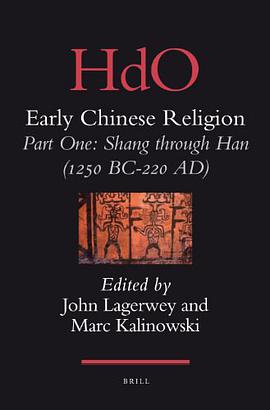
Early Chinese Religion 豆瓣
作者: John Lagerwey / Marc Kalinowski 出版社: Brill Academic Publishers 2009 - 2
Together, and for the first time in any language, the 24 essays gathered in these volumes provide a composite picture of the history of religion in ancient China from the emergence of writing ca. 1250 BC to the collapse of the first major imperial dynasty in 220 AD. It is a multi-faceted tale of changing gods and rituals that includes the emergence of a form of “secular humanism” that doubts the existence of the gods and the efficacy of ritual and of an imperial orthodoxy that founds its legitimacy on a distinction between licit and illicit sacrifices. Written by specialists in a variety of disciplines, the essays cover such subjects as divination and cosmology, exorcism and medicine, ethics and self-cultivation, mythology, taboos, sacrifice, shamanism, burial practices, iconography, and political philosophy.
Produced under the aegis of the Centre de recherche sur les civilisations chinoise, japonaise et tibétaine (UMR 8155) and the École Pratique des Hautes Études (Paris).
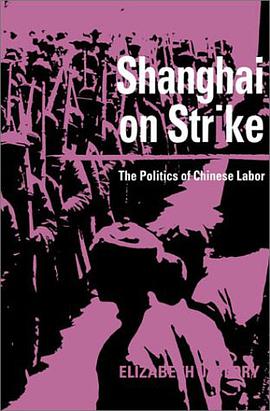
Shanghai on Strike 豆瓣
作者: Elizabeth J. Perry 出版社: Stanford University Press 1995 - 3
This is a comprehensive study on the social history of China during the first half of the 20th century. It draws on abundant sources and studies which have appeared in the People's Republic of China since the early 1980sand which have not been systematically used in Western historiography.
The Rebel 豆瓣 Goodreads
L'Homme révolté
作者: Albert Camus 译者: Anthony Bower 出版社: Vintage 1991 - 1
The Rebel is an essay on artistic, historical, and metaphysical rebellion, in which he lays out the difference between revolution and revolt.
Camus sees revolt as a peaceful, evolutionary process that requires leadership but not violence. He criticizes Hegel's work, accusing it of glorifying power and the state over social morality and ethics, and he accuses Marx of co-opting Hegelian philosophy to allow "any means to an end". Camus prefers Mediterranean humanism, a philosophy grounded in nature and moderation, to the violence and historicism he sees as part and parcel to what he calls the "Absolutist" philosophies. The attacks on Hegel, Marxism and nihilism in The Rebel had a profound effect on Camus' peers.
The book was described as intellectual treason by leftist critics, and a review by Francis Jeanson in Les Temps Modernes accused Camus of being a traitor to the left. After Camus attempted to defend himself in a letter to the publication, Jean-Paul Sartre, the editor of Les Temps Modernes at the time, published an open letter in response that tallied 19 pages. The letter included personal attacks, and marked the end of the two philosophers' friendship.
Education 豆瓣
作者: Murray N. Rothbard 出版社: Ludwig von Mises Institute 1999 - 8
What is it about today's school system that so many find unsatisfactory? Why have so many generations of reformers failed to improve the educational system, and, indeed, caused it to degenerate further and further into an ever declining level of mediocrity?
In this radical and scholarly monograph, out of print for two decades and restored according to the author's original, Murray N. Rothbard identifies the crucial feature of our educational system that dooms it to fail: at every level, from financing to attendance, the system relies on compulsion instead of voluntary consent.
Certain consequences follow. The curriculum is politicized to reflect the ideological priorities of the regime in power. Standards are continually dumbed down to accommodate the least common denominator. The brightest children are not permitted to achieve their potential, the special- needs of individual children are neglected, and the mid-level learners become little more than cogs in a machine. The teachers themselves are hamstrung by a political apparatus that watches their every move.
Rothbard explores the history of compulsory schooling to show that none of this is accident. The state has long used compulsory schooling, backed by egalitarian ideology, as a means of citizen control. In contrast, a market-based system of schools would adhere to a purely voluntary ethic, financed with private funds, and administered entirely by private enterprise.
An interesting feature of this book is its promotion of individual, or home, schooling, long before the current popularity of the practice.
As Kevin Ryan of Boston University points out in the introduction, if education reform is ever to bring about fundamental change, it will have to begin with a complete rethinking of public schooling that Rothbard offers here.
The R Inferno 豆瓣
作者: Patrick Burns 出版社: Standard Copyright License 2012 - 2
An essential guide to the trouble spots and oddities of R. In spite of the quirks exposed here, R is the best computing environment for most data analysis tasks. R is free, open-source, and has thousands of contributed packages. It is used in such diverse fields as ecology, finance, genomics and music. If you are using spreadsheets to understand data, switch to R. You will have safer -- and ultimately, more convenient -- computations.
分析性写作 豆瓣
Writing Analytically
作者: 罗森瓦塞尔 (David Rosenwasser) 出版社: 北京大学出版社 2008 - 9
《分析性写作(第5版)》特色十分明显:(1)删除了第二版中的有关分析定义的5个相关章节,压缩了篇幅;(2)使重点更加突出,更加方便查找;(3)调整了部分章节的内容,如,将妨碍写作构思的习惯独立成章,加以全面论述;(4)在学术写作一章加入了有关的阅读建议。写作是重要的语言技能。分析写作是大学教育中使用最广的写作任务,是各门课程的基本要求。《分析性写作》第三版,反映出美国高校写作教学的最新发展动态,《分析性写作》2006年一出版,就非常畅销,2008年三次再版。
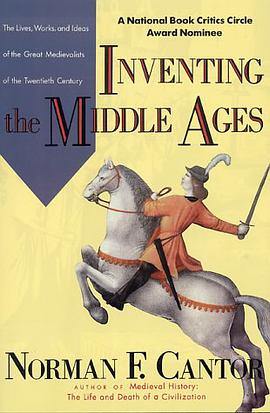
Inventing the Middle Ages 豆瓣
作者: Norman F. Cantor 出版社: Harper Perennial 1993 - 2
INVENTING THE MIDDLE AGES The Lives, Works, and Ideas of the Great Medievalists of the Twentieth Century In this ground-breaking work, Norman Cantor explains how our current notion of the Middle Ages-with its vivid images of wars, tournaments, plagues, saints and kings, knights and ladies-was born in the twentieth century. The medieval world was not simply excavated through systematic research. It had to be conceptually created: It had to be invented, and this is the story of that invention. Norman Cantor focuses on the lives and works of twenty of the great medievalists of this century, demonstrating how the events of their lives, and their spiritual and emotional outlooks, influenced their interpretations of the Middle Ages. Cantor makes their scholarship an intensely personal and passionate exercise, full of color and controversy, displaying the strong personalities and creative minds that brought new insights about the past. A revolution in academic method, this book is a breakthrough to a new way of teaching the humanities and historiography, to be enjoyed by student and general public alike. It takes an immense body of learning and transmits it so that readers come away fully informed of the essentials of the subject, perceiving the interconnection of medieval civilization with the culture of the twentieth century and having had a good time while doing it! This is a riveting, entertaining, humorous, and learned read, compulsory for anyone concerned about the past and future of Western civilization.
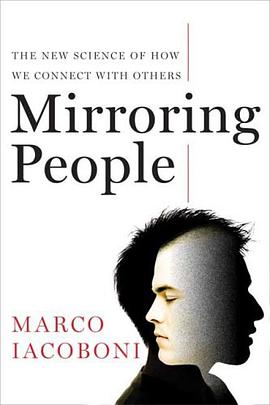
Mirroring People: The New Science of How We Connect with Others Goodreads 豆瓣
作者: Marco Iacoboni 出版社: Farrar, Straus and Giroux 2008 - 5 其它标题: Mirroring People
What accounts for the remarkable ability to get inside another person’s head—to know what they’re thinking and feeling? “Mind reading” is the very heart of what it means to be human, creating a bridge between self and others that is fundamental to the development of culture and society. But until recently, scientists didn’t understand what in the brain makes it possible. This has all changed in the last decade. Marco Iacoboni, a leading neuroscientist whose work has been covered in The New York Times , the Los Angeles Times , and The Wall Street Journal , explains the groundbreaking research into mirror neurons, the “smart cells” in our brain that allow us to understand others. From imitation to morality, from learning to addiction, from political affiliations to consumer choices, mirror neurons seem to have properties that are relevant to all these aspects of social cognition. As The New York Times “The discovery is shaking up numerous scientific disciplines, shifting the understanding of culture, empathy, philosophy, language, imitation, autism and psychotherapy.” Mirroring People is the first book for the general reader on this revolutionary new science.
From Frontier Policy to Foreign Policy 豆瓣 Goodreads
作者: Matthew W. Mosca 出版社: Stanford University Press 2013 - 2
Between the mid-eighteenth and mid-nineteenth centuries, Qing rulers, officials, and scholars fused diverse, fragmented perceptions of foreign territory into one integrated worldview. In the same period, a single "foreign" policy emerged as an alternative to the many localized "frontier" policies hitherto pursued on the coast, in Xinjiang, and in Tibet. By unraveling Chinese, Manchu, and British sources to reveal the information networks used by the Qing empire to gather intelligence about its emerging rival, British India, this book explores China's altered understanding of its place in a global context. Far from being hobbled by a Sinocentric worldview, Qing China's officials and scholars paid close attention to foreign affairs. To meet the growing British threat, they adapted institutional practices and geopolitical assumptions to coordinate a response across their maritime and inland borderlands. In time, the new and more active response to Western imperialism built on this foundation reshaped not only China's diplomacy but also the internal relationship between Beijing and its frontiers.
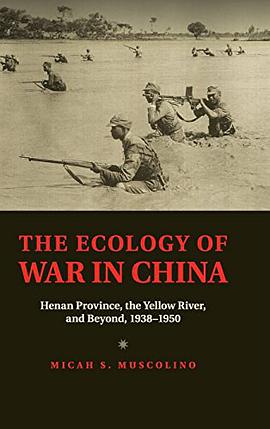
The Ecology of War in China 豆瓣 Goodreads
作者: Micah S. Muscolino 出版社: Cambridge University Press 2014 - 12
This book explores the interplay between war and the environment in Henan Province, a hotly contested frontline territory that endured massive environmental destruction and human disruption during the conflict between China and Japan that raged during World War II. In a desperate attempt to block Japan's military advance, Chinese Nationalist armies under Chiang Kai-shek broke the Yellow River's dikes in Henan in June 1938, resulting in devastating floods that persisted until after the war's end. Greater catastrophe struck Henan in 1942-1943, when famine took some two million lives and displaced millions more. Focusing on these war-induced disasters and their aftermath, this book conceptualizes the ecology of war in terms of energy flows through and between militaries, societies, and environments. Ultimately, Micah Muscolino argues that efforts to procure and exploit nature's energy in various forms shaped the choices of generals, the fates of communities, and the trajectory of environmental change in North China.
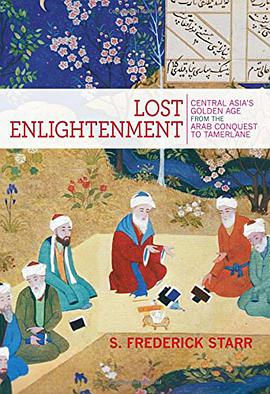
Lost Enlightenment: Central Asia's Golden Age from the Arab Conquest to Tamerlane 豆瓣 Goodreads
作者: S. Frederick Starr 出版社: Princeton University Press 2013 - 10 其它标题: Lost Enlightenment
The forgotten story of Central Asia's enlightenment―its rise, fall, and enduring legacy

In this sweeping and richly illustrated history, S. Frederick Starr tells the fascinating but largely unknown story of Central Asia's medieval enlightenment through the eventful lives and astonishing accomplishments of its greatest minds―remarkable figures who built a bridge to the modern world. Because nearly all of these figures wrote in Arabic, they were long assumed to have been Arabs. In fact, they were from Central Asia―drawn from the Persianate and Turkic peoples of a region that today extends from Kazakhstan southward through Afghanistan, and from the easternmost province of Iran through Xinjiang, China.

Lost Enlightenment recounts how, between the years 800 and 1200, Central Asia led the world in trade and economic development, the size and sophistication of its cities, the refinement of its arts, and, above all, in the advancement of knowledge in many fields. Central Asians achieved signal breakthroughs in astronomy, mathematics, geology, medicine, chemistry, music, social science, philosophy, and theology, among other subjects. They gave algebra its name, calculated the earth's diameter with unprecedented precision, wrote the books that later defined European medicine, and penned some of the world's greatest poetry. One scholar, working in Afghanistan, even predicted the existence of North and South America―five centuries before Columbus. Rarely in history has a more impressive group of polymaths appeared at one place and time. No wonder that their writings influenced European culture from the time of St. Thomas Aquinas down to the scientific revolution, and had a similarly deep impact in India and much of Asia.

Lost Enlightenment chronicles this forgotten age of achievement, seeks to explain its rise, and explores the competing theories about the cause of its eventual demise. Informed by the latest scholarship yet written in a lively and accessible style, this is a book that will surprise general readers and specialists alike.
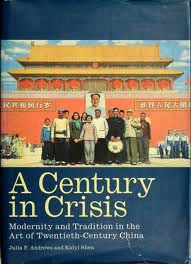
A Century in Crisis 豆瓣
《危机中的一世纪:20世纪中国艺术中的传统与现代》
作者: Julia F. Andrews 安雅兰 / Kuiyi Shen 沈揆一 出版社: Solomon R Guggenheim Museum 1998 - 1
本书是美国著名中国现代美术史学者安雅兰1998年在纽约古根海姆博物馆策划的大型展览“危机中的一个世纪:20世纪中国艺术中的现代与传统”的展览图录。该展览试图对一个世纪以来的中国艺术作一次概括性的回顾和总结。在书中作者把现当代中国美术划分为四个时期,即“中国画的革新,1850一1950";“现代主义者,1920-1950";“新中国艺术,1950-1980";以及“传统的改造,1980至今”,并分别描述和分析了各个时期的风格特点以及其时代特征。
Between 1850 and today, China has undergone an unprecedented series of shocks and transformations. This dramatic period -- which has seen urban industrialization, conquest by foreign powers, civil wars, changing governments, and, more recently, a gradual opening to the international community -- has also marked an explosion of artistic experimentation and innovation. Spanning 150 spectacular years of artistic production, A Century in Crisis -- which accompanied a landmark exhibition at the Guggenheim Museum SoHo in early 1998 -- offers the first systematic exploration of modern and contemporary Chinese art.
Essays by leading scholars show the ways in which Chinese artists have grappled with modernity, tradition, self-definition, and the adoption and rejection of Western conventions. Sumptuous colorplates showcase a dazzling array of achievements -- including Shanghai School paintings, modern calligraphy, commercial art, 1920s and '30s woodblock prints, modern guohua (traditional ink and color paintings), socialist realist paintings, and other contemporary works.