认知科学哲学
Representation in Cognitive Science 豆瓣
作者: Nicholas Shea 出版社: OUP Oxford 2018 - 10
Our thoughts are meaningful. We think about things in the outside world; how can that be so? This is one of the deepest questions in contemporary philosophy. Ever since the 'cognitive revolution', states with meaning-mental representations-have been the key explanatory construct of the cognitive sciences. But there is still no widely accepted theory of how mental representations get their meaning. Powerful new methods in cognitive neuroscience can now reveal information processing in the brain in unprecedented detail. They show how the brain performs complex calculations on neural representations.
The Brain's Representational Power 豆瓣
作者: Cyriel M.A. Pennartz 2015 - 10
Although science has made considerable progress in discovering the neural basis of cognitive processes, how consciousness arises remains elusive. In this book, Cyriel Pennartz analyzes which aspects of conscious experience can be peeled away to access its core: the hardest aspect, the relationship between brain processes and the subjective, qualitative nature of consciousness. Pennartz traces the problem back to its historical roots in the foundations of neuroscience and connects early ideas on sensory processing to contemporary computational neuroscience. What can we learn from neural network models, and where do they fall short in bridging the gap between neural processes and conscious experience? Do neural models of cognition resemble inanimate systems, and how can this help us define requirements for conscious processing in the brain? These questions underlie Pennartz's examination of the brain's anatomy and neurophysiology. The perspective of his account is t limited to visual perception but broadened to include other sensory modalities and their integration. Formulating a representational theory of the neural basis of consciousness, Pennartz outlines properties that complex structures must express to process information consciously. This theoretical framework is constructed using empirical findings from neuropsychology and neuroscience as well as such theoretical arguments as the Cuneiform Room and the Wall Street Banker. Positing that qualitative experience is a multimodal and multilevel phemen at its very roots, Pennartz places this body of theory in the wider context of mind-brain philosophy, examining implications for our thinking about animal and robot consciousness.
Cognitive Phenomenology 豆瓣
作者: Bayne, Tim; Montague, Michelle; 出版社: Oxford University Press 2012 - 2
It is widely agreed that there is such a thing as sensory phenomenology and imagistic phenomenology. The central concern of the cognitive phenomenology debate is whether there is a distinctive 'cognitive phenomenology'--that is, a kind of phenomenology that has cognitive or conceptual character in some sense that needs to be precisely determined. This volume presents new work by leading philosophers in the field, and addresses the question of whether conscious thought has cognitive phenomenology. It also includes a number of essays which consider whether cognitive phenomenology is part of conscious perception and conscious emotion. Three broad themes run through the volume. First, some authors focus on the question of how the notion of cognitive phenomenology ought to be understood. How should the notion of cognitive phenomenology be defined? Are there different kinds of cognitive phenomenology? A second theme concerns the existence of cognitive phenomenology. Some contributors defend the existence of a distinctive cognitive phenomenology, whereas others deny it. The arguments for and against the existence of cognitive phenomenology raise questions concerning the nature of first-person knowledge of thought, the relationship between consciousness and intentionality, and the scope of the explanatory gap. A third theme concerns the implications of the cognitive phenomenology debate. What are the implications of the debate for accounts of our introspective access to conscious thought and for accounts of the very nature of conscious thought? Cognitive Phenomenology brings the debate to the forefront of philosophy, and provides a state-of-the-art account of the issues at stake.
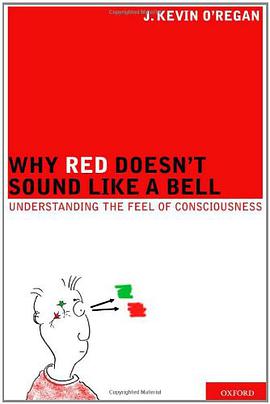
Why Red Doesn't Sound Like a Bell 豆瓣
作者: J. Kevin O'Regan 出版社: Oxford University Press 2011 - 6
This book proposes a novel view to explain how we as humans -- contrary to current robots -- can have the impression of consciously feeling things: for example the red of a sunset, the smell of a rose, the sound of a symphony, or a pain. The book starts off by looking at visual perception. Our ability to see turns out to be much more mysterious than one might think. The eye contains many defects which should seriously interfere with vision. Yet we have the impression of seeing the world in glorious panavision and technicolor. Explaining how this can be the case leads to a new idea about what seeing really is. Seeing is not passively receiving information in the brain, but rather a way of interacting with the world. The role of the brain is not to create visual sensation, but to enable the necessary interactions with the world. This new approach to seeing is extended in the second part of the book to encompass the other senses: hearing, touch, taste and smell. Taking sensory experiences to be modes of interacting with the world explains why these experiences are different in the way they are. It also explains why thoughts or automatic functions in the body, and indeed the vast majority brain functions, are not accompanied by any real feeling. The "sensorimotor" approach is not simply a philosophical argument: It leads to scientifically verifiable predictions and new research directions. Among these are the phenomena of change blindness, sensory substitution, "looked but failed to see", as well as results on color naming and color perception and the localisation of touch on the body. The approach is relevant to the question of what animals and babies can feel, and to understanding what will be necessary for robots to become conscious.
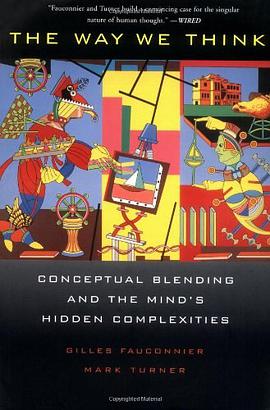
The Way We Think 豆瓣
作者: Gilles Fauconnier / Mark Turner 出版社: Basic Books 2003 - 3
" The Way We Think is a dazzling tour of the complexities of human imagination."--George Lakoff, co-author of Philosophy in the Flesh and Where Mathematics Comes From . In its first two decades, much of cognitive science focused on such mental functions as memory, learning, symbolic thought, and language acquisition--the functions in which the human mind most closely resembles a computer. But humans are more than computers, and the cutting-edge research in cognitive science is increasingly focused on the more mysterious, creative aspects of the mind. The Way We Think is a landmark synthesis that exemplifies this new direction. The theory of conceptual blending is already widely known in laboratories throughout the world; this book is its definitive statement. Gilles Fauconnier and Mark Turner argue that all learning and all thinking consist of blends of metaphors based on simple bodily experiences. These blends are then themselves blended together into an increasingly rich structure that makes up our mental functioning in modern society. A child's entire development consists of learning and navigating these blends. The Way We Think shows how this blending operates; how it is affected by (and gives rise to) language, identity, and concept of category; and the rules by which we use blends to understand ideas that are new to us. The result is a bold, exciting, and accessible new view of how the mind works.
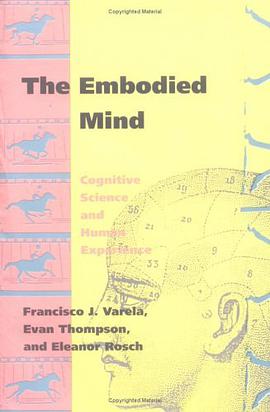
The Embodied Mind 豆瓣
作者: Francisco J. Varela / Evan T. Thompson 出版社: The MIT Press 1992 - 11
The Embodied Mind provides a unique, sophisticated treatment of the spontaneous and reflective dimension of human experience. The authors - argue that only by having a sense of common ground between mind in Science and mind in experience can our understanding of cognition be more complete. Toward that end, they develop a dialogue between cognitive science and Buddhist meditative psychology and situate it in relation to other traditions such as phenomenology and psychoanalysis.Francisco Varela is Director of Research at the Centre National de Recherche Scientifique and Professor of Cognitive Science and Epistemology, CREA, at the Ecole Polytechnique in Paris. Evan Thompson is Assistant Professor of Philosophy at the University of Toronto. Eleanor Rosch is Professor of Psychology at the University of California, Berkeley.
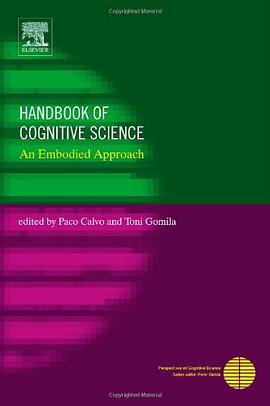
Handbook of Cognitive Science 豆瓣
作者: Calvo, Paco (EDT)/ Gomila, Antoni (EDT) 出版社: Elsevier Science 2008 - 8
The Handbook of Cognitive Science provides an overview of recent developments in cognition research, relying upon non-classical approaches. Cognition is explained as the continuous interplay between brain, body, and environment, without relying on classical notions of computations and representation to explain cognition. The handbook serves as a valuable companion for readers interested in foundational aspects of cognitive science, and neuroscience and the philosophy of mind. The handbook begins with an introduction to embodied cognitive science, and then breaks up the chapters into separate sections on conceptual issues, formal approaches, embodiment in perception and action, embodiment from an artificial perspective, embodied meaning, and emotion and consciousness. Contributors to the book represent research overviews from around the globe including the US, UK, Spain, Germany, Switzerland, France, Sweden, and the Netherlands.
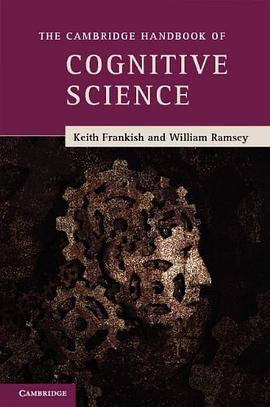
The Cambridge Handbook of Cognitive Science 豆瓣
作者: Frankish, Keith; Frankish, Keith; Ramsey, William 2012 - 9
Cognitive science is a cross-disciplinary enterprise devoted to understanding the nature of the mind. In recent years, investigators in philosophy, psychology, the neurosciences, artificial intelligence, and a host of other disciplines have come to appreciate how much they can learn from one another about the various dimensions of cognition. The result has been the emergence of one of the most exciting and fruitful areas of inter-disciplinary research in the history of science. This volume of original essays surveys foundational, theoretical, and philosophical issues across the discipline, and introduces the foundations of cognitive science, the principal areas of research, and the major research programs. With a focus on broad philosophical themes rather than detailed technical issues, the volume will be valuable not only to cognitive scientists and philosophers of cognitive science, but also to those in other disciplines looking for an authoritative and up-to-date introduction to the field.
The Myth of Mirror Neurons 豆瓣
作者: Gregory Hickok 出版社: W. W. Norton & Company 2014 - 8
An essential reconsideration of one of the most far-reaching theories in modern neuroscience and psychology.
In 1992, a group of neuroscientists from Parma, Italy, reported a new class of brain cells discovered in the motor cortex of the macaque monkey. These cells, later dubbed mirror neurons, responded equally well during the monkey’s own motor actions, such as grabbing an object, and while the monkey watched someone else perform similar motor actions. Researchers speculated that the neurons allowed the monkey to understand others by simulating their actions in its own brain.
Mirror neurons soon jumped species and took human neuroscience and psychology by storm. In the late 1990s theorists showed how the cells provided an elegantly simple new way to explain the evolution of language, the development of human empathy, and the neural foundation of autism. In the years that followed, a stream of scientific studies implicated mirror neurons in everything from schizophrenia and drug abuse to sexual orientation and contagious yawning.
In The Myth of Mirror Neurons, neuroscientist Gregory Hickok reexamines the mirror neuron story and finds that it is built on a tenuous foundation—a pair of codependent assumptions about mirror neuron activity and human understanding. Drawing on a broad range of observations from work on animal behavior, modern neuroimaging, neurological disorders, and more, Hickok argues that the foundational assumptions fall flat in light of the facts. He then explores alternative explanations of mirror neuron function while illuminating crucial questions about human cognition and brain function: Why do humans imitate so prodigiously? How different are the left and right hemispheres of the brain? Why do we have two visual systems? Do we need to be able to talk to understand speech? What’s going wrong in autism? Can humans read minds?
The Myth of Mirror Neurons not only delivers an instructive tale about the course of scientific progress—from discovery to theory to revision—but also provides deep insights into the organization and function of the human brain and the nature of communication and cognition.
神经经济学 豆瓣
Neuroeconomics: Decision Making and the Brain
作者: 保罗·W·格莱姆齐 / 恩斯特·费尔 译者: 周晓林 / 刘金婷 出版社: 中国人民大学出版社有限公司 2014 - 6
《神经经济学:决策与大脑》是几位神经经济学方面的先驱者共同主编的、涵盖了近几年神经经济学领域最新、最经典研究成果的论文集。神经经济学对经济学的贡献在于,它放弃了主流经济学用以解释人类行为的各种过分简单的模型,在切实了解人脑精神活动的真实方式的基础上,重建经济学对经济行为的解释。