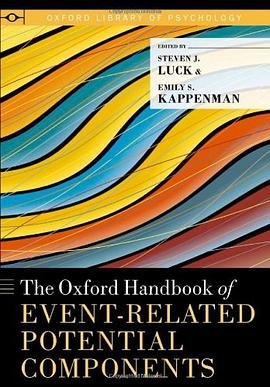
The Oxford Handbook of Event-related Potential Components 豆瓣
作者:
Luck, Steven J.; Kappenman, Emily S.;
2011
Event-related potentials (ERPs) have been used for decades to study perception, cognition, emotion, neurological and psychiatric disorders, and lifespan development. ERPs consist of multiple components and reflect a specific neurocognitive process. In the past, there was no single source that could be consulted to learn about all the major ERP components; learning about a single ERP component required reading dozens or even hundreds of separate journal articles and book chapters. The Oxford Handbook of Event-Related Potential Components fills this longstanding void with a detailed and comprehensive review of the major ERP components. Comprising 22 chapters by the field's founders and leading researchers, this volume offers extensive coverage of all relevant topics: -the fundamental nature of ERP components, including essential information about how ERP components are defined and isolated -individual components, such as the N170, P300, and ERN -groups of related components within specific research domains, such as language, emotion, and memory -ERP components in special populations, including children, the elderly, nonhuman primates, and patients with neurological disorders, affective disorders, and schizophrenia While undeniably broad in scope, these chapters are accessible to novices while remaining informative and engaging to experts. The Oxford Handbook of Event-Related Potential Components is a unique and valuable resource for students and researchers throughout the brain sciences.