Barthes
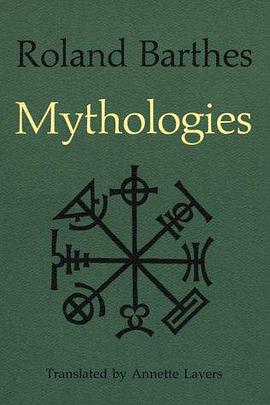
Mythologies 豆瓣
作者: Barthes Roland 译者: Annette Lavers 出版社: Hill & Wang 1972 - 1
"[Mythologies] illustrates the beautiful generosity of Barthes's progressive interest in the meaning (his word is signification) of practically everything around him, not only the books and paintings of high art, but also the slogans, trivia, toys, food, and popular rituals (cruises, striptease, eating, wrestling matches) of contemporary life . . . For Barthes, words and objects have in common the organized capacity to say something; at the same time, since they are signs, words and objects have the bad faith always to appear natural to their consumer, as if what they say is eternal, true, necessary, instead of arbitrary, made, contingent. Mythologies finds Barthes revealing the fashioned systems of ideas that make it possible, for example, for 'Einstein's brain' to stand for, be the myth of, 'a genius so lacking in magic that one speaks about his thought as a functional labor analogous to the mechanical making of sausages.' Each of the little essays in this book wrenches a definition out of a common but constructed object, making the object speak its hidden, but ever-so-present, reservoir of manufactured sense."--Edward W. Said

This text refers to the Paperback edition.

符号帝国 豆瓣
8.1 (18 个评分) 作者: [法] 罗兰·巴尔特 译者: 汤明洁 出版社: 中国人民大学出版社 2018 - 1
1966年,罗兰·巴尔访问日本。此后,他又两次到访东京。对巴尔特而言,日本之旅充满想象、体验以及愉悦。“我得到了一种完美的、强烈的、既深沉又微妙的快乐。”在1970年成书的《符号帝国》中,巴尔特把日本人生活的诸多方面均看做是日本文化的各种符号——语言、膳食、游戏(柏青哥 )、城市、文具店、诗歌(俳句),甚至眼皮,这些“能指符号”背后都有着丰富的意义。在巴尔特看来,日本文化现象的精髓便是具有禅宗意味的空无性。追随巴尔特独特的思想脉络,在全书26篇随笔式的叙述中,读者不仅可以领略巴尔特作品中鲜有的文学格调,体会苏珊·桑塔格所说的“巴尔特也是位唯美主义理想者”,也可以对日本社会及其背后的文化本质有崭新的认识。
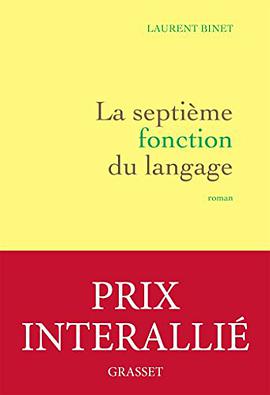
La septième fonction du langage - Prix Interallié 2015 豆瓣
作者: Laurent Binet 出版社: Grasset 2015 - 8
From amazon.fr: "A Bologne, il couche avec Bianca dans un amphithéâtre du XVIIe et il échappe à un attentat à la bombe. Ici, il manque de se faire poignarder dans une bibliothèque de nuit par un philosophe du langage et il assiste à une scène de levrette plus ou moins mythologique sur une photocopieuse. Il a rencontré Giscard à l’Elysée, a croisé Foucault dans un sauna gay, a participé à une poursuite en voiture à l’issue de laquelle il a échappé à une tentative d’assassinat, a vu un homme en tuer un autre avec un parapluie empoisonné, a découvert une société secrète où on coupe les doigts des perdants, a traversé l’Atlantique pour récupérer un mystérieux document. Il a vécu en quelques mois plus d’événements extraordinaires qu’il aurait pensé en vivre durant toute sa vie. Simon sait reconnaître du romanesque quand il en rencontre. Il repense aux surnuméraires d’Umberto Eco. Il tire sur le joint. »
Le point de départ de ce roman est la mort de Roland Barthes, renversé par une camionnette de blanchisserie le 25 février 1980. L'hypothèse est qu'il s'agit d'un assassinat. Dans les milieux intellectuels et politiques de l'époque, tout le monde est suspect...