Buddhism
Buddhism and Islam on the Silk Road Douban
author:
Johan Elverskog
publishing house:
University of Pennsylvania Press
2010
- 3
Elverskog has produced, for the very first time, a detailed account of the long-term interaction of Buddhism and Islam that should be welcomed by all students of Eurasian history. His approach to this issue is informed, balanced, and insightful. He understands that it is important to recognize the diversity within both religions, and that their encounters were not clashes between monolithic belief systems. Their relationship ran the gamut between religious violence and fanaticism to cultural exchange and tolerance.—Thomas T. Allsen, author of The Royal Hunt in Eurasian History
This is the most thorough treatment I have seen of the historical relationship between Buddhism and Islam. Elverskog skillfully and often entertainingly corrects many longstanding stereotypes about both religions, and richly demonstrates the complexity of their historical interaction with each other. This book is thoughtful, its arguments well supported, and its style very accessible. —Richard Foltz, author of Religions of the Silk Road
In the contemporary world the meeting of Buddhism and Islam is most often imagined as one of violent confrontation. Indeed, the Taliban's destruction of the Bamiyan Buddhas in 2001 seemed not only to reenact the infamous Muslim destruction of Nalanda monastery in the thirteenth century but also to reaffirm the stereotypes of Buddhism as a peaceful, rational philosophy and Islam as an inherently violent and irrational religion. But if Buddhist-Muslim history was simply repeated instances of Muslim militants attacking representations of the Buddha, how had the Bamiyan Buddha statues survived thirteen hundred years of Muslim rule?
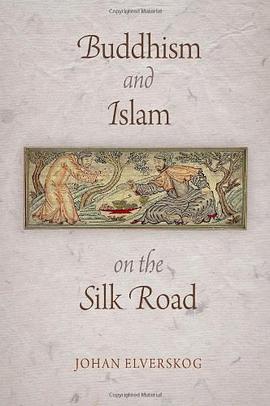
Buddhism and Islam on the Silk Road demonstrates that the history of Buddhist-Muslim interaction is much richer and more complex than many assume. This groundbreaking book covers Inner Asia from the eighth century through the Mongol empire and to the end of the Qing dynasty in the late nineteenth century. By exploring the meetings between Buddhists and Muslims along the Silk Road from Iran to China over more than a millennium, Johan Elverskog reveals that this long encounter was actually one of profound cross-cultural exchange in which two religious traditions were not only enriched but transformed in many ways.
This is the most thorough treatment I have seen of the historical relationship between Buddhism and Islam. Elverskog skillfully and often entertainingly corrects many longstanding stereotypes about both religions, and richly demonstrates the complexity of their historical interaction with each other. This book is thoughtful, its arguments well supported, and its style very accessible. —Richard Foltz, author of Religions of the Silk Road
In the contemporary world the meeting of Buddhism and Islam is most often imagined as one of violent confrontation. Indeed, the Taliban's destruction of the Bamiyan Buddhas in 2001 seemed not only to reenact the infamous Muslim destruction of Nalanda monastery in the thirteenth century but also to reaffirm the stereotypes of Buddhism as a peaceful, rational philosophy and Islam as an inherently violent and irrational religion. But if Buddhist-Muslim history was simply repeated instances of Muslim militants attacking representations of the Buddha, how had the Bamiyan Buddha statues survived thirteen hundred years of Muslim rule?
Buddhism and Islam on the Silk Road demonstrates that the history of Buddhist-Muslim interaction is much richer and more complex than many assume. This groundbreaking book covers Inner Asia from the eighth century through the Mongol empire and to the end of the Qing dynasty in the late nineteenth century. By exploring the meetings between Buddhists and Muslims along the Silk Road from Iran to China over more than a millennium, Johan Elverskog reveals that this long encounter was actually one of profound cross-cultural exchange in which two religious traditions were not only enriched but transformed in many ways.
佛教逻辑 Douban
Buddhist Logic
author:
[俄] 舍尔巴茨基
translator:
宋立道
/
舒晓炜
publishing house:
商务印书馆
1997
- 11
《佛教逻辑》是由三部著作所组成的丛书的最后一部。这套丛书的目的在于说明亚洲史上堪称最为强有力的思想运动。这种思想运动产生于公元前六世纪时的印度斯坦流域,逐渐地扩张到几乎整个亚洲大陆,以至日本和印度群岛。因此,这几部著作讨论的是中亚和东亚的主要思想的历史。《佛教逻辑》是关于佛教逻辑的一部权威性著作。作者通过对梵、藏原典的研究,并借助西方政治理论,对代表印度逻辑最高成就的晚期十乘佛教的逻辑理论作了系统的阐释和评价。
虚云和尚全集(全9册) Douban
author:
净慧主编
publishing house:
中州古籍出版社
2009
- 10
虚云和尚是中国近现代禅宗泰斗,对中国近现代佛教有着巨大的贡献和深远的影响。此次由中州古籍出版社出版的《虚云和尚全集》,由净慧长老主编,历时三年,全书共约一百二十万字,分十册,包括《法语》、《开示》、《书信》、《文记》、《诗偈》、《规约》、《年谱》、《传记资料》、《追思录》、《杂录》、《影谱》等十个部分。与岑学吕居士原编《法汇》和《年谱》相比,新增内容约有六十多万字。除《传记资料》、《追思录》和《杂录》纯为增补之外,其中,法语新增21则,文记新增50则,诗偈新增200多首,书信新增100则,开示新增110多则,文记新增50多则,规约新增15万余字,年谱增补50余处。另外,本书还共收集了与虚老相关的图片500多幅。应该说,这套全集是目前有关虚云老和尚生平资料最丰富的一个版本。《虚云和尚全集》的公开出版,适逢虚云和尚圆寂五十周年之际,亦是对虚云老和尚的最好纪念。