Criticism
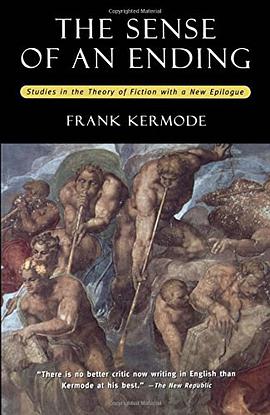
The Sense of an Ending 豆瓣
作者: Frank Kermode 出版社: Oxford University Press 2000 - 4
Frank Kermode is one of our most distinguished and beloved critics of English literature. Here, he contributes a new epilogue to his collection of classic lectures on the relationship of fiction to age-old concepts of apocalyptic chaos and crisis. Prompted by the approach of the millennium, he revisits the book which brings his highly concentrated insights to bear on some of the most unyielding philosophical and aesthetic enigmas. Examining the works of writers from Plato to William Burroughs, Kermode shows how they have persistently imposed their "fictions" upon the face of eternity and how these have reflected the apocalyptic spirit. Kermode then discusses literature at a time when new fictive explanations, as used by Spenser and Shakespeare, were being devised to fit a world of uncertain beginning and end. He goes on to deal perceptively with modern literature - with "traditionalists" such as Yeats, Eliot, and Joyce, as well as contemporary "schismatics," the French "new novelists," and such seminal figures as Jean-Paul Sartre and Samuel Beckett. Whether weighing the difference between modern and earlier modes of apocalyptic thought, considering the degeneration of fiction into myth, or commenting on the vogue of the Absurd, Kermode is distinctly lucid, persuasive, witty, and prodigal of ideas.
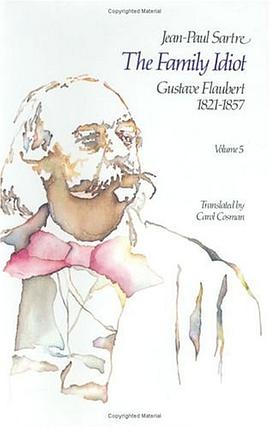
The family idiot : Gustave Flaubert, 1821-1857(5 Volume) 豆瓣
作者: Jean-Paul Sartre 译者: Carol Cosman 出版社: University Of Chicago Press 1993
That Sartre's study of Flaubert, "The Family Idiot," is a towering achievement in intellectual history has never been disputed. Yet critics have argued about the precise nature of this novel, or biography, or "criticism-fiction" which is the summation of Sartre's philosophical, social, and literary thought. Sartre writes, simply, in the preface to the book: ""The Family Idiot" is the sequel to "The Question of Method." The subject: what, at this point in time, can we know about a man? It seemed to me that this question could only be answered by studying a specific case."
"A man is never an individual," Sartre writes, "it would be more fitting to call him a universal singular. Summed up and for this reason universalized by his epoch, he in turn resumes it by reproducing himself in it as singularity. Universal by the singular universality of human history, singular by the universalizing singularity of his projects, he requires simultaneous examination from both ends." This is the method by which Sartre examines Flaubert and the society in which he existed.
Now this masterpiece is being made available in an inspired English translation that captures all the variations of Sartre's style--from the jaunty to the ponderous--and all the nuances of even the most difficult ideas. Volume 1 consists of Part One of the original French work, La Constitution, and is primarily concerned with Flaubert's childhood and adolescence.
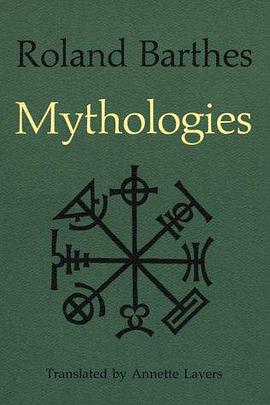
Mythologies 豆瓣
作者: Barthes Roland 译者: Annette Lavers 出版社: Hill & Wang 1972 - 1
"[Mythologies] illustrates the beautiful generosity of Barthes's progressive interest in the meaning (his word is signification) of practically everything around him, not only the books and paintings of high art, but also the slogans, trivia, toys, food, and popular rituals (cruises, striptease, eating, wrestling matches) of contemporary life . . . For Barthes, words and objects have in common the organized capacity to say something; at the same time, since they are signs, words and objects have the bad faith always to appear natural to their consumer, as if what they say is eternal, true, necessary, instead of arbitrary, made, contingent. Mythologies finds Barthes revealing the fashioned systems of ideas that make it possible, for example, for 'Einstein's brain' to stand for, be the myth of, 'a genius so lacking in magic that one speaks about his thought as a functional labor analogous to the mechanical making of sausages.' Each of the little essays in this book wrenches a definition out of a common but constructed object, making the object speak its hidden, but ever-so-present, reservoir of manufactured sense."--Edward W. Said

This text refers to the Paperback edition.
Conceptual Art 豆瓣
作者: GODFREY,TONY 出版社: PHAIDON PRESS 1998 - 6
Covering the entire 20th century, this text traces the roots of conceptual art to movements such as Dada, explaining its importance in the 1960s and 1970s and showing that it is still alive today. In 1917 Marcel Duchamp signed the name R. Mutt on a urinal and placed it in a gallery. Even the most strident modernists refused to accept this object as a work of art, however, Duchamp stuck to his guns, claiming that he had chosen the urinal as an art object so it must be art. Such arguments over the nature of art still continue today. Tony Godfrey sees the archetypal work of Conceptual Art as a question and a proposition joined together: "What is Art? This could be Art." This text seeks to demystify the subject by placing the art in its social and political context.