FirstPhilosophy外文
The Veil of Isis 豆瓣
Le Voile d'Isis
作者: Pierre Hadot 译者: Michael Chase 出版社: Belknap Press 2008 - 9
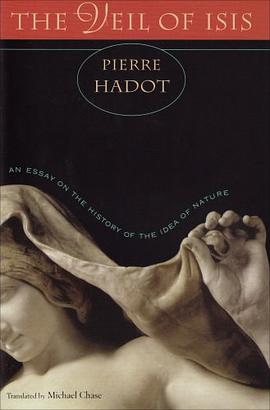
Nearly twenty-five hundred years ago the Greek thinker Heraclitus supposedly uttered the cryptic words 'Phusis kruptesthai philei.' How the aphorism, usually translated as 'Nature loves to hide,' has haunted Western culture ever since is the subject of this engaging study by Pierre Hadot. Taking the allegorical figure of the veiled goddess Isis as a guide, and drawing on the work of both the ancients and later thinkers such as Goethe, Rilke, Wittgenstein, and Heidegger, Hadot traces successive interpretations of Heraclitus' words. Over time, Hadot finds, 'Nature loves to hide' has meant that all that lives tends to die; that Nature wraps herself in myths; and (for Heidegger) that Being unveils as it veils itself. Meanwhile the pronouncement has been used to explain everything from the opacity of the natural world to our modern angst.
Plato's Parmenides 豆瓣
作者: Mitchell H. Miller Jr. 出版社: Pennsylvania State University Press 1991 - 10
The Parmenides is arguably the pivotal text for understanding the Platonic corpus as a whole. Miller offers a new reading that takes as its key the closely constructed dramatic context and mimetic irony of the dialogue. "Miller's work is a splendid achievement-- original, thorough, clear, deep and exciting. He blends literary sensitivity with analytical precision in a way that helps with just about everything in one of Plato's most obscure and difficult dialogues." ---Edward N. Lee, University of California, San Diego "Miller has much going for him. He has a deep understanding of Greek.... He is careful in following the arguments, and fresh and original in treating them.... We cannot do without Cornford and Allen; we now need Miller alongside them." ---John Ferguson, The Heythrop Journal "The Parmenides is one of the most obscure works in the history of Western thought. Yet this dialogue is of central importance in the development of Plato's theory of Forms, and we should be grateful to Miller for light in the darkness.... highly recommended." ---H.L. Shapiro, Choice ..".one can appreciate why Miller's book is a success; he offers an interpretation according to which the dialogue is a unified piece of work that marks a turning point in Plato's metaphysics. Miller's writing is lucid and straightforward.... There are sustained discussions of Cornford, Cherniss, Vlastos, Owen, Brumbaugh, Allen, and Sayre in the footnotes. There is little doubt that the book represents a significant contribution." ---Kenneth Seeskin, Philosophy and Literature "Miller's commentary is an impressive achievement, combining extensive scholarship with unusual sensitivity to Plato's nuances, both literary and discursive. Both for its imaginative interpretation of the larger issues, and its careful analysis of the details, it will be of great value to anyone with an interest in this bewildering dialogue." ---Kenneth Dorter, Canadian Philosophical Reviews Mitchell H. Miller, Jr. is Professor of Philosophy at Vassar College and author of The Philosopher in Plato's "Statesman" (Martinus Nijhoff, 1980).