GW
Letters from a Stoic 豆瓣 Goodreads
Ad Lucilium Epistulae Morales
作者: Seneca 译者: Robin Campbell 出版社: Penguin Classics 1969 - 7
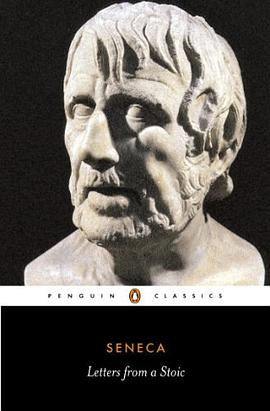
A philosophy that saw self-possession as the key to an existence lived 'in accordance with nature', Stoicism called for the restraint of animal instincts and the severing of emotional ties. These beliefs were formulated by the Athenian followers of Zeno in the fourth century BC, but it was in Seneca (c. 4 BC - AD 65) that the Stoics found their most eloquent advocate. Stoicism, as expressed in the Letters, helped ease pagan Rome's transition to Christianity, for it upholds upright ethical ideals and extols virtuous living, as well as expressing disgust for the harsh treatment of slaves and the inhumane slaughters witnessed in the Roman arenas. Seneca's major contribution to a seemingly unsympathetic creed was to transform it into a powerfully moving and inspiring declaration of the dignity of the individual mind.
The History of England 豆瓣
作者: Thomas Babington Macaulay 出版社: Penguin Classics 1979 - 4
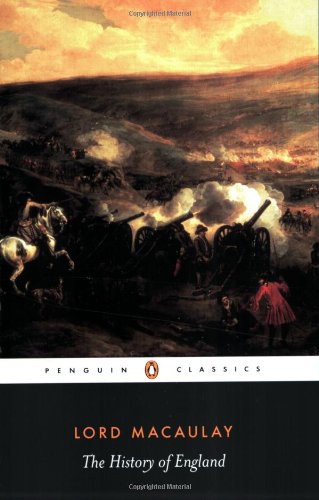
One of the greatest figures of his age, Thomas Babington Macaulay (1800-59) was widely admired throughout his life for his prose, poetry, political acumen and oratorical skills. Among the most successful and enthralling histories ever written, his "History of England" won instantaneous success following the publication of its first volumes in 1849, and was rapidly translated into most European languages. Beginning with the Glorious Revolution of 1688 and concluding at the end of the reign of William III in 1702, it illuminates a time of deep struggle throughout Britain and Ireland in vivid and compelling prose. But while Macaulay offers a gripping narrative, and draws on a wide range of sources including historical accounts and creative literature, his enduring success also owes a great deal to his astonishing ability to grasp, and explain, the political reality that has always underpinned social change.
George Perkins Marsh 豆瓣
作者: David Lowenthal 出版社: University of Washington Press 2003 - 2
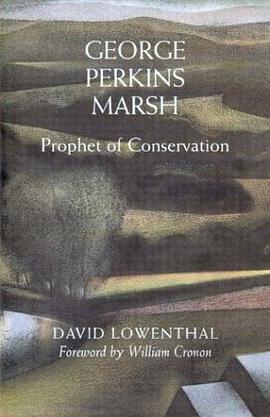
George Perkins Marsh (1801-1882) was the first to reveal the menace of environmental misuse, to explain its causes, and to prescribe reforms. David Lowenthal here offers fresh insights, from new sources, into Marsh's career and shows his relevance today, in a book which has its roots in but wholly supersedes Lowenthal's earlier biography "George Perkins Marsh: Versatile Vermonter" (1958). Marsh's devotion to the repair of nature, to the concerns of working people, to women's rights, and to historical stewardship resonate more than ever. His Vermont birthplace is now a national park chronicling American conservation, and the crusade he launched is now global. David Lowenthal is professor emeritus of geography at University College London. His books include "The Past Is a Foreign Country", "West Indian Societies", and "The Heritage Crusade and the Spoils of History".
Ad Infinitum 豆瓣
作者: Nicholas Ostler 出版社: Walker & Company 2008 - 9
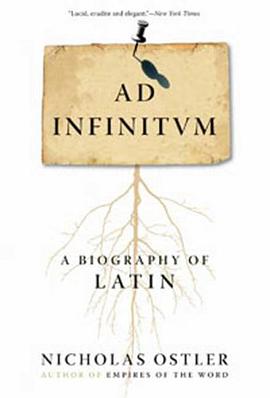
"An absorbing, scholarly account of the history of the Latin language, from its origins in antiquity to its afterlife in our own time..."Ad Infinitum" treats its readers with the dignity of Roman citizens."--"The" "Wall Street Journal" The Latin language has been the one constant in the cultural history of the West for more than two millennia. It has defined the way in which we express our thoughts, our faith, and our knowledge of how the world functions, its use echoing on in the law codes of half the world, in the terminologies of modern science, and, until forty years ago, in the liturgy of the Catholic Church. In his erudite and entertaining "biography," Nicholas Ostler shows how and why Latin survived and thrived even as its creators and other languages failed. Originally the dialect of Rome and its surrounds, Latin supplanted its neighbors to become, by conquest and settlement, the language of all Italy, and then of Western Europe and North Africa. After the empire collapsed, spoken Latin re-emerged as a host of new languages, from Portuguese and Spanish in the west to Romanian in the east, while a knowledge of Latin lived on as the common code of European thought, and inspired the founders of Europe's New World in the Americas. E pluribus unum. Illuminating the extravaganza of its past, Nicholas Ostler makes clear that, in a thousand echoes, Latin lives on, ad infinitum.