LGBT
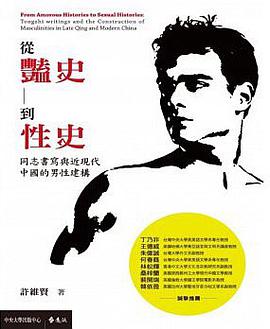
從豔史到性史 豆瓣 谷歌图书
作者: 許維賢 出版社: 中央大學出版中心 2014 - 7
本書重新考掘被中國近現代文學史大敘述遮蔽的同志書寫(1849年至2001年),反思以父權意識形態為主導的近現代中國男性建構如何支配中國的同志書寫和性別政治。本書指出曾經作為中國性愛藝術的「豔史」傳統敘事癖好,發展到近現代中國是如何被民族國家以「性科學」為名的「性史」病理 敘事機制所邊緣化,而這些轉變也非常弔詭地正是與近現代中國民族主義的男性建構並肩同行,並以民族國家男性建構的「同志」之名進行連結和互相詢喚。本書重新想像「同志」的系譜,解構中國民族主義的男性建構,並提出以「『老同志』-新同志」範式來描述那些在生理性別、社會性別或「社會性」論述的理論基礎上有所差異的不同男性建構表現。本書的分析對象主要是選取那些在中國大陸以男同性戀、「哥兒」或「兄弟」情誼或其他性/別議題作為敘事主軸的同志書寫,除了大量的舊報刊史料,其餘是自敘傳、私函、日記、筆記、小說、散文和詩詞,也包含從小說改編的同志電影、網路小說以及現有同志論述和反同志論述的再解讀。
導讀、推薦
推薦
本書探討十九世紀中葉以來中國男性欲望的流變以及其歷史意義。作者以同志論述角度切入議題,探索「豔史」與「性史」的辯證關係,以及其書寫與藝術創作的呈現。從王韜到王小波,從張競生到郭沫若,全書考證細膩,議論深刻,堪稱現代中國性別研究又一重要貢獻。
──王德威,美國哈佛大學東亞語言與文明系Edward C. Henderson講座教授
許維賢的大作《從豔史到性史:同志書寫與近現代中國的男性建構》審思男同性欲望論述從晚清至今在華語文化的發展。除了結合了淵博的全球理論和前現代中國論述外,此書的重要貢獻在於批駁一些認為酷兒理論僅為西方英語世界獨有現象的謬論,並在正值茁壯的華語學術世界裡,注入了深具生動原創性的研究和理論。
──裴開瑞(Chris Berry),英國倫敦大學國王學院電影系教授
從男男情感和身體欲望為主的同性戀,到社會角色和氣質展現為主的男性建構,加上以革命情操和救國大業為主的國族打造,在許維賢精闢的歷史文學分析中編織成繁複而明確的軌跡,也寫出了「同志」概念在中國風起雲湧的時代氛圍中所形成的重要凝聚意義。
──何春蕤,台灣中央大學英美語文學系專任教授
一份非常具有重大價值的文獻記錄。
──韓依薇(Ari Larissa Heinrich),美國加州大學聖地牙哥分校文學系副教授
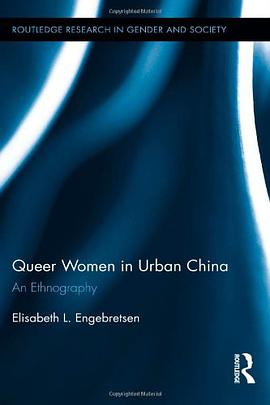
Queer Women in Urban China 豆瓣
作者: Elisabeth L. Engebretsen 出版社: Routledge 2013 - 11
Lala (lesbian) and gay communities in mainland China have emerged rapidly in the 21st century. Alongside new freedoms and modernizing reforms, and with mainstream media and society increasingly tolerant, lalas still experience immense family and social pressures to a degree that this book argues is deeply gendered. The first anthropological study to examine everyday lala lives, intimacies, and communities in China, the chapters explore changing articulations of sexual subjectivity, gendered T-P (tomboy-wife) roles, family and kinship, same-sex weddings, lala-gay contract marriages, and community activism. Engebretsen analyzes lala strategies of complicit transgressions to balance surface respectability and undeclared same-sex desires, why "being normal" emerges a deep aspiration and sign of respectability, and why openly lived homosexuality and public activism often are not.
Queer Women in Urban China develops a critical ethnographic analysis through the conceptual lens of "different normativities," tracing the paradoxes and intricacies of the desire for normal life alongside aspirations for recognition, equality, and freedom, and argues that dominant paradigms fixed on categories, identities, and the absolute value of public visibility are ill-equipped to fully understand these complexities. This book complements existing perspectives on sexual and gender diversity, contemporary China, and the politics and theories of justice, recognition, and similitude in global times.
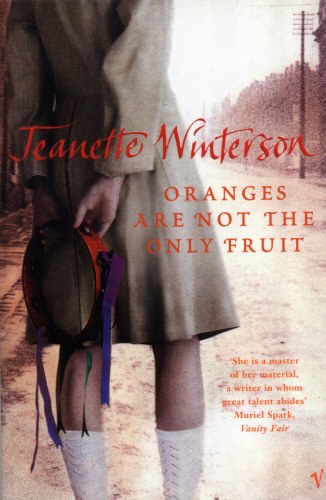
Oranges Are Not the Only Fruit 豆瓣
作者: Jeanette Winterson 出版社: Atlantic Monthly Pr 1987 - 9
Lk mos people I lived for a long time with my mother and<br > ~her liked to watch the wrestling, my mother liked<br > My<br > father<br > tow~stle;it didn t matter what. She was n he wh e corner and<br > that was that.<br > She hung out the largest sheets on the windiest days. She<br > ~n ed the Mormons to knock on the door. At election time in a<br > Labour mill town she put a picture of the Conservative<br > candidate in ~he window.<br > She had never heard of mixed fedings. There were friends and<br > th~re were enemms.<br > Enemies were: The Devil (in his many forms)<br > Next Door<br > Sex (in its many forms)<br > Slugs<br > Friends were: God<br > Our dog<br > Auntie Madgc<br > The Novels of Charlotte Bront6<br > Slug pellets<br > and me, at first. [ had been brought in to join her in a tag match<br > against the Rest of the World. She had a mysterious attitude<br > !owards the begetting of children it wasn t that she couldn t do<br > it+ mo~ that she didn t want to do it She was very bitter about<br > th, Virgin+ Mary getting there firs So he did the next best thing<br > anm arranged fo a oundling That was me<br > We had no Wise Men becau e she didn t believe the e we e any<br > tcannozrecallatimewhen lddno know hat l was special.<br > wL+ men, but we had sheep One of my earl est memori<br >~ ,+ ~ng on . t es is me<br >!~ Sactfi asheepatEase wh le she told me the oyo he<br > SLlclaa..,~ Lamb. We had it on Sundays with potato<br > +hol~d~I d s h day of the<br > mah g~k; we had a tad g t h h tmposmg<br > ~ura)ly w~dListefaedBt~kt~e kghth indue. ~ut ohn<br > 3<br >