ML
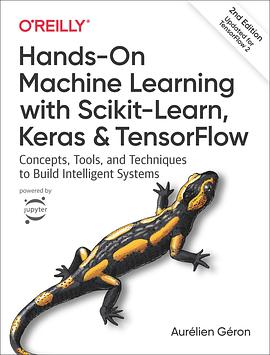
Hands-on Machine Learning with Scikit-Learn, Keras, and TensorFlow, 2nd Edition Douban
author:
Aurelien Geron
publishing house:
O′Reilly
2019
- 10
2 edition
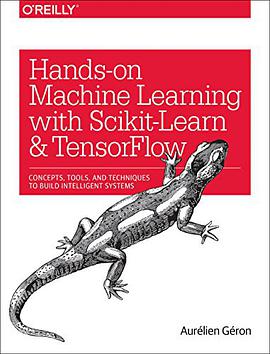
Hands-On Machine Learning with Scikit-Learn and TensorFlow Douban
8.7 (6 ratings)
author:
Aurélien Géron
publishing house:
O'Reilly Media
2017
- 1
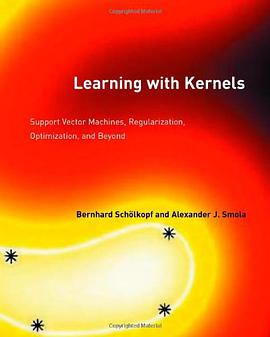
Learning with Kernels Douban
author:
Bernhard Schlkopf
/
Alexander J. Smola
publishing house:
The MIT Press
2001
In the 1990s, a new type of learning algorithm was developed, based on results from statistical learning theory: the Support Vector Machine (SVM). This gave rise to a new class of theoretically elegant learning machines that use a central concept of SVMs -- -kernels--for a number of learning tasks. Kernel machines provide a modular framework that can be adapted to different tasks and domains by the choice of the kernel function and the base algorithm. They are replacing neural networks in a variety of fields, including engineering, information retrieval, and bioinformatics.Learning with Kernels provides an introduction to SVMs and related kernel methods. Although the book begins with the basics, it also includes the latest research. It provides all of the concepts necessary to enable a reader equipped with some basic mathematical knowledge to enter the world of machine learning using theoretically well-founded yet easy-to-use kernel algorithms and to understand and apply the powerful algorithms that have been developed over the last few years.
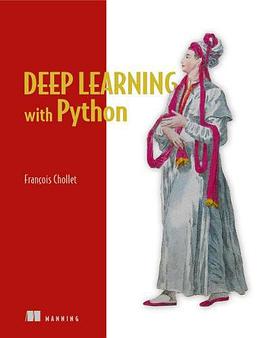
Deep Learning with Python Douban
author:
Francois Chollet
publishing house:
Manning Publications
2017
- 10
Deep Learning with Python introduces the field of deep learning using the Python language and the powerful Keras library. Written by Keras creator and Google AI researcher François Chollet, this book builds your understanding through intuitive explanations and practical examples. You'll explore challenging concepts and practice with applications in computer vision, natural-language processing, and generative models. By the time you finish, you'll have the knowledge and hands-on skills to apply deep learning in your own projects.
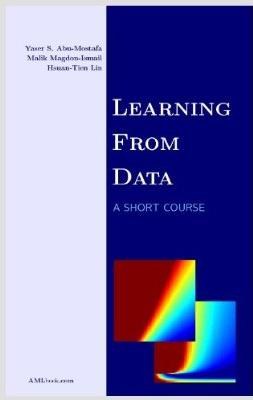
Learning From Data Douban
9.5 (8 ratings)
author:
Yaser S. Abu-Mostafa
/
Malik Magdon-Ismail
…
publishing house:
AMLBook
2012
- 3
Machine learning allows computational systems to adaptively improve their performance with experience accumulated from the observed data. Its techniques are widely applied in engineering, science, finance, and commerce. This book is designed for a short course on machine learning. It is a short course, not a hurried course. From over a decade of teaching this material, we have distilled what we believe to be the core topics that every student of the subject should know. We chose the title `learning from data' that faithfully describes what the subject is about, and made it a point to cover the topics in a story-like fashion. Our hope is that the reader can learn all the fundamentals of the subject by reading the book cover to cover. ---- Learning from data has distinct theoretical and practical tracks. In this book, we balance the theoretical and the practical, the mathematical and the heuristic. Our criterion for inclusion is relevance. Theory that establishes the conceptual framework for learning is included, and so are heuristics that impact the performance of real learning systems. ---- Learning from data is a very dynamic field. Some of the hot techniques and theories at times become just fads, and others gain traction and become part of the field. What we have emphasized in this book are the necessary fundamentals that give any student of learning from data a solid foundation, and enable him or her to venture out and explore further techniques and theories, or perhaps to contribute their own. ---- The authors are professors at California Institute of Technology (Caltech), Rensselaer Polytechnic Institute (RPI), and National Taiwan University (NTU), where this book is the main text for their popular courses on machine learning. The authors also consult extensively with financial and commercial companies on machine learning applications, and have led winning teams in machine learning competitions.
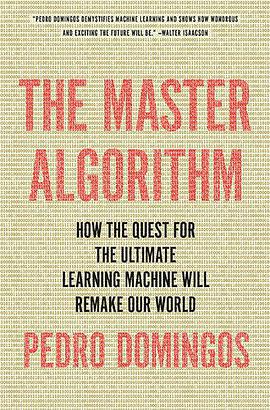
The Master Algorithm Douban Goodreads
author:
Pedro Domingos
publishing house:
Basic Books
2015
- 9
other title:
The Master Algorithm: How the Quest for the Ultimate Learning Machine Will Remake Our World
A thought-provoking and wide-ranging exploration of machine learning and the race to build computer intelligences as flexible as our own
In the world's top research labs and universities, the race is on to invent the ultimate learning algorithm: one capable of discovering any knowledge from data, and doing anything we want, before we even ask. In The Master Algorithm, Pedro Domingos lifts the veil to give us a peek inside the learning machines that power Google, Amazon, and your smartphone. He assembles a blueprint for the future universal learner--the Master Algorithm--and discusses what it will mean for business, science, and society. If data-ism is today's philosophy, this book is its bible.
In the world's top research labs and universities, the race is on to invent the ultimate learning algorithm: one capable of discovering any knowledge from data, and doing anything we want, before we even ask. In The Master Algorithm, Pedro Domingos lifts the veil to give us a peek inside the learning machines that power Google, Amazon, and your smartphone. He assembles a blueprint for the future universal learner--the Master Algorithm--and discusses what it will mean for business, science, and society. If data-ism is today's philosophy, this book is its bible.
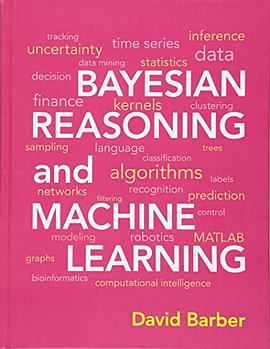
Bayesian Reasoning and Machine Learning Douban Goodreads
Machine learning methods extract value from vast data sets quickly and with modest resources. They are established tools in a wide range of industrial applications, including search engines, DNA sequencing, stock market analysis, and robot locomotion, and their use is spreading rapidly. People who know the methods have their choice of rewarding jobs. This hands-on text opens these opportunities to computer science students with modest mathematical backgrounds. It is designed for final-year undergraduates and master's students with limited background in linear algebra and calculus. Comprehensive and coherent, it develops everything from basic reasoning to advanced techniques within the framework of graphical models. Students learn more than a menu of techniques, they develop analytical and problem-solving skills that equip them for the real world. Numerous examples and exercises, both computer based and theoretical, are included in every chapter. Resources for students and instructors, including a MATLAB toolbox, are available online.
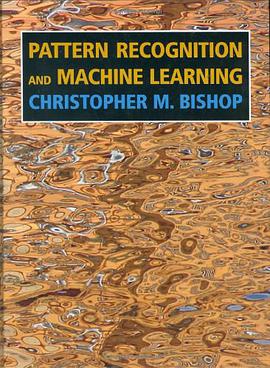
Pattern Recognition and Machine Learning Douban Goodreads
Pattern Recognition and Machine Learning (Information Science and Statistics)
The dramatic growth in practical applications for machine learning over the last ten years has been accompanied by many important developments in the underlying algorithms and techniques. For example, Bayesian methods have grown from a specialist niche to become mainstream, while graphical models have emerged as a general framework for describing and applying probabilistic techniques. The practical applicability of Bayesian methods has been greatly enhanced by the development of a range of approximate inference algorithms such as variational Bayes and expectation propagation, while new models based on kernels have had a significant impact on both algorithms and applications.
This completely new textbook reflects these recent developments while providing a comprehensive introduction to the fields of pattern recognition and machine learning. It is aimed at advanced undergraduates or first-year PhD students, as well as researchers and practitioners. No previous knowledge of pattern recognition or machine learning concepts is assumed. Familiarity with multivariate calculus and basic linear algebra is required, and some experience in the use of probabilities would be helpful though not essential as the book includes a self-contained introduction to basic probability theory.
The book is suitable for courses on machine learning, statistics, computer science, signal processing, computer vision, data mining, and bioinformatics. Extensive support is provided for course instructors, including more than 400 exercises, graded according to difficulty. Example solutions for a subset of the exercises are available from the book web site, while solutions for the remainder can be obtained by instructors from the publisher. The book is supported by a great deal of additional material, and the reader is encouraged to visit the book web site for the latest information.
This completely new textbook reflects these recent developments while providing a comprehensive introduction to the fields of pattern recognition and machine learning. It is aimed at advanced undergraduates or first-year PhD students, as well as researchers and practitioners. No previous knowledge of pattern recognition or machine learning concepts is assumed. Familiarity with multivariate calculus and basic linear algebra is required, and some experience in the use of probabilities would be helpful though not essential as the book includes a self-contained introduction to basic probability theory.
The book is suitable for courses on machine learning, statistics, computer science, signal processing, computer vision, data mining, and bioinformatics. Extensive support is provided for course instructors, including more than 400 exercises, graded according to difficulty. Example solutions for a subset of the exercises are available from the book web site, while solutions for the remainder can be obtained by instructors from the publisher. The book is supported by a great deal of additional material, and the reader is encouraged to visit the book web site for the latest information.