Postmodernism
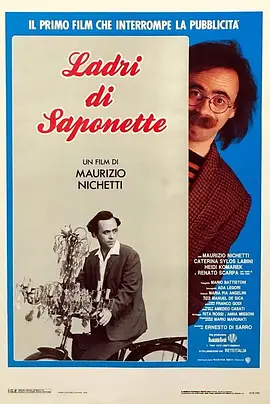
偷冰棍的人 (1989) 豆瓣
Ladri di saponette
导演: Maurizio Nichetti 演员: Heidi Komarek / Maurizio Nichetti
其它标题: Ladri di saponette / Ladri di Saponette
本片是对《偷自行车的人》的致敬和恶搞。片名揭穿了影片的搞笑性质:《偷自行车的人》去掉一个字母,就变成了《偷冰棍的人》(The Icicle Thief)。嘲笑对象主要是电视的商业化。电视上正在播映一部赚人热泪的新现实主义作品:老爸失业,6岁儿子为了补给家用而拼命干活。突然间,经典的黑白画面中闯进了性感袒露的女模特儿,原来是广告中的形象,最后导演不得不亲自钻进画面,来修理这个商业社会对艺术进行疯狂进攻的世界。本片曾荣获莫斯科电影金项奖。

Stanzas 豆瓣
作者: Giorgio Agamben / [意]吉奥乔·阿甘本 译者: Ronald L. Martinez 出版社: University of Minnesota Press 1992 - 11
Stanzas is a fascinating blend of philology, medieval physics and psychology, the psychoanalysis of toys, and contemporary linguistics and philosophy. In this unique work, Giorgio Agamben attempts to reconfigure the epistemological foundation of Western culture. He rereads Freud and Saussure to discover the impossibility of metalanguage and of synthesis that could be reflected in the transparency of signs. There is no “superior language” that can read the obscure scenes of the unconscious, and the “symbol” is always the return of the repressed in an improper signifier.
This impossibility leads Agamben to the problem of representation. He argues that because language is the locus of the production and storage of phantasms, all real objects are fractured by phantasmic itineraries that in turn divide poetry and philosophy, joy and knowledge.
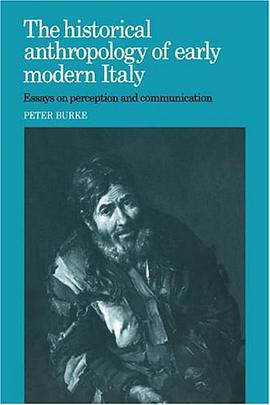
The Historical Anthropology of Early Modern Italy 豆瓣
作者: Peter Burke 出版社: Cambridge University Press 1987 - 4
Based on archival material from the cities of Genoa, Milan, Venice, Florence, Rome, and Naples, as well as on published sources, such as travel journals, and artistic representations, this volume presents an original view of the culture of early modern Italy. The book addresses particular themes - specifically those of perception and communication - as well as serving to exemplify modes of analysis in the currently developing field of historical anthropology. In the first part of the book, Peter Burke examines the stereotyped ways in which contemporaries perceived social groups such as saints, beggars, and working women, and shows how these stereotypes were used, consciously and unconsciously, both by the authorities and by ordinary people.